
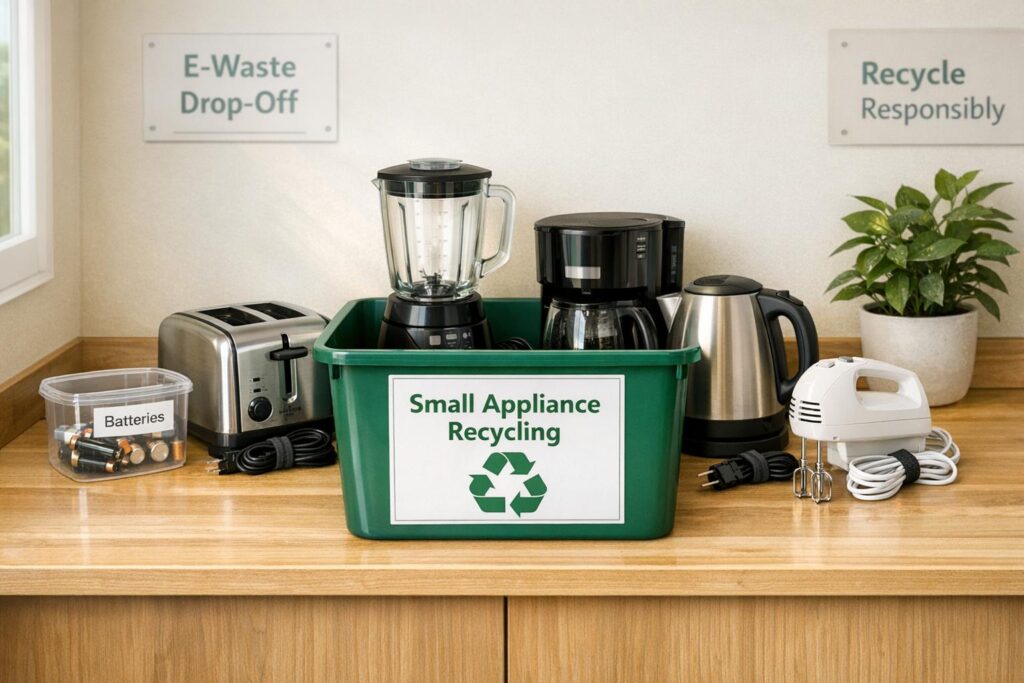
Recycling small kitchen appliances like blenders, toasters, and coffee makers is crucial to reducing landfill waste and recovering valuable materials like steel, copper, and aluminum. Here’s what you need to know:
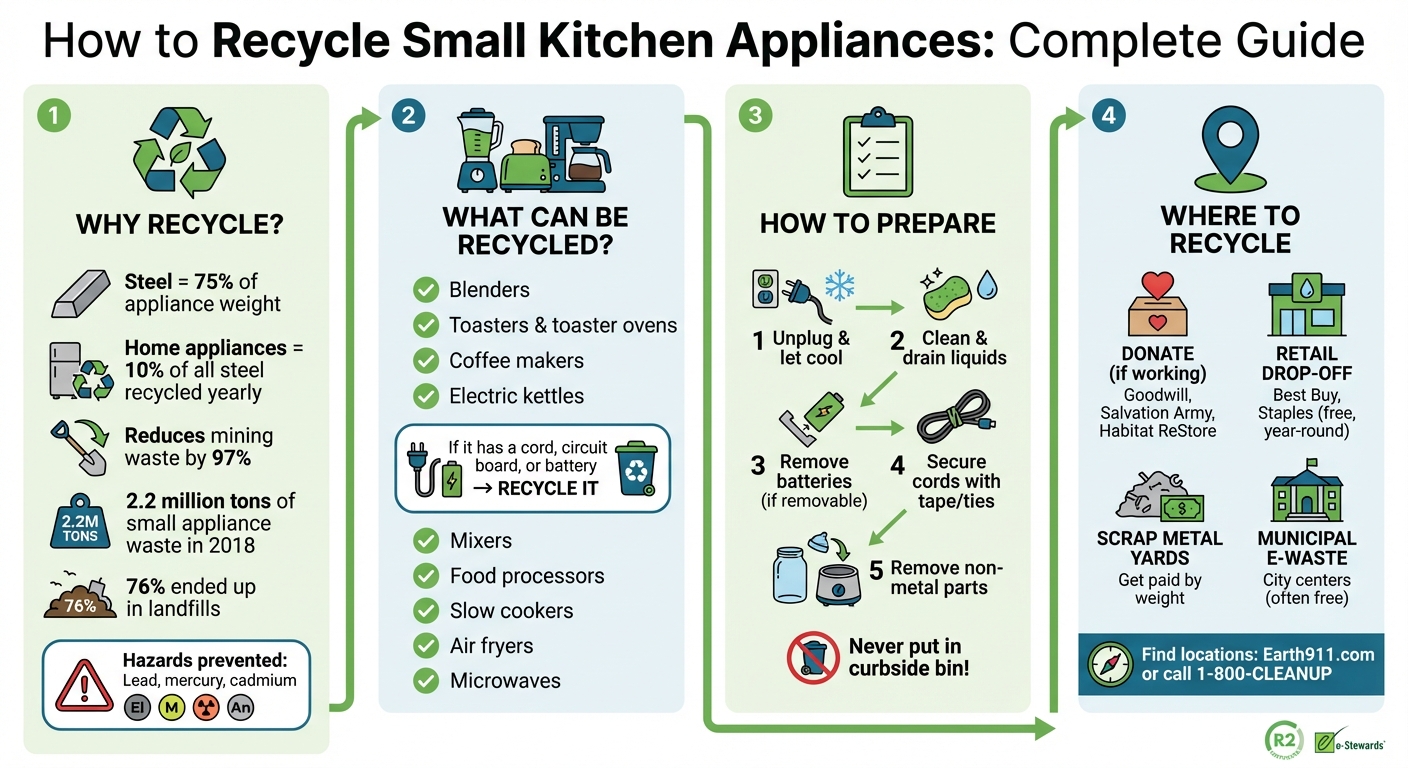
- Why Recycle? Most small appliances contain metals that can be reused, reducing the need for mining and preventing toxins like lead and mercury from polluting soil and water.
- What Can Be Recycled? Items with power cords, circuit boards, or batteries – like microwaves, mixers, and air fryers – are great candidates for recycling.
- How To Prepare: Unplug, clean, and secure cords or loose parts. Remove batteries if possible, as they require separate disposal.
- Where To Recycle: Options include donation (Goodwill, Salvation Army), retail drop-off (Best Buy, Staples), scrap metal yards, and municipal e-waste programs. Use tools like Earth911 to find local services.
Proper recycling ensures these appliances don’t harm the environment while reclaiming materials for future use. Avoid tossing them in curbside bins, as they require specialized handling.
How to Recycle Small Kitchen Appliances: 4-Step Guide
How to Dispose of Old Appliances the Right Way!
sbb-itb-663e316
Why You Should Recycle Small Kitchen Appliances
Recycling small kitchen appliances tackles serious issues like toxic contamination, resource depletion, and the growing problem of landfill overflow. When these appliances end up in landfills, hazardous substances such as lead, mercury, and cadmium can leach into the soil and groundwater, posing long-term risks to ecosystems and public health. Beyond reducing this harm, recycling helps recover valuable materials that play a key role in supporting the economy.
Did you know that steel accounts for about 75% of the weight of most small appliances? In fact, home appliances contribute to 10% of all steel recycled each year. These devices also contain other valuable materials like copper wiring, aluminum casings, and even small amounts of gold in their circuit boards. Recycling metals like these drastically reduces mining waste – by as much as 97% – and uses far less energy compared to extracting raw materials. Plus, metals like steel and aluminum can be recycled over and over again without losing their quality, creating a sustainable loop where old appliances are transformed into new products.
In 2018 alone, small appliances generated a staggering 2.2 million tons of waste, with nearly 76% of that ending up in landfills. Programs like the EPA‘s Responsible Appliance Disposal initiative have made strides in addressing this issue. Between 2006 and 2025, the program recycled 1.5 billion pounds of materials and prevented over 543,000 hazardous components – including mercury and contaminated oils – from polluting the environment.
"Recycling e-waste allows us to reuse scarce materials and prevent environmental damage caused by throwing hazardous waste in landfills." – Corridor Recycling
However, recycling small appliances requires careful handling to avoid unintended contamination. Never toss these items into your curbside recycling bin unless your local waste management service specifically allows it. Compactors in recycling trucks can crush appliances, causing broken glass or circuit boards to contaminate other recyclables like paper and plastic, making entire batches unusable. For example, the treated glass in microwave carousels has a higher melting point than typical bottle glass, and mixing the two can ruin the production of new glass products. Additionally, always remove lithium-ion batteries before recycling; these batteries are a fire hazard and need specialized processing.
Which Small Kitchen Appliances Can Be Recycled
Many small kitchen appliances can be recycled because they contain a significant amount of metal, particularly steel, which makes up about 75% of their weight. Items with power cords, circuit boards, or batteries should always be recycled instead of tossed in the trash. Recycling these appliances helps recover valuable materials and protects the environment.
However, most municipal recycling programs don’t allow you to place these items in curbside bins since they require specialized handling. Instead, you’ll need to take them to designated e-waste centers or specific retail locations that offer take-back programs. Before making the trip, it’s a good idea to check with your local facility to confirm what they accept, as policies can differ depending on the area.
"If the item has a cord, circuit board, or battery, it should be recycled – not trashed." – GreenCitizen
Recyclable Appliance Examples
Here are some common appliances that can typically be recycled. Dropping these off at e-waste centers helps recover resources and reduce waste:
- Blenders
- Toasters and toaster ovens
- Coffee makers
- Electric kettles
- Mixers (stand and hand mixers)
- Food processors
- Slow cookers
- Air fryers
- Juicers
- Bread makers
- Microwaves
Keep in mind that some drop-off locations may have exclusions. For instance, certain retailers might accept coffee brewers but not rice cookers or wine coolers. A quick check with the facility beforehand can save you time and ensure your items are recycled properly.
How to Prepare Appliances for Recycling
Getting your appliances ready for recycling is a straightforward process, but it’s important to do it right for safety and efficiency. Start by unplugging the appliance a few days beforehand. This gives it time to cool down completely and eliminates any lingering electrical charge – especially crucial for items like toasters or coffee makers that retain heat. Next, clean the appliance to remove any food residue, grease, or dirt. While it doesn’t need to be spotless, a quick wipe-down helps prevent contamination and keeps pests and odors away from collection points. For appliances that store liquids, like electric kettles or coffee makers, make sure to drain all water to avoid leaks during transport.
Take a moment to secure the power cord with twist ties or tape. This prevents accidents and protects the copper wiring. If the appliance has removable batteries – particularly lithium-ion ones – take them out, as they need separate disposal due to fire risks. However, if the battery is built-in and not meant to be removed, leave it in place to avoid damage.
"Make sure appliances are fully disconnected and uninstalled … take out removable accessories or anything you want to keep – like egg trays or custom grill pans. For electronics, remove any batteries if applicable."
– Jessica Petrino, Educator and Appliance Expert, AJ Madison
Basic Preparation Steps
Here’s a quick checklist to help you prepare your appliance for recycling:
- Remove detachable parts or accessories you want to keep, such as special attachments or egg trays.
- Secure any loose components with heavy-duty tape. For instance, tape down doors on microwaves or toaster ovens to prevent them from swinging open during transport.
- Gather detachable wires, cables, or remotes into a small bundle to make sorting easier for recycling centers.
- Wrap or tape down the power cord to avoid hazards.
Separating Non-Recyclable Parts
Once your appliance is cleaned and secured, focus on separating parts that can’t be recycled. Some materials, like tempered glass and certain plastics, don’t have a recycling market. These include items like glass carafes from coffee makers, plastic blender jars, or glass components from microwaves. Tempered glass, in particular, is treated to handle high heat and melts at a different temperature than regular recyclable glass, which can cause contamination.
Detach removable pieces from the main appliance body. For example, take the coffee pot off its base, separate the blender jar from the motor, or remove heating elements that can be easily detached. Recycling centers often prefer receiving just the metal base of an appliance, as steel makes up about 75% of an appliance’s weight and is highly recyclable.
"If your appliance has removable parts not made of metal (such as the tempered glass or plastic blender jar), there probably isn’t a recycling market for those. You can remove these parts prior to recycling."
– Earth911
Avoid dismantling certain appliances on your own. Microwaves, for example, have high-voltage capacitors that can hold a dangerous charge even days after being unplugged. Similarly, small wine coolers or refrigerators contain refrigerants that should only be handled by EPA-certified professionals. If your appliance is a smart device with internet connectivity, don’t forget to perform a factory reset to erase any personal data before recycling.
Where to Recycle or Dispose of Small Kitchen Appliances
Once you’ve prepared your appliance for recycling, it’s time to decide where it should go. Depending on its condition, you can either donate it if it’s still functional or recycle it through specialized programs if it’s no longer working. Below are some practical options to consider.
Donation and Resale Options
If your appliance is in good working order, donating it is a great way to give it a second life. Well-known organizations like Goodwill, The Salvation Army, and Habitat for Humanity ReStore accept small kitchen appliances that still work. For instance, Goodwill operates over 150 local organizations throughout the U.S., while The Salvation Army has more than 7,500 centers nationwide. Habitat for Humanity ReStores are particularly convenient, as they accept both small and large appliances, and some locations even offer free pickup services for bulk donations.
"Give to Goodwill what you would give to a friend." – Goodwill Keystone Area
If you prefer to help someone in your local community, consider using Facebook "Buy Nothing" groups to connect with neighbors who might need your appliance. Alternatively, online marketplaces or a garage sale can be great options if you’re looking to make a little extra money.
Retail and Recycling Drop-Off Programs
For appliances that can’t be donated, retail recycling programs are a reliable solution. Stores like Best Buy and Staples accept broken appliances for recycling, no matter where they were originally purchased. Some retailers, including Walmart and Best Buy, even offer trade-in programs that reward you with gift cards or discounts for functional appliances.
If your appliance has a lot of metal components, scrap metal yards can be a practical choice. These facilities pay by weight for items made largely of materials like steel, copper, or aluminum. Given that steel makes up about 75% of the average appliance, this option not only helps you recycle but also puts a little cash in your pocket. Did you know that home appliances account for roughly 10% of all steel recycled in the U.S. each year?
Municipal e-waste drop-off sites are another option. Many cities operate these centers year-round or host special collection events where residents can recycle small appliances for free or for a small fee. If you’re considering a private recycler, look for certifications like R2 (Responsible Recycling) or e-Stewards to ensure they meet proper environmental standards.
Here’s a quick summary of your options:
| Program Type | Examples | Details |
|---|---|---|
| Retail Recycling | Best Buy, Staples | Free year-round drop-off; may have item limits |
| Donation | Goodwill, Salvation Army, Habitat ReStore | Items must work; clean and bundle cords |
| Scrap Metal | Local Scrap Yards | Pays by weight; ideal for metal-heavy items |
| Municipal | City E-Waste Centers | Often free for residents; check schedules |
How to Find Local Recycling Services
Using Online Search Tools
Once your appliance is ready for recycling, the next step is finding a nearby service. Earth911 is a great starting point, offering a database of over 100,000 listings covering more than 350 materials. Just head to search.earth911.com, enter your ZIP code and the type of appliance you want to recycle, and you’ll get a list of local drop-off locations. Prefer to chat with someone? Call 1-800-CLEANUP for assistance.
For certified facilities that meet strict environmental standards, check out the e-Stewards directory at e-stewards.org or the R2 Recyclers list from Sustainable Electronics Recycling International (SERI). Both offer map-based tools to help you locate certified recyclers. Other helpful resources include RecycleNation (recyclenation.com) and ERI Direct (eridirect.com), which provide ZIP-code searches for manufacturer- and retailer-supported drop-off points.
Don’t overlook your local government’s website – search for terms like "e-waste recycling [Your City]" to find municipal programs or seasonal collection events. Some power companies even offer free haul-away services when you upgrade to energy-efficient appliances.
After identifying potential sites, take the time to compare their services to find the best fit for your needs.
Comparing Service Options
Before heading to a recycling facility, it’s a good idea to call ahead and confirm they accept your specific appliance. Some locations may not handle certain items, like rice cookers or wine coolers. Be sure to ask about fees as well – municipal programs are often free for residents, while private services may charge based on the size or weight of the appliance.
Look for certifications when choosing a recycler. Facilities certified by R2 or e-Stewards adhere to strict guidelines for handling hazardous materials and protecting data. This is especially important if you’re recycling a "smart" appliance that stores personal information. If you’re not using a certified recycler, consider performing a factory reset on the device before dropping it off.
Lastly, think about logistics. Does the facility offer pickup services? Retailers like Best Buy and Staples often have convenient in-store kiosks for smaller items, while scrap metal yards might pay you by the pound for heavier appliances. Just keep in mind that payouts for smaller items are usually minimal.
Conclusion and Final Tips
Recycling small kitchen appliances doesn’t have to be complicated. A little preparation goes a long way: unplug appliances a few days before recycling to let them cool, remove any batteries, and detach non-metal parts. Then, use resources like Earth911 or your local utility’s website to find a certified recycling facility nearby. Look specifically for locations with R2 or e-Stewards certifications to ensure safe and responsible handling of hazardous materials.
If your appliance is still in working condition, consider donating it. Organizations like Habitat for Humanity ReStore or local community groups are great options. As Jessica Petrino, Educator and Appliance Expert at AJ Madison, explains: "If your appliance still works, look into donation options like ReStore, Community Fridge Groups, or nonprofits… which may offer tax benefits".
For broken appliances, proper disposal is essential. Avoid placing them in your curbside recycling bin – doing so can lead to crushed appliances releasing toxins and contaminating other recyclables. Recycling through the right channels ensures valuable materials are recovered while minimizing environmental harm.
To make the process even smoother, secure power cords with tape or twist ties before transporting appliances, combine your recycling trip with other errands, and check if your utility provider offers rebates. Some companies even pay between $25 and $150 for working appliances. These small efforts help protect the planet and reclaim important resources.
FAQs
Can I recycle small appliances in curbside bins?
No, you can’t recycle small kitchen appliances in your curbside bins. Instead, you’ll need to bring them to e-waste recycling centers or retailers that run recycling programs. For example, stores like Best Buy often have options for recycling electronics. Be sure to check with local facilities or retailers in your area for the most accurate information.
Do I need to remove batteries before recycling?
Absolutely, you should always remove batteries before recycling small kitchen appliances. This step is crucial for safe handling during the recycling process and ensures that the appliance’s electrical components can be recycled correctly.
Once removed, make sure to follow your local recycling guidelines for proper battery disposal. Many areas have designated drop-off points or special instructions for handling batteries safely. Taking this extra step helps prevent hazards and supports effective recycling practices.
How do I find a local e-waste drop-off near me?
To locate a nearby e-waste drop-off, start with tools like Earth911 or Recycle Guide, which can help you find recycling centers in your area. Many city or local government websites, especially sanitation department pages, also provide details about where you can drop off e-waste. Additionally, you can explore e-Stewards for certified recyclers or refer to the Institute for Environmental Research and Education (IERE) for tips on responsibly recycling small appliances.