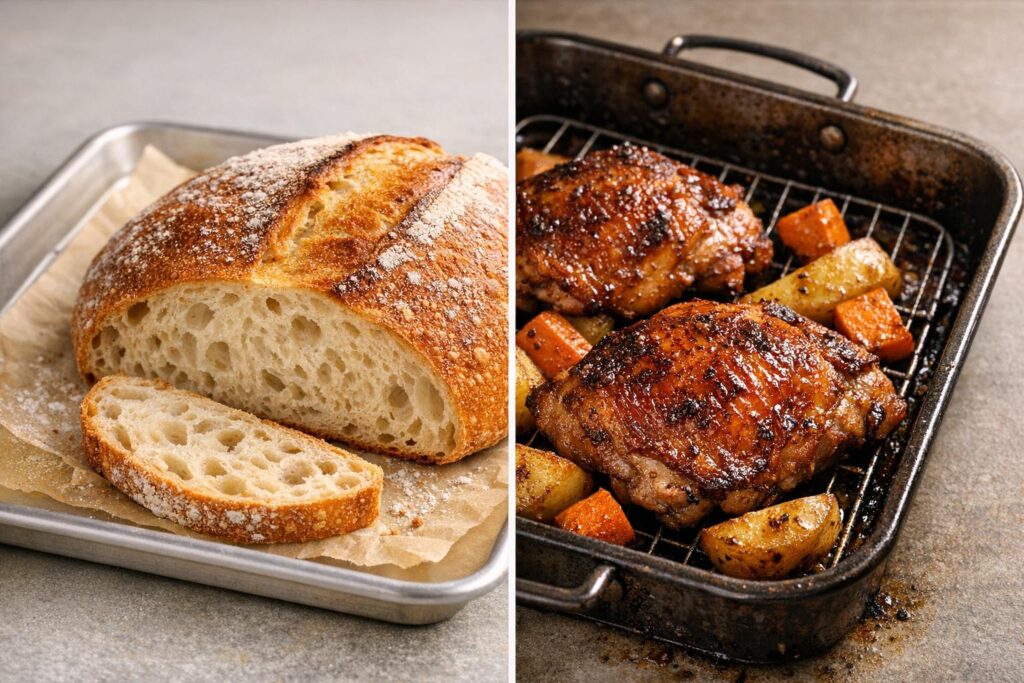
If you’ve ever wondered whether to bake or roast a dish, here’s the simple breakdown: baking is best for batters and doughs that need to rise and set, while roasting works for solid foods like meats and vegetables that benefit from high heat for browning. The main distinction lies in temperature and food structure:
- Baking: Uses moderate heat (300°F–375°F). Great for cakes, breads, and casseroles.
- Roasting: Relies on higher heat (400°F+). Perfect for meats and hearty vegetables.
Both methods use dry heat, but their goals and techniques vary. Baking focuses on even cooking and structure-setting, while roasting emphasizes a crispy, caramelized exterior. Choose the method based on the food’s starting texture and desired outcome.
Quick Comparison:
| Feature | Baking | Roasting |
|---|---|---|
| Temperature Range | 300°F–375°F | 400°F+ |
| Food State | Liquid, batter, or dough | Solid (meats, vegetables) |
| Goal | Even cooking, setting | Browning, crisping |
| Pan Type | High-sided pans | Low-sided pans |
Understanding these basics can help you achieve the perfect texture and flavor every time you cook.
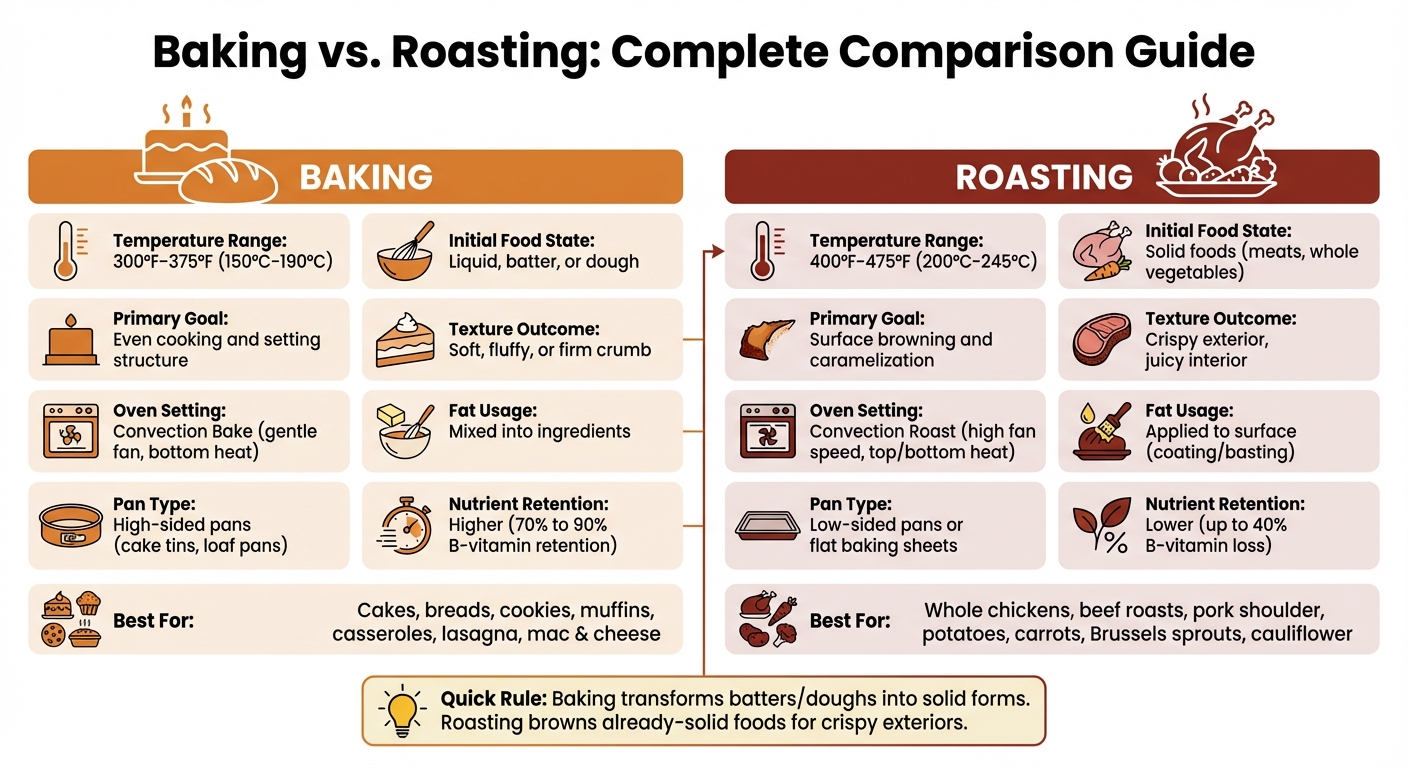
Baking vs Roasting Comparison Chart: Temperature, Techniques and Best Foods
How Temperature Differs Between Baking and Roasting
The heat level you choose plays a huge role in how your food cooks, the texture it develops, and how the flavors come together.
"The most significant and straightforward difference is the oven temperature. This isn’t just a minor detail; it dictates the entire cooking process and the final texture and flavor of your food." – Silas, Founder, Flavor365
Let’s explore the specific temperature ranges and their effects for both baking and roasting.
Baking Temperatures
Baking typically happens at 300°F to 375°F, a moderate heat range that ensures even cooking. This steady heat is ideal for foods that need to rise or set their internal structure. Cakes, breads, and casseroles depend on this gentler temperature to transform batters or soft doughs into solid, airy textures without scorching the exterior. The lower heat gives leavening agents like baking powder or yeast the time they need to create those fluffy pockets in bread or the tender crumb in cakes.
Roasting Temperatures
Roasting, on the other hand, uses higher temperatures – 400°F and above – to achieve a completely different result. This intense heat is what gives roasted foods their crispy, golden-brown exteriors. The Maillard reaction, which starts around 285°F, creates those savory, nutty flavors in roasted meats and vegetables. Caramelization, which begins at 320°F, works on natural sugars to add a sweet, rich complexity.
"Roasting temperatures are typically above 400 degrees Fahrenheit while baking temperatures are about 375 degrees and below." – Cammie Kim Lin, Food Writer and Professor, NYU
Of course, there are exceptions. Some breads and Neapolitan pizzas are baked at temperatures exceeding 500°F, while tough cuts of meat often benefit from "slow roasting" at lower temperatures. These cases require specific adjustments to achieve the best results.
sbb-itb-663e316
Which Foods Work Best for Baking vs. Roasting
The choice between baking and roasting often comes down to the food’s natural texture and structure. While temperature plays a role, the key difference lies in how the food starts out: baking is ideal for soft or liquid-based foods, while roasting works best for solid, structured ingredients.
Foods That Work Best for Baking
Baking is all about transforming unstructured mixtures – like batters and doughs – into solid, cohesive forms. Think cakes, cookies, breads, muffins, and casseroles. These foods require moderate oven temperatures, typically between 300°F and 375°F, to allow leavening agents to work their magic and for the interiors to set without over-browning.
"If you’re cooking food that doesn’t already have a solid structure, but will after it’s cooked – like muffins, cake, bread, and casseroles – the proper method is baking." – Kelli Foster, Culinary Producer
Foods That Work Best for Roasting
Roasting, on the other hand, is perfect for foods that already have a firm structure. Meats like whole chickens, beef roasts, and pork shoulders, as well as hearty vegetables like potatoes, carrots, Brussels sprouts, and cauliflower, thrive under the intense heat of roasting – usually 400°F or higher. This high heat triggers the Maillard reaction and caramelization, creating a crispy, flavorful exterior while keeping the inside tender.
"Roasting involves cooking foods that already have a set structure before the cooking process begins, like most meats and vegetables." – Kelli Foster, Culinary Producer
To achieve the best results, use a low-sided, uncovered pan to promote even air circulation. And remember: overcrowding the pan can lead to steaming instead of roasting, which compromises that coveted crispy texture.
Techniques and Oven Settings for Each Method
Temperature isn’t the only factor that defines baking and roasting. The way your oven is set up – heating elements, airflow, and rack placement – plays a big role in the final outcome of your dish. Let’s break down the differences.
Baking Techniques
Baking relies on steady, even heat to transform batters and doughs into finished goods. On the Bake setting, most ovens use the bottom heating element to provide consistent warmth without over-browning the surface. Placing your pan in the center of the oven ensures even cooking.
If you’re using a convection bake setting, the process changes slightly. The fan operates at a slower speed to help retain moisture, making it ideal for delicate recipes. When adapting a standard recipe for convection baking, reduce the temperature by 25°F and keep an eye on the cooking time to avoid over-browning the exterior.
"Baking is more associated with a cooking process that transforms multiple ingredients into something totally new, like a dough into bread, a batter into a cake, or an egg mixture into a quiche."
- Cammie Kim Lin, Food Writer and Professor
Now, let’s see how roasting takes a different approach.
Roasting Techniques
Roasting is all about high heat, active airflow, and dual heating elements to create that golden, crispy exterior. The Roast setting typically uses both the top and bottom heating elements to generate intense heat. When using convection roast, the fan kicks into high gear, circulating air to remove moisture and encourage rapid browning.
"The roast option will tend to use more fan power, circulating air around the oven more while your food cooks. The hot air moving around helps to brown, crisp up, and caramelize your roasted meats and veggies."
- Tim Forster
For large items like whole chickens or roasts, place them on the lower racks to allow for better air circulation. Vegetables, on the other hand, do well on center racks. To ensure proper roasting, leave enough space between food items – overcrowding can trap steam and prevent that desired crispy texture.
Baking vs. Roasting: Side-by-Side Comparison
This comparison outlines the key differences between baking and roasting, helping you pick the right approach for your recipe.
Main Comparison Points
The table below breaks down how these two cooking methods vary in terms of temperature, food types, equipment, and results. Roasting focuses on high heat to create a browned surface, while baking uses moderate heat for even internal cooking.
| Feature | Roasting | Baking |
|---|---|---|
| Temperature Range | 400°F to 475°F (200°C to 245°C) | 300°F to 375°F (150°C to 190°C) |
| Initial Food State | Solid foods (meats, whole vegetables) | Liquid, batter, or dough |
| Primary Goal | Surface browning and caramelization | Even cooking and setting structure |
| Texture Outcome | Crispy exterior, juicy interior | Soft, fluffy, or firm crumb |
| Oven Setting | Convection Roast (high fan speed, top/bottom heat) | Convection Bake (gentle fan, bottom heat) |
| Fat Usage | Applied to the surface (coating/basting) | Mixed into the ingredients |
| Pan Type | Low-sided pans or flat baking sheets | High-sided pans (cake tins, loaf pans) |
| Cooking Time | Often faster due to high heat | Generally longer or moderate |
| Nutrient Retention | Lower (up to 40% B-vitamin loss) | Higher (70% to 90% B-vitamin retention) |
This comparison makes it clear: roasting is ideal for solid foods where you want a crispy, caramelized exterior, while baking is perfect for evenly cooking batters and doughs.
Roasting thrives on high heat to lock in juices and develop a flavorful crust, making it a go-to for meats and vegetables. Baking, on the other hand, relies on moderate heat to set the structure of delicate items like cakes and breads without overcooking.
Your choice depends on the starting ingredients and the texture you’re aiming for. If you’re after a crisp, golden finish on solid foods, roasting is your answer. But if you’re working with mixtures that need to rise and firm up gently, baking is the way to go.
Next, we’ll dive into specific dishes and when to use each method.
When to Use Baking Instead of Roasting
Baking works best for dishes that require gentle, consistent heat to cook evenly without drying out. It’s ideal for delicate batters and doughs, as it allows the center to set while keeping the exterior soft and tender.
Go for baking when preparing dishes like lasagna, macaroni and cheese, or layered casseroles. These meals benefit from the trapped steam, which helps maintain moisture and retains up to 70% to 90% of B vitamins during cooking. To get the best results, start by covering the dish with a lid or foil to lock in moisture. Toward the end of baking, uncover it to develop a lightly browned, appetizing top layer. Using high-sided pans can also help by containing rising batters and keeping the dish moist throughout the process.
Make sure to preheat your oven and place the dish in the center for even heat distribution. Preheating is especially important as it activates leavening agents at just the right time, ensuring a light and airy texture.
Up next: when roasting becomes the better choice over baking.
When to Use Roasting Instead of Baking
Roasting is your go-to method for foods that already have a firm structure – like whole chickens, beef roasts, pork belly, or sturdy vegetables such as Brussels sprouts, carrots, and potatoes. While baking uses moderate heat for a gradual cooking process, roasting thrives on high heat to deliver that coveted browned, crispy exterior while keeping the inside tender and juicy. Baking temperatures just can’t achieve the same level of flavor concentration and texture contrast.
Typically, roasting is done at 400°F (200°C) or higher. At these temperatures, the Maillard reaction and caramelization work their magic, creating deep, savory flavors. Food writer and professor Cammie Kim Lin explains:
"The key is to let them go long enough to caramelize on the outside".
To get the best results, the right equipment is essential. A flat baking sheet or a low-sided roasting pan helps promote even browning. High-sided pans, on the other hand, trap steam, which lowers the surface temperature and prevents proper browning. Coating vegetables in olive oil or rubbing butter onto meat surfaces enhances heat conduction, while leaving enough space on the pan prevents overcrowding, which can cause steaming instead of roasting.
If your oven has a convection roast setting, use it – it helps remove surface moisture and speeds up browning. Also, patting food dry before applying oil and seasonings ensures that browning starts immediately, avoiding any unintended steaming.
Roasting shines with fatty cuts like pork shoulder, root vegetables that develop natural sweetness, and seafood such as salmon or scallops, which benefit from a quick sear on the outside while staying tender inside. Chef Ronna Welsh captures it perfectly:
"Roasting also always aims to brown, whether it’s chicken skin or broccoli… the heat concentrates or intensifies an ingredient’s flavor".
Conclusion
Deciding between baking and roasting comes down to the food’s structure, oven temperature, and the texture you’re aiming for. Foods like cakes, breads, and casseroles – starting as batters or dough – thrive in the moderate, even heat of baking, which helps them set properly. On the other hand, solid foods like meats, root vegetables, and Brussels sprouts shine with roasting. The high heat encourages a crisp, caramelized exterior that enhances flavor and texture.
The type of pan you use also plays a role. For roasting, low-sided pans or flat baking sheets allow hot air to circulate and promote browning. Baking, however, benefits from high-sided pans that support rising batters and keep things contained.
Fat behaves differently in each method too. In roasting, it’s applied to the surface, helping with browning and flavor. In baking, fat is incorporated into the batter or dough, adding richness and tenderness to the final product.
For added control, convection settings can make a difference. Use convection roast to speed up browning for meats and vegetables. For delicate baked goods, switch to convection bake, but remember to lower the temperature by about 25°F.
Understanding these distinctions between baking and roasting is a game-changer for home cooking. Matching the right method to your food ensures the best possible texture and flavor every time.
FAQs
Can I bake something at roasting temperatures?
Yes, you can bake at roasting temperatures, but there’s a distinction between the two methods. Roasting involves higher heat, usually above 400°F, and works best for solid foods like meats and vegetables, helping to create a browned, crispy exterior. Baking, on the other hand, typically uses moderate temperatures and is better suited for foods with liquid or semi-solid forms, such as cakes, bread, or casseroles. The choice of technique depends on the type of food and the result you’re aiming for.
When should I use convection bake vs convection roast?
Convection bake is ideal for treats like bread, cakes, and cookies. It relies on moderate temperatures and primarily uses the bottom heating element to ensure even cooking throughout. On the other hand, convection roast is perfect for meats and vegetables. It operates at higher temperatures (over 400°F) and engages both the upper and lower heating elements to develop a browned, crispy exterior. Your choice depends on the texture and finish you’re aiming for.
How do I keep vegetables from steaming instead of roasting?
To keep your vegetables from steaming instead of roasting, set your oven to a high temperature – about 425°F. Make sure they have plenty of room on the baking sheet; overcrowding leads to trapped moisture, which prevents them from crisping up. For even better results, preheat the baking sheet before adding the veggies, and cut them into evenly sized pieces to promote consistent caramelization and that perfect roasted texture.