
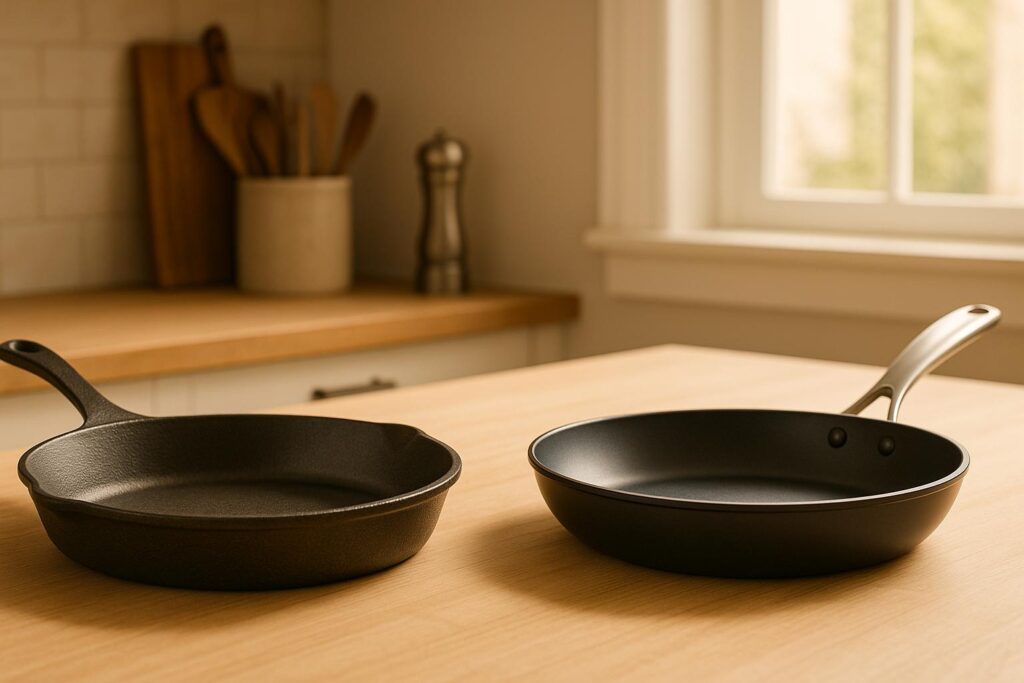
Choosing between cast iron and nonstick pans depends on your cooking needs. Here’s a quick breakdown:
- Cast Iron: Best for high-heat cooking, durability, and versatility. Ideal for searing, frying, and baking. Requires more care (seasoning and maintenance) but can last generations. Heavy and retains heat exceptionally well.
- Nonstick: Perfect for delicate foods like eggs and pancakes. Lightweight, easy to clean, and great for low-to-medium heat cooking. Coating wears out over time (3–5 years lifespan) and needs gentle care.
Quick Comparison Table
| Feature | Cast Iron | Nonstick |
|---|---|---|
| Heat Tolerance | Up to 1,200°F | Typically up to 500°F |
| Best For | Searing, frying, baking | Eggs, pancakes, delicate foods |
| Weight | Heavy | Lightweight |
| Durability | Lasts generations with care | 3–5 years lifespan |
| Maintenance | Needs seasoning and regular care | Easy to clean, avoid abrasives |
| Cooking Surface | Natural nonstick (with seasoning) | Coated nonstick surface |
| Price Range | $15–$500+ | $20–$150+ |
If you cook a variety of dishes, having both types of pans in your kitchen is the best option. Use cast iron for high-heat tasks and nonstick for quick, delicate meals.
Nonstick? Stainless? Cast iron?? Understanding different types of pots & pans for beginners
Cast Iron Cookware Basics
Cast iron cookware has earned its place as a kitchen staple. It’s one of those rare tools that actually gets better the more you use it. Understanding what makes cast iron special can help you decide if it’s the right fit for your cooking needs.
How Cast Iron Pans Are Built
Cast iron cookware is made from a blend of iron and 2–4% carbon, which gives it incredible strength and durability. This composition results in thick, heavy pans that can handle high heat without warping. You’ll find cast iron pans at a wide range of price points – from budget-friendly models starting around $15 to premium options that can exceed $500. Lodge, a well-known brand, offers affordable and reliable cast iron cookware. For those looking for something lighter, modern manufacturers now produce pans that are up to 50% lighter than traditional cast iron while still delivering excellent heat retention.
This construction doesn’t just make cast iron long-lasting – it also enhances its ability to retain heat, making it a favorite for serious cooks.
Heat Retention and Cooking Range
One of cast iron’s standout features is its ability to hold heat. As All-Clad explains:
"The thermal mass of cast iron creates an ideal cooking environment. Once heated, a cast iron pan maintains consistent temperatures across its entire surface, eliminating cold spots that can lead to uneven results."
This means cast iron heats up slowly but retains that heat for a long time, ensuring even cooking – even if your heat source fluctuates. It’s also incredibly versatile: you can use it on any stovetop, including induction, and it transitions seamlessly from stovetop to oven. For example, you can sear a steak on the stove, then finish it in the oven without needing to switch pans. To get the best performance, preheat your pan on medium-low heat for about 5–7 minutes. A quick test to check if it’s ready? Flick a few drops of water onto the surface – if they sizzle and evaporate instantly, you’re good to go.
This heat retention and adaptability make cast iron a favorite for everything from frying to baking.
Seasoning and Care Requirements
Seasoning is what gives cast iron its natural nonstick surface. It’s created by bonding layers of oil to the pan through heat . As Lodge Cast Iron explains:
"Seasoning is just oil baked onto the pan. That’s it. This layer of oil gives cast iron cookware a natural, easy-release finish that gets better with every use."
To season a new pan, start by washing and thoroughly drying it. Coat the entire surface with a thin layer of unsaturated cooking oil (like vegetable, canola, or corn oil), wipe off any excess, and bake it in a preheated oven at 450°F for 30 minutes. Repeating this process three to four times builds a strong seasoning base.
For daily care, don’t be afraid to use soap – it’s a myth that soap will ruin your pan. After washing, dry it completely, apply a light coat of oil, and heat it briefly to remove any remaining moisture. If food gets stuck, try scrubbing with kosher salt and a little warm water, or boil water in the pan to loosen stubborn bits before scraping with a wooden spatula. Cooking with oils and fats over time naturally improves the seasoning, but re-seasoning about twice a year can help keep your pan in top shape.
With proper care, cast iron cookware can last for generations , becoming more nonstick and reliable with every use.
Nonstick Cookware Basics
Nonstick cookware has become a staple in many kitchens, making up 75% of all cookware and bakeware sold. But what exactly makes these pans so popular? Let’s break down the basics to help you decide if nonstick pans are the right choice for your cooking needs.
Materials and Coating Types
Nonstick pans are made up of two main components: the base material and the nonstick coating. The base material influences how evenly the pan heats, while the coating ensures food doesn’t stick to the surface.
The most common base materials include aluminum, hard-anodized aluminum, stainless steel, cast iron, and carbon steel. Aluminum, the top choice, is lightweight and heats evenly, while hard-anodized aluminum adds durability and resistance to corrosion. Compared to cast iron, these materials are much easier to maneuver, making them a favorite for everyday cooking.
When it comes to the coating, PTFE (commonly known as Teflon) is the gold standard. According to Science Direct:
"The magic behind its nonstick surface lies in the coating made from PTFE or polytetrafluoroethylene… nonreactivity, hydrophobicity, a low coefficient of friction, and good insulating properties."
Ceramic coatings, introduced in the early 2000s, offer high-temperature resistance and a harder surface. While ceramic is often marketed as an eco-friendly alternative, PTFE coatings generally outperform it in terms of food release and longevity [22, 26].
For those looking for premium options, diamond or titanium-reinforced coatings provide exceptional durability. High-end models like the Hestan NanoBond Titanium are built to last a lifetime but come with a hefty price tag. As Andrew Palermo, Founder and Editor-in-Chief of Prudent Reviews, explains:
"For most home cooks, aluminum coated in PTFE is the best balance of performance and value… Since non-stick pans eventually need to be replaced, price should be a key consideration."
Cooking Performance and Best Uses
Nonstick pans shine at low to medium heat, making them perfect for delicate recipes that require minimal oil. They’re ideal for cooking eggs, pancakes, seafood, cheesy dishes, and even toasting nuts [29, 30]. The smooth surface ensures even fragile foods like fish fillets release effortlessly, and scrambled eggs practically glide out of the pan.
However, nonstick pans aren’t built for everything. Tasks like searing meat, making pan sauces, or cooking with acidic ingredients can wear down the coating over time, as these require higher heat. To maximize performance, preheat gently and avoid high temperatures. Stick to non-metal utensils – wood, silicone, or plastic – to protect the coating from scratches [32, 33].
Cleaning and Lifespan
One of the standout features of nonstick cookware is how easy it is to clean. Often, a simple wipe with a soft cloth does the trick.
To avoid damaging your pan, always let it cool completely before washing to prevent warping [36, 37]. Use mild dish soap, warm water, and a soft sponge – never abrasive scrubbers or steel wool [34, 36, 37]. Even if the pan is labeled dishwasher safe, hand washing is the better option for extending its lifespan. Leslie Reichert, Cleaning Coach and Author, advises:
"Even if your nonstick pan says ‘dishwasher-safe,’ hot temperatures and harsh detergents will break down the surface."
Colleen Weeden, Senior Brand Manager of the Dotdash Meredith Test Kitchen, adds:
"Read your manufacturer’s care instructions, as many nonstick pans are made from different materials… But I don’t think any pan should go in the dishwasher. They last much longer when cleaned by hand."
For stubborn food residue, soaking the pan in warm, soapy water is more effective than scrubbing aggressively [36, 37]. When storing, use a paper towel or pan protector between stacked pans to prevent scratches. Morgan Eberhard, Senior Scientist and Science Educator at Procter & Gamble, recommends:
"Avoid stacking nonstick pans directly on top of each other. If space requires stacking, place a soft cloth between pans to protect the nonstick surface."
Nonstick pans generally have a lifespan of 3 to 5 years with regular use. Once the coating starts to flake or food begins sticking persistently, it’s time for a replacement. A light rub of oil before and after use can help maintain the surface and extend its usability.
With these tips, caring for your nonstick cookware becomes straightforward. Now, let’s explore how nonstick pans compare to cast iron cookware in more detail.
sbb-itb-663e316
Cast Iron vs Nonstick: Side-by-Side Comparison
Now that we’ve taken a closer look at each type of pan, let’s compare them directly in the areas that matter most to home cooks.
Heat Performance and Temperature Limits
Cast iron can handle extremely high temperatures – up to 1,200°F (649°C) – making it perfect for tasks requiring intense heat. It heats evenly, retains heat exceptionally well, and can even be used over open flames. Nonstick pans, on the other hand, typically max out at 400°F (204°C), although some newer coatings can handle up to 500°F (260°C). However, nonstick cookware often struggles with even heat distribution, which can result in hot spots during cooking.
The dense construction of cast iron is what gives it such impressive heat retention, ensuring consistent cooking temperatures. Meanwhile, nonstick coatings can break down at high heat, so they’re better suited for lower temperature cooking.
Best Cooking Tasks for Each Pan Type
The heat tolerance of these pans plays a big role in determining what they’re best used for.
Cast iron shines in high-heat cooking and is ideal for:
- Searing steaks and other meats
- Deep frying
- Making pan sauces
- Baking items like pizza
- Broiling in the oven
Nonstick pans are better suited for low- to medium-heat tasks, especially when working with delicate foods. They’re perfect for:
- Scrambled eggs and omelets
- Pancakes and crepes
- Cooking delicate fish fillets
It’s worth noting that nonstick pans should not be used for searing or charring meats, as the high heat required can damage their coating. Your choice should depend on the types of meals you prepare most often.
Cleaning Requirements and Longevity
Cast iron requires a bit more care to maintain its natural nonstick surface. Regular seasoning is key, but with proper care, these pans can last for generations. Even if a cast iron pan becomes worn or rusty, it can often be restored through re-seasoning. Some businesses, like Smithey’s restoration shop, specialize in bringing damaged cast iron cookware back to life.
Nonstick pans, on the other hand, are easier to clean. A gentle wipe with mild soap and a soft sponge usually does the trick. However, they need to be handled carefully to avoid damaging the coating. Nonstick sprays should be avoided, as they can leave residues that degrade the surface over time. These pans typically last 3–5 years with regular use, but once the coating is scratched or worn, they need to be replaced.
| Aspect | Cast Iron | Nonstick |
|---|---|---|
| Daily Cleaning | Requires prompt drying and occasional scrubbing | Quick and easy with mild soap |
| Special Maintenance | Needs regular seasoning | Minimal; avoid abrasive cleaning |
| Utensil Use | Metal utensils are fine | Requires gentle handling |
| Lifespan | Can last generations with care | Shorter lifespan (3–5 years) |
| When Damaged | Can be restored with re-seasoning | Must be replaced |
Ultimately, the choice between cast iron and nonstick comes down to what you value more: ease of maintenance or long-term durability. Pick the pan that aligns with your cooking habits for the best results.
Which Pan Should You Choose?
Deciding between cast iron and nonstick pans – or even opting for both – really depends on how you like to cook. Each has its strengths, and understanding when to use them can make your time in the kitchen much easier.
When Cast Iron Is Your Best Option
Cast iron is perfect for high-heat cooking and for anyone who appreciates cookware that can stand the test of time. Here’s when it shines:
- For intense, even heat. Cast iron is excellent for searing steaks, frying chicken, or baking dishes that need consistent heat distribution.
- If you don’t mind the weight. Its heft isn’t just for show – it helps maintain steady heat for better cooking results.
- A long-term investment. While it needs periodic seasoning and some care, cast iron can last for decades, making it a durable choice.
- Health perks. Cooking with cast iron can naturally add iron to your food, and it avoids synthetic coatings often found in other pans.
- Versatility. Whether you’re using it on the stovetop, in the oven, over a campfire, or on a grill, cast iron handles it all.
When Nonstick Makes More Sense
Nonstick pans are all about convenience. They’re lightweight, easy to clean, and perfect for certain types of cooking.
- Great for delicate foods. Nonstick pans are ideal for eggs, pancakes, crepes, or fish fillets. Their surface minimizes sticking and reduces the need for extra oil.
- Easy cleanup. Nonstick’s smooth coating makes washing up a breeze.
- Lightweight and user-friendly. They’re easier to handle, especially for quick tasks.
- Low to medium heat cooking. Nonstick pans perform best at lower temperatures, so they’re great for everyday cooking that doesn’t involve high-heat searing.
Why You Might Want Both Types
Sometimes, the smartest choice is to have both types in your kitchen. Each pan serves a unique purpose, and together, they can cover nearly any recipe.
- Task-specific advantages. Use nonstick for eggs or delicate fish, and save cast iron for searing steaks or baking. As Christopher Corn explains:
"If I’m making an omelet or pancakes – non-stick; dark sear on a steak or a long slow braise in the oven – cast iron." – Christopher Corn
- Preserving each pan’s strengths. Nonstick pans last longer when used for low to medium heat, while cast iron thrives in high-heat scenarios.
- More cooking possibilities. Cast iron’s durability and heat tolerance complement nonstick’s ease of use for fragile foods.
Conclusion: Finding Your Perfect Pan
The best pan for your kitchen ultimately depends on your cooking style and priorities. Both cast iron and nonstick pans have earned their spot in American kitchens, and understanding their unique strengths can help you make the right choice. Here’s a quick breakdown of what each pan brings to the table.
Cast iron pans shine in high-heat cooking. They’re perfect for tasks like searing steaks, frying chicken, or baking cornbread, and they transition seamlessly from stovetop to oven. Unlike nonstick pans, which often need replacing every few years, cast iron can last for generations if cared for properly.
On the other hand, nonstick pans offer unmatched convenience. They’re ideal for delicate foods like eggs, pancakes, or fish fillets that might stick to other surfaces. Their lightweight design and easy cleanup make them a go-to for busy weeknight meals when you need quick results.
As Ann Ziata, Chef at the Institute of Culinary Education, advises:
"A well-stocked kitchen should have cookware from all three materials: stainless steel, nonstick, and cast iron."
Your cooking habits should guide your decision. If you love high-heat cooking and developing rich flavors, cast iron’s heat retention and even distribution are worth the extra care. But if your focus is on quick, low-maintenance meals, nonstick pans may better suit your needs.
Throughout this article, we’ve explored how each pan serves different purposes. Many home cooks find that having both types of pans is the best solution. Cast iron works wonderfully for durability and high-heat tasks, while nonstick excels in low-fat, delicate cooking. By using each pan for its intended purpose, you can handle a wider range of recipes and become a more versatile cook.
Consider factors like your budget, storage space, and how often you cook. Owning both types of pans ensures you’ll have the right tool for any recipe, helping you prepare every meal with ease and confidence.
FAQs
Why are cast iron pans better than nonstick pans for high-heat cooking?
Cast iron pans are a go-to choice for high-heat cooking, and for good reason. First off, they’re fantastic at holding heat, which means you get steady, even cooking temperatures. This makes them ideal for tasks like searing a steak or frying, where maintaining heat is key. On top of that, cast iron can withstand extremely high temperatures without breaking a sweat – unlike nonstick pans, which can degrade or release harmful chemicals if they go over 500°F. And the best part? Cast iron is incredibly versatile. Whether you’re using it on the stovetop, sliding it into the oven, or cooking over an open flame, it’s ready for just about anything.
What’s the best way to clean and season a cast iron pan to keep it in great shape?
To keep your cast iron pan in great shape, make cleaning a habit after every use. Start by rinsing it with hot water and using a non-abrasive sponge to scrub away any food residue. If there’s stubborn grime, a small amount of soap can be used – just make sure to dry the pan thoroughly afterward to avoid rust. Once it’s clean, rub a thin layer of vegetable oil over the surface, then wipe off any excess to prevent it from feeling sticky.
When it comes to seasoning your pan, set your oven to 450°F. Lightly coat the pan with oil, then place it upside down in the oven for 30 minutes. This process bonds the oil to the pan, giving it a smooth, non-stick surface. For the best results, repeat this step 3–4 times to build a solid seasoning layer. Over time, regular cooking – especially with oils – will naturally enhance the seasoning and keep your pan performing at its best.
How can I clean and care for nonstick pans to make them last longer?
To keep your nonstick pans in top condition and make them last longer, here are some practical tips:
- Let it cool down first: Always wait for the pan to cool completely before washing. Washing a hot pan can lead to warping.
- Be gentle when washing: Use a soft sponge and mild dish soap. Stay away from abrasive scrubbers like steel wool, which can scratch the coating.
- Stick to hand washing: Even if the pan says it’s dishwasher-safe, hand washing is the safer choice to preserve the nonstick surface.
- Avoid soaking for too long: Don’t leave your pan sitting in water for extended periods, as it can harm the coating.
- Store with care: Make sure the pan is completely dry before storing, and place a soft cloth or paper towel between stacked pans to avoid scratches.
When cooking, steer clear of sprays or oils with low smoke points – they can leave sticky residue that’s tough to clean. Instead, choose oils with higher smoke points to keep the nonstick surface in better shape.