
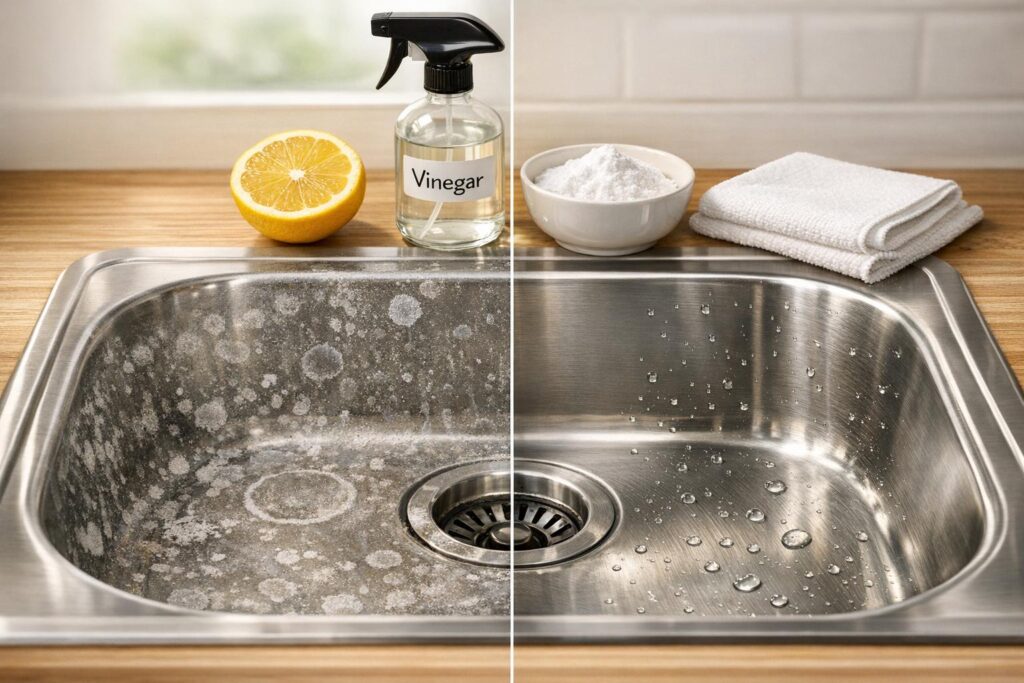
Hard water stains on stainless steel sinks are caused by mineral deposits like calcium and magnesium left behind when water evaporates. Over time, these stains can dull the sink’s appearance and lead to rust or damage if not addressed. The good news? You can remove them using simple household items like white vinegar, baking soda, and lemon juice. Here’s a quick summary of effective methods:
- White Vinegar Soak: Dissolves tough mineral deposits with acetic acid.
- Lemon Juice Treatment: Citric acid breaks down stains while adding a fresh scent.
- Baking Soda Paste: Gently scrubs away buildup without scratching.
- Baking Soda + Vinegar Combo: Fizzing reaction tackles stubborn spots.
- Cream of Tartar Scrub: Targets rust and discoloration effectively.
Prevention Tip: Dry your sink after each use to stop stains from forming. For long-term solutions, consider installing a water softener or applying a protective oil layer to the sink surface.
These methods are quick, affordable, and use items you likely already have. Keep your sink shiny and spotless with consistent care!
How To Clean A Stainless Steel Sink – Ace Hardware

sbb-itb-663e316
Why Hard Water Stains Form on Stainless Steel Sinks
Hard water stains on stainless steel sinks result from a natural chemical process. As water flows through rocks and soil, it picks up dissolved minerals like calcium and magnesium. When this mineral-rich water pools on your sink and evaporates, the water vapor disappears, but the minerals remain. These leftover deposits, known as limescale, are what form the visible stains on your sink.
King Soft Water explains:
"Hard water creates stains because it contains high levels of dissolved minerals, primarily calcium and magnesium. When hard water evaporates from surfaces like sinks, these minerals are left behind, forming visible deposits known as limescale."
Each time water collects and dries in your sink, another layer of deposits builds up. Over time, faint spots can turn into thick, chalky layers. Calcium and magnesium bond tightly to stainless steel, making these deposits increasingly difficult to remove the longer they sit. Hard water also interacts with soap, creating a filmy residue that dulls the sink’s shine, leaving it cloudy and streaked.
If ignored, these mineral deposits can trap moisture and chlorides against the metal, creating conditions that lead to oxidation and even rust. This can weaken the protective surface of your stainless steel. Understanding how these stains form is key to tackling them effectively. Addressing hard water stains promptly not only keeps your sink looking clean but also helps protect its durability over time.
What You’ll Need for Cleaning
Before diving into the cleaning process, make sure you have the right supplies. The good news? You can tackle hard water stains with items you probably already have at home.
Basic Supplies
Start with distilled white vinegar – it’s great for breaking down mineral deposits. Avoid using apple cider or balsamic vinegars, as they can leave behind residue or discoloration. If you prefer, lemon juice works as a substitute, offering the same cleaning power with a fresh citrus scent.
For gentle scrubbing, grab some baking soda or cream of tartar. According to Mr. Appliance, baking soda is perfect because it "contains tiny particles abrasive enough to remove stains yet gentle enough to prevent scratching and restore shine to stainless steel." Pair these with a non-abrasive cloth or sponge to apply and rinse your cleaning solutions without damaging surfaces.
If you want to take your cleaning up a notch, consider adding a few extras.
Optional Items
Optional tools include a spray bottle for even application, microfiber cloths for streak-free drying, and an old toothbrush to get into tight spots like the edges of drains or faucets.
For a finishing touch, you can use olive oil or club soda. Olive oil not only brings back shine but also creates a protective layer to prevent future stains. Club soda, on the other hand, uses its carbonation to lift any lingering mineral deposits. And if you’ll be working with vinegar or lemon juice for a while, don’t forget rubber gloves to shield your skin from the acidity.
5 Methods to Remove Hard Water Stains
Now that you’ve got your supplies ready, it’s time to deal with those pesky mineral deposits. Using everyday household items, you can try one of these methods to break down the calcium and magnesium buildup on your stainless steel sink.
Method 1: White Vinegar Soak
White vinegar is a go-to solution for hard water stains because its acetic acid dissolves the minerals causing the stains. For lighter deposits, mix equal parts distilled white vinegar and water in a spray bottle, spritz the affected areas, and let it sit for 5–15 minutes before wiping clean. For tougher stains, skip the dilution: soak a cloth in undiluted vinegar, lay it over the stained spots, and leave it overnight. The extended soaking helps the acid work through thick buildup. In the morning, scrub gently along the grain, rinse thoroughly with warm water, and dry with a microfiber cloth to avoid new water spots.
Method 2: Lemon Juice Treatment
Lemon juice is another effective option, thanks to its citric acid, and it leaves behind a clean, fresh scent. Cut a lemon in half and rub the cut side directly onto the stained areas. The acid starts breaking down the minerals immediately. For extra scrubbing power, sprinkle a little salt on the lemon before using it. Let the juice sit for about 5 minutes, then rinse with warm water and dry thoroughly. This approach works best for light to moderate stains and also helps deodorize your sink naturally.
Method 3: Baking Soda Paste
Baking soda offers a gentle abrasive action that’s tough on stains but safe for your sink’s finish. Mix equal parts baking soda and water to create a thick paste. Spread the paste over the stained areas and let it sit for 5–10 minutes. Jennifer Parnell, Co-founder of Humble Suds, explains:
"Baking soda dissolves calcium deposits, making it a great remedy for treating hard water stains."
Use a soft cloth or non-abrasive sponge to scrub in the direction of the stainless steel’s grain. Rinse with warm water and dry right away to prevent new spots from forming.
Method 4: Baking Soda and Vinegar Combination
For stubborn stains, combining baking soda and vinegar can be especially effective. Start by applying a baking soda paste to the problem areas. Then spray distilled white vinegar over the paste. The fizzing reaction helps lift mineral deposits that are harder to remove with a single ingredient. Let the mixture sit for a few minutes before scrubbing gently with a soft cloth, always following the direction of the grain. Rinse thoroughly and dry immediately. Avoid using abrasive tools that might scratch the sink’s surface.
Method 5: Cream of Tartar Scrub
If baking soda isn’t available, cream of tartar is a great alternative for tackling tough deposits. Mix cream of tartar with water to form a paste. Apply it to the stained spots and let it sit for a few minutes. Use a soft cloth or an old toothbrush to scrub gently, focusing on tight corners around drains and faucets. Rinse well and dry completely to reveal a cleaner, shinier surface.
Comparing the 5 Cleaning Methods
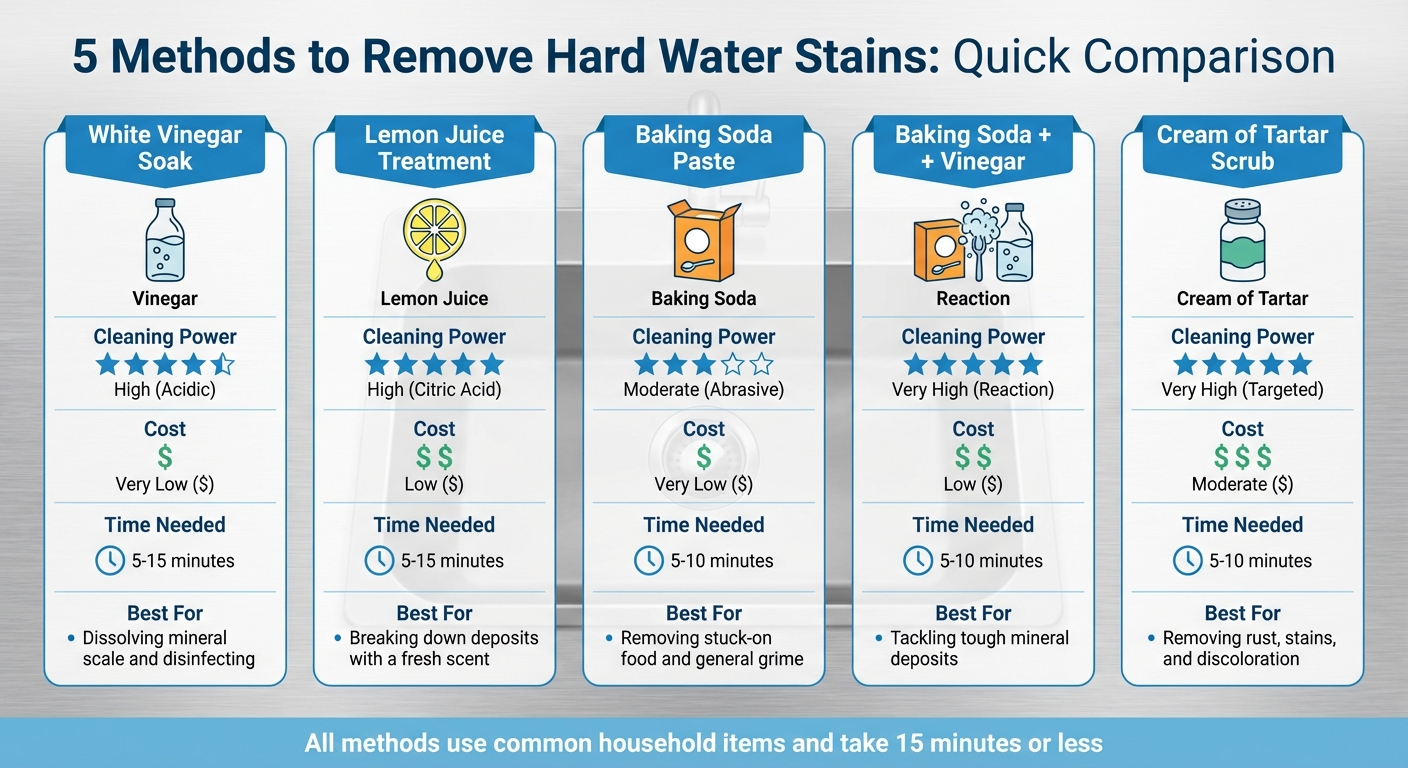
Comparison of 5 Methods to Remove Hard Water Stains from Stainless Steel Sinks
When it comes to cleaning, understanding how different methods stack up can save you both time and money. Some options, like white vinegar and baking soda, are incredibly affordable since they’re likely already sitting in your pantry. Lemon juice, while slightly more expensive if you’re buying fresh lemons just for cleaning, is still a budget-friendly choice. On the other hand, cream of tartar tends to cost more due to its smaller packaging and higher price per ounce. Knowing these differences can help you pick the best method for your specific cleaning needs.
Each method shines in its own way. For instance, the chemical reaction between baking soda and vinegar is highly effective at breaking down tough, stubborn deposits. Lemon juice, thanks to its higher acid content, often works better than white vinegar in certain situations. If you’re dealing with delicate surfaces, baking soda alone is a great option – it’s a gentle abrasive that can lift grime without causing scratches.
Here’s a quick table to help you compare the options:
Method Comparison Table
| Method | Cleaning Power | Cost | Time Needed | Best For |
|---|---|---|---|---|
| White Vinegar Soak | High (Acidic) | Very Low | 5–15 minutes | Dissolving mineral scale and disinfecting |
| Lemon Juice Treatment | High (Citric Acid) | Low | 5–15 minutes | Breaking down deposits with a fresh scent |
| Baking Soda Paste | Moderate (Abrasive) | Very Low | 5–10 minutes | Removing stuck-on food and general grime |
| Baking Soda + Vinegar | Very High (Reaction) | Low | 5–10 minutes | Tackling tough mineral deposits |
| Cream of Tartar Scrub | Very High (Targeted) | Moderate | 5–10 minutes | Removing rust, stains, and discoloration |
For physical buildup, a baking soda paste is your go-to – it scrubs away grime gently but effectively. If you’re dealing with particularly stubborn stains, the baking soda and vinegar combo is a powerhouse solution that can handle the toughest messes.
How to Prevent Hard Water Stains
After getting your sink spotless, keeping it that way is all about forming a few smart habits. Hard water stains may be stubborn, but with consistent care, you can stop them from coming back.
Daily Cleaning Habits
The simplest and most effective habit? Dry your sink after every use. When water evaporates, it leaves behind calcium and magnesium deposits. Wiping your sink dry stops those minerals in their tracks.
"The biggest thing you can do to prevent hard water stains is to always dry the surface after use." – Ashley Kidder, COO, Dashing Maids
Keep a microfiber cloth or paper towels nearby. After washing dishes, give the basin, handles, and faucet a quick wipe. Follow the stainless steel grain to avoid scratching the surface – scratches can trap minerals and make stains worse.
Also, avoid leaving wet sponges, dish rags, or towels sitting in the sink. These can lock in moisture, leading to discoloration and even bacteria growth.
For everyday cleaning, warm water and mild dish soap are enough. Make sure to rinse thoroughly to wash away any soap residue, which can dull the sink’s finish over time.
If your water is particularly hard, you might want to address the problem at its source.
Installing a Water Softener
In areas with very hard water, a water softener can make a big difference. These systems work by removing calcium and magnesium from your water supply, replacing them with sodium or potassium ions. This means the water hitting your sink carries fewer minerals, reducing the likelihood of stains.
"A water softener can help increase the life span of your plumbing, your water heater, and even your clothing." – Johnny Pujol, CEO and Water Expert, Tap Score Water Testing
Water softeners come in a range of prices, from $200 to $6,000, depending on the size of your home and the type of system. Installation typically costs around $1,500. Beyond keeping your sink spotless, these systems help prevent rust, leaks, and extend the life of appliances like dishwashers and water heaters.
Using Sink Protection
Once you’ve tackled daily habits and softened your water, adding a protective layer to your sink can keep it looking pristine. A light coating of oil creates a barrier that repels water and prevents mineral buildup. After cleaning and drying your sink, rub a small amount of olive oil, mineral oil, or avocado oil onto the surface using a soft cloth. Work with the grain of the steel for the best results.
Some cleaning products also add a protective layer. Follow the instructions carefully – apply the cleaner, let it sit for a few minutes, scrub gently with a non-abrasive sponge, and rinse thoroughly.
One tip: Avoid rubber sink mats. They trap water and food particles, which can lead to discoloration and pitting. Instead, opt for an open stainless steel grid. It protects your sink from scratches while allowing water to drain properly.
Conclusion
Hard water stains can be tackled with straightforward remedies like vinegar and baking soda. Vinegar breaks down calcium and magnesium deposits, while baking soda offers a gentle scrubbing action for those stubborn spots. For tougher stains, mixing vinegar and baking soda creates a fizzing reaction that helps loosen heavy buildup. The method you choose should depend on the severity of the stains – vinegar soaks are great for lighter deposits, while a baking soda paste or the vinegar-baking soda combo works well for more persistent buildup.
When cleaning, always scrub along the grain of your stainless steel and avoid using steel wool or chlorine bleach, as these can cause lasting damage. Be sure to rinse thoroughly and follow up with a baking soda rinse to neutralize any leftover vinegar.
Keeping your sink dry is another simple yet effective way to prevent mineral deposits from forming. This small habit can save you from hours of scrubbing down the line.
Choose the method that works best with your available supplies and time. With consistent and easy maintenance, your sink can stay as shiny and spotless as the day you got it.
FAQs
Will vinegar damage stainless steel?
Vinegar is a safe option for cleaning stainless steel if used correctly. It’s great for tackling hard water stains and mineral buildup. To prevent any damage, make sure to dilute the vinegar with water, avoid letting it sit on the surface for too long, and rinse it off thoroughly. Once cleaned, dry the surface to keep that polished look intact. Following these steps will help keep your stainless steel spotless and in great condition.
How do I remove stains around the drain and faucet?
To tackle stains around the drain and faucet on a stainless steel sink, start by soaking the area with white vinegar for about 5–10 minutes. After the soak, gently scrub using a soft cloth or sponge. If the stains are more persistent, mix up a baking soda paste and use a soft brush to scrub the area. Once clean, rinse everything thoroughly and dry the sink to avoid water spots. For an extra touch of shine, you can buff the surface with a bit of olive oil or a stainless steel cleaner.
What should I avoid so I don’t scratch the sink?
To keep your stainless steel sink free from scratches, avoid using abrasive pads, steel wool, or harsh scrubbers. Opt for a soft-bristled brush or a sponge instead, and make sure to scrub gently. Additionally, stay away from abrasive cleaning products and refrain from applying too much pressure while cleaning. This will help maintain the sink’s surface and finish.