

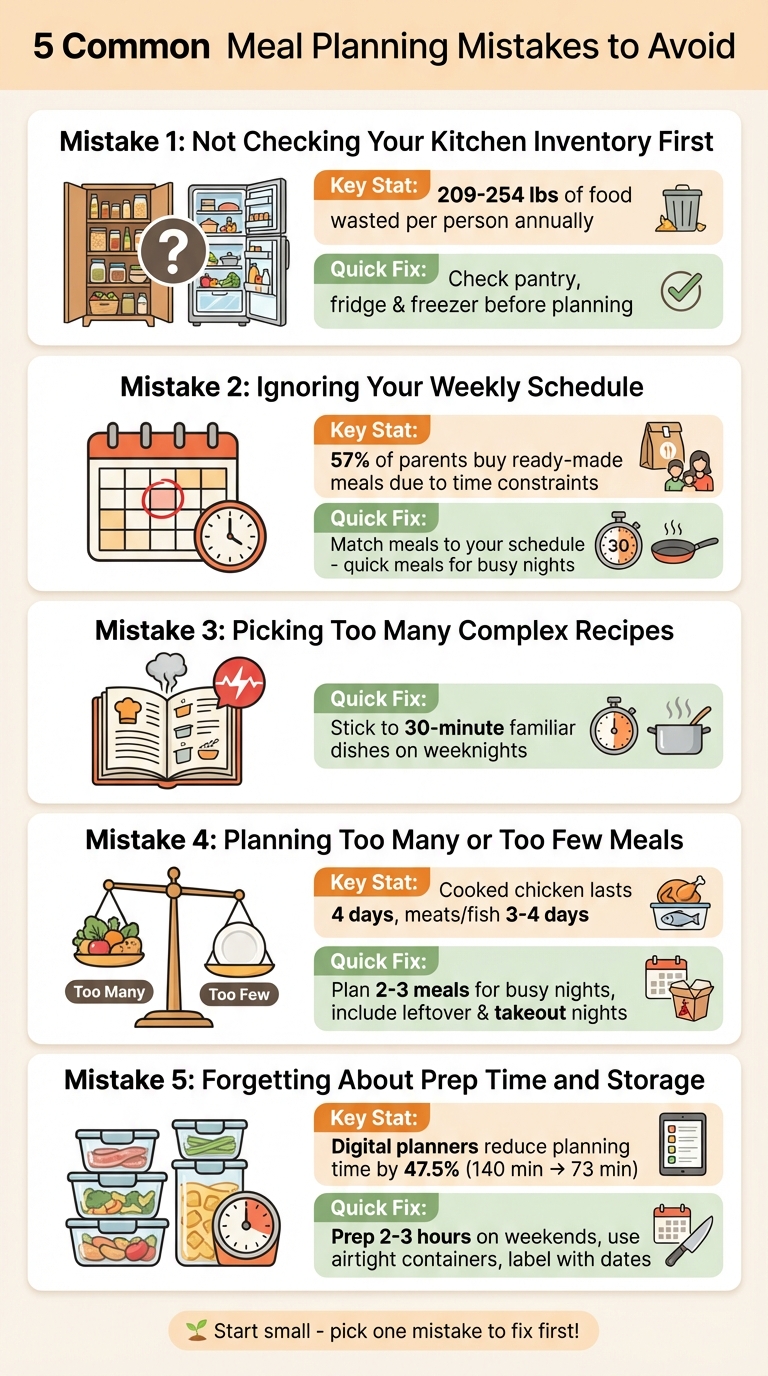
Planning meals can save time, money, and stress. But even seasoned planners hit snags. Here are five common mistakes to watch out for – and how to fix them:
- Skipping a Kitchen Inventory: Leads to food waste and overspending. Always check your pantry, fridge, and freezer before planning.
- Ignoring Your Schedule: Busy nights need quick meals; save complex recipes for slower days.
- Overloading with Complex Recipes: Stick to simple, familiar dishes during the week.
- Planning Too Many or Too Few Meals: Avoid waste by balancing your plan with your calendar.
- Underestimating Prep Time and Storage Needs: Prep ahead and use airtight containers to keep food fresh.
5 Common Meal Planning Mistakes and How to Fix Them
Meal Planning Burnout? These 6 Mistakes Might Be Why!
1. Not Checking Your Kitchen Inventory First
Diving into meal planning without first checking your kitchen inventory is like heading to the grocery store without a game plan – you risk overspending, wasting food, and cluttering your shelves unnecessarily.
Did you know that North American consumers waste between 209-254 pounds of food per person annually? A big part of this waste happens because we forget to check what we already have on hand. By skipping this simple step, you might buy items you don’t need, blow your budget, or even find yourself halfway through a recipe missing a key ingredient – cue the dreaded last-minute grocery run.
Kelly Jones, a Registered Dietitian and Founder of Student Athlete Nutrition, highlights just how helpful a quick inventory check can be:
"Simply planning what to make might lead you to take a quick pantry and freezer inventory, reducing the chances of purchasing a duplicate of an item you already own. This can remind you of foods that haven’t yet spoiled in the fridge that you might want to eat right away. It can also remind you of shelf-stable or frozen items to combine into a full meal without adding another item from your grocery list."
So, what’s the fix? Before you plan your meals, take a moment to scan your pantry, fridge, and freezer. Make note of items nearing expiration and build your meals around them. For instance, if you spot chicken breasts in the freezer and canned tomatoes in the pantry, you’ve got the foundation for a great dish right there.
This simple habit not only saves money but also reduces waste and makes grocery shopping quicker by keeping you focused on what you actually need. To make inventory management even easier, store dry goods in airtight containers so you can see what’s running low. And if you’re not planning to use fresh ingredients immediately, freeze them to extend their shelf life.
For more tips on making the most of your kitchen staples, check out Comfy Kitchen. They offer storage hacks and recipes that transform overlooked ingredients into delicious meals.
2. Ignoring Your Weekly Schedule
Planning meals without considering your weekly commitments often leads to wasted groceries and unplanned takeout. Late work nights, kids’ activities, or social events can easily derail even the most thoughtful meal plan. And the numbers reflect this struggle: 57% of parents resort to buying ready-made meals because their schedules leave little time for cooking.
Caroline West Passerello, a Registered Dietitian, emphasizes the importance of being realistic about the time you actually have for meal prep. The key? Match your meals to your schedule. Start by reviewing your week – marking busy evenings, social engagements, and nights you already plan to eat out. This way, your meal plan works with your life, not against it.
For hectic days, stick to quick and easy options like 15-minute dinners or pre-prepped freezer meals. Save more elaborate recipes for weekends or quieter evenings when you have the time and energy to enjoy cooking. And don’t forget to keep a few "backup meals" ready for unexpected changes – think pasta with jarred sauce, scrambled eggs with toast, or even a frozen pizza. These simple options can transform last-minute chaos into a manageable solution, making takeout an occasional treat instead of a costly fallback.
3. Picking Too Many Complex or New Recipes
Jumping into overly complicated recipes during a busy week can quickly lead to frustration and burnout. Elaborate menus often require extra time, hard-to-find ingredients, and advanced cooking techniques – none of which are ideal when you’re juggling a packed schedule.
Recipe developer Brittany L. Bergman captures this perfectly:
"I don’t have the energy to figure out a new recipe on a weeknight, because there’s usually something time-consuming in the instructions that I managed to overlook or an ingredient I forgot to buy."
Tackling intricate recipes during the week can waste time and pile on unnecessary stress.
Instead, aim for balance. Build your weekly menu around simple, familiar dishes – think a quick pasta, a sheet pan meal, or a stir-fry. These types of meals are reliable, easy to prepare, and perfect for weeknights. Save the more adventurous recipes for weekends or days when you have extra time to enjoy the process. By sticking to meals that take about 30 minutes to prepare, cooking stays manageable and enjoyable.
For a little variety without the hassle, make small tweaks to your go-to recipes. Swap out spice blends, toss in fresh herbs, or try a new marinade to give your favorite dishes a fresh spin. It’s an easy way to keep things interesting without overcomplicating your weeknight dinners.
sbb-itb-663e316
4. Planning Too Many or Too Few Meals
Finding the right balance in meal planning can make all the difference. If you plan too many meals, you might end up tossing food that spoils before you can use it. For example, the US FDA recommends consuming cooked chicken within 4 days, while meats, fish, and soups should be eaten within 3–4 days to maintain quality.
Beehive Meals puts it this way:
"Prepping 21 meals in one day sounds productive, but it often leads to burnout or wasted food when life doesn’t go as planned."
On the flip side, planning too few meals can leave you scrambling for takeout or convenience foods, which are often less healthy and more expensive.
The solution? Build some flexibility into your meal plan. Start by checking your calendar to see how many meals you’ll realistically need. For instance, if you have a work dinner on Tuesday and soccer practice on Thursday, don’t plan for seven elaborate dinners. Instead, set aside one night for leftovers and another for takeout or a "scrounge night" to use up whatever’s left in the fridge.
If you’re just getting started with meal planning, ease into it. Try planning 2–3 meals for your busiest nights. Over time, you can expand to cooking larger batches of your go-to recipes, giving you leftovers for lunch or meals to freeze for later. Your freezer can be a game changer – soups and stews stay good for 2–3 months, while cooked meats can last 3–6 months. Just remember to label everything with the date.
Another tip? Pick recipes that share common ingredients. This way, you’ll use up everything you buy, cutting down on waste and saving money. Plus, it keeps your weeknight dinners stress-free by reducing the need to come up with new ideas mid-week.
5. Forgetting About Prep Time and Storage
Even the most well-thought-out meal plan can fall apart if you underestimate prep time or overlook proper food storage. Planning five dinners that each take 45 minutes to prepare? That’s a recipe for takeout on a busy weeknight.
Set aside 2–3 hours on the weekend just for meal prep. Tools like digital meal planners can make this process smoother – they’ve been shown to reduce planning and shopping time by 47.5%, cutting it down from 140 minutes to just 73 minutes per week. Break your prep into manageable steps: chop vegetables, batch-cook proteins, and whip up sauces or dressings for the week. Save those time-intensive recipes for days when you have extra time.
Storage is just as important as prep. Airtight containers are your best friend for keeping food fresh and avoiding freezer burn. Label everything with the prep date and "use by" date, and stick to the "first-in, first-out" rule – older items should always be at the front of your fridge. For proteins, the middle shelf is ideal since it offers consistent temperatures. To keep lean meats like chicken breast moist, add a bit of broth or sauce before storing. These storage habits should extend to fresh produce and frozen meals for a more streamlined system.
When it comes to produce, wash and chop it as soon as you get home from the store. Wrap herbs and greens in paper towels and place them in reusable bags to keep them fresh longer. If you’re freezing meals, divide larger portions into shallow containers (no more than 2 inches deep) to help them cool quickly, and ensure your fridge stays at or below 40°F. Don’t forget to set reminders to move frozen meals to the fridge 1–2 days before you plan to eat them.
Clear, airtight containers make it easy to see what you have and avoid waste. Cooked proteins will last 3–4 days in the fridge but can be frozen for up to 3 months. With a solid prep routine and smart storage, you’ll spend less time scrambling during the week and more time enjoying your meals.
Conclusion
Meal planning doesn’t have to be a daunting task. By addressing a few common pitfalls, you can create a system that’s easier to manage, fits your lifestyle, and saves you money. The trick is to focus on building habits that simplify your week instead of complicating it.
Start small – tackling everything at once can lead to frustration. Instead, pick one thing to change. For example, spend 15 minutes taking stock of what’s in your kitchen before your next grocery run, or align your meal plan with your calendar to match recipes with your busiest nights. These simple adjustments can help cut down on food waste, lower your grocery bill, and ease the stress of last-minute dinner decisions. Experts agree that gradual changes are the way to go.
"Meal prep shouldn’t feel like a second job – it should feel like a break. Avoiding these common pitfalls can help you build a sustainable rhythm that truly makes your week easier." – Beehive Meals
Once you’re comfortable with one change, build on it. Maybe you’ll prep a couple of meals for your busiest nights or swap out a time-consuming recipe for a quick and reliable favorite. The goal is to create a flexible plan that reduces stress and ensures you’re not throwing food (or money) away.
With a little patience and these tweaks, you’ll spend less time scrambling during the week and more time enjoying your meals. For more meal planning ideas and simple recipes, check out Comfy Kitchen (https://comfykitchen.com).
FAQs
What’s the best way to take stock of your kitchen before meal planning?
Taking stock of your kitchen is a straightforward yet effective way to simplify meal planning, cut costs, and minimize food waste. Start by dividing your kitchen into three main areas: pantry, refrigerator, and freezer. As you go through each section, jot down what you have, including quantities (e.g., "2 cans of beans" or "1 lb of chicken") and expiration dates for anything perishable. For dry goods, if you’re unsure how long they’ve been sitting there, make a note of when you think you bought them.
Pay special attention to items that need to be used soon or that align with recipes you’re planning for the week. Before you shop, compare your inventory with your meal plan to avoid buying duplicates or unnecessary items. Keep your list up-to-date by revisiting it after shopping or cooking – this small habit will make meal prep smoother down the line. These practical steps, as Comfy Kitchen often advises, can help you stay organized, save time, and make smarter decisions in the kitchen.
What are some easy and quick dinner ideas for busy weeknights?
When your weeknight schedule is packed, quick and easy meals can be a lifesaver. The key? Stick to recipes that are simple to prepare or can be partly made in advance. For instance, cooking proteins like grilled chicken, ground turkey, or beans over the weekend can make weeknight dinners a breeze. Here are some ideas to get dinner on the table fast:
- Sheet-pan dinners: Toss chicken thighs or salmon with baby potatoes, carrots, and broccoli. Drizzle with olive oil, sprinkle your favorite seasonings, and bake at 425°F for about 20 minutes. Easy cleanup, too!
- One-pot pasta: Sauté some garlic and onion, then add ground turkey, marinara sauce, and uncooked pasta. Cover and let it simmer for 12-15 minutes until the pasta is perfectly tender.
- Stir-fry: Grab a bag of frozen mixed veggies and combine them with pre-cooked chicken strips. Stir-fry everything with soy sauce and sesame oil, then serve over instant rice for a quick, satisfying meal.
Using shortcuts like pre-chopped or frozen vegetables, along with batch-cooked proteins, makes it possible to whip up a tasty dinner in under 20 minutes – without breaking a sweat.
What’s the best way to store meal-prepped food to keep it fresh?
To keep your meal-prepped food fresh and safe, here are a few simple yet effective tips:
- Let food cool before storing: Allow cooked dishes to cool for about 20–30 minutes at room temperature. This helps prevent condensation and spoilage when you seal them in containers.
- Choose airtight containers: Use glass or BPA-free plastic containers with tight lids to keep your food fresh and stop odors from spreading throughout the fridge.
- Maintain proper storage temperatures: Set your fridge to 35–38°F and your freezer to 0°F. These temperatures help preserve food quality and ensure safety.
- Stay organized: Label each container with the prep date, and store them in the middle of the fridge, where it’s typically coldest. Eat older meals first to reduce waste.
When it’s time to reheat, make sure your food reaches at least 165°F to ensure it’s both safe and flavorful. By following these tips, your meals will stay fresh and ready to enjoy all week long!