

Salmon is a preferred fish that can be prepared in a selection of ways. Today, we’ll concentrate on baking salmon since it’s one of the most traditional methods to prepare it—Preheat the stove to 350°F and oil a glass baking dish with olive oil before you start. Remove the Salmon from the fridge as well as allow it to sit for 30 mins to take off any kind of cool. When ended up, flake or slice into small items. Fill a large saucepan midway with room-temperature water as well as place over tool warmth until warm yet not boiling (roughly 180 levels Fahrenheit).
Salmon is a high-quality fish that is both nourishing and healthful, and also though it might be expensive sometimes, many healthcare professionals suggest eating Salmon two times a week. Each time you consume it, you obtain your whole daily recommended amount of Vitamin D from simply five ounces of Salmon two times weekly. Salmon can be cooked in larger quantities and then maintained for approximately four days in the refrigerator.
The good idea about a basic dish similar to this is that it’s adaptable enough to opt for a wide variety of side meals. As well as by simply mixing up the side dishes, you can keep weeknight suppers intriguing and tasty!
Salmon Baking Time and Temperature Chart
Times below are for a skin-on fillet about 1 inch thick, baked uncovered on a lined sheet pan straight from the fridge. Thinner fillets finish sooner; thicker center cuts take longer. Start checking a few minutes early.
| Oven temperature | Approx. time (1-inch fillet) | Best for |
|---|---|---|
| 350°F (177°C) | 20–25 minutes | Gentle, even cooking; larger sides of salmon |
| 375°F (190°C) | 15–20 minutes | Everyday fillets with a glaze or seasoning crust |
| 400°F (204°C) | 12–15 minutes | Quick weeknight fillets with a little browning |
| 425°F (218°C) | 10–14 minutes | Crisper edges; thin or skin-on fillets |
| 450°F (232°C) | 8–12 minutes | Fast roast; watch closely so it doesn’t dry out |
When is it done? The flesh turns opaque and flakes easily with a fork. The USDA-recommended safe minimum internal temperature for fish is 145°F (63°C), measured in the thickest part (FoodSafety.gov). Many cooks pull salmon a few degrees early because it keeps cooking as it rests.
Select Fresh Salmon

Don’t be bewildered if you are most likely to the supermarket to get your Salmon. There are a few unique kinds, and the most crucial point to consider is whether you want wild or farmed Salmon. While it is not essential to be worried regarding acquiring ‘organic’ Salmon, wild Salmon must be selected if whatsoever feasible given that it is harvested in one of the most lasting ways as well as is likewise generally the healthiest. The four kinds of Salmon you’re most likely to find in a store are:
- Coho – milder in taste, fantastic for people that aren’t specific regarding the “doubtful” preference of Salmon.
- Atlantic – currently jeopardized in addition to must be stayed clear of
- King or Chinook – high in outstanding fats, omega-3s, along with the fantastic appearance
- Sockeye – phenomenal for grilling
De-Bone the Salmon
A lot of the time, you’ll be notified by your butcher that your Salmon is already de-boned, yet it’s always an excellent idea to look for pin bones, which are tiny bones. Sometimes, these bones might have been cut during the butchering procedure, leaving you to feel them extend from the flesh when you run your hands along with it. Carefully remove them with a pair of clean tweezers or pliers. If these bones aren’t eliminated, they might be challenging to choke on.
Season Your Salmon

Salmon is infamous for having a solid “salmon” taste that is hard to disguise, and also, it’s not one you intend to mask! Most individuals take pleasure in gently salted and peppered Salmon, yet a touch of paprika is additionally significant. Unless you’re feeding individuals that don’t appreciate the preference or intend to use it for something like a teriyaki salmon salad, later on, there’s no need for even more hefty garnishes.
Prepare to Bake, the Salmon
Begin by outlining a cooking sheet that is longer than your salmon fillet or steaks on the counter. You’ll wish to wrap the lightweight aluminum foil-wrapped baking sheet in this situation. Salmon skin ends up being quite sticky throughout the food preparation treatment. Lining the cooking sheet with aluminum foil keeps scrubbing the skin off later on from preventing a great deal of extra work.
Prepare the Oven
Preheat the stove to 350 levels Fahrenheit and freely oil a cooking sheet with cooking spray. Period the Salmon with salt and pepper; after that, position it in the facility of the pan. If you’re most likely to use a sauce, now is the time to do so.
Extra Special Tip
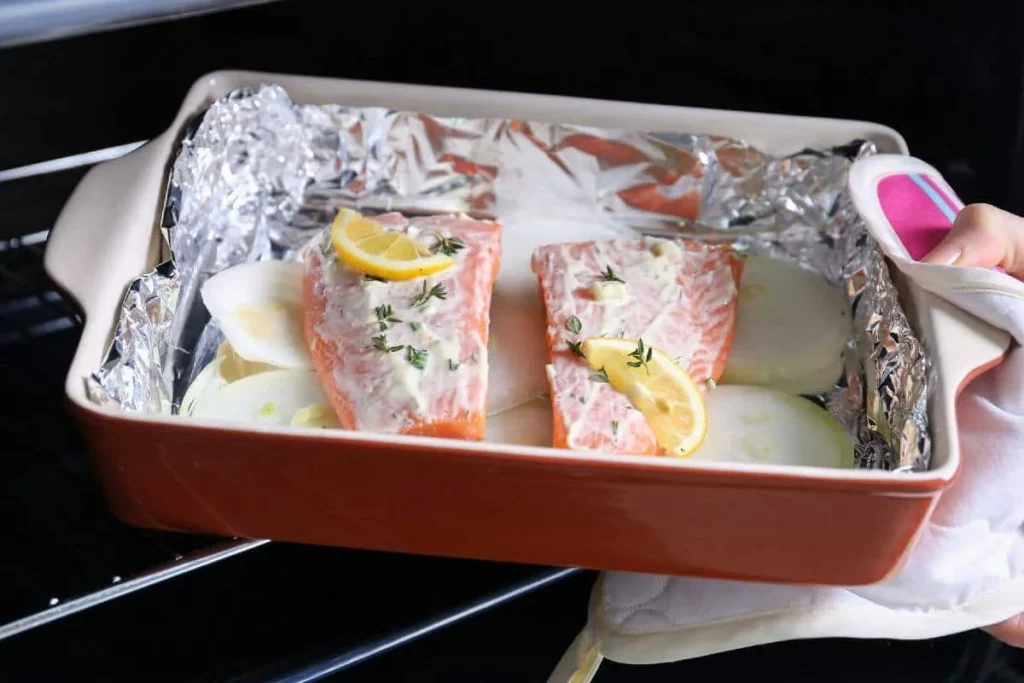
The most uncomplicated strategy to seal in wetness, preserve the half-cracked appearance, and provide your Salmon with that soft yet half-cracked taste is to burn the exterior while it’s still warm and afterward allow it to be in the Oven simply enough time to prepare through. Salmon is a fattier fish, so be careful not to overcook it, or you’ll end up with a dehydrated, crunchy mess. Nevertheless, you should watch on your Salmon, given that if you go too far from the stove, it may conveniently overlook. Salmon from the wild is generally leaner than farm-raised Salmon, making this a bit more complicated.
Bake Your Salmon
Since we’re cooking our Salmon at 350 ° F on the stove, as well as it’s been preheated, the initial sear will undoubtedly be done quickly. Our whole salmon fillet need to just take about 15 mins to cook due to the fact that we are placing it in the Oven at 350 ° F. Don’t cover your Salmon with aluminum foil; this could trigger it to take longer to cook.
When the Salmon is done cooking, you can offer it quickly or cool it for future use in salads and pasta (make sure that your next dish doesn’t have milk). You can likewise ice up cooked Salmon if wanted; make sure you wrap it up tightly so no air leakages!
When is it Finished?

Salmon has an intense orange shade when it is raw and also appears damp. When prepared, it will show up relatively drier, with a brighter orange shade. When exfoliating a little salmon as well as observing how wonderfully it glimmers, you’ll discover the moisture. Salmon ought to be cooked to 140 ° F if you’re using a meat thermometer, which is the risk-free minimum. You may constantly pull it out before it reaches this temperature, around 135 ° F, cover it in foil, and also allow it to relax up until it comes 140 ° F.
Choose Yummy Sides
No dish is total without sides, and also, Salmon is delicious by itself. Think about adhering to sides if you wish to select your baked Salmon:
- Garlic Broccoli
- Wonderful Potatoes
- Baked Potato with the repairings
- Basmati Rice Pilaf
- Honey-butter Roasted Carrots
In general, you ought to search for preferences that match the Salmon while not subduing its scrumptious flavor.
Serve it Beautifully
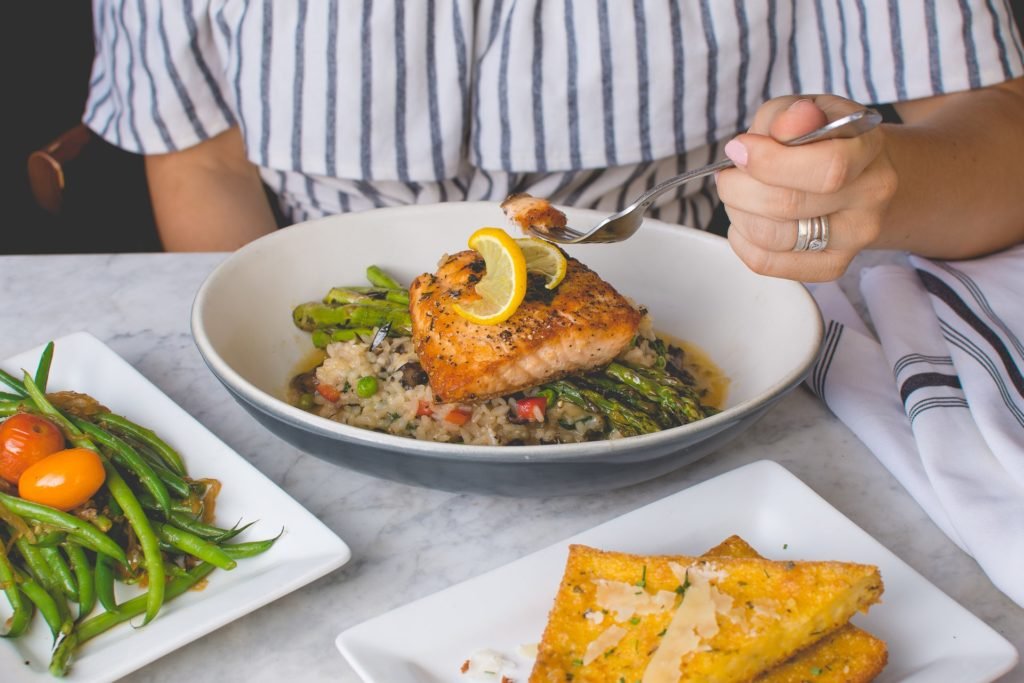
With a gentle touch, you need to be able to chop your Salmon after it has been accepted for intake. You may be able to get the skin off quickly if Your Oven isn’t too hot, or you may have trouble removing it if it’s sweltering. It’s excellent, relying on whether you want things to be a lot more rustic or stylish. The fresh Salmon may also be sliced into equal portions and placed on individual plates for you and your family to enjoy.
What you’ll need for the best Baked Salmon
When it pertains to Salmon, there’s no requirement to overthink things. All you truly require is a standard lemon butter sauce and also a spray of herbs for it to taste superb.
- Salmon: You may make use of individual fillets or a whole salmon for this meal (also known as half of a salmon). It’s incredible with either technique!
- Butter: It keeps the Salmon moist and offers it that incredibly buttery flavor.
- Lemon juice: A press of lemon adds a lively and also rejuvenating taste.
- Garlic: I’m making use of three garlic cloves, however, do not hesitate to increase or reduce them as wanted!
- Parsley and also dill, on the other hand, are an excellent match for Salmon.
How to Shop for Salmon

Shopping for Salmon may be difficult, especially if you’re not aware of all the terms. To save time, here’s a list of points to watch out for when choosing from farmed vs. wild-caught, king vs. sockeye vs. coho.
Wild Salmon is the best choice. Farmed Salmon, like shrimp, need to have stayed clear of. Why? Toxins, antibiotics, as well as a selection of chemicals from fish ranches, are more likely to be discovered in farmed Salmon. Along with safety and security worries, wild-caught Salmon has better nutrients, a superior texture, a great color, and also a far better taste (translation: a delicious baked salmon!).
The determining attributes of Salmon. There are numerous kinds of Salmon, yet the ones I suggest are king, sockeye, and also coho. Wild Salmon do have periods, although they differ from one location to one more. However, despite which variety you choose, look for pinkish-red fillets with marbling.
Fresh vs. frozen Salmon. Unless you’re going to a fish market that offers fresh catches of the day (which may be expensive), select frozen Salmon instead. Yes, it’s perfectly splendid, and in most cases remarkable than “fresh” Salmon on ice … which isn’t specifically fresh. Icy Salmon is flash-frozen right after being captured to maintain it fresh!
More on Salmon: How Long Should Salmon Be Baked at 375
How long should Salmon be baked at 375
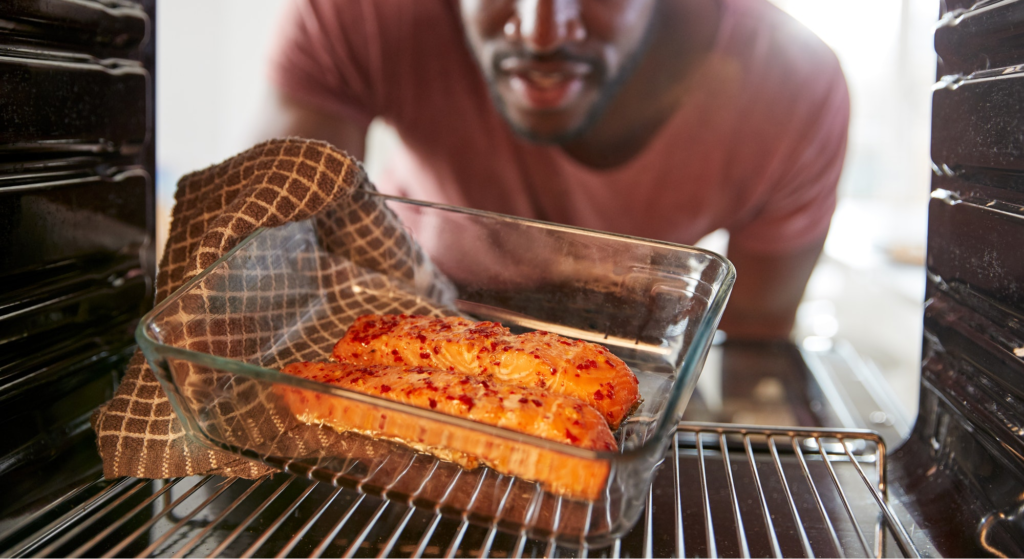
There are two easy ways to tell how long Salmon should be baked at 375 degrees. First, you can look at the packaging and see how many minutes it typically takes for a certain-sized piece of fish. Second, touch your finger to one side while gently pressing down into the middle part of the salmon filet. If your fingerprint stays in place, the Salmon is done. If your fingerprint comes back to normal, it needs more time in the oven!
Baking takes about 12-20 minutes, depending on how thick you cut each filet of fish and how cold it was when you put it into the oven. However, if you’re cooking for a large group or want all of your components to be done at the same time, check how cooked your Salmon is every few minutes after 12 minutes.
Salmon seasoning
Salmon is already a strong-flavored fish, and all seasonings used to Cook Salmon in the oven will improve the distinctiveness even more.
I like to use the following seasonings when cooking Salmon: coarse salt, freshly ground black pepper, paprika, Cajun seasoning, and fresh herbs such as fresh parsley or oregano. Mmmm, Tasty!!
How to prepare baked Salmon
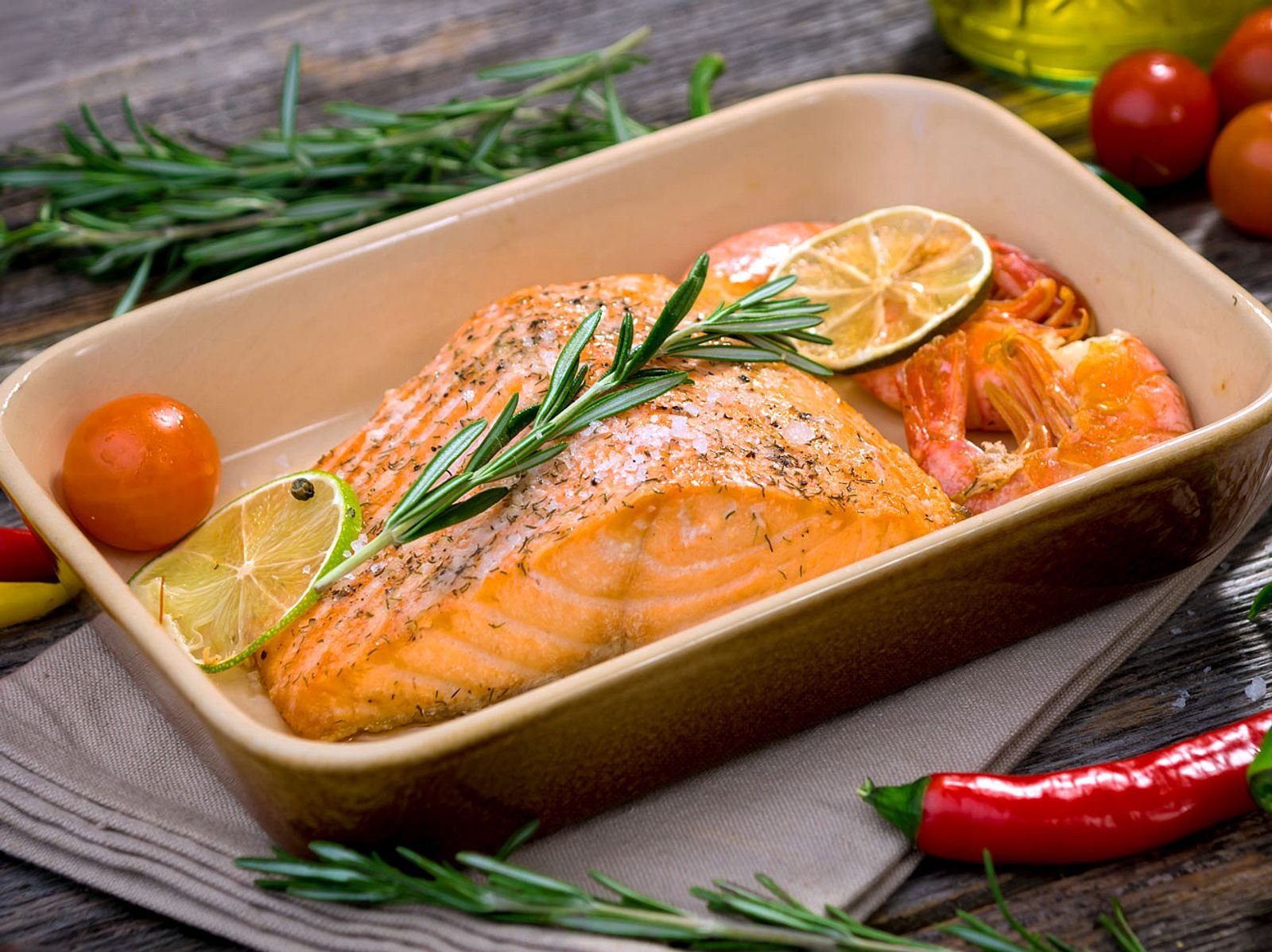
- Choose between a fillet with and without the skin. If still intact, I find it simpler to remove the skin after it’s been cooked for a while.
- Then, drain the sauce and discard any remaining tiny bones—clean and dry the surface afterward.
- Place the sheet pan in a roasting pan before adding the potatoes.
- While you’re at it, coat the pan with melted butter (olive oil or ghee may also be used). Season the fish with salt, pepper, and minced garlic before cooking.
- Prepare the marinade and brush it over the fish. Arrange lemon slices around the fillet.
They become more juicy and less tart in taste while being cooked. They’re fantastic as a dipping sauce when served with them. You may also prepare the Salmon into individual portions by cutting them into equal-sized pieces. Because there are many exposed edges that will cook faster, the baking time might be a few minutes shorter.
How do I store cooked salmon?
Seasoned with a little bit of salt, lemon juice, and paprika, the Salmon will keep in the refrigerator for about three weeks or more. Strengthening your delicious fish can be as simple as adding some salt (or even sugar), lemon juice, and paprika to each fillet before storing it in an airtight container. For optimum results when reheating, use leftovers in a pan on the stovetop to keep the Salmon crispy. You may also cook these Easy Salmon Recipes in a microwave with some salad for a complete dinner all at once.
What temperature should Salmon be cooked at?
Salmon is commonly cooked at 375 degrees Fahrenheit, although some recipes advocate for 400F. Although a higher temperature will help the Salmon to cook faster, there’s no need to go above 400F since the fish will dry out and become problematic if it heats up too much. If you want your salmon fillets to be uniformly cooked without using a thermometer, simply follow our how long does Salmon take a guide!
Do you cover Salmon when baking?
Yes, you can cover your Salmon when baking if you want the fish to cook faster or in a shorter time. Be sure that it is tightly covered, and there are no thin spots where steam could escape! If these parts of the fish don’t get hot enough, they will never become tender or flaky.
Can you overcook Salmon in the oven?
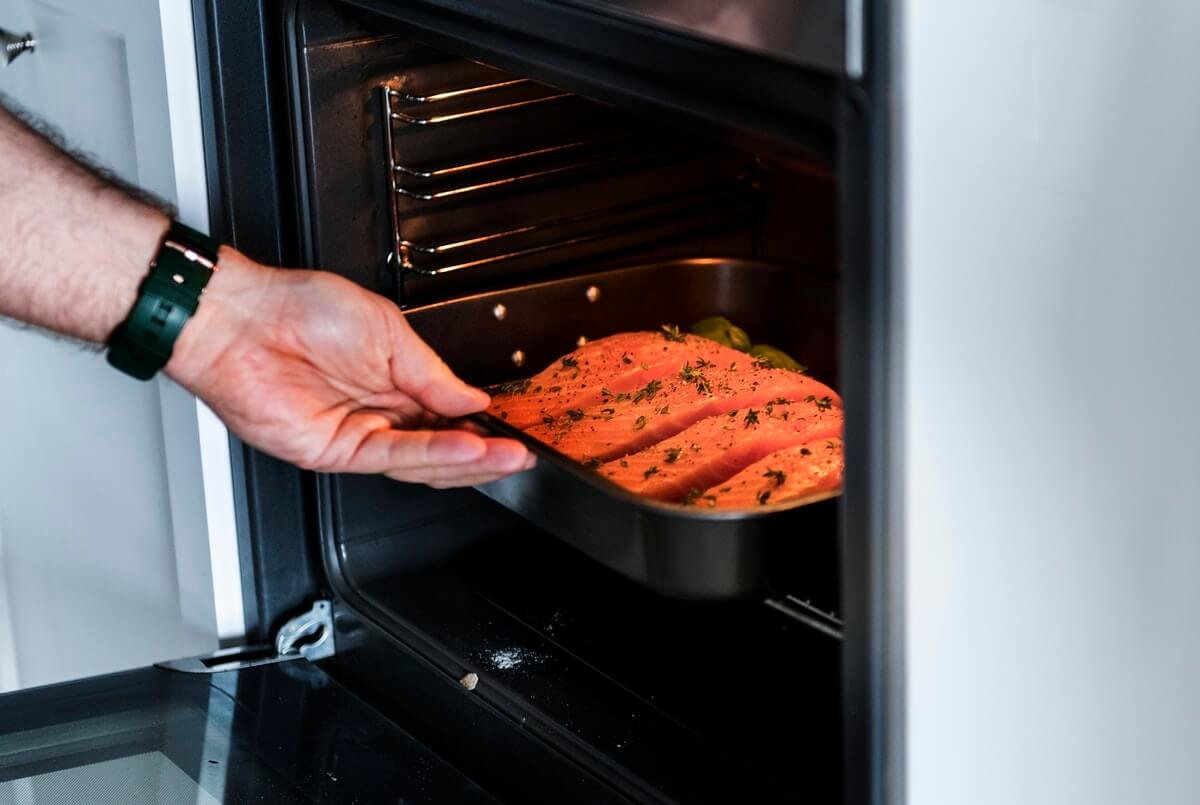
Yes, you can overcook Salmon in the oven if it gets too hot or is cooked for a very long time. Salmon naturally becomes dry and tough over large amounts of time on high heat, so be sure to check how done your fish is every few minutes after 12-20 minutes!
Do you cook Salmon on high or low heat?
Cook salmon on low heat. Salmon naturally becomes dry and tough over large amounts of time on high heat, so be sure to check how done your fish is every few minutes after 12-20 minutes!
Is it better to bake or pan fry salmon?
Baking is better than pan-frying Salmon because it cooks the fish more evenly throughout. Baked salmon also tastes good and doesn’t absorb as much fat or oil, so you don’t have to worry about how healthy your meal will be!
Does cooking in foil take longer?
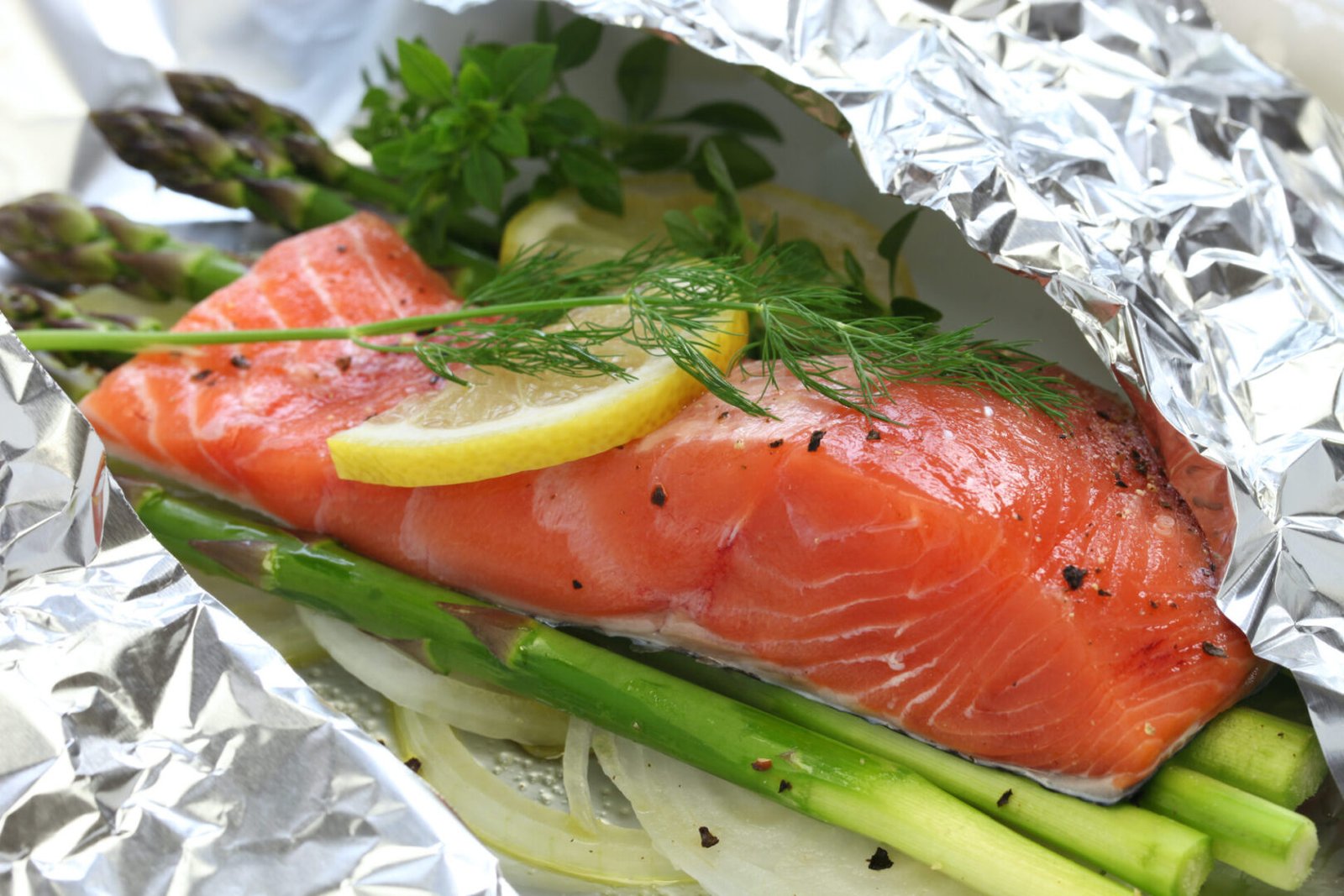
No, baking Salmon in foil takes the same amount of time as not using foil. It will cook just as quickly and evenly if it is tightly wrapped or covered with aluminum foil!
Should you wrap Salmon in foil?
No. Wrapping salmon in foil will trap steam and turn it into the water, which can make your fish soggy or mushy! It’s better to wrap the aluminum foil tightly around each filet of fish so that no steam escapes while cooking.
How long does it take Salmon to cook in the oven?
It takes about 12-20 minutes to Cook Salmon in the oven, depending on how thick you cut each filet of fish and how cold it was when you put it into the oven. However, if you’re preparing a large meal or want all of your components to be ready at the same time, inspect your Salmon every few minutes after 12 minutes for doneness.
Do I wash Salmon before cooking?
No, you should not wash your Salmon before cooking it. The water and oil help keep the fish moist while baking!
What is the white stuff that comes out of Salmon?
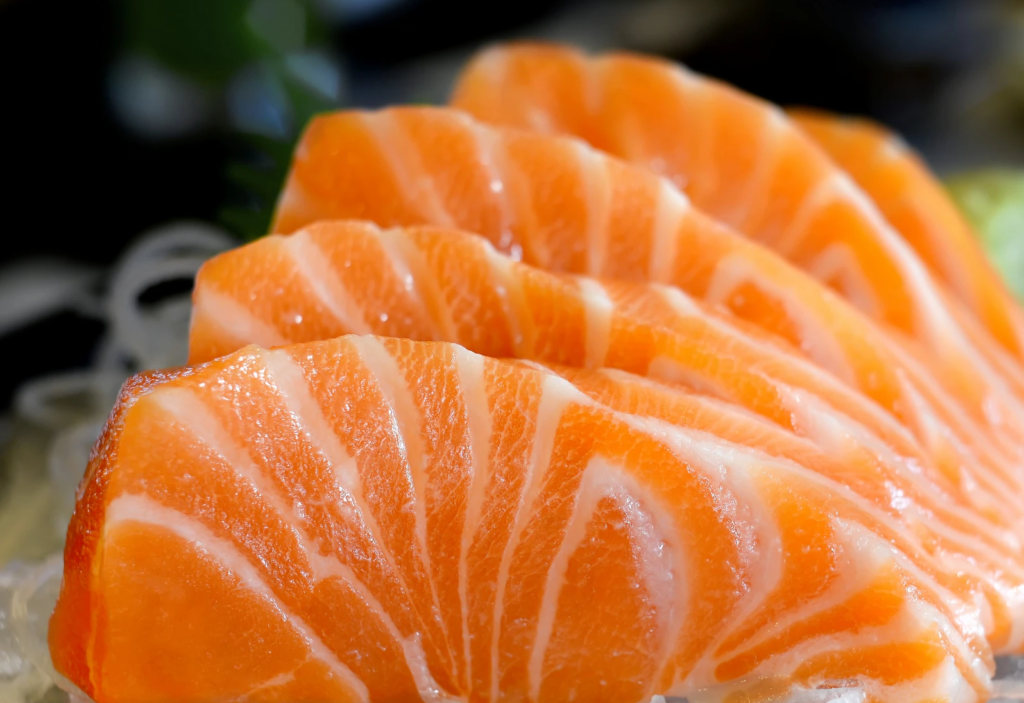
The white stuff that comes out of Salmon when you bake it is called albumin. It doesn’t taste good, but there’s nothing harmful about it, and the fish will still be safe to eat!
What vegetable is good with Salmon?
Salmon is good with vegetables like asparagus, green beans, or carrots. The vegetable enhances the taste of Salmon and helps reduce how much fat you’re adding to your meal!
How do you cook Salmon without drying it out?
The easiest way to slow-roast Salmon is to use the slow cooker. Every time I prepare Salmon, it comes out fantastic, and there’s no need for a fancy knife or anything. Slow-roasting salmon in a low oven (225°F to 250°F) or in the crockpot produces lovely fillets every time. You can also coat it in a light sauce or marinade for extra flavor before baking!
How do you know if Salmon is cooked?
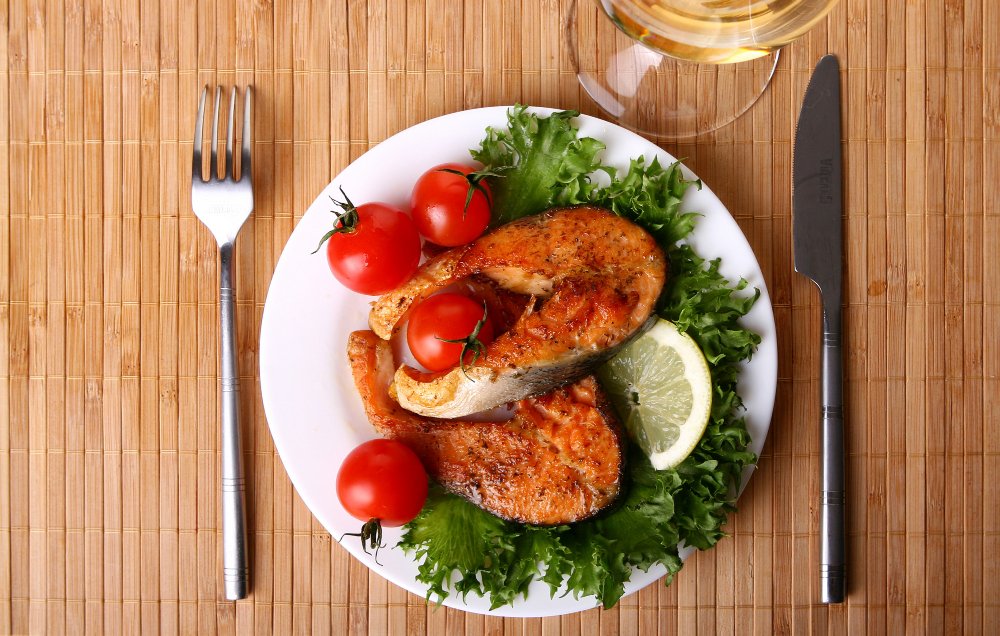
When Salmon is cooked through, it flakes and breaks apart easily. You should also be able to see the pinkish color of the flesh begin to fade from bright red, which means Salmon has reached an internal temperature of 145 degrees Fahrenheit or higher!
More on Salmon: What is the baking time for Salmon at 400° F?
Should salmon be cooked on high heat?
Place the salmon flesh-side down on a grill or in a pan with a bit of oil. Sauté until golden brown on both sides, skin side down, for about 5 minutes on each side, or until cooked through. If grilling, use aluminum foil under the fillet so it won’t stick to the grill.
Do you bake Salmon covered or uncovered?
Depending on how thick you want it, cover the dish with aluminum foil and bake for 4 to 6 minutes per half-inch thickness. Bake a seasoned salmon for 6 to 9 minutes per 8 ounces of fish. Always check your fish for doneness at least once during the minimum baking time to ensure that your baked Salmon isn’t overcooked.
What do I cook Salmon too?
While the FDA suggests grilling fish to 145°F for a flakier, more moist, and tender salmon filet, many chefs believe it’s best consumed when it reaches medium temperature — 125°F.
Can you eat Salmon raw?
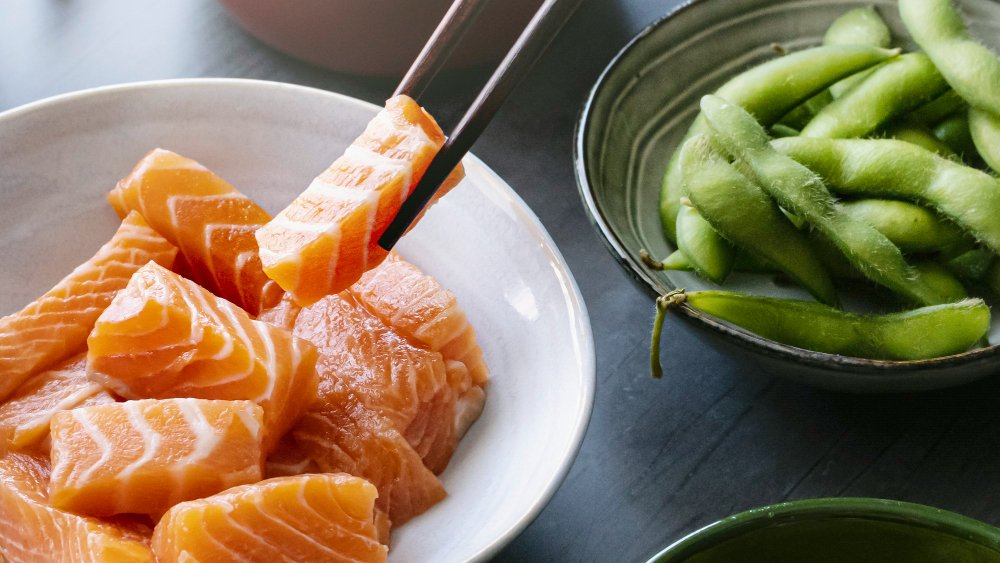
Yes, you may eat raw Salmon! It’s OK to eat Salmon that has been frozen according to FDA regulations as long as you can confirm that the fish in question was done so. It’s our favorite method to cook Salmon for a crowd. You’ll need to take off the skin from your fish fillet for the recipes below.
Should you cover fish in the oven?
Silicone is superior in several ways. It’s more durable; it’s nonstick and will not leech chemicals into foods; and it doesn’t heat up as quickly as Teflon during everyday cooking, although some contain silicone (which isn’t the case with this product). As a result of its high melting point, aluminum foil traps moisture
Baking Frozen Salmon
When you put Salmon in cold water, it thaws rather rapidly (while it’s still in the plastic bag), but if you don’t have time for that, there’s no need to worry. You can bake frozen Salmon just fine. The cooking procedure will be somewhat slower, but the end result will be delicious nonetheless.
Preheat the oven to 400°F. Put a pinch of salt and pepper to taste, then lay salmon skin side down in a dish or pan that is lined with parchment paper. Baking should take about 30 minutes until the fish is flaky and has an internal temperature of at least 125°F.
Slow-Baked Salmon
The slow-baking technique takes it to a whole new level. Because it is simmered in a low-temperature oven, it has an incredible texture comparable to sous vide Salmon. It takes somewhat longer, but it’s still completely hands-off. If you want to give slow baking some salmon ago, Bon Appetit
To prevent Salmon from overcooking, season it with salt, pepper, and fresh lemon juice. Fresh thyme leaves, dill, parsley, and cilantro are all good options. You won’t be able to use the whole large salmon filet for this method of slow baking; rather than individual slices of Salmon, you’ll need to
Is Salmon Healthy?
Salmon is a nutrient-dense food that makes an excellent nutritional foundation. It’s high in protein and low in carbohydrates. Vitamin B12, potassium, and selenium are among the vitamins and minerals found in Salmon. Omega-3 fatty acids found in Salmon are beneficial to one’s health in several ways. At least once a week, my