

When deciding between plastic and glass food storage containers, it’s all about your needs. Plastic is lightweight, shatterproof, and portable, making it great for on-the-go meals or kids’ snacks. However, it can leach chemicals when exposed to heat or acidic foods and tends to absorb stains and odors. Glass, on the other hand, is chemical-free, resists stains and smells, and is oven-safe – but it’s heavier, breakable, and more expensive.
Here’s a quick breakdown:
- Plastic: Affordable, portable, and durable for daily use, but may degrade over time and isn’t ideal for reheating.
- Glass: Non-toxic, long-lasting, and versatile for reheating and storage, but heavier and less portable.
Quick Comparison:
| Feature | Plastic Containers | Glass Containers |
|---|---|---|
| Durability | Resists breaking but warps over time | Breakable but lasts decades |
| Weight | Lightweight | Heavier |
| Heat Tolerance | Limited; avoid microwaving | High; oven and microwave-safe |
| Chemical Safety | Risk of leaching chemicals | Non-reactive and chemical-free |
| Cost | $3–$25 for basic sets | $25–$200+ |
| Stain/Odor Resistance | Absorbs stains and odors | Resists stains and odors |
| Portability | Excellent for travel | Less portable |
For the best of both worlds, use plastic for travel or short-term storage and glass for reheating, long-term storage, and leftovers.
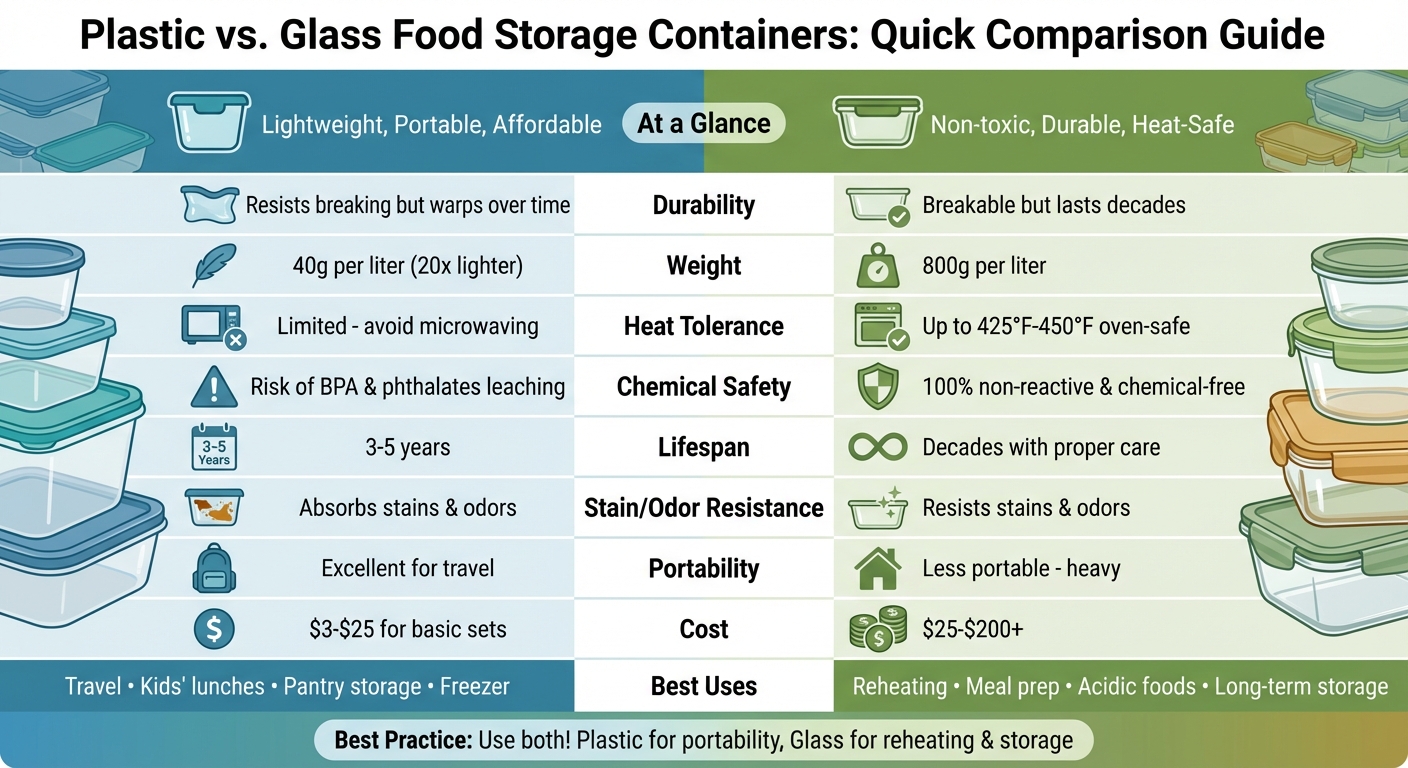
Plastic vs Glass Food Storage Containers Comparison Chart
Equipment Review: The Best Plastic and The Best Glass Food Storage Containers & Our Testing Winners
Plastic Food Storage Containers
Plastic containers are a kitchen essential – they’re lightweight, budget-friendly, and durable. For instance, a one-liter plastic jar weighs just 40 grams, while a similar glass jar comes in at about 800 grams. That’s a weight difference of 20 times! This makes plastic a practical choice for packing lunches, loading up a cooler for a picnic, or simply avoiding the strain of carrying heavy items.
Their durability is another big plus, especially for families with kids. Drop a plastic container, and it bounces back; drop glass, and you’re left cleaning up sharp, dangerous shards. This toughness also makes plastic containers ideal for outdoor adventures like camping or hiking.
Many plastic container sets are designed to save space, with stackable or nesting options. Some even come with handy extras like dividers or colander inserts for rinsing produce. Features like freshness-tracking dials also help keep your pantry and meal prep organized [11, 12, 16, 18].
Affordability is another reason plastic containers are so popular. Basic sets start at just $6.99 for a three-pack, while higher-quality options, like the Rubbermaid Brilliance 10-piece set, cost around $26.99 [10, 11]. Rubbermaid Brilliance was even named the top pick by America’s Test Kitchen in December 2025, thanks to its ability to pass a rigorous "blue water" shake test without leaking and survive a drop from counter height while frozen. Their low cost also makes them perfect for sharing meals or sending care packages without worrying about getting the container back.
Benefits of Plastic Containers
Plastic containers offer several practical advantages:
- Their lightweight design makes them easier to handle, especially for people with mobility or health challenges. In contrast, glass containers can be cumbersome and difficult to lift.
- They save space. A full set of plastic containers can often fit in the same area that might hold just a few glass ones [16, 20].
Downsides of Plastic Containers
Despite their convenience, plastic containers do have drawbacks. One major concern is chemical leaching. When exposed to heat or used to store fatty or acidic foods, plastics can release chemicals like BPA and phthalates into food [13, 3]. These substances are known endocrine disruptors that may interfere with hormones, potentially affecting fertility and reproduction [13, 6]. The European Food Safety Authority has even drastically lowered the tolerable daily intake for BPA due to these risks.
"The transfer [of chemicals] is also higher with hot foods. This means you might absorb a higher dose of chemicals by microwaving food in a plastic container than you would when using the same container to store salad."
– Dr. Jane Muncke, Managing Director and Chief Scientific Officer, Food Packaging Forum
Another issue is material degradation. Even with proper care, plastic containers typically last only 3 to 5 years before becoming brittle, cracked, or warped. Dishwashers and UV exposure can speed up this process, weakening the plastic over time. Any signs of wear – like discoloration, cloudiness, or cracking – mean it’s time to replace the container [6, 11].
Plastic also has a tendency to absorb stains and odors. Foods like tomato sauce, curry, or turmeric can leave permanent marks, and even after thorough washing, some containers may retain food smells or grease [6, 5].
Finally, the environmental impact of plastic is considerable. Only about 9% of plastic food containers are recycled successfully [10, 2]. In 2012, just 14% of plastic containers and packaging in the U.S. were recycled, with most ending up in landfills. In 2010 alone, an estimated 14 million tons of plastic containers were generated.
When to Use Plastic Containers
Plastic containers shine in specific scenarios:
- Pantry storage: They are great for organizing dry goods like flour, sugar, beans, pasta, and rice, where there’s minimal risk of chemical transfer [16, 18].
- Freezer storage: Opt for "freezer-safe" plastic containers to avoid cracking. Pre-portion soups, beans, or chopped fruits and veggies for easy meal prep [15, 5, 16, 20].
- On-the-go meals: Their shatter-resistant design makes them ideal for lunch bags, backpacks, or coolers. As Karuna Eberl explains:
"I don’t like them [glass] for the cooler, the car or on a hike because they’re heavy and breakable. Takeout containers are a perfect substitute."
- Refrigerator storage: Plastic works well for salads and cut vegetables. Just ensure your fridge stays between 35°F and 40°F, and always let hot foods cool before transferring them into plastic containers [11, 17].
To limit chemical exposure, avoid microwaving food in plastic containers – even those labeled "microwave-safe." That label only means the plastic won’t melt, not that it’s free of chemical leaching [13, 14]. Hand wash plastic containers with warm, soapy water instead of using the dishwasher, as high heat can accelerate wear [6, 11]. Also, avoid storing fatty or acidic foods like tomato sauce or lasagna in plastic for extended periods [13, 11]. Lastly, check the bottom of your containers for resin codes. Stick to codes 1, 2, 4, and 5, and steer clear of codes 3, 6, and 7, which may contain PVC, polystyrene, or BPA [3, 14].
Glass Food Storage Containers
Glass containers stand out for their health benefits, durability, and versatility, although they do come with the trade-offs of being heavier and more expensive than plastic.
One of the biggest perks of glass is that it doesn’t leach chemicals. Being non-reactive and non-porous, glass won’t release BPA, phthalates, or other harmful substances into your food – even when reheating acidic dishes like marinara or storing fatty foods. As eco-writer Wendy Gabriel puts it:
"Potentially harmful chemicals aren’t leaching into our meals when heated in a glass food storage container – or anytime, for that matter."
Glass also resists stains and odors far better than plastic. That stubborn tomato sauce that might permanently tint a plastic container? It washes right off glass. The same goes for strong-smelling ingredients like garlic or curry – glass won’t absorb those odors, keeping your containers odor-free and hygienic.
When it comes to versatility, glass is hard to beat. It’s safe for the microwave, dishwasher, freezer, and oven – handling temperatures up to 425°F to 450°F in most cases, and up to 950°F for borosilicate glass. Just remember to remove any plastic lids before putting them in the oven, as they aren’t heat-safe.
Environmentally, glass is a standout choice. It’s 100% recyclable and can be recycled endlessly without losing quality or purity – a rare trait among food storage materials.
Benefits of Glass Containers
Glass containers offer a range of advantages, starting with their non-porous surface. This feature helps them resist germs, stains, and odors, ensuring long-term hygiene. Unlike plastic, which often clouds or discolors over time, glass maintains its clarity, even after years of use.
Durability is another major plus. While glass can break if dropped, it doesn’t warp, melt, or scratch as easily as plastic. With proper care, glass containers can last for decades, far outliving the 3-to-5-year lifespan typical of plastic. For instance, in December 2025, America’s Test Kitchen tested Rubbermaid Brilliance Glass Food Storage Containers by dropping them from counter height three times. The result? No cracks or breaks – just two small scratches on the bottom.
Glass’s transparency and tight seals also make it easier to manage your kitchen. The clear design lets you see what’s inside at a glance, serving as a visual reminder to use leftovers before they spoil. Plus, the airtight seals act as a barrier against moisture and bacteria, keeping food fresher for longer. In July 2025, Better Homes & Gardens tested the Pyrex FreshLock Glass Storage Set by storing a peeled avocado for three days. The airtight seal kept the avocado fresh and significantly reduced browning.
Thermal versatility is another area where glass shines. Most glass containers can go from the freezer to the microwave or oven without worry. Borosilicate glass, in particular, handles rapid temperature changes exceptionally well, making it ideal for freezer-to-oven use. Tempered soda-lime glass, while slightly less resistant to thermal shock, offers better impact and scratch resistance.
Downsides of Glass Containers
Despite their many benefits, glass containers do have some drawbacks. Their heavier weight and potential for breakage make them less practical for on-the-go use. Even though tempered glass is designed to break into blunt fragments rather than sharp shards, it still poses a risk – especially in households with young children or during outdoor activities like camping.
Glass containers are also more expensive. Basic sets start around $32 for 12 containers, while mid-range options like Rubbermaid Brilliance or Glasslock range between $40 and $60. Premium ceramic-coated sets, such as Caraway, can cost over $200.
Additionally, glass requires careful handling during extreme temperature transitions. Moving a container directly from the freezer to a preheated oven – or vice versa – can cause it to shatter. To avoid this, let frozen containers thaw in the refrigerator before reheating.
When to Use Glass Containers
Glass is perfect for oven-safe dishes like casseroles, lasagnas, or roasted vegetables. You can prep, bake, store, and reheat all in the same container, cutting down on cleanup.
For acidic or strongly flavored foods, glass is the better option. Tomato-based sauces, citrus marinades, curries, and pickled items won’t stain or leave lingering odors in glass as they might in plastic.
Glass is also ideal for large-batch cooking. Soups, stews, and sauces stored in glass stay fresh longer without absorbing flavors or leaching chemicals. The transparency makes it easy to identify what’s inside, helping reduce food waste.
If you’re freezing food, borosilicate glass is your best bet for handling temperature changes. Leave 1 to 1.5 inches of headroom when freezing liquids to allow for expansion and prevent cracking. Chef Jason Goldstein, founder of Chop Happy, advises:
"When in doubt, get borosilicate glass so you can use it for everything."
For daily heavy use, tempered soda-lime glass is a solid choice. It’s more resistant to impacts and scratches, making it practical for busy kitchens. Just check for "oven-safe" or "microwave-safe" stamps on the bottom, as untreated soda-lime glass isn’t heat-resistant.
Next, we’ll compare plastic and glass side-by-side to help you decide which works best for your kitchen needs.
sbb-itb-663e316
Plastic vs. Glass: Direct Comparison
Comparison Table
Here’s a side-by-side look at how plastic and glass containers measure up for everyday kitchen use:
| Feature | Plastic Containers | Glass Containers |
|---|---|---|
| Durability | Susceptible to warping, discoloration, and scratches | Tough against scratches and odors but can break if dropped |
| Weight | Lightweight and easy to handle | Heavier and bulkier |
| Heat Tolerance | Limited; may melt or deform in microwaves or dishwashers | Excellent; safe for microwaves, dishwashers, and ovens (up to 425°F–450°F) |
| Chemical Safety | Can leach BPA, phthalates, or microplastics | Non-reactive and free of harmful chemicals |
| Lifespan | Short-lived (a few months to a couple of years) | Long-lasting; can endure for decades if handled carefully |
| Portability | Highly portable; lightweight and shatterproof | Less portable; heavy and fragile |
| Stain/Odor Resistance | Poor; absorbs stains and odors over time | Excellent; non-porous and resists both stains and smells |
| Cost | Budget-friendly ($3–$25 for basic sets) | More expensive ($25–$200+ depending on brand) |
This table highlights the main differences, but let’s dive deeper into how to choose the best option for your needs.
How to Choose Based on Your Needs
Start by considering how you’ll use the containers. Use the table as a quick reference, but here are some more tailored recommendations:
- For Meal Prep at Home: Glass is the ideal choice. It’s safe for reheating, helps preserve food quality, and its clear design makes it easy to see what’s inside and prioritize what to use first.
- For On-the-Go Use: Plastic wins for portability. It’s lightweight and shatterproof, making it perfect for school lunches, picnics, or camping trips. Just avoid reheating food in plastic to reduce chemical exposure.
- For Pantry Storage: Glass works best to keep food fresh while allowing you to quickly identify the contents.
- For Reheating Leftovers: Stick with glass to avoid potential chemical leaching. Its heat tolerance makes it a safer option.
- For Freezer Storage: Borosilicate glass is your go-to for handling temperature changes, like moving from freezer to oven. If you prefer plastic, use it only for short-term freezing and thaw food before reheating.
Using Both Plastic and Glass in Your Kitchen
Incorporating both plastic and glass containers into your kitchen routine can make life a whole lot easier. Each material has its own strengths, so using them strategically ensures you’re prepared for a variety of tasks.
Glass containers are ideal for long-term storage at home. Their transparency makes it easy to spot leftovers, encouraging you to use them before they go bad. They’re perfect for batch cooking, reheating meals, and keeping your fridge organized. Plus, glass doesn’t absorb odors or stains, making it the go-to choice for storing foods like marinara sauce or curry .
On the other hand, plastic containers shine when portability and convenience are key. They’re lightweight and less prone to breaking, which makes them great for school lunches, work commutes, and picnics. Plastic is also a smart choice for organizing your pantry or storing dry goods. Thanks to their stackable and nestable designs, they help maximize cabinet space, especially in smaller kitchens.
For specific situations, the choice is clear. Glass is better for storing aromatic, acidic, or oily foods, while plastic works well for cold snacks or sandwiches that need to stay separated – think bento-style boxes for an easy grab-and-go option. By assigning each material to the tasks it handles best, you can create a more efficient and organized kitchen.
More on Food Storage Containers: Ultimate Guide to Food Storage Containers
Materials: Plastic, Glass, and Stainless Steel
Choosing the right material for food storage can make a big difference in your kitchen. Each option – plastic, glass, and stainless steel – has its own strengths and trade-offs. Let’s dive into what makes each one stand out.
Plastic Containers
Plastic containers are the go-to for many households because they’re lightweight, affordable, and versatile. But not all plastics are created equal. Look for BPA-free options with recycling codes 1, 2, 4, or 5 to ensure they’re safe for food storage.
These containers are easy to handle and perfect for on-the-go use, like packing lunches or storing food in the freezer. Since they don’t shatter, they’re also a practical choice for families with kids. Most are dishwasher-safe, adding to their convenience.
However, plastic does have its drawbacks. Over time, it can absorb odors and stains, especially from foods like tomato sauce or heavily spiced dishes. It’s also sensitive to heat – most plastics can’t withstand high temperatures and may warp in the dishwasher or melt in the oven.
Glass Containers
Glass containers are a favorite for their durability and non-porous surface, which doesn’t absorb odors, flavors, or stains. This makes them ideal for storing everything from leftovers to strong-smelling foods like cheese. Plus, their transparency makes it easy to see what’s inside, helping you stay organized and avoid food waste.
If you’re looking for top-tier performance, borosilicate glass is worth considering. It can handle extreme temperature changes, so you can safely transfer it from the freezer to the oven. Soda-lime glass, while more affordable, requires more care to avoid cracking from sudden temperature shifts.
Glass containers are microwave and oven-safe (just remove the lids first), making reheating simple. They’re also fully recyclable, making them a great choice for eco-conscious households. On the downside, glass is heavier and more fragile than other materials, and the initial cost can be higher. But with proper care, they can last for years, making them a long-term investment.
Stainless Steel Containers
For unmatched durability and excellent temperature control, stainless steel is hard to beat. Food-grade stainless steel (look for 304 or 316 grades) is non-reactive, so it won’t affect the taste of your food or release any chemicals.
These containers are built to last. They resist dents, scratches, and daily wear, and their smooth surface makes cleaning a breeze – even sticky or greasy foods wash off easily. Stainless steel also excels at keeping foods at their desired temperature, whether hot or cold, making it a great choice for packed lunches or outdoor activities.
Stainless steel’s longevity is another major plus. With proper care, these containers can last decades, and they’re fully recyclable when they reach the end of their life. Some families even pass them down through generations! However, they’re not without their limitations. The opaque design means you can’t see what’s inside without opening them, and they’re not microwave-safe, so you’ll need to transfer food for reheating.
Material Comparison Chart
| Feature | Plastic | Glass | Stainless Steel |
|---|---|---|---|
| Weight | Lightweight | Heavy | Medium |
| Durability | Moderate | Fragile but long-lasting | Durable |
| Temperature Range | 32°F to 200°F | -40°F to 450°F | -40°F to 500°F |
| Microwave Safe | Most types | Yes (without lids) | No |
| Dishwasher Safe | Yes | Yes | Yes |
| Stain Resistance | Poor | Excellent | Excellent |
| Odor Retention | High | None | None |
| Visibility | Clear | Clear | Opaque |
| Price Range | $1-15 | $5-40 | $10-60 |
| Environmental Impact | Moderate recyclability | Fully recyclable | Fully recyclable |
Plastic is ideal for lightweight, everyday use, especially for meal prep and freezer storage. Glass is the best option when you want to see what’s inside and prioritize food safety. Stainless steel shines in durability and temperature control, making it perfect for active lifestyles or heavy-duty storage needs.
Choosing Containers for Different Uses
Finding the right container for your storage needs can make a big difference in keeping your food fresh and your kitchen organized. Whether you’re prepping meals, storing leftovers, or managing bulk pantry items, the right container can simplify your life. Here’s how to pick the best one for each purpose.
Meal Prep Containers
Meal prepping requires containers that help with portion control and keep different foods separate to maintain their flavor and texture. Rectangular, stackable containers are a great choice – they save space in the fridge and fit easily into lunch bags. If you’re packing a variety of foods, consider using compartmentalized containers to keep proteins, veggies, and grains neatly divided.
Glass containers are particularly versatile since they can handle a range of temperatures. Just remember to remove the lids before microwaving. To ensure your meals stay mess-free, test for leak-proof seals by filling the container with water and briefly turning it upside down. These tips also work well for storing leftovers of different sizes.
Leftover Storage Containers
Leftovers come in all shapes and sizes, so having a variety of container sizes on hand is key. Avoid using oversized containers for small portions, as too much empty space can affect freshness.
Airtight seals are essential for keeping leftovers fresh longer. Containers with silicone gaskets in their lids generally provide better seals compared to basic snap-on lids. Clear containers are another smart choice – they let you quickly see what’s inside, reducing the chances of forgotten leftovers. For reheating, glass containers are a safe bet, as they can move from the fridge to the microwave or oven (just remove the lids). If you’re storing oddly shaped foods, shallow, wide containers can give you more flexibility.
Bulk Storage Containers
Bulk storage requires a strategic approach to maximize pantry space while keeping items fresh. The key is to choose containers that fit your pantry’s dimensions and the type of food you’re storing.
Tall, narrow containers are ideal for deeper shelves, while wider, shorter ones provide stability and easier access but may need more shelf depth. Measure your pantry to ensure a good fit. Features like built-in pour spouts or scoops make dispensing easier, and tight-fitting lids help protect against pests and keep food fresh. Smooth interior surfaces are also a plus – they make cleaning quick and hassle-free. For added organization, look for containers with flat surfaces or built-in label holders to track contents and usage. Modular designs that stack or nest when not in use can help you make the most of your pantry’s vertical space and keep everything tidy.
sbb-itb-663e316
Advanced Storage Solutions and Tips
Once you’ve got the basics of container selection down, it’s time to step up your game. These advanced storage ideas can help keep your food fresher for longer while making your kitchen more organized and efficient. Let’s dive into some specialized tools and smart techniques that can make a real difference.
Vacuum-Sealed Containers
Vacuum-sealed containers are a game-changer for keeping food fresh. By removing air, these containers slow down oxidation and spoilage. Once reserved for professional kitchens, they’re now a practical option for home cooks too.
These containers are perfect for dry goods like coffee, nuts, and cereals, as they protect them from air exposure. They also work well for hardy vegetables, as reducing oxygen and moisture can help maintain their freshness. However, softer fruits and delicate produce might not hold up well under the suction process.
Many vacuum-sealing systems come with handy features like manual pumps and seal indicators, making them easy to use. They’re a smart investment for anyone serious about locking in freshness and cutting down on food waste.
Tips for Maximum Freshness
To get the most out of your storage containers, it’s important to use them wisely. Here are some tips to keep your food fresher for longer:
- Keep containers away from heat sources and areas with fluctuating temperatures.
- Leave extra room in containers for items that expand, like liquids.
- Layer foods thoughtfully: place delicate items on top of sturdier ones and keep dressings or sauces separate. Adding a paper towel to the bottom can help absorb excess moisture.
- Label containers with dates and organize them using a "first in, first out" system.
- Let hot foods cool before sealing to avoid unwanted condensation.
How to Reduce Food Waste
Cutting down on food waste doesn’t just save money – it’s also great for the environment. Here are some practical strategies to help you waste less:
- Portion large batches of food into smaller servings right away, so leftovers don’t go to waste.
- Use clear containers or keep an inventory list to avoid forgetting what you have.
- Get creative with items nearing expiration: toss wilted veggies into soups or freeze overripe fruits for smoothies.
- Choose container sizes that match your portions. If there’s extra space, fill it with something neutral to limit air exposure.
- Regularly check your pantry or fridge and move items with earlier expiration dates to the front.
These simple habits, combined with the right storage tools, can make a big difference in extending the life of your food and keeping your kitchen running smoothly.
Care, Maintenance, and Safety
Taking good care of your containers not only keeps them safe to use but also helps them last longer. Different materials require specific cleaning and maintenance routines, and following these can protect your investment while ensuring safety.
Cleaning and Maintenance
Plastic containers need regular cleaning to avoid stains and odors. For daily cleaning, hand wash them with warm water and dish soap or place them on the top rack of your dishwasher to prevent warping from high heat and water pressure. Make sure not to overcrowd the dishwasher so everything gets cleaned thoroughly.
Before washing, scrape out leftover food and rinse with hot water to remove grease. This step helps prevent buildup that could lead to unpleasant smells or permanent staining.
If stains do appear, there are several ways to tackle them. For minor stains, leaving the container in direct sunlight for a few hours can naturally bleach them. For tougher stains, soak the container in a mild bleach solution (2 teaspoons of bleach per gallon of water). You can also use a baking soda scrub (1 teaspoon of baking soda mixed with 1 cup of water) or undiluted vinegar for cleaning. After treating stains, always wash the container thoroughly.
To minimize staining in the first place, try spraying the inside with unflavored cooking spray or lining it with foil before use. Avoid microwaving oil-based or tomato-based foods directly in plastic containers, as this can cause permanent discoloration and damage.
Glass containers are easier to clean since they are naturally non-porous. They can go in the dishwasher or be hand washed with warm water and mild detergent. For stubborn stains or odors, soak them in a mixture of warm water and baking soda or vinegar before washing. If mold appears on the lids, soak them in a 10:1 solution of warm water and bleach.
Stainless steel containers are best cleaned by hand with hot soapy water, though they can go in the dishwasher if needed. Hand washing is often recommended to avoid scratches or damage to seals and coatings. For tough stains, apply a paste made from baking soda or vinegar, let it sit for a few minutes, then scrub and rinse thoroughly.
While cleaning is essential, knowing how to handle containers under different temperatures is just as important.
Temperature and Usage Rules
Once your containers are clean, using them within their temperature limits is key to keeping them safe and functional.
Plastic containers generally shouldn’t be exposed to temperatures above 140°F (60°C). Avoid using them in conventional ovens, and even with microwave-safe plastics, be cautious – overheating can cause warping or release chemicals.
Glass containers are more resistant to temperature changes but aren’t completely immune. Sudden shifts, known as thermal shock, can cause cracks. For example, if a container is frozen, let it warm to room temperature before putting it in a hot oven. Most good-quality glass containers can handle freezer temperatures (0°F or -18°C) and oven temperatures up to 400°F (204°C), but always double-check the manufacturer’s guidelines. Some glass containers are designed solely for cold storage or microwave use.
Stainless steel containers are great for cold storage and room temperature use, but they aren’t microwave-safe because of their metal construction. They can usually handle freezer temperatures but shouldn’t go in ovens unless specifically designed for that purpose.
After cleaning and following temperature guidelines, another tip for food safety is to let hot foods cool before sealing them in a container. This helps reduce condensation and prevents bacterial growth.
More on Food Storage Containers: How to Organize Your Kitchen Area for Maximum Efficiency: Glass Food Storage Containers
Streamline Your Tupperware Collection
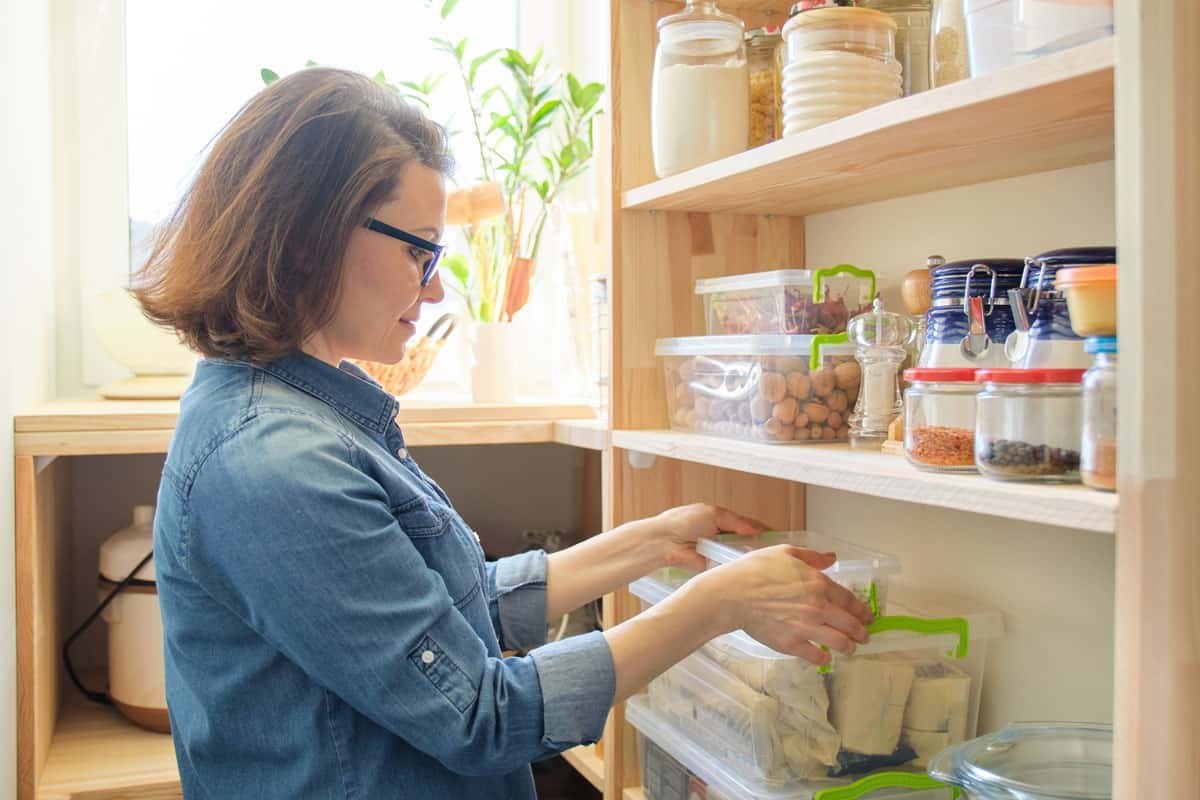
We know just how it is– fifty percent of the storage space containers in your cabinets have originated from unknown resources. Whether you neglected to return one to your in-laws or inadvertently snagged one while earning remaining brownies from the bake sale, something is clear; food storage space containers accumulate like mad! Before you can even begin to create a brand-new storage space system, take inventory of what you have.
Don’t Be Afraid To Say Goodbye
Believe truthfully concerning the number of containers you require. Do you live alone? After that, 20 Pyrex meals may not be necessary. If you have six children and need to meal-prep for the week, your situation is possibly different. Take your circumstances right into factor to consider as well as de-clutter accordingly.
The dimensions and shapes of the containers you choose to keep are also critical. It’s ideal if your collection varies in size for two reasons:
It is much easier to save glass containers that can pile right into each other to conserve area in your cupboard.
Utilizing the smallest vessel required to store your leftovers will certainly save room in the fridge. So throw any repeat competitors for a set of staggering dimensions.
Every Bottom Needs A Top
Although they will not be stored, fit each container with its correct lid before saving it. If there isn’t one, trash it. Any leftover covers can likewise enter the trash. Attempt to preserve a stringent 1:1 ratio of bases to tops. Roaming covers, as well as mismatched sets, are an only unneeded mess.
Choose The Right Cabinet
To be specific, no covers obtain lost in the shuffle, and it’s best to have one assigned area for every one of your storage space containers. However, a cupboard is best if your kitchen has a large drawer (both deep and also large) that can function. The method is to make sure you’re refraining from doing any packing. Whatever should pleasantly fit with a bit of area to spare– a closet packed to the brim will certainly appear disorganized even if it’s practically not.
Store Lids Separately
It may be alluring to keep containers with the covers to make sure they do not obtain separated down the line, but it depends on us, and it’s not an excellent suggestion. If you have containers in different dimensions, they should conveniently match each other in a neat stack. By doing this, you can save five containers and occupy the space of one! As long as you have a great storage approach for covers, this will not be a problem.
Organizational Tools Work Wonders

Don’t hesitate to obtain some assistance from outside sources. There are numerous tools and divider panels you can utilize to make the most out of a small space.
Keep Your Lids In Check
We understand precisely how easily covers can become messy as well as eventually go missing out on. We recommend having some organizer to hold them upright as well as within reach. An adjustable shelf is available in helpful and also can be flexible based upon your requirements.
Try A Lazy Susan

If your cabinet is profound yet not vast, it may aid have a turning organizer. You won’t need to get rid of containers in order to access a particular one in the rear. Rotate your organizer to find what you need.
Stacked Drawers Create Space
If your storage space has substantial height, cabinets could be your most acceptable option. This will undoubtedly develop two levels of business capacity where there or else would certainly have only been one. Plus, pull-out drawers produce effortless access to your containers.
Are Glass Storage Containers Better Than Plastic?


You might have observed that we’ve placed a focus on exactly how to store your glass storage space containers, not plastic. This is because we believe that glass is a significantly much better alternative when choosing between the two.
Glass Is Better For The Environment
Glass storage space containers are merely much more sustainable than plastic. First of all, it will certainly last you a lot longer. Glass storage containers are generally made from exceptionally durable glass that is hard to damage or chip. Plastic, on the other hand, will fracture instead. And also, when it is time to change your glass containers, they can be reused, unlike many plastic ones.
Glass Is Better For You

There’s been a lot of argumentation in recent years about whether harmful chemicals in plastic food storage container packaging may leach into your leftovers—and, unfortunately, they have. When heated (such as in the microwave), plastic containers can emit compounds. Using glass eliminates the problem completely.
Can Glass Storage Containers Go In The Oven?
Freeze it, microwave it, and even cook it! Glass storage space containers are usually oven-safe. However, it’s an excellent concept to examine whether the particular one you’re making use of says so. More affordable brand names may be oven-safe at approximately a specific temperature, so we recommend inspecting the all-time low of the dish (or even the brand name’s internet site) to make sure.
What Are The Best Glass Storage Containers?
There are a few essential things to seek when buying a new set of storage space containers. You desire something that’s most likely to be watertight, durable, as well as reasonably affordable. Maintain checking out to locate the storage containers that finest fit your standards.
Best Bang For Your Buck
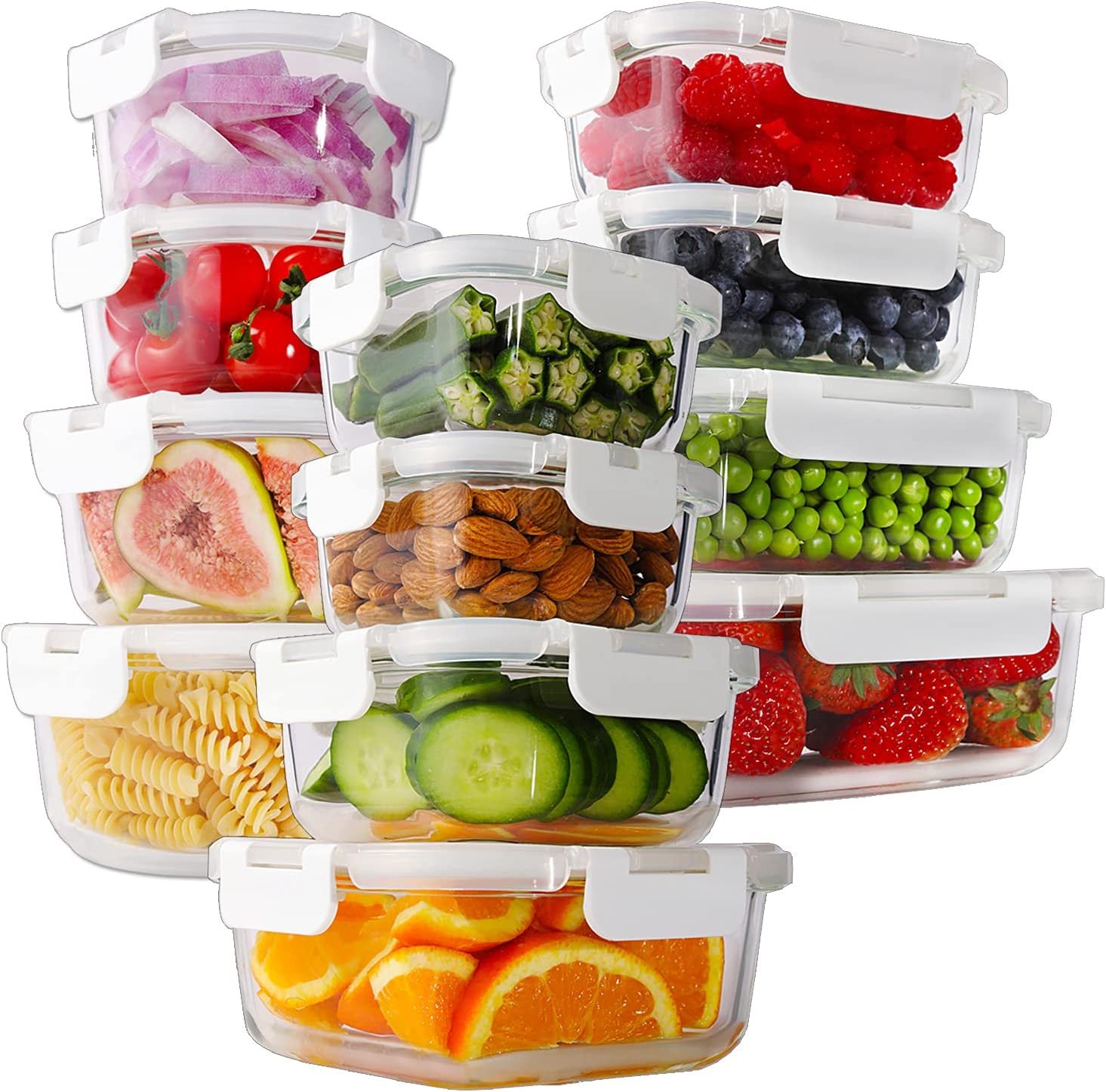
If you’re looking to start fresh and upgrade your whole food storage collection, look no further than this Bayco 24 item set. Coming with nine various sizes at just $35.99 (that’s $3 per container), your cooking area and also purse will both enjoy this purchase.
Best For Meal Prep
If you like to prepare your week’s meals in advance, this multi-colored set is for you. With ten containers coming in five various shades, you’ll have the ability to remember clearly which dish is of what day.
Best For Hot Meals
There’s absolutely nothing even worse than wet food. These glass containers have heavy steam launch shutoffs on their lids so vapor can run away and guarantee your leftovers never get soaked.
Best Sustainable Option

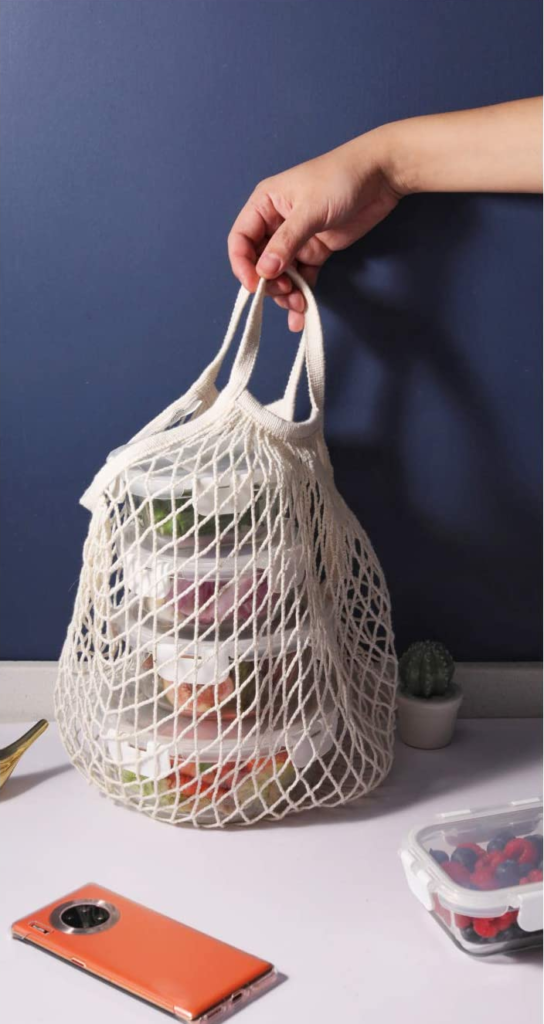
These lightweight, microwave-safe containers are perfect for transporting meals on the go. They’re made of sustainable bamboo and include a set of biodegradable chopsticks. Remove the need for plastic utensils and do your support– obtain these containers!
Live Your Life Clutter-Free
Since you have the best information at hand, there’s no justification for leaving your glass container cabinet looking unpleasant. Bear in mind, before you begin arranging, consider downsizing– the key to business bliss is typically minimalism. Have fun and also enjoy your recently organized kitchen area!
Conclusion
Both plastic and glass food storage containers can play an important role in your kitchen. Knowing the differences between them allows you to choose the right option for your cooking and storage needs.
Glass containers shine when it comes to reheating, long-term storage, and preserving acidic or strongly scented foods. They’re non-toxic, oven-safe, and fully recyclable, making them a solid choice for many households. On the other hand, plastic containers are lightweight, shatterproof, and perfect for on-the-go meals, kids’ lunches, or when you’re working with limited storage space.
For those who frequently batch-cook or reheat leftovers, glass is a reliable option. If portability and convenience are priorities – like packing lunches or snacks – plastic is often the better fit. Having a mix of both types on hand can provide a versatile and practical setup for any kitchen.
"It’s important to keep track of how long you’ve had a plastic container, as chemicals can ‘leak’ out of the plastic when heating up." – Leanne Stapf, Chief Operating Officer, The Cleaning Authority
FAQs
Can you use glass containers in the oven or microwave?
Yes, glass containers marked as microwave-safe or crafted from materials such as borosilicate or tempered glass are suitable for use in both ovens and microwaves. These types of glass are built to withstand high heat without cracking or breaking.
However, it’s important to review the manufacturer’s guidelines to confirm the container’s heat tolerance. Also, be cautious with sudden temperature shifts – like moving a hot glass container into cold water – as this can lead to cracking.
What steps can I take to reduce chemical exposure when using plastic food containers?
When aiming to limit chemical exposure, opt for plastic containers marked with resin codes 1, 2, 4, or 5, as these are generally regarded as safer options. Avoid microwaving these containers or putting them in the dishwasher, as heat can lead to chemical leaching. Let hot foods cool before storing them in plastic containers, and try to steer clear of using them for fatty or acidic foods, which can also increase leaching risks. Always hand-wash plastic containers gently, and replace any that show signs of scratching, warping, or damage to keep them safe for use.
How do plastic and glass food storage containers impact the environment?
Plastic containers have a heavy toll on the environment, largely because most of them aren’t recycled. In the U.S., only about 14% of plastic containers actually make it through the recycling process. The rest? They often end up in landfills, are burned in incinerators, or contribute to pollution through greenhouse gas emissions and the spread of microplastics. On top of that, producing new plastic generates significant amounts of carbon dioxide and other harmful pollutants.
Glass containers, by contrast, offer a much more sustainable alternative. They are highly recyclable and can be reused over and over again without losing their quality. In fact, nearly 100% of glass can be reclaimed, which helps cut down on landfill waste significantly. While making glass does require a lot of energy, and its heavier weight can lead to higher transportation emissions, its overall environmental impact tends to be smaller than plastic’s in the long run. If you’re aiming for a more eco-friendly option, glass containers are often the better pick.