
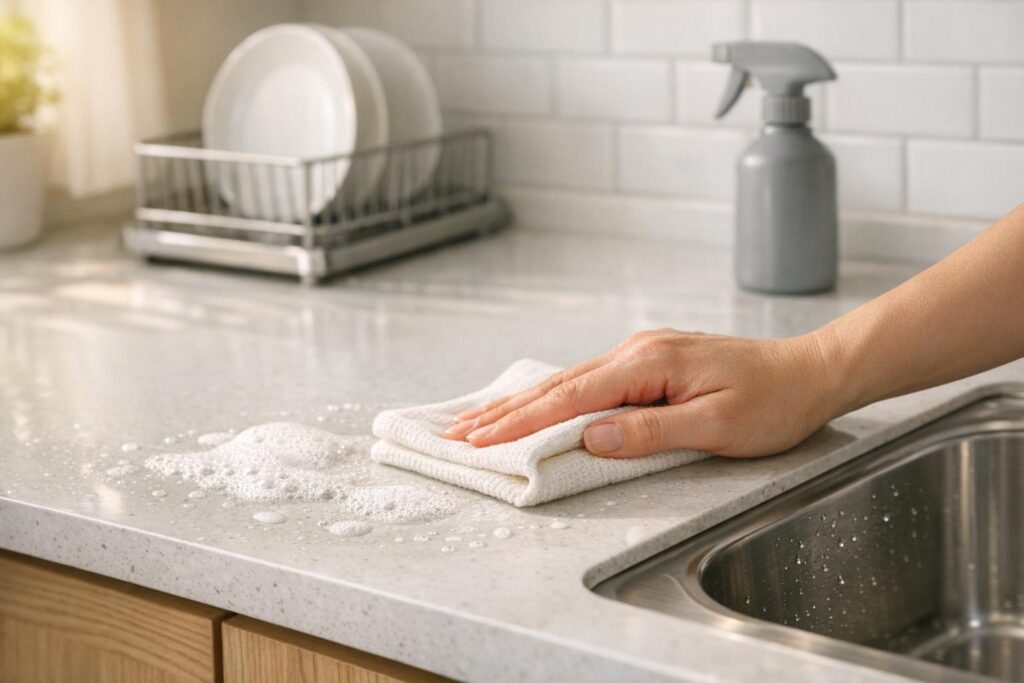
Keeping your kitchen clean daily is simpler than you think and only takes 10–20 minutes. A clean kitchen prevents bacteria buildup, reduces foodborne illness risks, and keeps your space welcoming. Here’s a quick breakdown of what to do:
- Wipe counters and prep surfaces: Use a microfiber cloth with soapy water or an all-purpose cleaner. Avoid acidic cleaners on stone surfaces.
- Clean the sink and faucets: Scrub with dish soap, use baking soda for tough stains, and deodorize drains with baking soda and vinegar.
- Sweep and spot-clean floors: Remove crumbs and clean spills immediately to avoid pests.
- Empty trash daily: Replace liners and wipe the bin to prevent odors.
- Handle dishes: Wash or load them into the dishwasher to avoid clutter.
Consistency is key. By tackling small tasks daily, you’ll save time and prevent overwhelming messes. Start today for a healthier, more inviting kitchen.
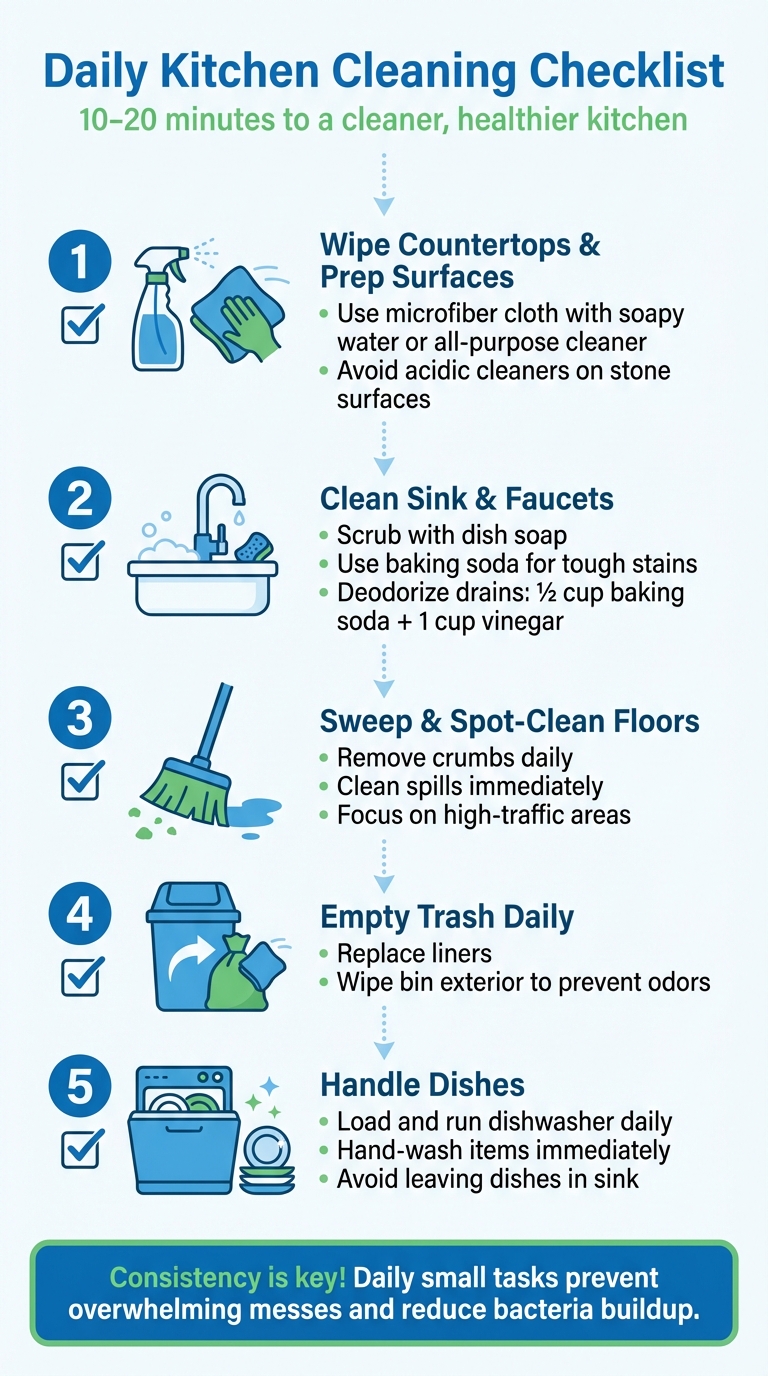
5-Step Daily Kitchen Cleaning Checklist
Daily Kitchen Cleaning Routine! (Clean My Space)

sbb-itb-663e316
Daily Kitchen Cleaning Checklist
Keeping your kitchen clean every day doesn’t just make it look good – it also keeps it safe for cooking and eating. A daily routine helps you stay ahead of messes before they turn into bigger problems. Here’s a step-by-step guide to tackle the most important areas in your kitchen.
Wipe Down Countertops and Prep Surfaces
Start by clearing off clutter like small appliances and utensils. Once the surfaces are clear, wipe them down to remove food particles, grease, and bacteria. Use an all-purpose cleaner or a mix of warm, soapy water with a microfiber cloth. Microfiber is great because it traps grease and bacteria better than paper towels.
Keep in mind that certain surfaces need special care. For example, vinegar or acidic cleaners can damage natural stone like marble or granite, causing discoloration. Instead, try a simple homemade cleaner: mix one cup of water, one cup of distilled white vinegar, and 10 drops of lemon essential oil in a spray bottle.
"As a general rule, it is recommended to clean and disinfect your kitchen daily to prevent the buildup of grease, grime and bacteria." – Armeka Townsend, Cleaning Expert, Zep
Once your counters are spotless, turn your attention to the sink and faucets.
Clean and Sanitize the Sink and Faucets
The sink is a hotspot for germs, especially after handling food. Scrub it daily with dish soap and water to remove grime and food debris. For tougher stains, use a baking soda paste – it’s gentle on surfaces but effective at lifting stubborn spots. Don’t forget about the faucet and handles, which often collect dirt from frequent use.
After cleaning, dry the sink with a towel to avoid hard-water stains or mineral buildup. If you notice unpleasant odors from the drain, try pouring ½ cup of baking soda followed by 1 cup of vinegar. Let it fizz for about 10–15 minutes, then flush with hot water.
Sweep and Spot-Clean Floors
Kitchen floors tend to collect crumbs and debris quickly, especially in high-traffic areas. A daily sweep or vacuum can keep things under control.
"Sweeping crumbs off the floor should be a part of your daily cleaning routine to keep pests away and your home tidy." – Marla Mock, President, Molly Maid
For spills or sticky spots, grab a damp cloth or mop to clean them right away. Pay extra attention to areas like the toe kick under cabinets or beneath the dining table, as these spots tend to collect the most mess.
Once the floors are clean, it’s time to handle the trash.
Empty Trash and Replace Liners
Taking out the trash every day is key to avoiding bad odors and keeping pests at bay. Even small bins in food prep areas can hold scraps and packaging that attract bugs, so don’t skip them. After removing the trash bag, wipe down the outside of the bin to remove any grime or sticky spots.
Load and Run the Dishwasher or Hand-Wash Dishes
Leaving dirty dishes in the sink can lead to unpleasant smells and make cleanup harder later on.
"Dishes put off for another day can cause unwanted odor." – Melissa Poepping, Founder, The Chemical Free Home
Make it a habit to load and run the dishwasher daily. For items that need to be hand-washed, clean and dry them right away to avoid clutter and dried-on food.
Tools and Supplies for Daily Kitchen Cleaning
The right tools can make daily kitchen cleaning quicker and more effective. You don’t need a stockpile of products – just a few durable essentials tailored to your kitchen’s needs. With the proper tools, your cleaning routine becomes far more manageable.
Recommended Cleaning Tools
Microfiber cloths are a must-have. They trap grease, dust, and bacteria using just water, making them far more efficient than paper towels. A multi-pack runs about $13.43 and can be reused if washed separately to prevent lint buildup.
For scrubbing tasks, plant-based cellulose sponges are a scratch-free and eco-friendly alternative to plastic sponges. Pair these with non-abrasive scrub pads for delicate cookware or stiff-bristle brushes for grout and sinks. Long-handled brushes are ideal for scrubbing pots without dirtying your hands. These tools typically cost between $5.95 and $9.99.
Bench scrapers, often used by pastry chefs, are excellent for sweeping crumbs and food scraps directly into the trash. Plastic scrapers work well for loosening stuck-on food without harming surfaces. For floors, consider a reusable spray mop or spin mop with washable pads to simplify daily cleaning. Finally, latex-free or rubber gloves protect your hands from hot water and harsh chemicals.
Once you’ve got the right tools, choosing the appropriate cleaners for your tasks becomes much easier.
Natural vs. Commercial Cleaners
Natural and commercial cleaners each have their strengths, depending on the job. Natural solutions like vinegar, baking soda, and lemon are great for light cleaning and deodorizing. On the other hand, commercial products are designed for tackling tough grease and sanitizing more efficiently.
| Feature | Natural Cleaners | Commercial Cleaners |
|---|---|---|
| Primary Ingredients | Vinegar, baking soda, lemon, essential oils | Bleach, ammonia, surfactants, degreasers |
| Best Use Case | Light spills, glass cleaning, deodorizing | Heavy grease, deep cleaning, disinfecting |
| Effectiveness | Works well for maintenance but may require more effort for buildup | Handles tough grime with less physical effort |
| Health Impact | Low risk; non-toxic; safe for respiratory health | May cause irritation, allergies, or asthma |
| Environmental Impact | Biodegradable and eco-friendly | Can contribute to water pollution and plastic waste |
| Cost | Generally lower (DIY options) | Varies; specialized products often cost more |
Your choice depends on the specific cleaning challenge. For example, a study comparing cleaners found that Clorox Wipes left 0–1 bacteria colonies on a contaminated surface, while a natural essential oil spray left 0–3 colonies. Soapy water, though effective for general cleaning, left 2–6 colonies and may not fully sanitize. Natural sanitizers like white vinegar or hydrogen peroxide require at least 10 minutes of contact time to work effectively.
"In this study, we found both natural and chemical cleaners can be unreliable in cleaning countertops thoroughly. Everyone needs to take foodborne illnesses seriously and should be aware of what to use to clean and sanitize food preparation areas."
– Daryl Rich, D.C.
For tough grease, try mixing one tablespoon of mild dish soap with two tablespoons of baking soda into a paste. However, avoid using vinegar or lemon-based cleaners on natural stone surfaces like marble or granite, as their acidity can cause permanent damage. Instead, stick to pH-neutral cleaners or plain soapy water for those surfaces.
Time-Saving Techniques for Daily Cleaning
When it comes to keeping your kitchen clean, working smarter – not harder – can make all the difference. By weaving small cleaning tasks into your daily routine, you can tackle messes in short, manageable bursts, keeping your space fresh without feeling overwhelmed.
Clean as You Cook
One of the best ways to save time is to deal with messes as they happen, instead of letting them pile up. This approach pairs perfectly with a daily cleaning checklist. Scott Schrader, Cleaning Expert and CMO at CottageCare, advises incorporating small cleaning tasks into your cooking routine.
- Empty the dishwasher first: Before you start cooking, clear out the dishwasher so it’s ready for dirty prep dishes.
- Use idle moments wisely: Waiting for water to boil or the oven to preheat? Use that time to clear countertops or unload clean dishes.
- Put items away immediately: Return spices, oils, and refrigerated ingredients to their spots as soon as you’re done with them.
- Soak pots and pans: Let stubborn cookware soak in warm, soapy water while you finish cooking – this makes cleanup much easier later.
- Wipe up spills instantly: Address spills and splatters right away to prevent grease or stains from setting in.
These simple habits ensure your kitchen stays tidy, even while you cook.
Quick Sanitizing Tricks
Daily sanitizing doesn’t have to be complicated. Focus on high-touch areas during those brief moments of downtime in your day – like waiting for your toast to pop or the microwave to finish. Here are a few easy tricks:
- Disinfect high-touch surfaces: Use a 3% hydrogen peroxide solution to wipe down light switches, cabinet handles, and faucet levers.
- Sanitize sponges: Microwave a damp sponge for one minute to kill bacteria.
- Steam-clean the microwave: Place a bowl of water with lemon slices in the microwave for 4–5 minutes. The steam loosens grime, making it easy to wipe away in seconds.
- Freshen up the garbage disposal: Grind ice cubes and lemon peels to sharpen the blades and eliminate odors.
To make cleaning even more efficient, keep your supplies in a portable caddy so everything you need is within reach. If you’re short on time, set a 20-minute timer and focus on specific tasks – you’ll be surprised how much you can accomplish when you stay on track.
Common Mistakes to Avoid in Daily Kitchen Cleaning
While quick cleaning techniques can save time, overlooking certain details might compromise the cleanliness of your kitchen. To maintain a truly hygienic space, watch out for these common errors.
Neglecting High-Touch Areas
High-touch areas are often skipped during daily cleaning, even though they are hotspots for germs. Cabinet handles, light switches, and appliance buttons are touched repeatedly throughout the day but rarely cleaned. A survey revealed that many Americans overlook these spots in their routines. Dr. Michael Genovese, Physician and Chief Medical Advisor at AscendantNY, highlights the importance of cleaning these areas:
"high-touch or high-traffic surfaces should be cleaned and disinfected at least once daily, especially in households with multiple people, children, or pets".
Pay extra attention to places like drawer pulls, oven knobs, microwave buttons, and faucet levers. Given that Salmonella can survive on surfaces for up to 32 hours, cleaning these areas daily is key to reducing cross-contamination risks.
Using Dirty Cleaning Tools
Cleaning with dirty tools can undo all your hard work. The kitchen sponge, for instance, is often the dirtiest item in the house. Bill Sullivan, PhD, Professor of Microbiology and Immunology at Indiana University School of Medicine, warns:
"Germs contaminate the very tool we use to clean the dishes!".
Bacteria such as Salmonella can live inside sponges for up to seven days, while Campylobacter from raw poultry can survive for at least a day. Using a contaminated sponge spreads bacteria, increasing the risk of illness and making cleaning less effective.
To keep your sponge safe to use, sanitize it daily. Microwave a damp sponge for two minutes or run it through the dishwasher at 155°F. Replace sponges every 7 to 14 days – or sooner if they start to smell. Store them in a dish rack with good air circulation to help them dry completely, as damp sponges encourage bacterial growth.
Skipping Hard-to-Reach Areas
Out-of-sight spots often go unchecked, but ignoring them can lead to pest problems and damage over time. Crumbs and moisture under cabinets or behind appliances attract pests and can harm finishes. For tight spaces like those around oven knobs or faucet bases, wrap a microfiber cloth around a butter knife to clean effectively.
Don’t forget the area beneath your refrigerator – unplug it seasonally to clean underneath and vacuum the coils behind it. This not only keeps pests at bay but also boosts your refrigerator’s efficiency by preventing dust buildup. Regularly addressing these hidden areas will enhance your daily cleaning routine and keep your kitchen in top shape.
Conclusion
Once you’ve got your daily checklist down, a quick review can help reinforce these habits. Keeping up with a daily kitchen cleaning routine doesn’t have to be complicated. Simple tasks like wiping down surfaces, scrubbing the sink, handling dishes, and sweeping the floor only take a few minutes but make a big difference. These small, consistent efforts not only keep bacteria at bay but also save you from those dreaded deep-cleaning marathons that can take hours when messes pile up.
The key is consistency, not perfection. Melissa Maker, Founder of Clean My Space, emphasizes this point:
"It is more important that you do something, rather than do nothing and have a kitchen mess build up and irritate you".
Start with just one habit and build from there. For example, empty the dishwasher each morning while your coffee brews – it takes less than 4 minutes. Add an "Evening Reset" by spending a few minutes tidying up before bed, so you can wake up to a clean and welcoming kitchen.
Daily cleaning is like preventive care for your kitchen. Regular effort now stops mold, rust, and stubborn grime from taking hold – problems that can be nearly impossible to fix later. Your kitchen is the heart of your home, and keeping it clean helps protect both your health and your peace of mind.
With this guide, maintaining your kitchen becomes easier and more manageable. Just 10–15 minutes a day can keep even the busiest kitchen running smoothly. Start building these habits today to enjoy a cleaner, healthier kitchen tomorrow.
FAQs
What’s the fastest daily kitchen cleaning routine?
The fastest way to tackle daily kitchen cleaning takes just 5–10 minutes. Prioritize simple tasks like wiping down surfaces, clearing clutter from countertops, and sanitizing high-touch spots. These quick steps help keep your kitchen tidy and hygienic without much hassle.
How do I disinfect kitchen surfaces safely?
To disinfect kitchen surfaces safely, start by cleaning them with soap and warm water to remove any dirt or grime. Once the surface is clean, apply a kitchen-safe disinfectant, such as a diluted bleach solution. Make sure the surface remains wet for the recommended contact time – usually about 6 minutes. After disinfecting, rinse the area with clean water and either let it air dry or wipe it down with a clean cloth. For added safety, ensure the area is well-ventilated to minimize fumes.
What cleaners are safe for granite or marble countertops?
When it comes to cleaning granite or marble countertops, stick to warm, soapy water or a mild bleach solution. These options are gentle and effective. Be cautious, though – abrasive cleaners or scrub pads should be avoided, as they can scratch or damage the surface, ruining the natural beauty of your countertops.