
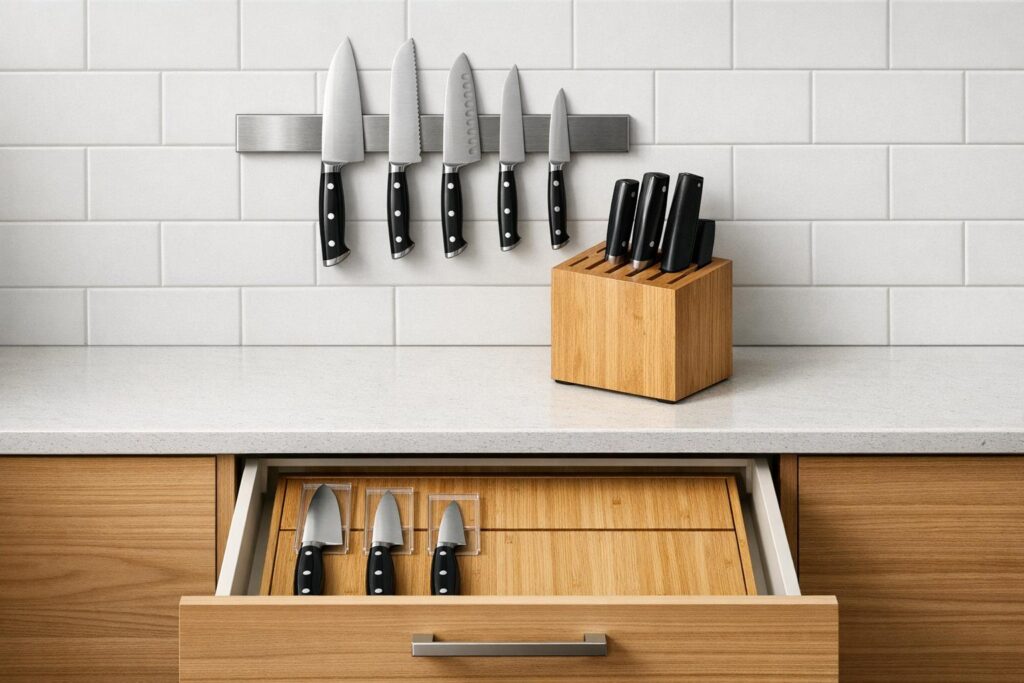
Knives are essential kitchen tools, but how you store them directly impacts their safety, sharpness, and hygiene. Improper storage can lead to injuries, dull blades, and even bacterial growth. Here’s a quick breakdown of the best storage options for your knives:
- Knife Blocks: Convenient and stable but can trap moisture and dull blades if not used carefully. Slotless blocks or magnetic stands are better alternatives.
- Magnetic Strips: Space-saving and easy to clean, but exposed blades can pose risks in homes with kids or pets.
- In-Drawer Organizers: Great for small kitchens, keeping knives safely out of sight while protecting their edges.
- Blade Guards, Sheaths, and Sayas: Ideal for individual knives, especially when transporting or storing high-value blades.
Key Tips for Knife Care:
- Always handwash and dry knives immediately after use.
- Apply food-safe oil to carbon steel knives to prevent rust.
- Choose storage solutions that protect both the blade and your hands.
Proper storage not only keeps your knives sharper for longer but also ensures a safer and more hygienic kitchen. Let’s dive deeper into each option and how to choose the best one for your needs.
Knife Storage Solutions for Every Kitchen
sbb-itb-663e316
Why Proper Knife Storage Matters
Storing knives properly isn’t just about keeping your kitchen tidy – it’s about safety, blade longevity, and hygiene. Tossing knives into a drawer without care can lead to three big problems: injuries, damaged blades, and bacterial buildup.
Safety should always come first. Jared Schmidt, Co-founder and COO of Schmidt Bros. Cutlery, emphasizes:
"Reaching into a drawer filled with exposed blades is a quick way to end up with a finger injury."
By storing knives correctly, you can keep sharp edges out of reach of children and pets while ensuring handles are positioned for safe, easy access.
Blade damage is another concern. Shanna Jantz Kemp, a knife maker at Jantz Supply, explains:
"Tossing knives into a drawer next to metal utensils or other kitchen tools is almost a guaranteed way to dull the blades or cause tiny chips."
The edge of a high-quality knife is incredibly delicate – sometimes thinner than a human hair. Without proper protection, blades can develop nicks or scratches, and dull knives can even be more hazardous than sharp ones since they require more force, increasing the risk of slipping.
Hygiene is equally important. A study by NSF International found that knife blocks rank as the 7th germiest item in the kitchen, falling just below the refrigerator meat drawer. Moist, enclosed spaces can become breeding grounds for bacteria, especially if knives aren’t dried thoroughly before being stored. George Guzman, Chef at Carta Wine Bar, warns:
"If knives are returned to the block without being fully sanitized, they may retain residue that can lead to bacterial growth over time, especially with temperature changes."
To avoid these issues, take a few simple precautions: dry your knives completely after washing, store them in a well-ventilated area, and choose storage options that protect both the blade and your hands. By focusing on safety, blade care, and cleanliness, you’ll be better equipped to select the best storage solution for your kitchen.
Common Knife Storage Options
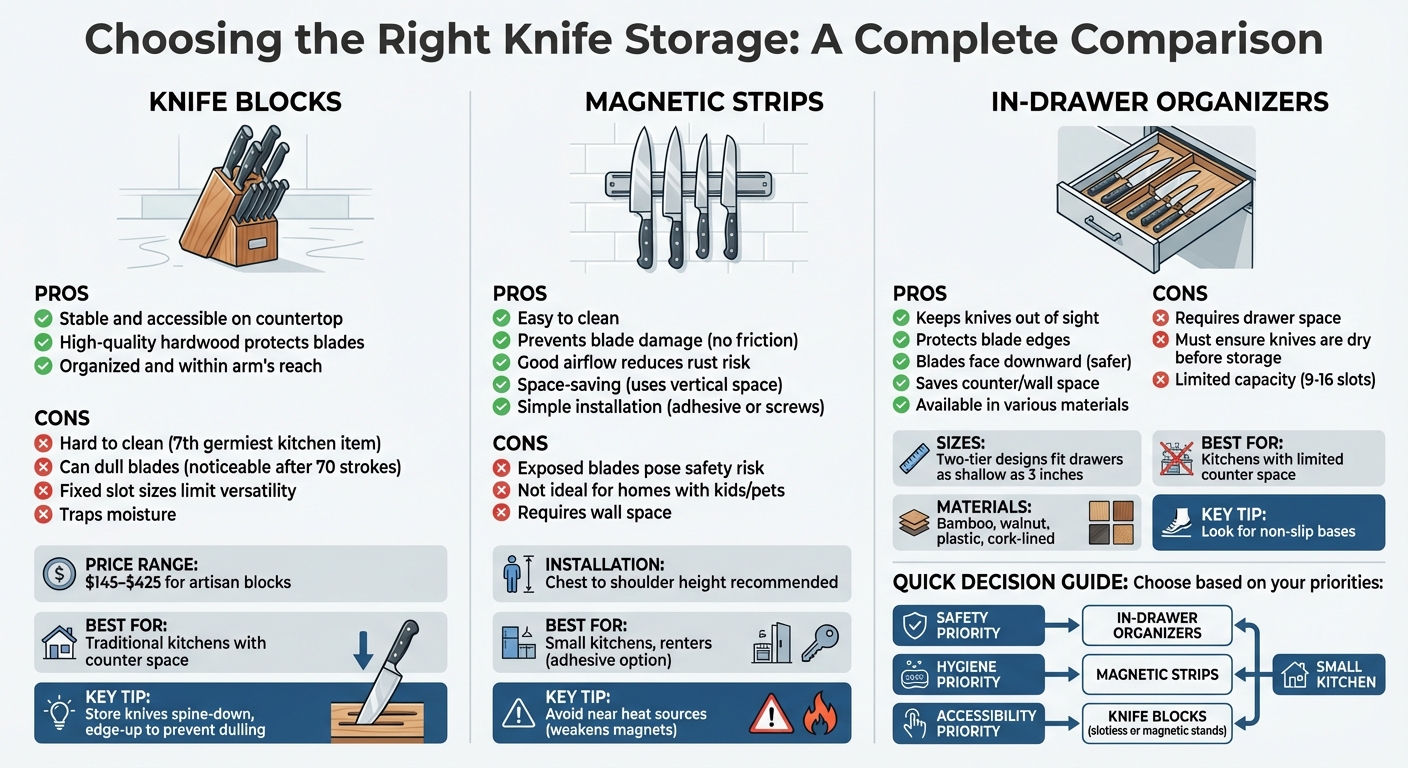
Knife Storage Options Comparison: Blocks, Magnetic Strips, and Drawer Organizers
Once you understand why proper storage is important, the next step is deciding which solution works best for your kitchen. Three popular choices – knife blocks, magnetic strips, and in-drawer organizers – each come with their own perks and challenges.
Knife blocks are the go-to option for many. They keep your knives organized and within arm’s reach on the countertop. High-quality hardwood blocks are gentle on blades, but traditional slotted designs have their downsides. For one, cleaning them can be tricky. Prices vary widely, from budget-friendly models to custom artisan blocks that can cost anywhere from $145 to $425. If hygiene is a priority, slotless blocks with removable plastic rods (which are dishwasher safe) or magnetic stands that display knives on the exterior are better options.
Magnetic knife strips solve many of the issues associated with traditional blocks. They’re simple to clean, prevent blade damage, and allow for good airflow, which helps reduce the risk of rust. Installation is a breeze – use adhesive backing for a renter-friendly option or screws for a more permanent setup. For instance, the Jonathan Alden Magnetic Wooden Bar is highly praised for its strong magnetic hold and protective wooden surface. However, exposed blades can be a safety concern, especially in homes with kids or pets.
In-drawer organizers are perfect for kitchens with limited counter or wall space. These keep knives separated and positioned with the blade facing downward, reducing the risk of accidental cuts – something Jared Schmidt of Schmidt Bros. Cutlery emphasizes as a common hazard. Materials range from bamboo and walnut for durability and style to plastic options that are dishwasher safe. Cork-lined models add flexibility for storing knives of various sizes while protecting their edges. Organizers come in different sizes, from 9 to 16 slots, with some two-tier designs fitting shallow drawers as little as 3 inches deep. Look for non-slip bases to keep them steady, and always store completely dry knives to prevent bacteria or mold growth.
Below, we’ll dive deeper into each option to help you make the best choice for your needs.
Knife Blocks: Pros, Cons, and Best Practices
Knife blocks offer a convenient way to store your kitchen tools on the countertop. They’re stable, accessible, and high-quality hardwood options (like walnut, cherry, or maple) protect blades better than plastic or glass.
One downside is that slotted blocks can dull knives. Friction from the wood wears down the cutting edge – tests show noticeable dulling after just 70 strokes with a standard vertical-slot block. To avoid this, always store knives with the spine down and the edge up. This method prevents contact with the wood, as tests revealed no damage even after 200 strokes when stored correctly.
Hygiene is another concern. Lisa Yakas, a microbiologist at NSF International, warns:
"Naturally, if you put a wet or dirty knife into a storage block, microbes may grow. Dark, moist environments breed germs".
Always dry knives thoroughly before storage. Clean the block with a damp cloth (never soak it) and periodically treat wooden blocks with food-safe oil or beeswax to maintain their condition.
Traditional slotted blocks can also be less versatile. If your knife set doesn’t match the slot sizes, they may not fit properly. As Asha, Co-Founder of Dovetails & Stitches, explains:
"It’s not about having a block filled with every blade – it’s about efficiency, flow, and using the tools you actually reach for".
For better hygiene and flexibility, consider slotless blocks with dishwasher-safe rods or magnetic stands. The Zwilling Slanted Magnetic Knife Block combines these benefits with a sleek design.
| Storage Type | Pros | Cons |
|---|---|---|
| Slotted Block | Stable and classic; organizes knives. | Hard to clean; can dull blades; fixed slot sizes. |
| Slotless Block | Fits various knife shapes; easy to clean. | Rods may wear out; takes up counter space. |
| Magnetic Stand | Easy to clean; good ventilation. | Exposes blades (safety risk); more expensive. |
Inspect your knife block regularly for mold or oxidation, and check knife handles for cracks. With proper care, a hardwood block can last for years.
Magnetic Knife Strips: Installation and Usage
Magnetic strips offer a modern alternative to knife blocks. They use strong magnets, like neodymium, to hold metal blades securely without friction. This design helps preserve sharpness and allows airflow to prevent rust.
Installing a magnetic strip is simple. Adhesive backing works well for renters, while screws provide a sturdier, permanent solution. Place the strip at a comfortable height – typically between chest and shoulder level – and ensure there’s enough clearance for knife handles. Avoid installing it near heat sources like stoves, as high temperatures could weaken the magnets.
While magnetic strips are hygienic and space-saving, they do leave blades exposed, which could be risky in homes with children or pets.
In-Drawer Organizers and Trays
For kitchens short on counter space, in-drawer organizers are a practical way to store knives safely. By keeping blades separated and facing downward, they minimize the risk of injury when reaching into a drawer.
These organizers come in a variety of materials. Bamboo, walnut, and acacia provide durability and style, while plastic options are easier to clean. Cork-lined dividers offer added flexibility to fit different knife sizes while protecting the blades.
Before buying, measure your drawer carefully. Organizers are available with 9 to 16 slots, and some two-tier designs can fit in drawers as shallow as 3 inches. Look for features like non-slip bases to keep the organizer steady. And, as always, make sure your knives are completely dry before storing to avoid bacterial growth or mold.
No matter your kitchen setup, there’s a knife storage solution to fit your needs. Whether you prioritize hygiene, accessibility, or space-saving design, the right choice will help keep your knives sharp and safe for years to come.
Blade Guards, Sheaths, and Sayas
While general knife storage options can protect an entire set, individual blade protection goes a step further. It’s especially useful for high-value knives or blades that are frequently transported. Blade guards, sheaths, and sayas are designed to safeguard specific knives, whether they’re stored in a drawer, packed for travel, or simply need extra care. These accessories shield the blade from unnecessary edge contact, which helps prevent micro-chipping. They also keep you safe from accidental cuts and stop knives from piercing through bags or knife rolls.
Blade guards (also called edge guards) are rectangular covers made from plastic or rubber that fit snugly over the blade’s edge. These are affordable (typically $4 to $15) and work well for drawer storage or when packing knives in a roll. Some modern versions even feature hinged designs with locking latches, tested to endure over 10,000 open-and-close cycles for added reliability. Using a blade guard can reduce edge dulling by as much as 85% compared to unprotected storage in a drawer.
Sheaths offer full-blade coverage and are usually crafted from durable materials like leather or Kydex. They’re ideal for transporting knives or for outdoor use, as they provide excellent durability and secure closures, such as straps or snaps, to keep the knife firmly in place. However, leather sheaths aren’t ideal for long-term storage of kitchen knives. The tanning chemicals in leather can react with steel, potentially causing rust or staining.
Sayas are traditional Japanese wooden sheaths, commonly made from Magnolia wood. Each saya is custom-fitted to match a specific blade shape and secured with a wooden pin to hold the knife securely in place. Magnolia wood is often chosen because it’s lightweight, resists moisture, and doesn’t contain resins that could corrode high-carbon steel. Prices for wooden sayas generally range from $15 to $50, depending on the type of wood.
When selecting any of these options, ensure the length matches or slightly exceeds your blade (by about 0.5 inches) to fully cover the tip and heel. Always dry your knife before placing it in a guard or saya – trapped moisture can lead to rust, even on stainless steel blades. Plastic guards should be cleaned weekly with soap and water, while wooden sayas require only a dry cloth wipe and occasional oiling. These small maintenance steps, combined with proper pre-storage care, can help extend the life of your knives.
Protecting Blades from Rust and Dullness
Even the best storage methods won’t save your knives if they aren’t prepped correctly beforehand. Most knife corrosion happens during storage, not during use, according to restoration workshops. A simple care routine can help prevent rust, water spots, and dulling – important when professional sharpening costs about $20 per standard blade. Following these steps will keep your blades in top condition.
Moisture is your knife’s worst enemy. Always wash your knives by hand with warm water and mild dish soap, then dry them immediately with a soft towel. Dishwashers are a no-go – their heat and harsh detergents can damage handles and pit the blades. Also, never leave knives soaking in the sink. Prolonged water exposure can loosen handle rivets, cause wooden handles to swell, and speed up rusting.
When drying, wipe from the spine toward the sharp edge to avoid injury, and let the knife air dry briefly to ensure no moisture lingers in crevices. After cutting acidic foods like citrus, onions, or tomatoes, clean your knife right away. Acids can speed up corrosion.
For carbon steel knives, applying a thin coat of food-safe mineral oil or Tsubaki oil creates a moisture barrier. Even stainless steel benefits from occasional oiling, especially for long-term storage. As Element Knife Company explains:
"Remember, ‘stainless’ means ‘stain-less,’ not ‘stain-free’".
Stainless steel relies on a protective chromium oxide layer, which can take up to 24 hours to restore itself if damaged. Meanwhile, carbon steel can rust in minutes if left wet.
Pre-Storage Protection Routine
This routine complements the storage methods discussed earlier and works for all knife types. Here’s what to do:
| Step | Action | Purpose | Applicable Knife Types |
|---|---|---|---|
| 1. Wash | Hand wash with warm, soapy water. | Removes food residue and acidic juices. | All (Stainless, Carbon, Ceramic) |
| 2. Dry | Use a soft, clean towel immediately. | Prevents water spots and oxidation. | All |
| 3. Air Dry | Let sit for a few minutes. | Ensures no moisture remains in crevices. | All |
| 4. Oil | Apply food-safe mineral or Tsubaki oil. | Adds a protective barrier. | Essential for Carbon; Recommended for Stainless (long-term) |
| 5. Inspect | Look for chips, misalignment, or rust spots. | Catches issues early. | All |
If you notice light rust, use a rust eraser (about $11.95) or fine-grit wet/dry sandpaper rather than steel wool, which can scratch the blade. For carbon steel, let it develop a natural gray-to-brown patina – this layer helps guard against red rust. Store your knives in a cool, dry, and dark place, avoiding humid spaces like basements or garages. For extended storage of carbon steel, consider wrapping the blade in Volatile Corrosion Inhibitor (VCI) paper for added protection.
Choosing the Right Storage Solution for Your Needs
When deciding how to store your knives, it’s important to consider your kitchen’s layout, the types of knives you own, and your safety needs. Start by taking stock of your knife collection and evaluating the space you have available. According to Daniel Gritzer, Editorial Director at Serious Eats:
"For most home cooks, we recommend a magnetic knife strip or a cork-lined knife holder. Both of these knife storage solutions offer far more flexibility than knife blocks".
If you’re working with a small kitchen, wall-mounted magnetic strips can be a game-changer. These strips, available at a range of prices, help you make the most of vertical space while keeping your knives within easy reach. As Josh Joseph from Axeman.ca points out:
"If you have limited counter space, a wall-mounted storage solution… could be ideal, allowing you to display your favorite knives while saving space".
For those who prefer to keep their knives out of sight, in-drawer organizers are a great alternative. Before purchasing, be sure to measure your drawer’s interior dimensions to ensure the organizer fits and allows the drawer to close properly. These options not only address spatial concerns but also meet safety and blade-specific requirements.
Safety is especially crucial in homes with children. Magnetic strips should be mounted high enough to keep blades out of reach, while in-drawer trays provide an added layer of protection by completely concealing the knives. Just as proper cleaning and drying are essential to prevent rust, choosing the right storage solution plays a key role in maintaining your knives’ longevity.
Different blade materials and designs also influence storage needs. Carbon steel knives, for instance, thrive in a dry environment with humidity levels under 60%, making magnetic strips a practical choice for open-air storage. However, ceramic knives are more fragile and should be stored in individual slots or padded cases to prevent chipping. For high-end Japanese knives, wooden sayas – custom-fitted wooden sheaths costing about $30 each – offer excellent protection, helping to preserve the blade’s integrity.
FAQs
What’s the safest knife storage option if I have kids or pets?
When you have kids or pets at home, keeping sharp objects like knives safely stored is a top priority. Some of the best options include:
- Locked Cabinets: These are a go-to option for securing knives. They keep sharp tools completely out of reach, offering peace of mind.
- Knife Guards: These protective covers not only shield the blade but also reduce the chances of accidental cuts during handling.
- Wall-Mounted Magnetic Strips: Mounted high on the wall, these strips keep knives accessible for adults but safely out of reach for little hands and curious paws.
The key is to choose a method that balances security with convenience, ensuring knives are only accessible to adults while minimizing risks at home.
How do I clean a knife block without damaging it?
To clean a knife block without causing damage, start by carefully removing all the knives. Next, shake out any crumbs or dust that may have accumulated inside. Use a small brush, like a bottle brush or toothbrush, to reach and clean the interior of the slots. Avoid soaking the block in water, as this can lead to swelling or mold. Instead, wipe the exterior with a damp cloth. Once cleaned, let the block air-dry completely before placing the knives back. Steer clear of harsh cleaners or dishwashers, as they can cause stains or other damage, ensuring your knife block stays in great shape.
Do I need to oil stainless steel knives before storage?
Yes, applying oil to stainless steel knives before storing them is a good idea, particularly in humid environments or when storing them for extended periods. A light coating of food-safe mineral oil or another protective oil acts as a shield against moisture and oxidation. This helps prevent rust and keeps the blade in good shape. Make sure to apply the oil after cleaning the knife to ensure it stays in top condition.