
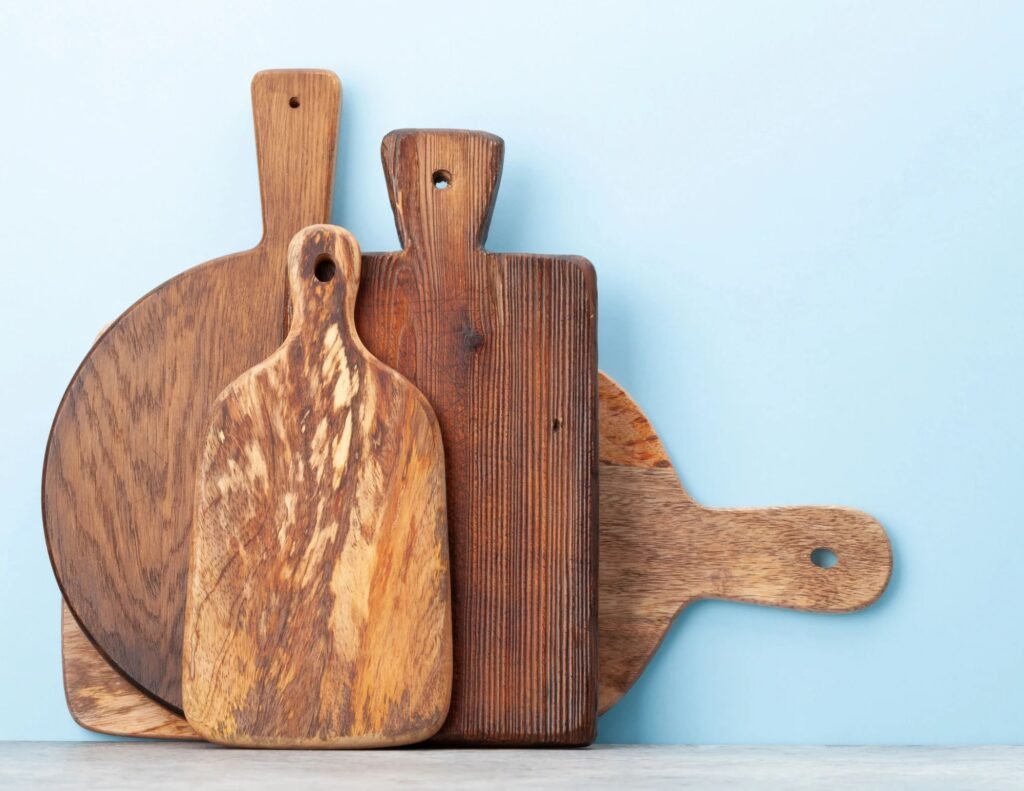
Cooking is one of the best ways to express yourself. If you love cooking as much as we do, you know how important a cutting board is. For example, you wouldn’t want to chop onions or a giant turkey on a ceramic plate, since it can break under enough pressure.
However, with the right cutting board, you’ll cook more successfully while protecting your countertops and other surfaces from scratches over time. Plus, it is nice to have a designated cutting board you can use for multiple meals!
In this article, we will discuss the best cutting boards, the differences between them (such as wood vs. plastic), and some frequently asked questions. This article is your ultimate guide to choosing the best option for you. Without further ado, let’s get started!
What Are the Best Cutting Boards? At a Glance
Essentially, the best cutting boards work well in a functional setting and are easy to clean and maintain. Overall, if you are constantly working hard to keep the cutting board looking pristine or have to replace it every few months to a year because of constant scratches, it is not the best option for you.
However, you should consider budget-friendly options and which board is best for a specific scenario, like carving meat. Let us take a look at our overall reviewed favorites below:
-
Best Overall: Epicurean Kitchen Series Cutting Board
-
Best Budget: Totally Bamboo Cutting Board Set of 3
-
Best Plastic/Dishwasher-Safe: OXO Good Grips Plastic Cutting Board
-
Best Large/Carving: Greener Chef 2XL Carving Board
-
Best for Knives: John Boos Chop-N-Slice Series Maple Cutting Board
Wood vs. Plastic vs. Bamboo vs. Composite: Which is Better?
When it comes to 4 different types of cutting boards, it’s important to understand their comparisons and contrasts. This will help you decide which cutting board is best for you. For example, if you often carve large cuts of meat, a good XL cutting board is better than a flat one where juices can spill over.
Nevertheless, if you only have the budget for something simple, using what you have is always the best option. Even so, below, we’ll cover wood vs. plastic vs. bamboo vs. composite cutting boards and review which one best suits your needs.
1. Wood Cutting Boards
Wood cutting boards are good for everyday use. They are best known for protecting your knife blades and serving food. First, we’ll review the pros and cons at a glance.
| PROS | CONS |
| Durable and repairable | Heavier and bulkier |
| Contains natural antimicrobial properties | Can be difficult to clean |
| Aesthetically pleasing | Needs constant oiling or conditioning |
| Knife-friendly | Higher cost initially |
| Provides quieter meal prep | Cannot be soaked in water |
| Food safety compliance | Vulnerable to deep grooves: Heavier cuts may require additional sanding |
| Higher maintenance |
Knife Wear
In terms of knife wear, a wooden cutting board’s surface is extremely forgiving because it’s softer and shock-absorbing. Your knife will last much longer. In fact, the blade will last much longer on a wood surface than on bamboo, metal, or composite. Plus, many wood boards close back up after they separate, preventing permanent, deep grooves.
Bacteria & Cleaning
Although cleaning a wood cutting board isn’t difficult, it does take a bit of work and may take a few minutes. For example, you can clean it with mild soap and water, but make sure to dry it with a towel immediately, then set it somewhere it can air-dry thoroughly.
For deep cleaning, oil the surface of your cutting board every couple of weeks to prevent drying out and cracking. Lastly, deep clean your cutting board at least once a month with lemon and salt, then let it sit for 5 minutes before rinsing it off. If the stain is stubborn, make a paste with baking soda and water, then rinse it off afterward.
You can’t put a wood cutting board in the dishwasher or let it soak in water. Otherwise, the entire board gets ruined. So, if you use the dishwasher for everything because you don’t like hand-washing your dishes, a wood cutting board may not be for you unless you are willing to do a bit of work to keep a nontoxic living environment.
Thankfully, wood cutting boards don’t harbor many bacteria. This is because wood will naturally fight off bacteria. For example, if you cut raw chicken on a wood surface, any sign of E. coli or Salmonella will get trapped inside the wood but cannot multiply. After the wood dries out, any signs of bacteria will die within a few minutes to hours.
Maintenance
Maintaining a wood cutting board is fairly easy. The main things to keep in mind are keeping it oiled, keeping the surface dry (especially after cleaning), and storing it somewhere each part can fully dry out.
Also, if you cut something juicy on the board or just made homemade bread, any lingering moisture can cause the board to warp. In that case, keep only certain items off the board for a set amount of time. Otherwise, you will end up with a non-flat surface.
Price
The price of a wooden cutting board depends on the wood type, grain style, and thickness. Here is a quick breakdown of the price range:
- Budget-friendly options: Usually $15-25, often made of bamboo or rubberwood. These boards are usually one inch long. However, they’re prone to warping over time if exposed to uneven moisture.
- Mid-range options: Around $35-90, made from soft maple, beech, or sustainable teak. You can also find premium brands in this range made from maple, cherry, or walnut.
- Premium options: Prices range from $90-200+, and they include a thick, 2-inch piece of walnut, cherry, or hard maple. You can also find many XL wood boards made by artisan butcher block companies, most of which are handmade.
When to Replace a Wood Cutting Board?
Even good things in life must end at some point. Although some wood cutting boards can last several years or even your entire lifetime, replace a wood cutting board if it sits warped on your counter or has deep cracks and slits that cannot be fixed. Also, if you notice clear mold, rot, or a consistent sour odor, it is time to replace the board.
2. Plastic Cutting Boards
A plastic cutting board is usually the most budget-friendly option for any household. It is great for cutting multiple meats and seafood, as well as heavily stained ingredients like beets and berries. Most plastic cutting boards can handle a lot of pressure, so you can use them in multiple ways. Below are the pros and cons of plastic cutting boards.
| PROS | CONS |
| Budget-friendly | No natural antimicrobial properties |
| Low maintenance | Is prone to dulling the knife faster |
| Good for raw meats | Microplastic shedding |
| Most are dishwasher-safe | Deep scratches trap bacteria |
| Lightweight and portable | Has a shorter lifespan |
| Easy to store | Causes stains and odors quicker |
Knife Wear
Plastic cutting boards dull knives much faster than the wood boards we mentioned above. However, the wear is moderate, and your knives will still last a relatively long time. Also, a plastic cutting board has a small amount of “give” when the blade hits, which means it’s still forgiving on a knife’s edge.
On the other hand, if you are investing in acrylic and glass-like plastic, the wear and tear is harder and more rigid. If you want a plastic cutting board that causes less damage, we recommend polypropylene/HDPE instead.
Bacteria & Cleaning
Initially, plastic cutting boards are a dream to clean because they don’t hold knife grooves, stains, or odors. Yet over time, the plastic breaks down and more knife grooves appear, making them harder to clean, even in the dishwasher.
The saying, “you get what you paid for,” is extremely accurate when it comes to plastic cutting boards. Although they are cheap and fit everyone’s budget, they can start harboring bacteria like Salmonella and E. coli wedged into knife scars.
Because of this, plastic cutting boards aren’t the most eco-friendly or best choice if you want a toxin-free home. Lastly, microplastics can eventually get into your food as the board breaks down.
Maintenance
One good thing about plastic cutting boards is that you can throw them in the dishwasher or soak them in the sink. Plus, you don’t need to oil or condition your board, which makes it much easier.
However, you cannot sand the cutting board if you notice the surface isn’t smooth. You will need to throw it away and replace it over time.
Price
A plastic cutting board is usually within almost anyone’s budget. Down below we have a brief breakdown by category:
- Single boards and low-budget options: These boards typically vary from $4-15. These boards are small to medium and made from standard polyethylene or polypropylene.
- Multi-piece mat or multipack sets: Ranging from $5-30, a multipack set helps prevent cross-contamination from occurring. Plus, you won’t have to wash the board multiple times to cut lots of different things (for example: if you are cutting 3 different vegetables and one meat item and only have one cutting board, getting multiple might be the best option for your home.
- Commercial high-density polyethylene: These thicker, heavy-duty commercial boards usually cost $15-60 and are most often used in the food service industry. You can also buy them yourself to ensure the cutting board lasts longer.
When to Replace a Plastic Cutting Board?
Replace a plastic cutting board when it develops deep knife grooves, starts warping or wobbling, or becomes heavily stained that refuses to come off. Also, if a plastic surface becomes “fuzzed” over time, it’s an easy sign you need a new board.
These are major signs that, no matter how many times you clean it, it still won’t be clean enough and will do more harm than good.
3. Bamboo Cutting Boards
As one of the most budget-friendly options, a bamboo cutting board can be a beautiful addition to your kitchen. However, bamboo cutting boards are best for serving, light food prep, and presentation rather than heavy chopping. Think charcuterie board for all of your presentation needs! Let us briefly review the list of pros and cons of a bamboo cutting board:
| PROS | CONS |
| Perfect for those on a budget | Not dishwasher-safe |
| Highly sustainable | Contains the potential for added chemicals |
| Resistant to stains and moisture | Hard on a knife’s edge |
| Low maintenance | Prone to warping and splitting |
| Lightweight and maneuverable | Cuts fairly loudly |
| Eco-friendly | Not suitable for heavy chopping |
Knife Wear
Because bamboo is a hard surface, it isn’t ideal for knife wear. Also, bamboo is extremely dense and contains high silica content. As a result, when the knife hits the board, microscopic abrasive particles strike the blade and dull it quickly. Lastly, bamboo contains hard glues, so your knife isn’t hitting organic fibers.
Bacteria & Cleaning
Cleaning a bamboo cutting board is an extremely simple process. However, clean the board as soon as you finish using it. Otherwise, food particles will remain caked on and be harder to remove. If you scrub too hard, some fibers may come off, leaving you with a non-usable cutting board. Also, it is not dishwasher-safe, but if you keep it clean, the board should last a long time.
You will be happy to know that bamboo does not harbor bacteria easily. In fact, it doesn’t absorb much moisture, which makes it more resistant to bacteria and mold.
Maintenance
Maintaining a bamboo cutting board is similar to maintaining the wood cutting board we mentioned above. You must do these 6 simple but crucial steps:
- Hand-wash the board only immediately after use.
- Gently scrub with a non-abrasive sponge or brush to remove food particles.
- Dry immediately to prevent warping, then let it fully air-dry before hanging it up.
- Never soak it or put it in the dishwasher, as this can cause splitting, warping, or ruin the food-safe glues.
- Season the board regularly with food-safe oils.
- Deep clean every so often using the same method mentioned above for wood cutting boards.
Price
Thankfully, bamboo cutting boards don’t cost much. Usually, an individual board costs $5 to $20, while multi-piece sets cost $12 to $40. However, if you want a premium or XL butcher block, expect to pay $50-100, depending on the brand, features, and thickness.
When to Replace a Bamboo Cutting Board?
Replace a bamboo cutting board as soon as you notice splintering, warping, separating seams, or deep grooves. This is especially true if the splintering occurs, as it can contaminate your food with debris that can then enter your body and cause complications.
4. Composite Cutting Boards
Composite cutting boards are made from compressed wood pulp or paper fibers mixed with a food-safe resin and pressed under extreme heat and pressure. They are often called wood-fiber boards or paper composites. However, like anything, composite cutting boards come with a mix of pros and cons.
| PROS | CONS |
| Lightweight and thin | Noisey |
| Dishwasher-safe | Hard on knives |
| Low maintenance | Not ideal for heavy prep |
| Stain resistant | |
| Durable |
Knife Wear
In terms of the wear and tear your knife will endure, composite cutting boards do not have as much “give” as wood, plastic, or rubber boards would. This means they are essentially harsher than both. As a result, your knife will dull much faster.
Bacteria & Cleaning
Composite cutting boards are extremely easy to clean: you can wipe down the surface and put them in the dishwasher. Composite boards can handle high heat. Plus, they don’t easily warp or crack, which is one of the main reasons people choose them over traditional wood.
Regarding bacteria build-up, you will be happy to know the material is non-porous, meaning juices, liquids, and other microorganisms won’t penetrate the surface.
Maintenance
If you want an extremely low-maintenance cutting board, the composite cutting board doesn’t require additional sanding, waxing, oiling, or special conditioner. However, if you notice a deep scratch from years of use, you can lightly sand it with fine-grit sandpaper. Overall, this is probably one of the easiest cutting boards to maintain.
Price
These cutting boards can cost a mid-range investment of $20-60, depending on the brand and size you want. Although they aren’t super budget-friendly, they pay off in the long run!
When to Replace a Composite Cutting Board?
There are a few key factors to know when you should replace a composite cutting board:
- If you notice any warping
- Deep, rough scores that cannot be fixed with a simple sanding down
- You notice any splitting or peeling
Best Cutting Boards Reviewed
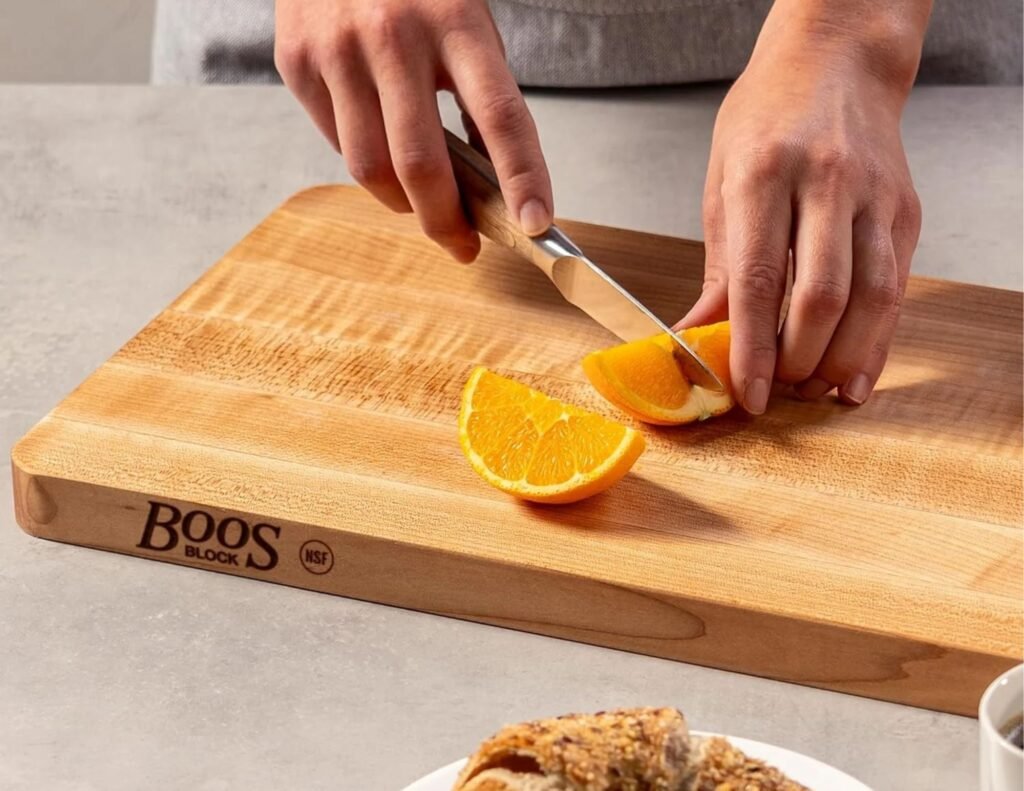
1. John Boos Chop-N-Slice Series Maple Cutting Board
The first cutting board on our list is the John Boos Chop-N-Slice Series, and thankfully, it comes in multiple sizes to fit whatever cutting needs you have! This 1-inch-thick board is made from North American hardwood with a maple color.
It is great for slicing whatever you need: vegetables, fruit, meat, bread, or anything else. It includes 2 usable sides, eased corners, and an oil finish. Lastly, every piece of wood you buy has its own grain and texture, so no two are the same!
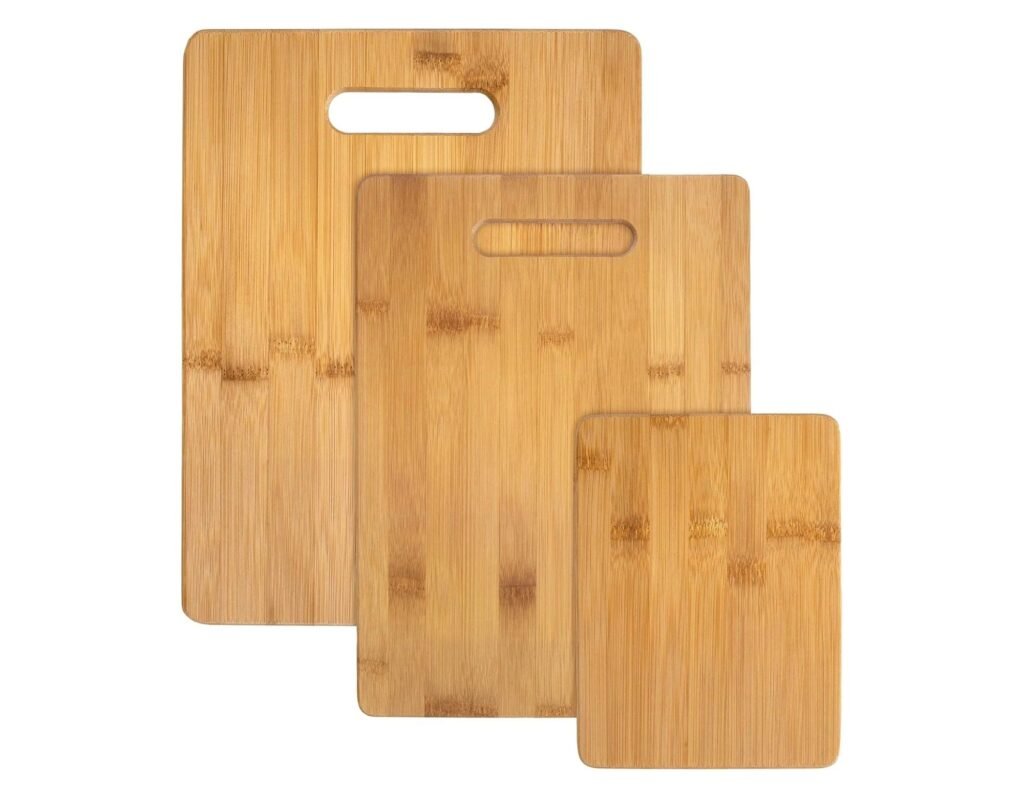
2. Totally Bamboo Cutting Board Set of 3
If you want more than one cutting board but have a strict budget, thankfully, Totally Bamboo has you covered with a set of 3 cutting boards in different sizes: 8” x 6”, 13” x 9.5”, and 11” x 8.5”. These bamboo boards are perfect for serving and chopping your favorite dishes, so you won’t need extra plates when you are making something special, like cheese and grapes with a glass of your favorite wine. Totally Bamboo cutting boards are versatile and lightweight rather than bulky, making them a perfect addition to your kitchen.
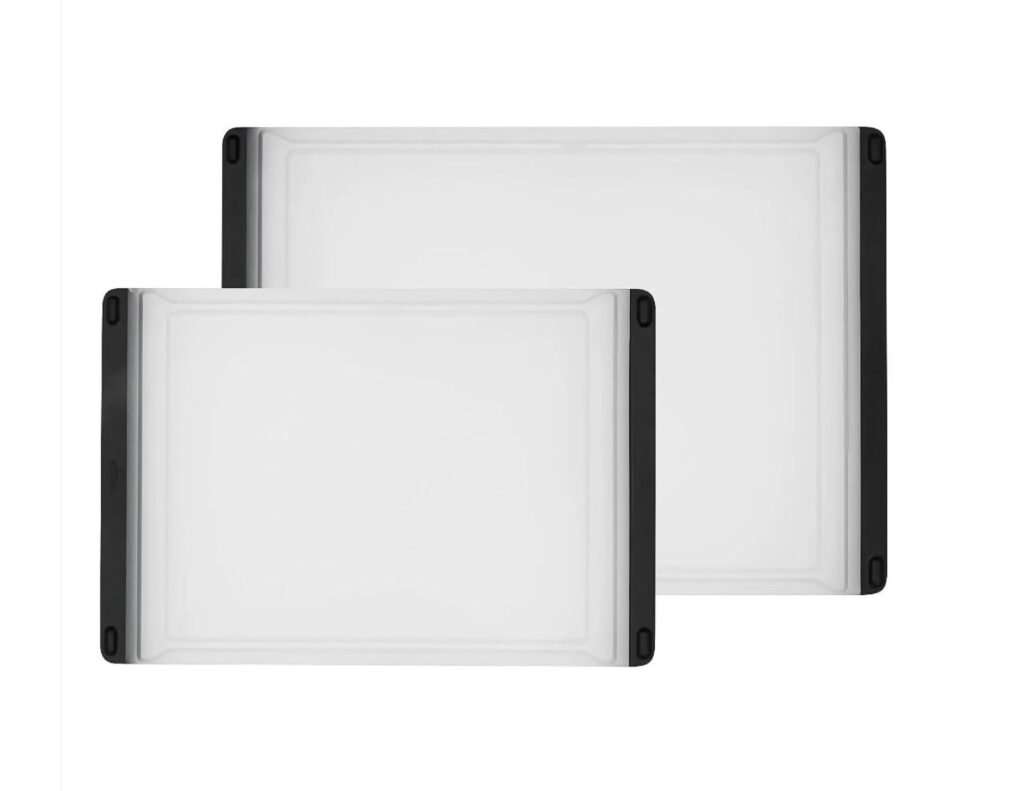
3. OXO Good Grips Plastic Cutting Board
If you want something easy to lift but durable, look no further than the OXO Good Grips plastic cutting boards that come in a 2-pack! These boards are excellent for everyday usage. Plus, once you are done, they go right into the dishwasher, making cleanup simple. Plus, these cutting boards are double-sided, so you can use the full surface.
4. Greener Chef 2XL Carving Board
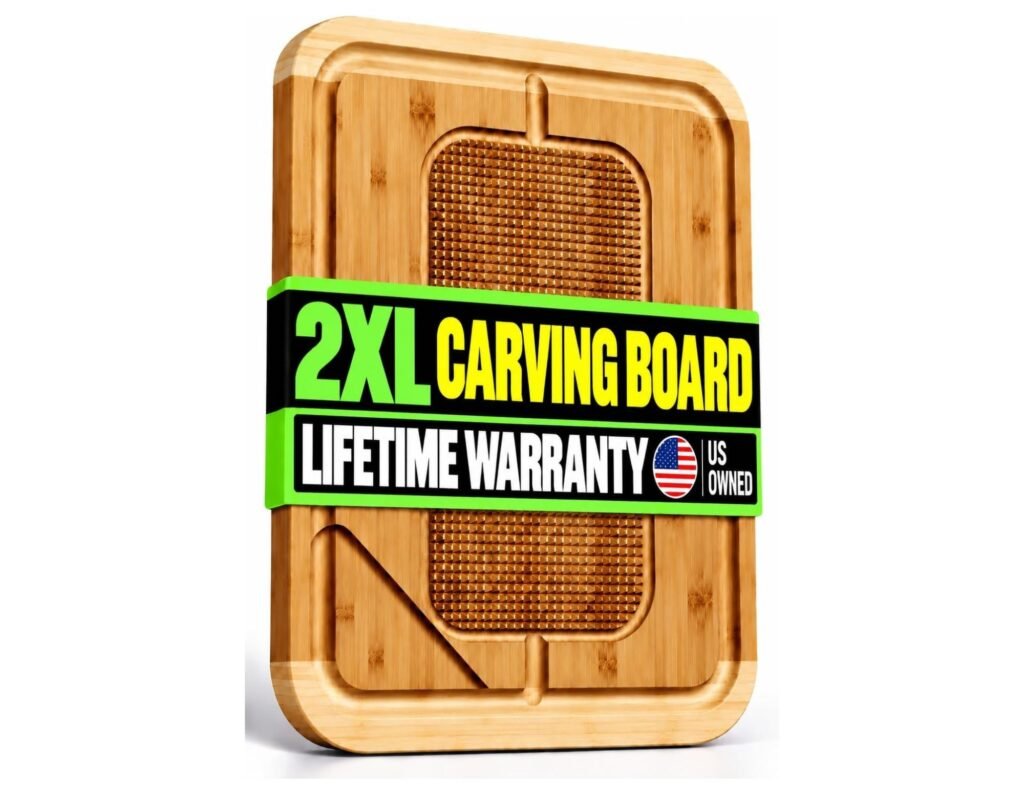
For those who love to cook giant turkeys, pot roasts, or other similar things often. The Greener Chef 2XL carving board is the perfect addition to your kitchen for several reasons. First, the board measures 24″ x 18″, and second, it has plenty of grooves to keep juices from spilling. Made of bamboo, it’s a great choice for anyone who wants to keep their home as eco-friendly as possible.
5. Epicurean Kitchen Series Cutting Board
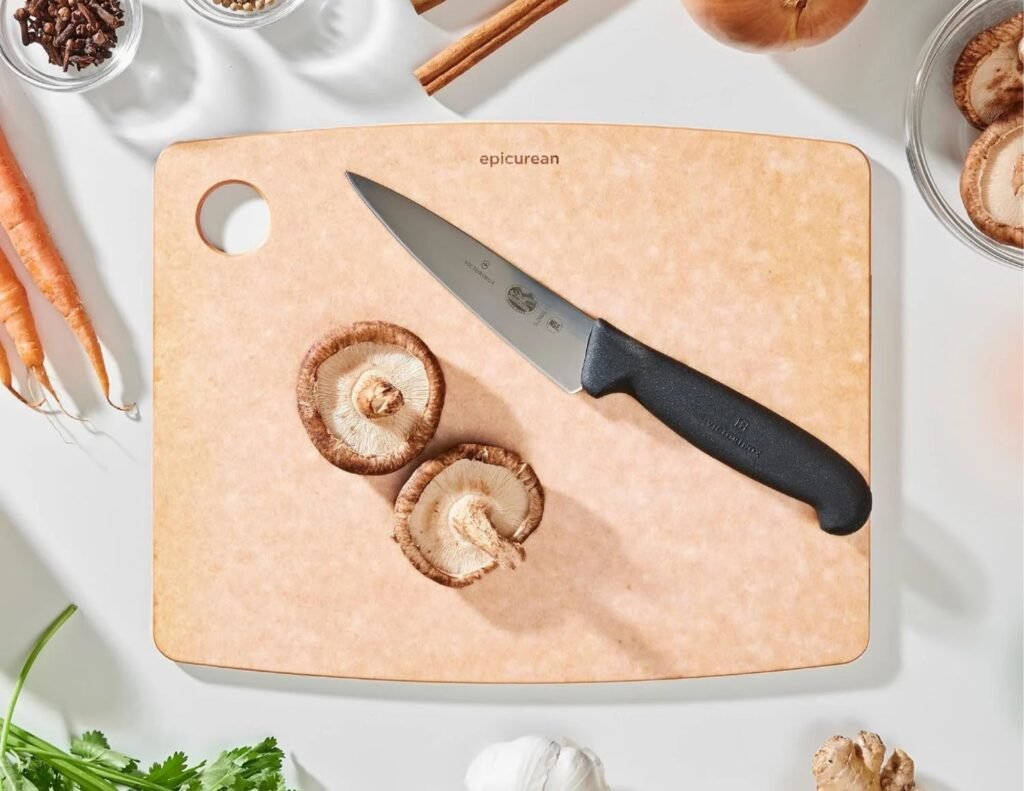
If you want a durable cutting board that needs little maintenance and stays non-toxic, you can stop your search at the Epicurean Kitchen Series cutting board! This cutting board is perfect for everyday use and can be utilized in the dishwasher. Lastly, these boards are meant to keep your knives sharper for longer, making them well worth the purchase!
6. Teakhaus Edge-Grain Teak Wood Carving Board
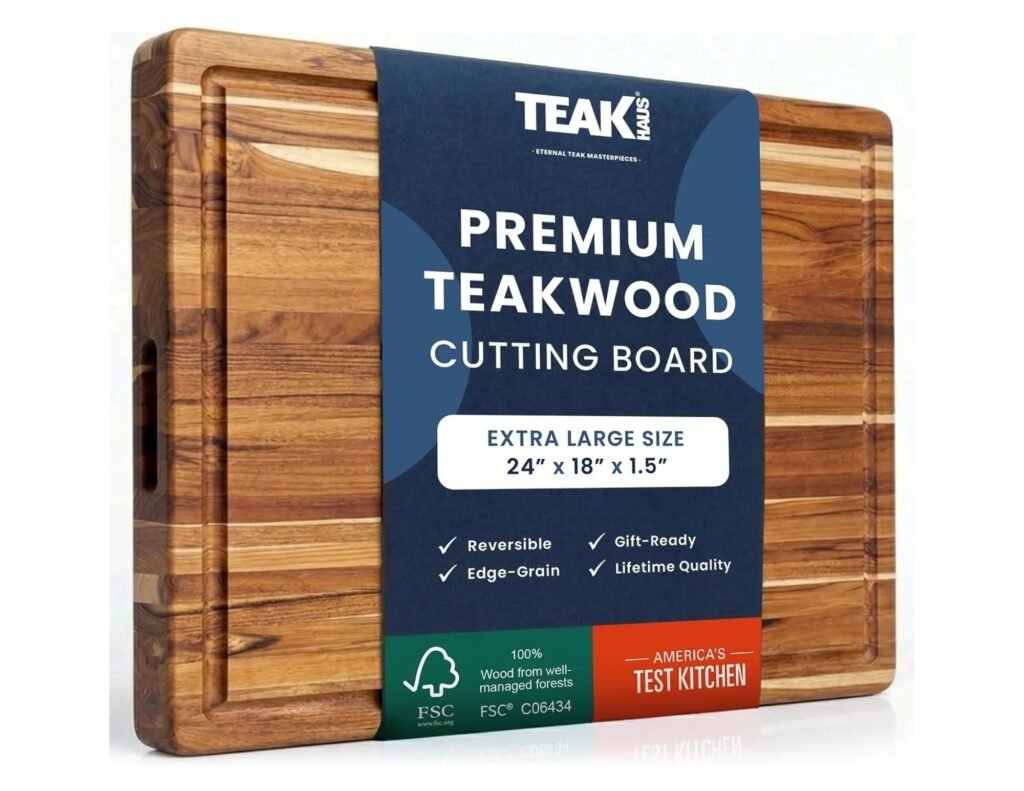
Another wood carving board we tested, the Teakhaus Edge-Grain Teak Wood Carving Board is higher quality, though it is a bit on the expensive side. However, it is worth every penny, since you can use it for multiple tasks, like slicing meats, vegetables, fruit, and other foods. Plus, this product comes with a lifetime warranty, so if anything happens, you can get a replacement at no extra cost.
7. Best Food-Grade Mineral Oil for Wood Cutting Board: Kate Naturals
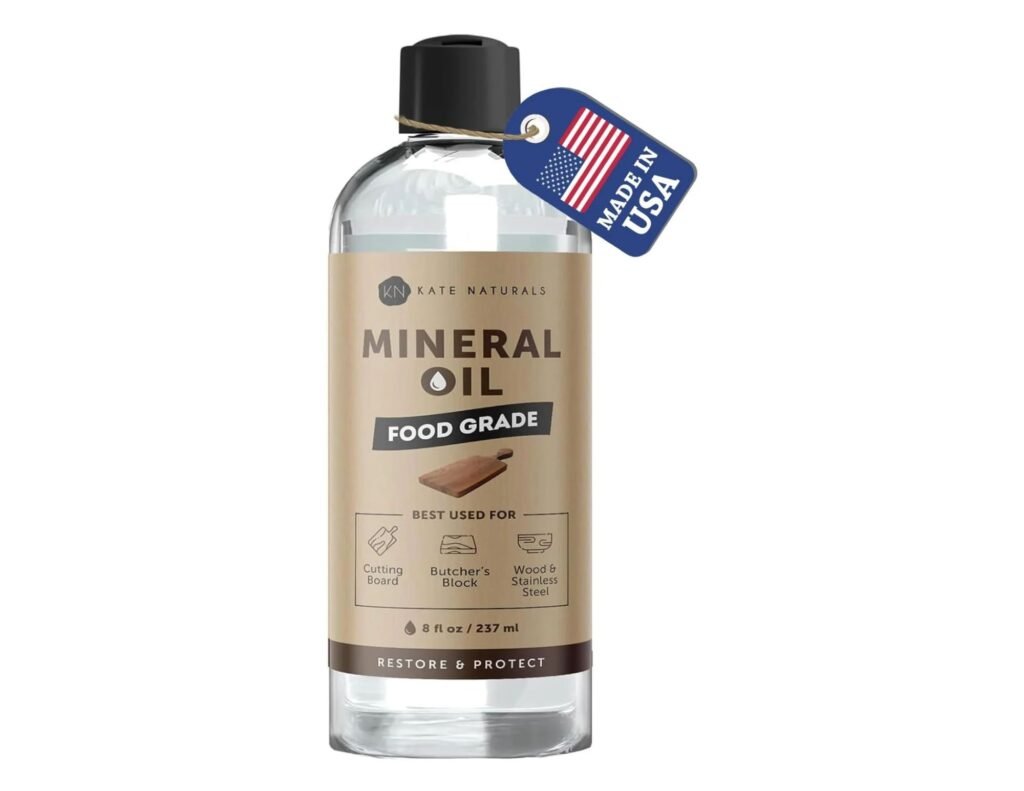
Although we’ve finished reviewing boards, we can agree that all wood and bamboo cutting boards need a good wood oil. Kate Naturals comes in three sizes: 8, 12, and 16 ounces. This wood oil should last a long time and is effective at oiling multiple wood surfaces, especially cutting boards. Lastly, lots of people appreciate that it is food-grade quality!
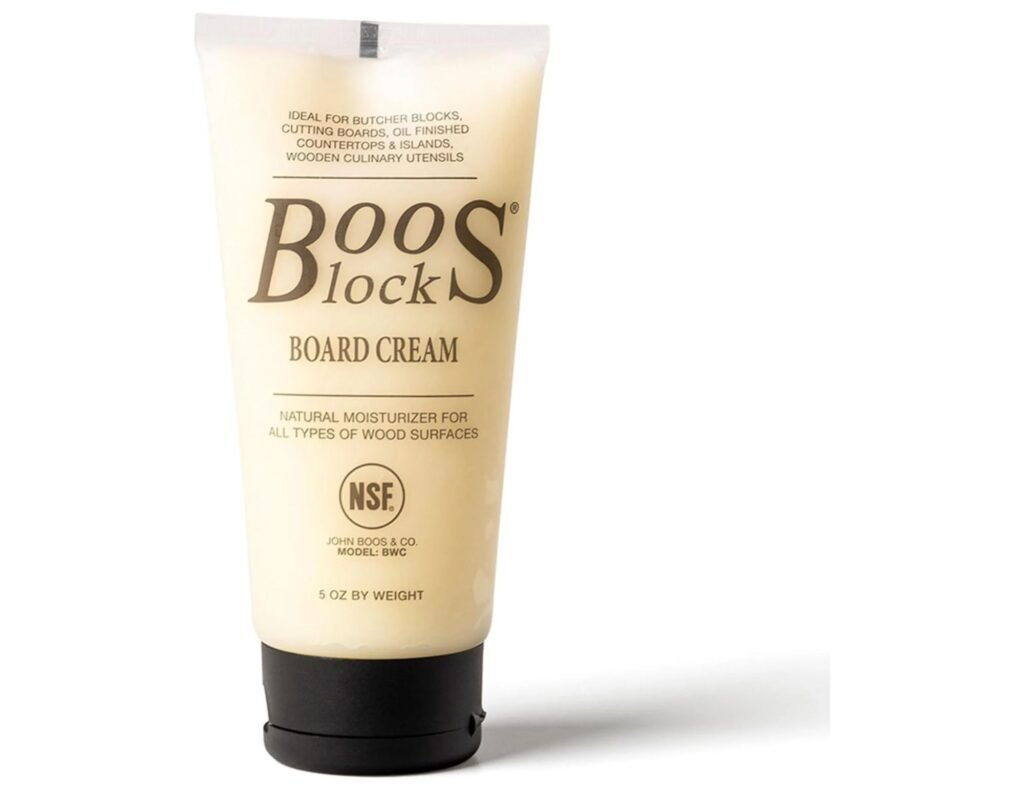
8. Best Food-Grade Cream for Wood Cutting Board: John Boos
The last item on our list is a food-grade cream called John Boos. This cream comes in a 5-ounce bottle and is made from beeswax, so it is safe to use on your cutting board. All you have to do is apply a decent amount on the board for extra protection! If you live in an arid climate, they recommend applying it more often; otherwise, you can use it once a month.
What Size Cutting Board Do You Need?
The size you need depends entirely on how much you use it to cook. If you’re only cutting for yourself and use half a bell pepper, for example, you realistically only need a small board. However, if you’re cooking for a large family, consider a medium-to-large board to ensure you have plenty of workspace. For more information, we created a small chart to help you choose what best suits your needs.
| SIZE | DIMENSIONS | BEST USED FOR | PROS | CONS |
| Small | 8” x 10” | Quick prep work (herbs, fruit, and small vegetables) |
|
Too small for meal prep (especially with larger families) |
| Medium | 12” x 18” | Everyday cooking |
|
Might be too small for large roasts or turkeys |
| Large | 18” x 24” | Carving meats & batch cooking |
|
|
| XL | 24” x 36” | Butchery and heavy-duty prepping |
|
|
How Do You Clean and Oil a Wooden Cutting Board?
Cleaning and oiling a wooden cutting board is a fairly simple process. Below is how you can do it step-by-step:
- Step 1: Clean and sanitize with mild dish soap and water. Wash it immediately to ensure no lingering food residue remains.
- Step 2: Dry the board completely before putting it away.
- Step 3: Deodorize and remove stains with baking soda mixed with water. This is optional, but it can help remove tough stains.
- Step 4: Oil and condition by applying a few tablespoons of mineral oil directly to a dry board. Afterward, use a clean microfiber cloth to buff it in completely. Follow the direction of the grain. Once that’s done, let it dry for about 4 hours, but overnight is better. Then wipe off any excess surface oil to ensure the board doesn’t stay sticky. Use a dry cloth.
Frequently Asked Questions
1. Are Glass Cutting Boards Bad for Knives?
Simply put, yes, glass cutting boards are not good for knives. This is because the surface is too hard and doesn’t give your knife much room to move. On top of that, the surface is extremely smooth, making it harder to control where the knife goes.
2. Can You Put Cutting Boards in the Dishwasher?
Yes, you can put certain cutting boards in the dishwasher, like plastic, glass, rubber, and wood-fiber composites. However, keep wood and bamboo out of the dishwasher, as it can damage the surface and make them unusable.
3. Is Using the Same Cutting Board for Meats and Vegetables Safe?
Technically, using the same cutting board for meats and vegetables is safe, but only if you wash it between each use. For example, if you are making a stew and need to cut celery, carrots, and potatoes, we recommend washing it after you cut each vegetable to prevent cross-contamination.
Lastly, we recommend cutting any meat products last. This is because vegetables can be eaten raw, whereas meats need to be eaten cooked. Cutting a slice of chicken before cutting vegetables would not be the wisest choice.