
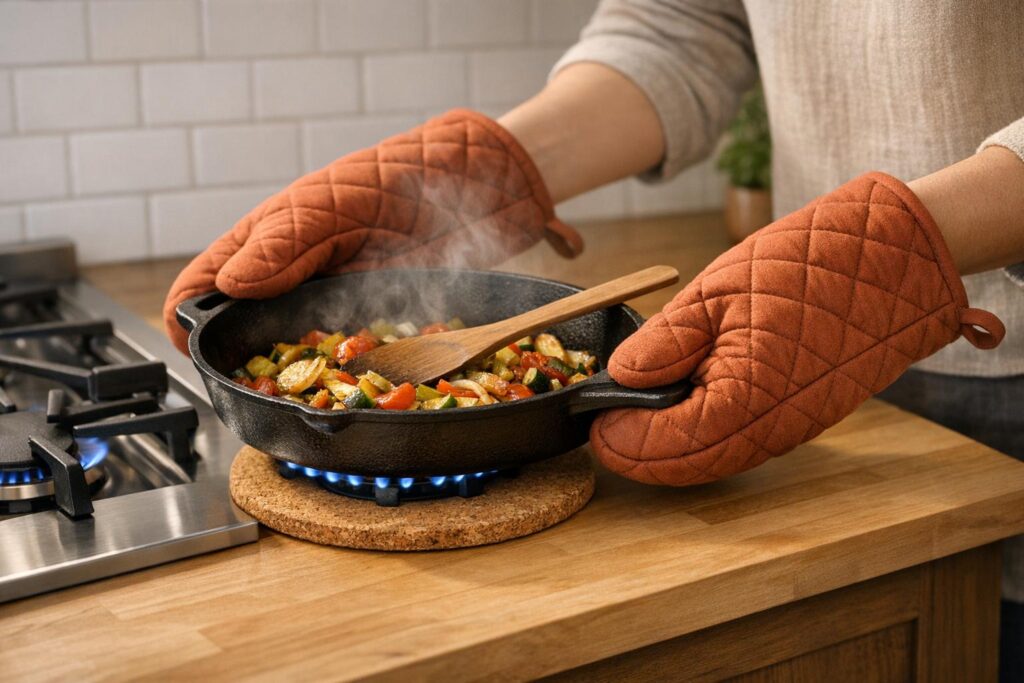
When cooking, burns and injuries can happen fast if you’re not careful. Hot surfaces, steam, and splattering oil are common hazards in the kitchen. But with a few simple precautions, you can stay safe.
Here’s a quick rundown of the best safety tips:
- Use dry oven mitts to avoid burns from heat-conducting moisture.
- Never preheat empty pans to prevent overheating and damage.
- Choose long-handled utensils to keep your hands away from heat.
- Turn pot handles inward to avoid accidental spills.
- Limit high heat use to boiling liquids and control temperatures for other tasks.
- Place hot cookware on heat-resistant surfaces to protect counters.
- Let cookware cool naturally before moving to avoid burns or damage.
These small adjustments can prevent injuries and make your time in the kitchen safer.
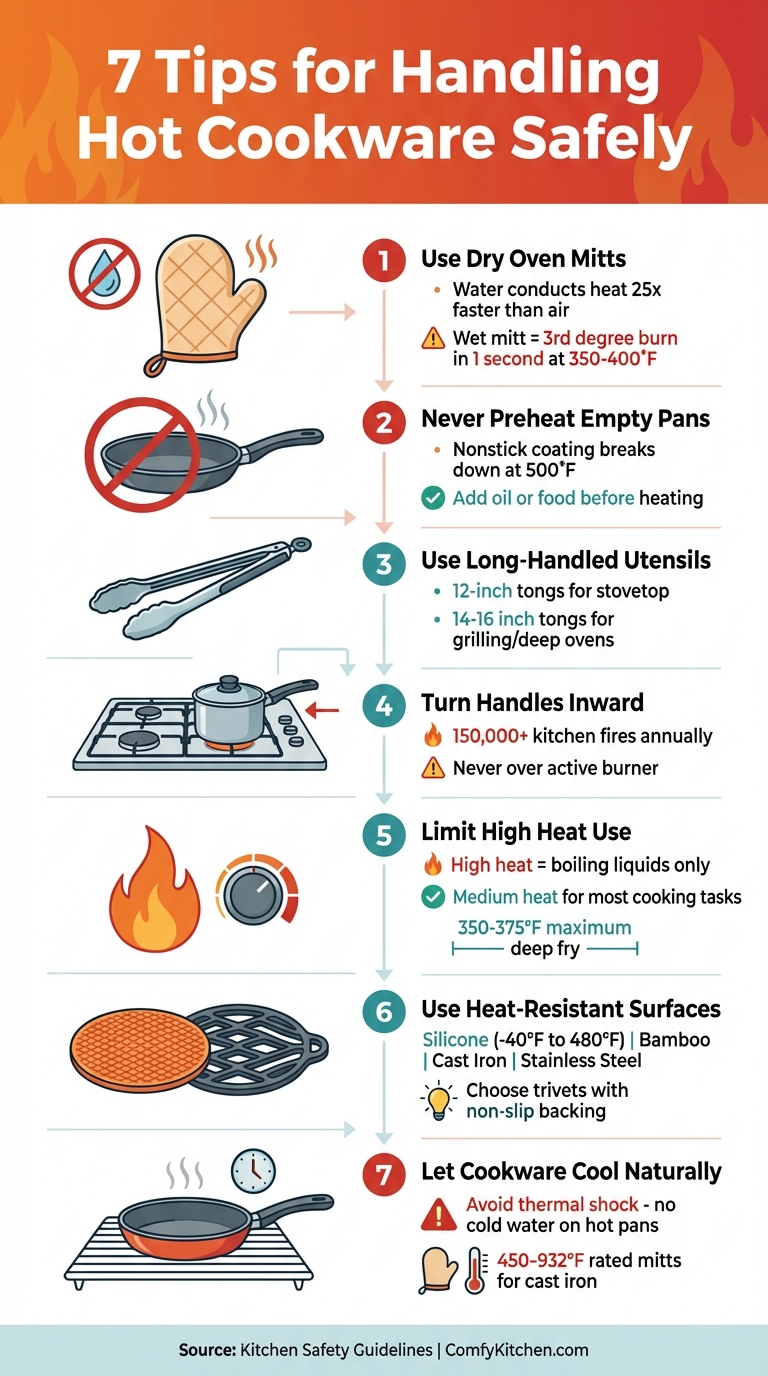
7 Essential Tips for Safe Hot Cookware Handling in the Kitchen
Why Chefs Never Touch Hot Pans With Wet Towels ⚠️
sbb-itb-663e316
1. Always Use Dry Oven Mitts or Potholders
Keeping your oven mitts and potholders dry isn’t just a suggestion – it’s essential. Water conducts heat up to 25 times faster than air. This means even a small amount of moisture can turn a seemingly safe mitt into a dangerous heat conductor, putting your skin at risk.
Here’s why it matters: Moisture disrupts the insulating air pockets in the material. When exposed to high temperatures, that moisture turns to steam, which transfers heat even faster. At oven temperatures between 350°F and 400°F, a wet oven mitt can cause a third-degree burn in just one second. Dr. Adriana Petrova, Associate Professor at Oklahoma State University, explains:
"If the oven mitt or your hand was wet and the oven mitt was exposed to oven temperatures of 350 degrees Fahrenheit or 400 degrees Fahrenheit, a third-degree burn could happen in as little as one second, depending on the material."
Even damp hands inside a dry mitt can conduct heat and lead to burns. So, before you grab that hot pan, make sure your hands are completely dry and your mitt hasn’t soaked up any water from countertops or sinks.
It’s also a good idea to check your potholders regularly. Look for holes, thin spots, or worn padding, as these can reduce their ability to protect against heat. To minimize risk, store your mitts in a dry place and consider using waterproof silicone options. Silicone mitts are not only moisture-resistant but also handle higher temperatures more effectively.
Taking a moment to ensure your hands and mitts are dry is a small habit that can make a big difference in preventing serious injuries.
2. Never Preheat Empty Pans
Heating an empty pan on high heat for just 1–2 minutes can lead to serious risks, including injuries and damage to your cookware.
Nonstick pans are especially sensitive. Once they hit 500°F, their coating can start to break down. As Chef Scott Bradley puts it:
"Never preheat an empty nonstick pan for long; always add oil or food."
Stainless steel pans can develop a "rainbow tint" from excessive heat, while cast iron, which takes longer to heat (4–6 minutes) but retains heat well, can quickly surpass safe temperatures if left unattended.
Adding oil to a pan that’s already too hot can cause it to reach its smoke point or even pop violently, creating a burn hazard. To avoid this, it’s better to start with medium heat, giving you more control and reducing the chance of damage.
A safer method: For nonstick pans, add oil or food before turning on the heat. With stainless steel or cast iron, heat the pan dry on medium for 1–2 minutes, then add oil. Wait until the oil shimmers – without smoking – before adding your ingredients.
3. Use Long-Handled Utensils and Tongs
After ensuring you’re using proper oven mitts, it’s smart to extend your reach with long-handled tools. These utensils help keep your hands safely away from hot surfaces, flames, or rising steam – just like dry oven mitts do.
For stovetop tasks, 12-inch tongs are a great choice. They provide enough length to flip steaks, lift pasta out of boiling water, or turn vegetables without putting your hands too close to the heat. When grilling or working with deep ovens, go for 14- to 16-inch tongs for extra clearance. Pairing these tools with dry mitts adds an extra layer of protection.
Erica Wides, a culinary educator at the Institute of Culinary Education, sums it up perfectly:
"A chef’s tongs are an extension of their arm – we use them for all kinds of things."
When selecting tongs, opt for ones with silicone, rubber, or wooden handles. These materials stay cooler and prevent heat from transferring to your grip. If you’re working with nonstick pans, silicone-tipped tongs are a must to avoid scratching surfaces. Also, look for tongs with a locking mechanism – either a pull-tab or click-lock design – for easier storage and better one-handed control.
Even with long-handled tools, always use a dry pot holder or oven mitt to protect yourself from steam burns.
4. Keep Handles Turned Inward on the Stovetop
A small adjustment can make a big difference in kitchen safety. Always turn pot and pan handles toward the back or center of the stove – never leave them sticking out where they can be bumped or grabbed.
Cooking is the top cause of injuries in homes, and each year, over 150,000 residential fires start in the kitchen. Handles that stick out increase the risk of accidents. They can snag on clothing, get bumped by someone walking by, or even be pulled down by curious kids or pets, leading to dangerous spills of hot food or liquids.
Chef Alli from Kansas Living Magazine highlights this often-overlooked hazard:
"As the cook, you realize the skillet handle is hot, but those walking into the kitchen do not. If they reach for the handle to lift or move the skillet, their hand can be badly burned."
When turning handles inward, make sure they’re not positioned over an active burner. Heat conduction can make the handle dangerously hot, creating yet another burn risk. If you’re working in a tight space with multiple burners, aim handles toward the back center of the stove to reduce exposure to heat.
This simple practice, along with using dry mitts, long-handled utensils, and rolling up long sleeves, reduces the chance of burns. In busy kitchens, it’s also a good idea to keep a three-foot safety zone around the stove to avoid accidental bumps or snags.
5. Avoid High Heat Unless Boiling Liquids
Using high heat can quickly raise the temperature of your cookware, transferring heat to the handles through conduction and radiation. This rapid temperature increase requires extra care when using high settings.
At such high temperatures, oil can start to smoke, ignite within just a few minutes, and splatter as moisture rapidly converts to steam. Shawn Matijevich, Lead Chef-Instructor at the Institute of Culinary Education, explains:
"The flash point is typically about 50 degrees higher than the smoke point, so going from smoking to being on fire does happen pretty quickly."
Oil burns are particularly dangerous because they penetrate deeper into the skin compared to steam burns, causing ongoing damage for several seconds.
To minimize these risks, adjust your heat settings based on the cooking task. Reserve high heat for boiling water. For most other tasks – like sautéing vegetables, browning meat, or simmering sauces – medium heat offers better control and reduces the chance of accidents. Professional chef Randy Feltis emphasizes:
"There is no need to deep fry above 350 degrees Fahrenheit to 375 degrees Fahrenheit."
Stahl Kitchens also advises:
"Never leave cooking unattended, especially at high heat. Fires and spills happen in a heartbeat."
For stir-frying, take extra precautions: dry ingredients thoroughly, use less than half a pan of oil, and keep a metal lid nearby to smother any flames if necessary.
6. Place Hot Cookware on Trivets or Heat-Resistant Surfaces
Once you’ve taken a pot or pan off the stove, make sure to set it down on a trivet, cooling rack, or heat-resistant mat. This simple step protects your countertops from burns and damage caused by high temperatures. Surfaces like granite, marble, and laminate are especially vulnerable to heat, so it’s crucial to avoid placing hot cookware directly on them.
When picking a trivet, think about both practicality and style. Look for materials that are heat-resistant and stable. Here are a few options:
- Silicone: Durable and heat-resistant, these can handle temperatures from -40°F to 480°F.
- Bamboo: Offers a natural look but must be kept dry to avoid warping.
- Cast Iron: Provides excellent stability, especially for heavier cookware.
- Stainless Steel: Easy to clean and great for modern kitchens.
Make sure the trivet is large enough to fully support the base of your cookware. A trivet that’s too small can lead to tipping or leave parts of the pan in direct contact with your countertop. For added safety, choose trivets with silicone backing or rubber feet to prevent slipping, which could lead to spills or burns.
7. Let Cookware Cool Before Moving and Handle with Care
Letting your cookware cool naturally is key to avoiding burns and preventing damage. Rapid temperature changes can cause thermal shock, which might warp, crack, or even shatter your pots and pans. For example, aluminum can warp, untempered glass may shatter, and even sturdy cast iron can crack under extreme shifts in temperature. Avoid rinsing hot cookware with cold water – stick to warm or room-temperature water instead.
If you need to handle cookware before it’s fully cooled, take these precautions. Use dry, heat-resistant mitts and lift the cookware slowly. As KitchenSeer explains:
"Touching the handles while cooking should not be a problem if you are cooking at a low to medium heat level… However, exercise caution by handling All-clad cookware with an oven mitt or potholder".
For especially hot items, like cast iron, choose mitts made from materials like Kevlar, silicone, or leather, which can handle temperatures ranging from 450°F to 932°F. Keep in mind, a dry towel left on a hot handle is a clear sign the handle is still dangerously hot.
Before moving cookware, make sure your path is clear and that you have a heat-resistant surface ready to set it down on. Always lift cookware straight up instead of sliding it across the stovetop – this helps prevent scratches on glass cooktops and minimizes the risk of spills.
Conclusion
Keeping your kitchen safe is about protecting everyone in your cooking space. The numbers clearly show why safe cookware handling should be a part of your daily routine.
Every tip we’ve discussed – from using dry oven mitts to letting cookware cool – helps reduce the chances of burns, fires, and other accidents. As Chef Alli, a professional chef, wisely says:
"Understanding potential kitchen hazards can help you and your family avoid cuts and burns".
Once these safety habits become second nature, they won’t take much extra effort. Simple steps like turning pot handles inward, standing back when lifting lids, and ensuring oven mitts are dry can make a big difference in preventing injuries. And as we get older, managing heavy, hot pans can become harder, so sticking to these safety tips is even more important.
For more advice on kitchen safety, practical cooking tips, and easy recipes, check out Comfy Kitchen. These small but effective practices can help you handle hot cookware with confidence and care.
FAQs
How can I tell if a pan is too hot?
If you’re wondering whether a pan is too hot, pay attention to a few key signs. First, check the handle – if it feels extremely hot even when you’re using oven mitts or a silicone cover, the pan might be overheating. Another clue is the surface: if you see smoke or hear loud sizzling sounds, it’s a clear indication that the heat is too high.
To stay safe and avoid burns, always preheat your pans on low to medium heat for about 10 minutes. This helps prevent overheating while giving you better control over your cooking. And don’t forget to use protective gear like oven mitts or silicone handle covers to protect your hands.
What’s the safest way to move a heavy hot pan?
When handling hot pans, always use oven mitts or pot holders to shield your hands from burns. Make sure you have a firm grip before lifting, and use both hands to keep the pan stable. Avoid sudden or jerky movements that could cause spills. If the handle is hot, never touch it with bare hands. Instead, use a silicone or leather handle cover if you have one. Move slowly and with care to minimize the risk of accidents.
What should I do if hot oil starts smoking?
If you see hot oil starting to smoke, it’s a sign that it’s overheating and could potentially catch fire. To avoid this, take the pan off the heat right away to stop it from getting any hotter. Under no circumstances should you pour water on hot oil – this can lead to dangerous splattering or even make the fire worse. If a fire does break out, cover the pan with a metal lid or baking sheet to cut off the oxygen, or use a fire extinguisher specifically designed for grease fires. Keeping a close eye on oil while cooking is the best way to prevent smoking or fires in the first place.