

Your cutting board can be a hidden source of harmful bacteria like E. coli, Salmonella, and Listeria. Cross-contamination happens when raw meat, poultry, or seafood transfers germs to ready-to-eat foods like fruits or bread. To stay safe, follow these simple steps:
- Use separate boards: One for raw meat and another for ready-to-eat foods.
- Clean and sanitize: Wash with hot, soapy water and sanitize with a bleach solution (1 tablespoon per gallon of water) after each use.
- Dry properly: Air-dry or pat dry with disposable paper towels. Avoid stacking wet boards.
- Replace damaged boards: Deep knife grooves, cracks, or warping make cleaning ineffective.
Choose nonporous materials, like plastic or glass, for raw meat, and maintain wooden boards with regular oiling. Proper care reduces foodborne illness risks and keeps your kitchen safer.
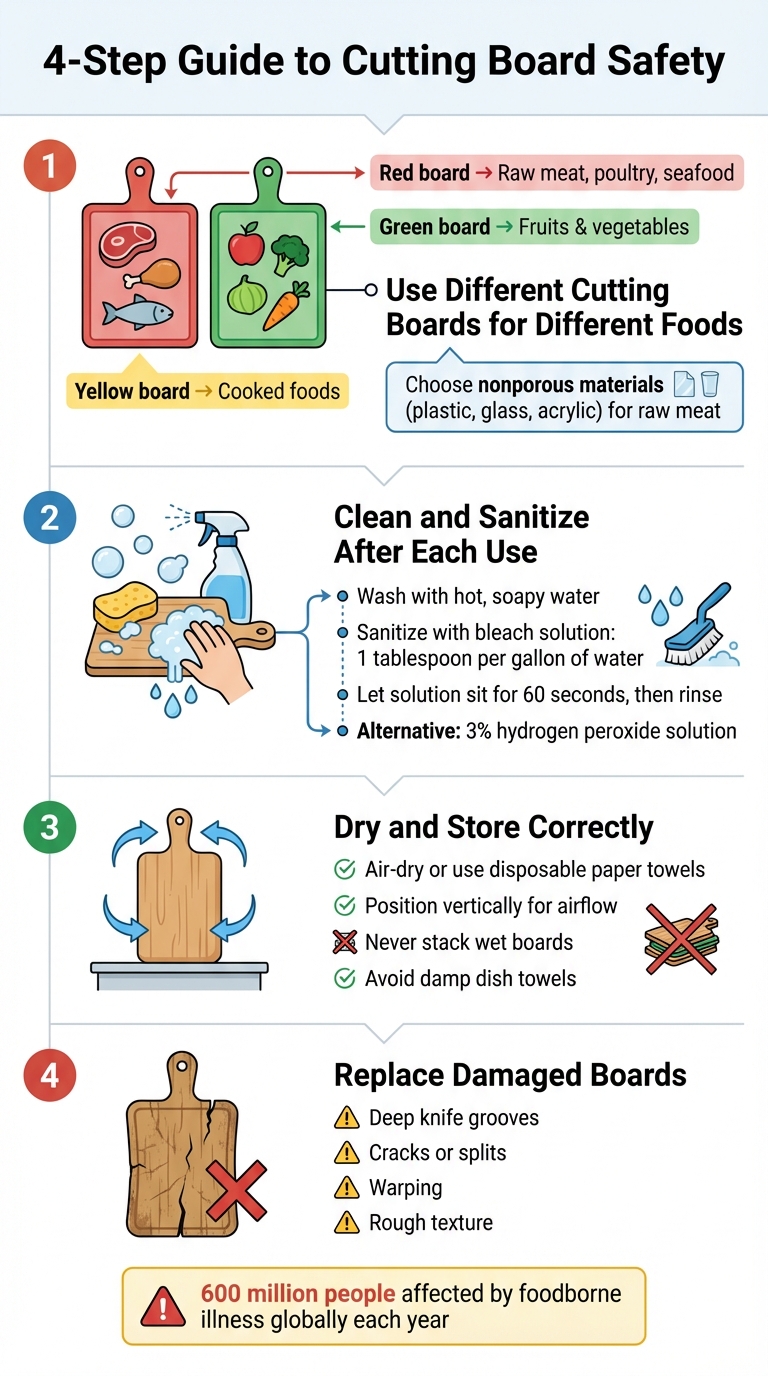
4-Step Guide to Cutting Board Safety and Cross-Contamination Prevention
Food Safety Mistakes Everyone Makes With Cutting Boards!
How Cross-Contamination Happens
Cross-contamination occurs when harmful bacteria move from one food item to another through shared surfaces. The USDA explains that this often happens when raw meats, poultry, seafood, or eggs come into contact with ready-to-eat foods like salads, fruits, or sandwiches via improperly cleaned cutting boards and utensils. Alarmingly, foodborne illnesses affect an estimated 600 million people globally every year. Let’s dive into how cross-contamination occurs and the dangers it poses.
What Causes Cross-Contamination
One of the most common causes of cross-contamination is using the same cutting board for raw meat and produce without cleaning and sanitizing it in between. Juices from raw meat can seep into porous materials like wooden boards or linger on plastic surfaces. Once bacteria like Salmonella or E. coli settle on a surface, they can easily transfer to other foods.
Knife cuts also contribute to the problem. Grooves left behind by repeated use can trap bacteria, making it difficult to clean thoroughly. Joyce McGarry from Michigan State University Extension explains:
"Cross-contamination occurs when ready-to-eat food is placed on a surface that held raw meat, poultry, seafood, or egg; spreading illness-causing bacteria to ready-to-eat foods".
Even dishwashers may not fully sanitize cutting boards with deep grooves, leaving bacteria behind.
A study by the Partnership for Food Safety Education revealed that 74% of households engage in behaviors that increase the risk of cross-contamination. These include using heavily scarred cutting boards, neglecting to clean boards between different food types, and stacking wet boards, which can trap moisture and encourage bacterial growth.
These practices create an easy pathway for bacteria to spread, leading to potential health hazards.
Health Risks from Cross-Contamination
The health risks tied to cross-contamination can be serious. Pathogens such as Salmonella, E. coli, and Listeria are notorious for causing foodborne illnesses that range from mild digestive issues to severe, life-threatening conditions. These bacteria are remarkably hardy – Salmonella, for example, can survive on a dry surface for up to four weeks.
Ready-to-eat foods are particularly vulnerable because they aren’t cooked before consumption, meaning any bacteria present are consumed directly. This highlights the critical need for proper cutting board care and hygiene to minimize these risks.
How to Prevent Cross-Contamination
Keeping cross-contamination at bay is simpler than you might think. The trick is sticking to three essentials: keep raw foods separate, clean thoroughly, and dry properly.
Use Different Cutting Boards for Different Foods
Assign specific cutting boards for different food types: one for raw meat, poultry, and seafood, and another for ready-to-eat items like fruits and vegetables. A color-coded system works wonders here – think red for raw meat, green for fresh produce, and yellow for cooked foods. For raw meat, opt for nonporous materials such as plastic, glass, or acrylic. These materials are easier to sanitize and often dishwasher-safe, making them a practical choice.
Esther Ellis, MS, RDN, LDN, from the Academy of Nutrition and Dietetics, underscores the importance of proper cutting board care:
"To prevent food poisoning, it’s also important to remember to wash your cutting boards. If not cleaned and maintained properly, cutting boards can hold harmful bacteria and spread food poisoning."
How to Clean and Sanitize Cutting Boards
After each use, wash your cutting board with hot, soapy water. For boards used with raw meat, take it a step further by sanitizing them. Use a solution of 1 tablespoon unscented bleach per gallon of water (or 1/2 teaspoon per quart) or a 3% hydrogen peroxide solution. Let the solution sit on the board for 60 seconds before rinsing. Most plastic and solid wood boards can handle a high-heat dishwasher cycle (at least 171°F), but avoid putting laminated or bamboo boards in the dishwasher, as they may warp or crack. Keep in mind that a freshly mixed bleach solution is effective for about one week.
Drying and Storing Your Cutting Boards
Drying your cutting boards properly is just as important as cleaning them. Air-dry them or use a disposable paper towel to pat them dry. Avoid shared dish towels, as they can harbor bacteria. As Gulsun Akdemir Evrendilek, Ph.D., Associate Extension Professor at The University of Maine Cooperative Extension, advises:
"Position the board vertically or on a rack to promote airflow. Avoid stacking wet boards or laying them flat for extended periods, as trapped moisture can lead to the growth of microorganisms or mold."
When storing, keep your boards upright in a clean, dry spot with good airflow. Never stack boards unless they’re completely dry, and steer clear of using a damp board – moisture creates the perfect environment for bacteria to thrive.
Next, let’s dive into which cutting board materials align best with these safety practices.
sbb-itb-663e316
Which Cutting Board Material to Choose
The material of your cutting board plays a big role in food safety, particularly when it comes to how easy it is to clean and sanitize. Picking the right one can help reduce the risk of cross-contamination in your kitchen. Let’s break down the pros and cons of different cutting board materials, so you can decide what works best for your needs.
Plastic Cutting Boards
Plastic cutting boards are a solid choice for handling raw meats. Their non-porous surfaces make it harder for bacteria to seep in, and they’re easy to sanitize. As Washington State University Extension points out, “It was much easier to remove the bacteria from plastic cutting boards because they are non-porous.”
These boards are dishwasher safe, which adds to their convenience, and they’re ideal for color-coding – like using a red board for meat and a green one for veggies. You can find plastic board sets for about $25 for three or flexible mats for around $8. However, once deep knife scars appear, it’s time to replace them to maintain food safety.
Wooden Cutting Boards
Wooden cutting boards are gentle on knives and built to last, but their porous nature means they can absorb moisture and potentially trap bacteria. Interestingly, some studies suggest that wood may have natural antibacterial properties. Still, deep grooves in the surface can harbor bacteria, so it’s best to reserve wooden boards for fruits, vegetables, and bread instead of raw meat.
Most wooden boards require hand washing, even if labeled as dishwasher safe. To prevent cracking, condition them monthly with food-grade mineral oil or beeswax. While high-quality edge grain wooden boards can run about $100, proper care can make them a long-term investment.
Bamboo and Glass Cutting Boards
Bamboo boards are a tougher, less porous alternative to traditional hardwoods, making them resistant to knife marks and bacterial buildup. The USDA recommends bamboo, with Karen Fitfield from Michigan State University Extension noting, “It is harder and less porous (so it absorbs less moisture) than hardwoods and is easy to clean.” However, bamboo boards can splinter or develop a rough texture over time, which could create spaces for bacteria to hide.
Glass cutting boards, on the other hand, are completely non-porous and easy to sanitize. But they come with significant downsides: they dull knife blades quickly and can slip or even shatter during use. Because of these limitations, glass boards are better suited for serving cheese or light chopping tasks rather than heavy-duty food prep.
When to Maintain and Replace Cutting Boards
Keeping your cutting boards in good shape goes beyond cleaning. Routine maintenance and knowing when to replace them are crucial for a safe kitchen.
Watch for Signs of Damage
Take a close look at your cutting boards regularly. Deep knife grooves, cracks, splits, or any warping can create hiding spots for bacteria to thrive. If your board wobbles instead of sitting flat or has a surface that’s too rough to clean properly, it’s time to replace it.
Caring for Wooden Cutting Boards
Wooden cutting boards need a little extra love to stay in top condition. Once a month, treat them with food-grade mineral oil or beeswax to keep the wood from drying out. If you notice small cuts, lightly sand the surface to smooth it out. For warped boards, place them flat under a damp cloth with heavy books on top until they dry completely, then reapply oil. Always hand wash wooden boards – dishwashers are a no-go.
Proper Storage Matters
Storing your cutting boards the right way can make a big difference. Keep them upright to allow air to circulate and prevent moisture from building up. Before putting them away, ensure they’re completely dry. Stacking damp boards is a recipe for mold and bacteria growth.
Taking these steps to maintain your cutting boards helps minimize the risk of cross-contamination in your kitchen.
Conclusion
Keeping your cutting boards safe to use isn’t complicated, but it does require some key habits. One of the most important steps is using separate boards for raw meat and ready-to-eat foods – this simple practice can significantly reduce the risk of foodborne illnesses. After each use, wash your boards thoroughly with hot, soapy water and sanitize them with a bleach solution (1 tablespoon of bleach per gallon of water) to eliminate harmful bacteria like E. coli, Listeria, and Salmonella.
Beyond cleaning, proper drying and storage are just as important. Standing your boards upright allows air to circulate, helping prevent moisture buildup that can lead to mold. Regularly check for deep grooves or cracks, as these can trap bacteria and make cleaning less effective.
FAQs
When should I replace my cutting board to keep it safe to use?
When your cutting board starts showing signs of heavy wear – like deep grooves, cracks, or warping – it’s time to replace it. These flaws can trap bacteria, making it harder to clean and sanitize effectively.
For plastic cutting boards, keep an eye out for deep knife marks or discoloration. Wooden boards should be replaced if they develop cracks or splits that can’t be smoothed out by sanding. Regular inspections of your cutting boards are key to keeping your food prep safe and hygienic.
What type of cutting board is safest for preventing cross-contamination?
To keep cross-contamination at bay, opt for non-porous cutting boards crafted from materials like high-density plastic, acrylic, glass, or dense hardwoods such as bamboo or solid wood. These materials are easier to clean and less likely to trap bacteria compared to porous alternatives.
For an extra layer of safety, use separate cutting boards: one for raw meat, poultry, and seafood, and another for ready-to-eat items like fruits and vegetables. This straightforward habit can significantly lower the chances of harmful bacteria spreading during food preparation.
What’s the best way to sanitize my cutting boards to avoid cross-contamination?
To ensure your cutting boards are safe and free from cross-contamination, it’s essential to clean and sanitize them after every use. Start by scrubbing the board with hot water and dish soap to get rid of any food residue, then rinse it thoroughly. After that, use a food-safe sanitizer – like a mix of 1 tablespoon of unscented bleach per gallon of water – and let it sit on the surface for 1–2 minutes. Once sanitized, let the board air-dry completely before putting it away. This method works well for both wood and plastic boards, keeping them ready for your next cooking session.