
Food allergies can turn your kitchen into a risky space. Even tiny traces of allergens can cause severe reactions, and cooking doesn’t neutralize allergenic proteins. This guide simplifies how to create a safer kitchen environment and prevent cross-contact during food prep, storage, and cleaning. Here’s what you need to know:
- 9 Major Allergens: Milk, eggs, fish, shellfish, tree nuts, peanuts, wheat, soy, and sesame cause 90% of reactions in the U.S.
- Cross-Contact Risks: Allergen proteins aren’t destroyed by heat, so strict storage, prep, and cleaning practices are essential.
- Key Practices: Use color-coded tools (purple for allergen-free), store allergen-free foods on higher shelves, and clean with the wash-rinse-sanitize-air dry method.
- Emergency Preparedness: Learn to spot allergic reactions and act quickly with epinephrine if anaphylaxis occurs.
These steps help you protect those with food allergies, whether at home or in professional settings. Let’s dive into the details.
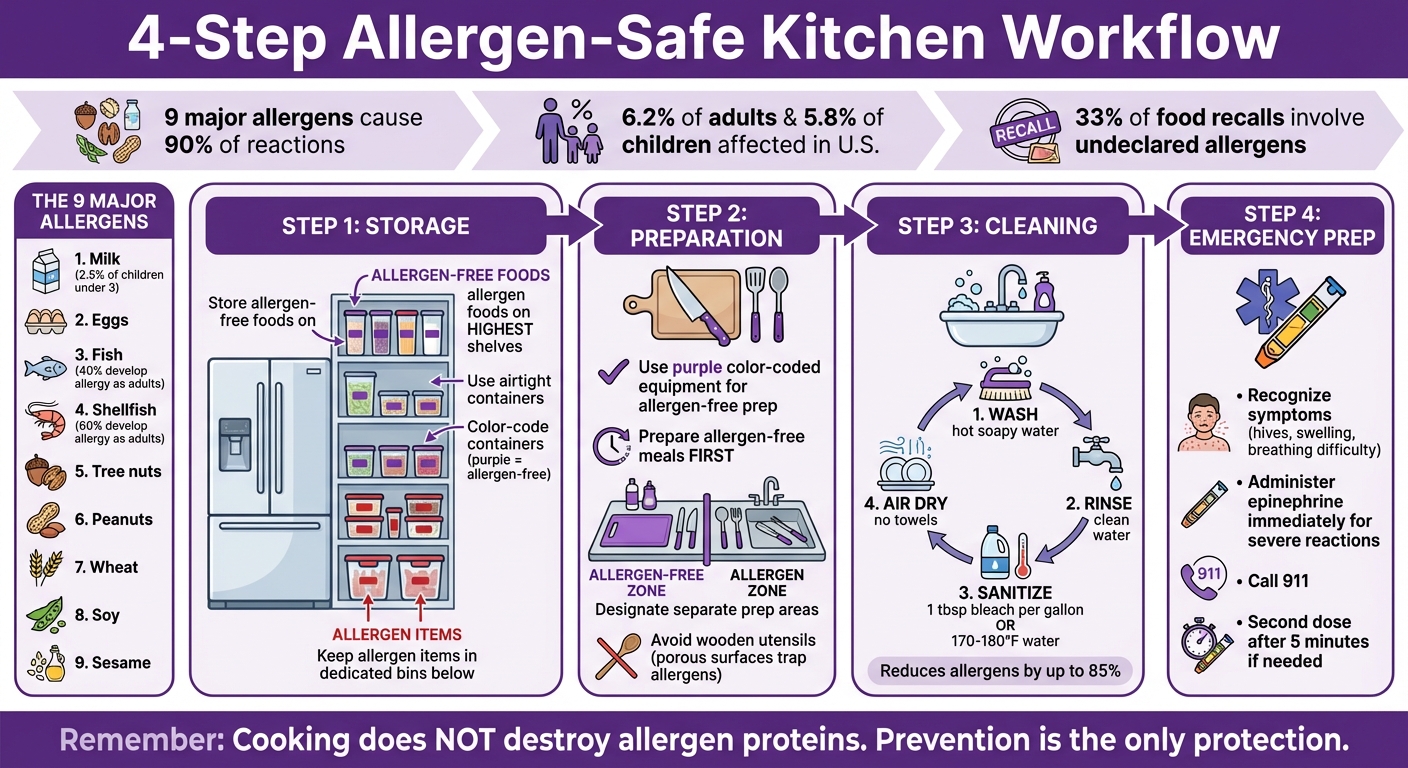
4-Step Allergen-Safe Kitchen Workflow Guide
How to prevent allergen cross-contact in home kitchens | Prevent Allergen Clash
Common Food Allergens and Health Risks
In the United States, nine primary allergens are responsible for about 90% of all food allergy reactions. While over 160 foods can trigger allergic responses, these nine dominate the conversation, making it crucial to recognize them for safer food handling. Their widespread presence in everyday foods means extra care is needed at every step in the kitchen.
The health risks tied to these allergens can range from minor to severe. Mild symptoms, such as hives, a tingling sensation in the mouth, or stomach cramps, often show up within minutes to a few hours after exposure. However, even mild reactions can escalate. As the FDA warns, "A mild allergic reaction does not always mean the allergy is mild. Any allergic reaction has potential to lead to anaphylaxis". Anaphylaxis is a life-threatening condition that can cause restricted breathing, a sharp drop in blood pressure, and swelling in the throat.
Knowing how widespread these allergens are can help improve food storage and preparation practices. In the U.S., food allergies affect about 6.2% of adults and 5.8% of infants and young children. For instance, milk allergies impact roughly 2.5% of children under three, and undeclared milk is the leading cause of food recalls. Interestingly, food allergies can develop later in life – 40% of people with fish allergies and 60% with shellfish allergies reported their first reaction as adults.
What makes these allergens especially concerning is their ability to hide in unexpected foods. Milk might show up in caramel, chocolate, or even lunch meat, while eggs can sneak into drink foams or lo mein noodles. Wheat, surprisingly, can be found in ice cream or soy sauce. This makes careful label reading absolutely essential.
Currently, there’s no cure for food allergies, and the only way to stay safe is through strict avoidance. Unlike bacteria, which can be destroyed by cooking, allergen proteins remain intact even after heat treatment. This resilience highlights the need for advanced safety measures and constant vigilance when dealing with food allergens.
Preventing Cross-Contact in Food Storage
When it comes to managing food allergies, proper storage is your first line of defense against cross-contact. Since cooking or heating won’t destroy allergen proteins, it’s crucial to prevent contamination before you even start preparing meals. How you arrange your pantry, refrigerator, and freezer plays a big role in keeping allergen-free meals safe. A well-organized storage system sets the stage for safer food preparation practices.
Designating Allergen-Free Zones
Setting up dedicated storage areas for allergen-free items is a smart way to prevent mixing safe and unsafe foods. Always store allergen-free foods on the highest shelves in your pantry, fridge, or freezer. This vertical storage method keeps safe foods out of the danger zone where spills, leaks, or crumbs from allergen-containing items could fall and contaminate them.
"Place gluten- and allergen-containing foods on shelves below allergen- or gluten-free foods – in the pantry, refrigerator and freezer." – Academy of Nutrition and Dietetics
If possible, assign specific shelves or cupboards exclusively for allergen-free products. If space is tight and you can’t dedicate entire zones, clear labeling is key. Clearly mark which items are safe, and use squeeze bottles for condiments like peanut butter, jelly, or sour cream. This small switch helps avoid the risk of cross-contact from utensils being used in multiple jars.
Pairing these designated areas with secure storage solutions adds an extra layer of safety.
Using Airtight Containers
Airtight containers are essential for creating a barrier that prevents allergens from contaminating other foods. The FDA advises using dedicated, securely closable bins or containers for storing allergen-containing items. This is especially critical for powdered allergens like wheat flour or ground nuts, which can easily become airborne and settle on nearby surfaces.
"Use dedicated bins or containers that can be closed in a secure manner for storing allergen-containing ingredients and allergen-containing products." – FDA
Label all containers clearly, and consider using a color-coded system (e.g., red for peanuts, blue for milk, yellow for eggs) for quick identification. This visual approach helps everyone in the household instantly recognize which containers hold allergens. When grocery shopping, bag allergen-containing foods separately in plastic produce bags, and keep them isolated through checkout and transport until they’re stored properly at home.
Safe Cooking Practices to Avoid Allergen Cross-Contact
Once you’ve ensured safe storage, the next step is keeping allergens at bay during meal preparation. Unlike bacteria, cooking or heating won’t destroy allergen proteins, which means avoiding cross-contact is critical at this stage. How you organize your workspace and the tools you use can significantly impact the safety of your meals. These strategies build on your storage practices to ensure every step of the cooking process is allergen-safe.
Using Color-Coded Equipment
Introducing a color-coded system for kitchen tools provides a quick, visual way to identify equipment designated for allergen-free use. In the food service industry, specific colors are assigned to different food groups, with purple universally recognized for allergen-free preparation. This makes it easy to spot tools that are safe to use for those with allergies.
"Purple: A color reserved for allergen-free production, beneficial in preventing allergenic cross-contamination." – Restaurantware
This system can be applied to all food-contact items, such as cutting boards, knives, utensils, thermometers, and storage containers. If you’re managing multiple allergens, you can expand the system using additional standard color codes. Clearly labeling everything helps prevent mistakes and confusion.
Avoid using wooden utensils and cutting boards. Wood is porous, which means it can trap allergenic proteins that are hard to remove, even with thorough washing. Instead, opt for materials like plastic, silicone, or stainless steel, which have smooth surfaces that are easier to clean. When it comes to washing color-coded tools, dishwashers are your best bet. The combination of high heat and detergents effectively removes allergen proteins, outperforming hand washing.
Once your tools are ready, always start by preparing allergen-free meals before handling any potential allergens.
Preparing Allergen-Free Foods First
Cooking allergen-free meals first is a simple yet effective way to prevent cross-contact. Starting with freshly cleaned surfaces and tools reduces the risk of contamination.
"A separation between allergen-containing products and non-allergen-containing products can be achieved by establishing a production order; that is, producing the foods in a sequence whereby the food with the fewest allergens or no allergen is produced first and the food with the most allergens is produced last." – FDA
Before you begin, wash and sanitize all counters, cutting boards, knives, and bowls. Once the allergen-free meal is prepared, cover it immediately and keep it warm in a low-heat oven to protect it from any potential contaminants. When serving, make sure the allergen-free dish is plated and served separately to avoid accidental cross-contact.
sbb-itb-663e316
Cleaning and Sanitizing for Allergen Safety
Once you’ve adopted safe cooking practices, maintaining a clean workspace is the next critical step to prevent allergen cross-contact. Cleaning thoroughly is essential because allergen proteins can’t simply be "killed" – they must be physically removed from surfaces and tools. This is why cleaning takes precedence over sanitizing when it comes to allergen safety. While sanitizers reduce bacteria, they don’t eliminate allergenic proteins.
Wash-Rinse-Sanitize-Air Dry Method
The FDA Food Code outlines a four-step process to effectively manage allergens. Start by scraping off any visible food debris – this pre-cleaning step makes it easier to remove allergens. Then, follow these steps:
- Wash: Use hot, soapy water and scrub items thoroughly with a brush [2, 24].
- Rinse: Rinse with clean water to remove soap and any lingering allergens [2, 24].
- Sanitize: Mix 1 tablespoon of unscented bleach with a gallon of warm water, or use water heated to 170–180°F, to sanitize surfaces.
- Air Dry: Let items air dry on a clean rack instead of using dishtowels, which can reintroduce contaminants [2, 24].
"Full cleaning (using a wash-rinse-sanitize-air dry method) as recommended in the FDA Food Code was effective at allergen removal and minimizing allergen transfer." – FDA
This process ensures your kitchen stays allergen-free after meal prep. Remember, sanitizers alone won’t remove allergens – the wash and rinse steps are what do the heavy lifting. For reusable cleaning cloths, keep them stored in a sanitizer solution between uses, and always prepare fresh cleaning solutions [5, 7].
Focus on Smooth-Surfaced Tools
The materials and design of your kitchen tools can make a big difference in allergen management. Smooth surfaces like stainless steel or glass are easier to clean compared to textured plastics, which can trap allergens. For reduced cross-contact risk, use non-porous items such as glass, stainless steel, or smooth plastic.
Disassemble complex appliances – like those with blades, screens, or handles – to clean hidden areas where allergens might linger. Baking trays should be cleaned and sanitized after each use to remove any oil residues. For items made of glass, stainless steel, or acrylic, running them through a high-heat dishwasher cycle provides effective cleaning and sanitizing in one step.
At Comfy Kitchen, we’re committed to helping you create an allergen-safe environment. By incorporating these detailed cleaning practices into your routine, you can minimize cross-contact risks and enjoy cooking with confidence.
Creating an Allergen-Safe Kitchen Workflow
Developing a routine to separate allergen-containing foods from allergen-free ones is essential for maintaining a safe kitchen environment. This involves creating distinct zones and following a consistent process to prevent cross-contact. By clearly dividing spaces and adhering to a structured workflow, you can move food safely from storage to preparation while keeping allergens under control.
Setting Up Dedicated Prep Areas
Reserve a specific countertop or section of your kitchen solely for preparing allergen-free meals. This area should remain completely free of allergens. To help with this, use purple cutting boards and utensils – an easy way to visually differentiate allergen-free tools. If your kitchen is tight on space, try using partitions, shields, or covers to protect allergen-free zones from potential splatter or airborne particles.
Hygiene is just as important as physical separation. Keeping your workspace clean and following strict hygiene practices are critical to maintaining a contaminant-free zone.
Hand Hygiene and Glove Use
Wash your hands thoroughly with warm, soapy water for at least 20 seconds before and after handling food. This step is especially crucial if you’ve touched common allergens like raw eggs, meat, poultry, or fish. Liquid soap is particularly effective for removing allergens from your hands.
When using gloves, choose non-latex, powder-free options to avoid triggering allergic reactions. However, gloves are not a replacement for proper handwashing – always wash your hands before putting on a fresh pair. Change gloves immediately after handling allergens or when switching between different tasks. If you’re working with ingredients like flour that can spread easily, be sure to change both your gloves and apron before entering an allergen-free area.
Emergency Preparedness: Handling Allergen Reactions
Incorporating emergency protocols into your allergen-safe kitchen practices is essential for ensuring safety. Despite your best efforts, allergic reactions can still happen. The key is to recognize the symptoms quickly and act immediately – it could save a life. Allergic reactions typically occur within minutes to two hours after exposure to an allergen.
Mild symptoms might include an itchy mouth, hives, nausea, or sneezing. These often affect just one part of the body. However, severe symptoms demand urgent attention. Be on the lookout for signs like shortness of breath, wheezing, swelling of the tongue or lips, dizziness, pale or bluish skin, repetitive vomiting, or a weak pulse. The FDA cautions that "a mild allergic reaction does not always mean the allergy is mild. Any allergic reaction has potential to lead to anaphylaxis".
If severe symptoms or multiple systems are affected, administer epinephrine immediately. Then, call 911 and let the dispatcher know the person is experiencing anaphylaxis. Position the person flat with their legs elevated, unless they are vomiting or having trouble breathing – in that case, sitting up or using the recovery position is better. According to Food Allergy Research & Education, "epinephrine is a safe and relatively harmless drug. When in doubt, use it! The risks of anaphylaxis outweigh any risks from giving the medication".
Stay with the person and monitor them closely. If symptoms persist or return, give a second dose of epinephrine after 5 minutes. Even if the symptoms seem to subside, they should still go to the emergency room and be observed for at least four hours, as symptoms can reappear.
To be fully prepared, post a physician-signed Food Allergy & Anaphylaxis Emergency Care Plan in a visible spot. Including a photo can help with quick identification in an emergency. Additionally, keep the packaging of any suspected allergen, as it may have lot numbers needed for reporting the reaction to the FDA. These steps are crucial for creating a truly safe environment in your allergen-free kitchen.
Conclusion: Key Takeaways for Allergen Safety
Maintaining an allergen-safe kitchen comes down to consistent habits that safeguard your household. It starts with preventing cross-contact through smart storage solutions, dedicated prep areas, and using color-coded tools. Considering that about 2% of adults and up to 8% of children in the U.S. have a food allergy, these steps are crucial for many families.
Cleaning is a cornerstone of allergen safety. Regular cleaning methods that work against bacteria won’t remove allergenic proteins, which is why the Wash-Rinse-Sanitize-Air Dry method is essential. The FDA emphasizes that "cleaning procedures targeting microbial hazards may not be adequate for allergen removal". This four-step process physically eliminates proteins that cause reactions, cutting allergens by up to 85% when done properly. Combine this with an efficient kitchen workflow to maximize safety.
The way you organize your kitchen and prepare meals is just as important as the tools you use. Stick to key practices like using separate storage, prioritizing allergen-safe meal prep, and practicing thorough handwashing.
Between September 2009 and September 2014, approximately 33% of foods reported to the FDA as serious health risks involved undeclared allergens, with milk being the leading cause of recalls. This highlights the critical need to always double-check food labels.
FAQs
How can I avoid cross-contact of allergens while preparing meals?
To minimize the risk of cross-contact with allergens, start by carefully checking ingredient labels to confirm they don’t include the allergen you’re avoiding. At home, store foods that contain allergens in sealed containers or separate bags, and place them on a different shelf from allergen-free items. Use dedicated tools like color-coded cutting boards, knives, and utensils for allergen-specific foods, and ensure they’re thoroughly washed before reuse. If possible, prepare allergen-free dishes first to reduce potential contamination.
When prepping meals, wash your hands with soap and warm water for at least 20 seconds both before and after handling any allergenic ingredients. Clean all surfaces, utensils, and cookware that have been in contact with allergens using hot, soapy water and an appropriate sanitizer. To further reduce risks, use separate cleaning cloths or disposable paper towels for allergen-free and allergen-containing areas. Staying organized and following these precautions can go a long way in keeping your kitchen safer for everyone.
What should I do if someone has an allergic reaction while cooking?
If someone shows signs of an allergic reaction – such as itching, hives, swelling of the lips or throat, wheezing, stomach pain, or dizziness – stop using the suspected ingredient immediately and remove them from the source of exposure. Call 911 right away, even if the symptoms seem mild, as allergic reactions can worsen rapidly. If they have an epinephrine auto-injector, use it immediately by following the instructions. Lay the person flat with their legs elevated unless they’re struggling to breathe; in that case, they should remain sitting upright. Stay with them and monitor their condition until medical help arrives.
Once the emergency is under control, thoroughly clean all surfaces, utensils, and tools to prevent cross-contact. Note what triggered the reaction and replace any contaminated food items. Keep an updated emergency care plan readily available in the kitchen, and make sure everyone knows where the auto-injector is stored. To promote safety, consider posting these steps in a visible area as a reminder during meal preparation.
Why should I use color-coded tools to prevent allergen cross-contact in the kitchen?
Using color-coded tools – such as knives, cutting boards, and utensils assigned specific colors for certain allergens – can make a big difference in preventing cross-contact. For instance, designating a red cutting board for gluten-free foods or a blue knife for nut-only preparation allows everyone in the kitchen to quickly identify the correct tools. This simple system helps reduce the risk of exposing allergen-free foods to harmful traces, which is crucial since even tiny amounts can trigger severe allergic reactions.
Beyond safety, color-coded systems also bring order to cleaning and storage. Each tool can be cleaned, stored, and used exclusively in its designated allergen-safe area, lowering the chances of accidental contamination. This not only protects individuals with food allergies but also makes meal prep smoother and less stressful for everyone involved. It’s a practical way to keep the kitchen safer and more organized.