
Kitchen fires are common, but preventable. Nearly 50% of home fires start in the kitchen, with ovens causing 16% of cooking-related incidents. Simple habits like staying in the kitchen while cooking, cleaning your oven regularly, and using proper materials can drastically reduce risks.
Here’s what you need to know:
- Stay present: Unattended cooking causes 33% of home fires. Always monitor your oven or broiler.
- Clean regularly: Grease buildup increases fire risk by 30%. Wipe spills and clean every 10–20 uses.
- Use safe materials: Avoid wax paper; use parchment paper within its heat limits.
- Prevent drips: Place a baking sheet under greasy or sugary foods.
- Check before use: Remove debris and avoid blocking airflow.
- Follow instructions: Use the correct settings and keep oils below their smoke points.
- Keep flammables away: Keep oven mitts, towels, and other items at least 3 feet from heat sources.
- Dress safely: Wear fitted clothing to avoid accidental contact with heat.
- Protect children: Maintain a safe zone around hot appliances.
If a fire starts, keep the oven door closed, turn off the heat, and never use water on grease fires. For larger fires, evacuate and call 911. Regular attention and safe practices can help you cook safely and avoid emergencies.
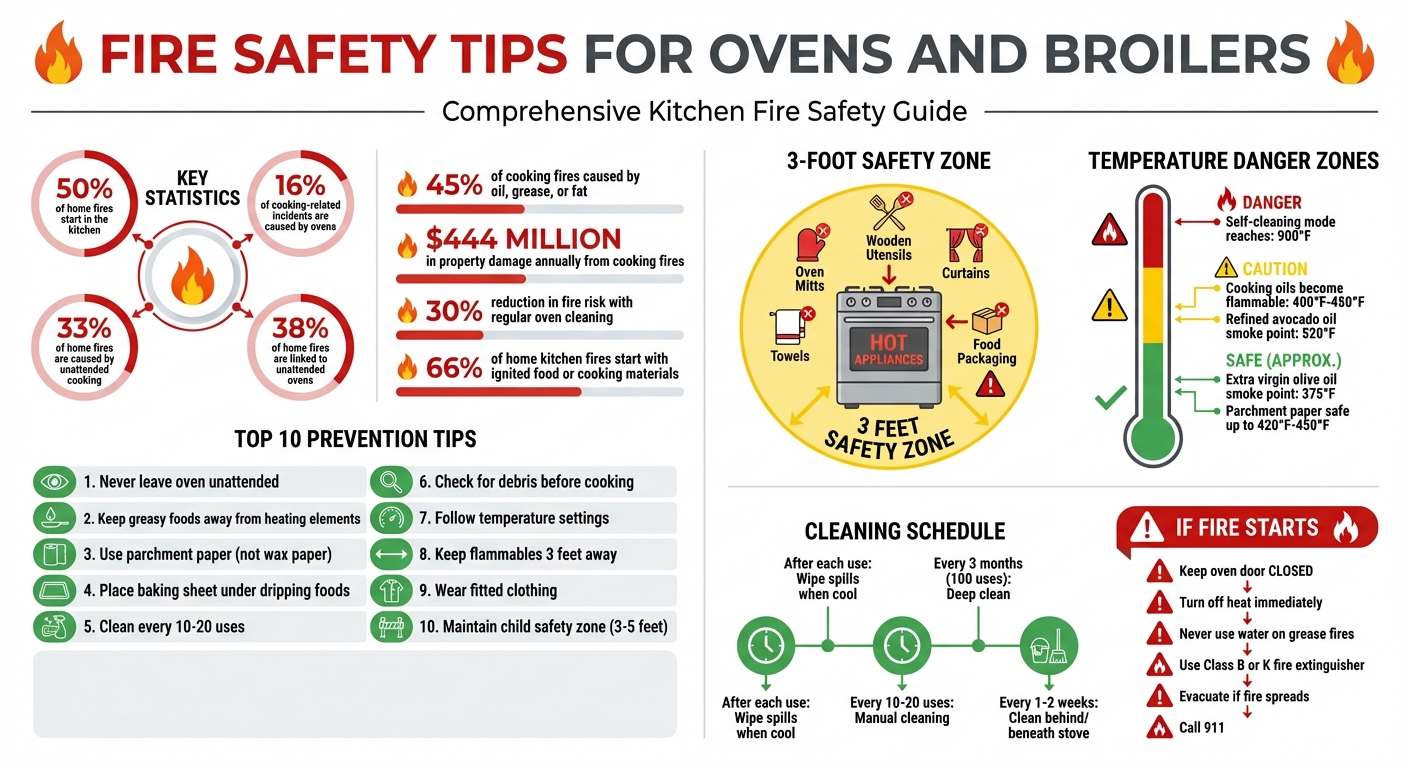
Kitchen Fire Safety Statistics and Prevention Tips
How to stop an oven fire.
sbb-itb-663e316
1. Never Leave Your Oven or Broiler Unattended
Staying in the kitchen while cooking is the most critical step in preventing fires. Unattended cooking is responsible for 33% of home fires and nearly half of all cooking-related deaths. Even stepping away for a moment can allow a small problem to escalate into something dangerous.
Broilers, in particular, use intense, direct heat that can ignite grease or food splatters in seconds. If you’re not there to catch it, a minor mishap can quickly spiral out of control. Plus, walking away often means losing track of cooking times, increasing the chances of burning your meal.
Set a timer to stay on track. Whether it’s a digital timer or an old-school wind-up one, it’ll help you stay focused. If you need to leave the kitchen, turn off the heat and remove the food. This habit is a simple yet effective way to ensure your cooking remains safe.
"Unattended cooking is too big a risk to try and increase your productivity by multitasking."
Multitasking while cooking is never worth the risk. To stay focused, follow the three-foot rule: keep the area around your oven free of kids and clutter. During busy times, like holidays, assign one adult to supervise the kitchen rather than splitting attention between multiple people.
Never leave your home with food still cooking. Unattended ovens are linked to 38% of home fires. Be alert to early warning signs such as smoke wisps or burning smells – these often signal that food is starting to char or grease is splattering, which can lead to flames.
Up next: tips for handling greasy build-ups to minimize fire hazards even further.
2. Keep Greasy Foods Away from Heating Elements
Grease and heating elements are a recipe for disaster. Grease splattered on hot elements can catch fire instantly. Whether it’s fresh splatters or built-up grease, both can ignite when exposed to high heat.
Cooking fires are the top cause of residential fires, with 45% of recent incidents linked to oil, grease, or fat. When preparing fatty foods, grease can easily splatter onto heating elements, sitting dangerously close to the source of heat.
"When cooking oil nears a heating source, it sparks a flame." – Arielle Weg and Annie Campbell, AllRecipes
Here’s how to minimize the risk and keep your cooking space safe:
- Adjust oven racks thoughtfully. When cooking fatty items like bacon, roasts, or oiled vegetables, place the rack slightly lower and use an oven-safe lid or splatter guard.
- Drain excess grease regularly. If roasting fatty meats, pour off grease from the pan every 30 minutes to avoid buildup.
Cooking oils become highly flammable at temperatures between 400°F and 450°F. Keep an eye on your oven’s temperature to ensure it doesn’t approach these dangerous levels.
3. Use Parchment Paper Instead of Wax Paper
They may look alike, but they serve very different purposes in the kitchen. Parchment paper is coated with silicone, making it heat-resistant up to 420°F–450°F. In contrast, wax paper has a paraffin wax coating that melts at low temperatures, making it highly flammable.
"Wax paper is not heat-resistant like parchment paper, so it will most definitely melt when subjected to prolonged high heat, allowing the paper to easily catch fire." – Arielle Weg and Annie Campbell, Authors, AllRecipes
When exposed to heat, the wax on wax paper melts away, leaving the paper fibers vulnerable to catching fire. According to Reynolds Kitchens, their parchment paper can safely be used in ovens up to 425°F.
Parchment paper isn’t foolproof, though. Avoid using it under a broiler, as the intense heat can exceed its safety threshold. Always cut parchment to fit snugly within the pan to keep loose edges away from direct heat. Wax paper, on the other hand, should only be used for cold tasks, like wrapping food or lining countertops.
In convection ovens, parchment paper can shift due to circulating air. To prevent this, secure it with a small dab of batter or oil. And before using parchment, double-check the packaging for its specific temperature limit.
Up next, we’ll explore how to prevent oven mishaps by managing drips and spills – an essential step in reducing fire hazards.
4. Place a Baking Sheet Under Foods That Drip
Drips and spills can quickly become fire hazards. When grease, fat, or sugary liquids hit heated surfaces, they can ignite and start a fire. According to FEMA, cooking fires result in an estimated $444 million in property damage every year, with nearly 45% of these fires caused by oil, grease, and fat. Controlling drips is a simple yet effective way to reduce this risk.
Certain foods are especially prone to dripping. High-fat meats and sugary desserts often release liquids that can ignite, while overfilled batters may spill during baking.
"A super common mistake is forgetting to place a baking sheet under dishes that could drip on the bottom of the oven. Pies, cobblers, and pizzas should be baked either directly on a baking sheet or with a baking sheet placed on the rack beneath to catch any excess liquid that may spill over." – Arielle Weg and Annie Campbell, Allrecipes
To prevent drips from causing problems, place a baking sheet on the oven rack directly below your dish. Avoid putting it on the oven floor, as this can block airflow and damage the appliance. Lining the baking sheet with aluminum foil can make cleanup even easier. This small precaution not only reduces fire risks by catching drips but also keeps your oven cleaner, preventing baked-on grime that could affect its performance. Plus, by stopping spills from burning, you’ll avoid smoky vapors that might give your food an unpleasant charred flavor.
5. Clean Food Particles and Grease Regularly
Grease and food debris left in your oven aren’t just unsightly – they’re serious fire hazards. Over time, the grates, trays, and oven floor collect grease and bits of food that can ignite under high heat. According to the National Fire Protection Association, keeping your oven clean can lower the risk of fire by up to 30%. It’s worth noting that oven fires are responsible for around 16% of all cooking-related home fires.
When food particles dry out, they can catch fire at high temperatures. Meanwhile, grease can vaporize and coat your oven’s interior, as well as nearby cabinets, making it easier for flames to spread quickly.
"The grates, trays, and even the bottom of the oven can become littered with a thin film of grease and food droppings through normal use. This grime is a real fire hazard and can ignite whenever you use the oven." – Stanley Gilmore, appliance repairman
To minimize risks, make cleaning a habit. Wipe up spills once the oven has cooled to prevent them from hardening. Aim for a manual cleaning every 10–20 uses, a deep clean every three months (or after about 100 uses), and use a simple mix of baking soda and water to tackle grease buildup. Don’t forget to clean behind and beneath your stove every one to two weeks to remove dust and food debris that could also pose a fire risk.
If your oven has a self-cleaning feature, be sure to wipe down the interior afterward to clear away any ash or residue that could smoke or ignite later. Pay attention to warning signs like smoke, burning smells, or unusual popping noises during preheating – these could indicate that grease or food debris needs immediate removal.
Finally, before each use, check that the oven is free of loose food or blockages that could lead to trouble.
6. Check for Loose Food and Blockages Before Cooking
Before you fire up your oven, take a moment to check for leftover debris. Small food particles like bread crumbs, bits of vegetables, or melted cheese can dry out and ignite almost instantly. It’s a simple step, but one that can prevent dangerous situations.
"Leftover bits may catch fire, or at least burn and smoke at the base of your oven. Larger pieces of food are even worse… Dried out in the oven, they become even more flammable and could catch fire instantly." – Arielle Weg and Annie Campbell, Authors, AllRecipes
Skip the temptation to line the oven floor with aluminum foil. While it might seem like a good way to catch spills, it actually blocks airflow and traps heat, which can lead to malfunctions. Also, double-check that no items like paper towels, cardboard, or plastic lids have been left inside. Many kitchen fires have started because something was accidentally left behind when the oven was preheated.
Don’t forget to examine the heating elements. Grease or food particles that come into contact with these elements can ignite quickly. This is especially risky with broilers, which rely on intense, direct heat from above.
Take a quick look at the oven floor, racks, and vents before every use. Clearing out debris not only reduces the risk of fire but also helps avoid unpleasant smoke and odors.
7. Follow Recipe Instructions and Temperature Settings
Getting your oven settings right is more than just a step toward perfecting your recipe – it’s a key safety measure. Missteps, like selecting "broil" instead of "bake" or accidentally triggering the self-cleaning mode, can turn your oven into a potential fire hazard. These errors can cause grease or oils to overheat, reaching dangerous temperatures.
"Simple mistakes, like setting the oven to broil instead of bake or hitting the self-cleaning option, can easily become the start of a fire." – Allrecipes
Every cooking oil has specific temperature thresholds: the smoke point, where it starts to smoke, and the flash point, where it can ignite. For instance, extra virgin olive oil begins smoking at about 375°F, while refined avocado oil can handle up to 520°F. Exceeding these limits can lead to fires. Always check your recipe and make sure the oil you’re using matches the required temperature.
"Heated oil that reaches its smoke point can quickly ignite and cause a fire. Check the smoke point of your preferred cooking oil and make sure it doesn’t exceed the recommended oven temperature." – Mart Cobra
Broilers, with their intense, direct heat from above, require extra attention. They can char food in seconds, especially if the rack is too close to the heating element. For fattier foods, position the rack lower to minimize grease splatters that could hit the heat source and ignite. The self-cleaning mode is even riskier, reaching up to 900°F. Any leftover grease or food residue inside the oven can catch fire at these extreme temperatures.
To keep things safe, double-check your oven settings before cooking and always set a timer to avoid prolonged exposure to high heat. Make sure your oil’s smoke point aligns with the recipe’s temperature. These steps not only enhance your cooking but also keep your kitchen safer from preventable fire risks.
8. Keep Flammable Items Away from Hot Surfaces
Your kitchen is filled with items that can catch fire if they’re too close to heat. Oven mitts, wooden utensils, dish towels, curtains, and food packaging are some of the most common culprits. Even plastic containers, cardboard boxes, and paper towels can ignite if left near an active oven or stovetop.
"Keep anything that can catch fire – oven mitts, wooden utensils, food packaging, towels or curtains – away from your stovetop." – National Fire Protection Association
Did you know that two-thirds (66%) of home kitchen fires start with ignited food or cooking materials? Keeping flammable items at least three feet from heat sources can reduce the likelihood of these fires by 10%–29%.
Avoid storing baking sheets, plastic lids, or other items in your oven. It’s easy to forget they’re in there when preheating, turning them into potential fire hazards. The stovetop deserves the same attention – keep it completely clear. Dish towels hanging from the oven handle might seem convenient, but they can easily brush against a burner or heating element, creating a dangerous situation.
If your oven is near a window, swap out long, flowing curtains for short blinds or non-flammable window coverings. Always check inside your oven before turning it on, and maintain a three-foot safety zone around hot appliances. This simple habit can go a long way in supporting overall fire safety in your kitchen.
9. Wear Short or Fitted Sleeves While Cooking
Your choice of clothing in the kitchen is more important than you might think when it comes to fire safety. Loose sleeves, bathrobes, and scarves can easily catch fire if they come into contact with a burner or heating element. Lieutenant Anthony Mancuso, Director of Fire Safety at the FDNY, emphasizes this risk:
"A lot of people come home and start cooking before changing into safer clothing".
The numbers tell a concerning story. While clothing is the first thing ignited in less than 1% of home cooking fires, these incidents account for 4% of deaths caused by such fires. The direct contact between flames and skin often leads to severe outcomes.
Loose fabric doesn’t just pose a fire risk – it can also cause accidents. Long sleeves can snag on pot handles or tip over hot dishes, leading to burns or other injuries. Many people start cooking as soon as they get home without considering how their clothing might increase these risks.
To stay safe, opt for short or close-fitting sleeves when cooking. If you’re wearing long sleeves, roll them up securely past your elbows. Avoid wearing scarves, bathrobes, or any loose clothing in the kitchen. Hillary MacMichael from UF/IFAS Extension Orange County reinforces this point:
"Loose clothing can catch on fire if it gets too close to the heat source".
In the event your clothing does catch fire, act quickly. Smother the flames using a fire blanket, which should always be kept within easy reach in your kitchen. Simple precautions like these can make a big difference in staying safe while cooking.
10. Keep Children Safe Around Hot Appliances
Hot ovens and broilers can be dangerous for children, and the numbers are alarming: every day, around 300 kids aged 0 to 19 end up in emergency rooms due to burn-related injuries. Valley Children’s Healthcare highlights the added risk for kids:
"A child’s skin is thinner than an adult’s, so they can get more serious injuries from a burn or scald."
One simple safety tip is the "3-5 Rule": make sure children stay 3–5 feet away from any hot appliance. You can create a clear boundary by using colored electrical tape on the floor.
If your child needs to be in the kitchen while you’re cooking, consider placing them in a highchair outside this safety zone. Keep them occupied with tasks like washing fruits or vegetables, but never carry them near hot appliances. Use the back burners whenever possible, and always turn pot handles inward to avoid accidental spills.
To further reduce risks, install safety equipment. Oven locks can stop kids from opening hot oven doors, and knob covers prevent little hands from turning on burners. Products like RangeSafe safety knobs automatically lock when the stove is turned off, adding an extra layer of protection. Also, don’t overlook the danger of household cleaners – store items like oven cleaners and degreasers in locked cabinets to prevent accidental poisoning.
How to Handle an Oven or Broiler Fire
Even with the best fire-prevention efforts, accidents can still happen. Knowing how to act quickly and correctly can stop a small fire from turning into a full-blown emergency.
If a fire starts in your oven or broiler, keep the door closed and immediately turn off the appliance. Cutting off the heat source and sealing the door deprives the fire of oxygen, which helps prevent it from spreading.
If it’s safe, unplug the appliance or shut off the circuit breaker for your kitchen. Most oven fires will extinguish themselves once the heat is off and the door remains closed, but give it at least 15 minutes before opening the door to check if the flames are out.
What NOT to do: Never use water, flour, or baking powder on an oven fire. These can lead to dangerous splatters or even small explosions. For small flames in a broiler, you can smother them with baking soda or salt. For larger fires, grab a Class B or Class K fire extinguisher and aim it at the base of the flames.
If the fire doesn’t die down, spreads beyond the oven, or becomes unsafe to manage, call 911 immediately. Evacuate everyone from the house, and close the kitchen door behind you to cut off the fire’s oxygen supply.
Once the fire is out, open windows and use fans to clear out smoke from your kitchen. Any food exposed to smoke should be thrown away, as it could contain harmful substances. Before using your oven again, have it inspected by a professional appliance technician to ensure it’s safe and functional.
Conclusion
Oven and broiler fires can often be avoided by making safety a daily habit. Did you know that almost 50% of all reported home fires start in the kitchen? About 16% of these cooking-related fires are caused by ovens. These numbers emphasize the importance of simple precautions – like staying in the kitchen while cooking, keeping your oven clean, and ensuring flammable items are kept far from heat sources.
As Max Fletcher, a Baker and Electrician, wisely said: "Your attention and care are the most reliable safety tools you have". Whether you’re broiling a steak or baking a casserole, staying attentive and using the correct temperature settings can stop accidents before they happen. Regular upkeep, such as thoroughly cleaning your oven every three months, can also help eliminate grease buildup, a common fire hazard.
If a fire does break out, remember these steps: keep the oven door closed, turn off the heat immediately, and never use water on grease fires. Having a Class B or Class K fire extinguisher nearby ensures you’re prepared to handle emergencies safely.
Incorporating these practices into your cooking routine not only lowers the risk of fires but also creates a safer, more secure kitchen environment for you and your family. For more tips on kitchen safety, cooking advice, and step-by-step guides, visit Comfy Kitchen. A little effort today can save you from a big problem tomorrow.
FAQs
How do I know if my oven fire is safe to handle or if I should call 911?
If a fire breaks out in your oven, the first step is to turn off the oven and keep the door closed. This helps cut off the oxygen supply and can prevent the fire from spreading. If the flames are small and contained, you can carefully use a fire extinguisher that’s rated for kitchen fires (look for Class B or ABC).
However, if the fire starts to spread or you feel unsafe, evacuate immediately and call 911. Your safety should always come first – never take unnecessary risks.
What’s the safest way to clean baked-on grease without creating fumes or fire risk?
When it comes to cleaning grease safely, the best approach is using natural, non-toxic options like baking soda. Baking soda effectively breaks down grease without producing harmful fumes or creating fire risks. Here’s how you can use it:
- Mix baking soda with water to form a paste.
- Apply the paste to the greasy spots and let it sit for a while.
- Gently scrub the area with a sponge or plastic scraper.
- Wipe everything clean with a damp cloth.
Skip harsh chemicals or abrasive tools to keep things safe and avoid potential damage. This method is simple, effective, and easy on both you and your surfaces.
What type of fire extinguisher should I have for oven and grease fires?
For tackling oven and grease fires, using a Class B fire extinguisher is the way to go. These include foam or carbon dioxide extinguishers, both specifically designed to deal with flammable liquids and grease fires. Make sure your extinguisher is in a spot that’s easy to reach and is regularly checked to ensure it’s in working condition.