

Your kitchen sink isn’t designed to handle everything. Certain foods can clog pipes, damage plumbing, and lead to expensive repairs. Here’s a quick rundown of the worst offenders and how to dispose of them properly:
- Fats, Oils, and Grease (FOG): Solidify in pipes and trap debris. Let them cool, then toss in the trash.
- Starchy Foods (Pasta, Rice, Oatmeal): Expand in water, forming sticky clogs. Scrape leftovers into the trash or compost.
- Coffee Grounds: Compact into dense clumps. Dispose in the trash or compost.
- Eggshells: Jagged fragments stick to pipe walls. Throw them in the trash or compost.
- Bones and Hard Scraps: Too tough for disposals, they can jam systems. Discard in the trash.
- Fibrous Vegetables (Celery, Peels): Fibers tangle and clog pipes. Toss in the trash or compost.
- Nut Shells, Seeds, and Pits: Abrasive and non-biodegradable. Dispose in the trash.
Key Tip: Use a sink strainer and avoid relying on your garbage disposal for anything but soft scraps. These small changes can save you from plumbing headaches and costly repairs.
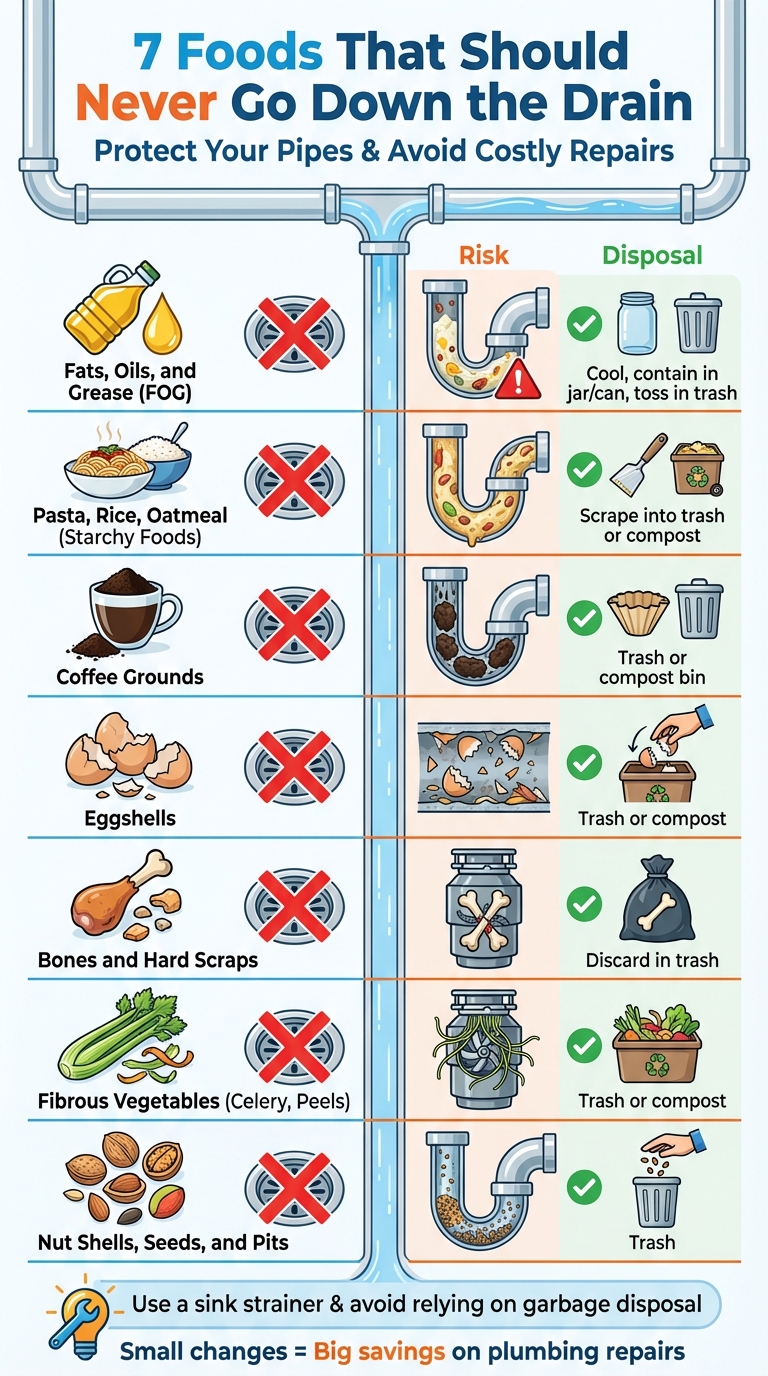
7 Foods That Clog Drains and How to Dispose of Them Properly
1. Fats, Oils, and Grease
Risk of Causing Drain Clogs
Fats, oils, and grease – commonly referred to as FOG – are notorious for causing kitchen drain clogs. You might think pouring bacon grease or cooking oil down the sink is harmless because it’s warm and in liquid form. But here’s the problem: as it travels through cooler pipes, it solidifies and clings to the walls. Over time, layer upon layer builds up, trapping food scraps, coffee grounds, and other debris. This sticky sludge narrows the pipe opening, eventually leading to a full-blown clog.
In older metal pipes, the situation can get worse. The grease buildup not only clogs the pipes but also accelerates corrosion, which can result in leaks or even pipe failure. If left unchecked, this can cause sewage to back up into sinks, dishwashers, or basement drains – a messy and costly problem no one wants to deal with.
Recommended Disposal Method
To avoid these issues, it’s essential to dispose of FOG the right way. The best method? Cool it, contain it, and toss it in the trash. After cooking, pour the warm grease into a heat-safe container, like an empty metal can or glass jar, and let it cool and solidify. Once it’s hardened, simply throw it away. For smaller amounts, you can use a paper towel to wipe greasy pans and plates before washing them – this keeps grease out of your pipes entirely.
If you’re looking for an eco-friendly option, many cities and counties in the U.S. offer cooking oil recycling programs. These programs allow you to drop off used oil in sealed containers for proper recycling.
One final tip: don’t rely on your garbage disposal to handle grease. While it can grind up solids, it won’t stop liquid grease from coating your pipes further down the line.
For more simple tips on keeping your kitchen clog-free, check out Comfy Kitchen’s guides and advice at Comfy Kitchen.
2. Pasta, Rice, Oatmeal, and Other Starchy Foods
Risk of Causing Drain Clogs
Starchy foods like pasta, rice, potatoes, and beans can be troublemakers for your pipes. These foods absorb water and expand after cooking, creating sticky blockages that are tough to clear. Rice, in particular, is sneaky – it can slip through strainers and settle in the P-trap. Once there, it continues to expand, clogging pipes and paving the way for further buildup and potential damage.
Potential for Pipe Damage or Buildup
Dumping starchy foods down the sink repeatedly can lead to layers of sticky residue inside your pipes. This buildup traps grease and debris, eventually restricting water flow. Over time, this can put extra pressure on older pipes, increasing the risk of leaks, especially at the joints. If you frequently need to clear clogs using methods like snaking or hydro-jetting, the added stress can further weaken fragile pipes, making leaks more likely.
Recommended Disposal Method
To avoid these issues, scrape any starchy leftovers into the trash before rinsing your dishes. If you compost, plain pasta, rice, or oatmeal (as long as it’s free of heavy oils or meat) can go into your compost bin. Always use a sink strainer and empty it regularly to catch smaller bits. Steer clear of pouring large amounts of starchy food down the sink or relying on your garbage disposal – it just chops the food into smaller pieces that can expand and clump further down the pipes.
3. Coffee Grounds
Risk of Causing Drain Clogs
Coffee grounds don’t dissolve in water, which means they remain intact as they move through your plumbing system. As they travel, these tiny particles often settle in areas like bends and low points – especially in the P-trap. Here, they tend to compact and mix with grease, soap residue, and other food debris. This combination creates a sticky, sludge-like layer that gradually narrows the pipe and leads to clogs that can be incredibly stubborn to clear.
If you’re using a garbage disposal, the problem can escalate. The disposal’s blades grind the grounds into even smaller particles, which can get trapped in the disposal itself or nearby drain lines. These saturated grounds can accumulate quickly, increasing the likelihood of clogs.
Potential for Pipe Buildup
Although coffee grounds don’t cause chemical damage to pipes, they contribute heavily to physical buildup. Over time, this accumulation can even exacerbate corrosion in older metal pipes. Homes with older cast-iron or galvanized plumbing, as well as those with long horizontal drain runs, low-slope pipes, or narrow kitchen branches, are especially prone to these issues. What starts as a minor buildup can eventually lead to significant blockages, requiring professional intervention to restore proper drainage.
Recommended Disposal Method
To avoid these problems, it’s best to throw coffee grounds in the trash. After brewing, scoop out the grounds and wipe away any residue from filters or baskets before rinsing. If you make coffee daily, consider using a small, lidded container to collect the grounds. Once full, you can either toss them in the trash or add them to a compost bin. Many cities across the U.S. even allow coffee grounds in curbside compost or yard-waste programs, offering an eco-friendly alternative. To further protect your plumbing, use a sink strainer when cleaning coffee equipment to catch any stray grounds before they enter the drain.
4. Eggshells
Risk of Causing Drain Clogs
Eggshells might seem harmless, but they can actually create significant problems for your plumbing. When ground up in a garbage disposal, eggshells break into jagged fragments that don’t dissolve in water. These fragments often settle in pipe bends or low spots, where they mix with grease, soap scum, and other food debris. Over time, this mixture can form stubborn clogs that slow down your drainage – or even block it completely.
The inner membrane of the eggshell adds another layer of trouble. It can wrap around the components of your garbage disposal, reducing its efficiency or even causing it to jam. Once these membranes enter the pipes, they can tangle with other debris, trapping more material and creating larger blockages as time goes on.
Potential for Pipe Buildup
Even if you rinse your sink regularly, eggshell fragments can still stick to your pipes, especially in areas where grease or mineral deposits already exist. This is particularly problematic in older homes with galvanized or cast-iron pipes, which are prone to rust and scale buildup. Small eggshell fragments can easily get lodged in these rough surfaces, contributing to chronic clogs that may eventually require professional intervention. While eggshells themselves won’t crack pipes, they can aggravate existing buildup, leading to more severe plumbing issues over time.
Recommended Disposal Method
To avoid these problems, it’s best to dispose of eggshells directly in the trash or add them to your compost. If you’re composting, crush the shells first to speed up their decomposition. A sink strainer can help catch any stray fragments before they enter your pipes. For convenience, collect eggshells in a small container while cooking and empty it immediately into the appropriate disposal bin. Many cities in the U.S. now include eggshells in their curbside organics collection programs, making eco-friendly disposal even easier.
5. Bones and Hard Food Scraps
Risk of Causing Drain Clogs
Bones and other hard scraps, like fruit pits, popcorn kernels, and chicken or pork bones, are tough for garbage disposals to handle. Instead of grinding down smoothly, they break into sharp, stubborn fragments that don’t dissolve in water. These fragments often get stuck in pipe bends or the P-trap, where they can pile up and lead to clogs.
Over time, these hard materials settle in low points of the plumbing system. They combine with grease, starch, and fibrous waste to form solid blockages that are difficult to clear. According to plumbing professionals, bones are responsible for 20–30% of service calls in various parts of the U.S.
Potential for Pipe Damage or Buildup
Hard scraps don’t just clog pipes – they can also damage them. Their sharp edges can scratch the inside of pipes, which may speed up rusting in older metal systems. Even with PVC pipes, these micro-abrasions can create rough surfaces where debris can stick, leading to layers of buildup. Over time, this buildup narrows the pipes, causing slow drainage or even complete blockages. Without regular maintenance, these issues can become chronic.
Recommended Disposal Method
To avoid these problems, toss bones and hard food scraps directly into the trash. Scrape your plates and cookware into the trash before rinsing them in the sink. For added convenience and odor control, seal bones in a trash bag before throwing them out.
If you’re looking for a more eco-friendly option, check if your local municipality offers curbside food-waste or composting programs that accept meat and bones. These programs are becoming more common across the U.S. Using a sink strainer can also catch any small fragments during dishwashing, making it easier to transfer them to the trash or compost bin. For more tips on keeping your kitchen running smoothly, visit Comfy Kitchen.
sbb-itb-663e316
6. Stringy, Fibrous Vegetables and Peels
Risk of Causing Drain Clogs
Certain vegetables – like celery, asparagus, onion skins, corn husks, artichoke leaves, potato peels, and carrot tops – are notorious for causing clogs. Their fibrous strands don’t easily break down in water or garbage disposals. Instead of being ground up, these fibers often wrap around the disposal’s blades and impellers, leaving behind partially shredded pieces. Once these fibers make their way into the drain, they tangle together and trap other debris, such as coffee grounds, grease, and starch. Plumbers often encounter these clogs after meal prep, especially when large amounts of these scraps are rinsed down the sink. The result? Dense blockages, typically found in the P-trap, that can lead to further buildup in the pipes.
Potential for Pipe Damage or Buildup
Consistently washing fibrous scraps down the drain can lead to long-term problems. The tangled fibers create rough surfaces inside the pipes, which catch additional debris, eventually forming thick, stubborn sludge. This sludge is often resistant to common household drain cleaners or plungers. In older plumbing systems, repeated clogs and the use of harsh chemical cleaners can weaken the pipes, increasing the chances of corrosion, leaks, or even cracks. For homes with septic systems, these fibers break down very slowly, which can speed up sludge accumulation in the tank, requiring more frequent pumping and maintenance.
Recommended Disposal Method
The best way to avoid plumbing issues is to keep fibrous scraps out of your sink entirely. Instead of rinsing them down the drain, scrape them directly into a lined trash can or a countertop compost bin. If you have an outdoor compost pile or access to a curbside composting program, these scraps can be a great addition. For added protection, consider using a sink strainer or drain screen to catch stray fibers before they enter your pipes. These simple habits can help prevent clogs and save you from costly plumbing repairs.
7. Nut Shells, Seeds, and Coarse, Gritty Foods
Risk of Causing Drain Clogs
Nut shells, seeds, and other gritty food waste can be a real headache for your plumbing. Items like peanut, pistachio, walnut, and almond shells, as well as sunflower and pumpkin seeds, and even olive and cherry pits, are tough, non-biodegradable materials. These don’t just wash away with water. Even if your garbage disposal breaks them into smaller bits, those fragments can settle in your drain’s P-trap, mixing with grease and debris to form a clog that’s tough to clear.
Potential for Pipe Damage or Buildup
The abrasive texture of these shells and seeds isn’t just a clogging risk – it can also damage your pipes. Older metal pipes are especially vulnerable, as the rough surfaces created by scratches make it easier for grease and sludge to stick, speeding up buildup. Additionally, sharp shell edges can jam or strain garbage disposal blades, leading to costly repairs that could run anywhere from $100 to $300.
Recommended Disposal Method
To keep your drains safe, avoid letting nut shells, seeds, and other coarse food residues go down the sink. Instead:
- Scrape them directly into the trash before rinsing dishes.
- If composting is an option, add these items to your backyard compost bin.
- Use a sink strainer to catch any small particles that might accidentally slip through.
- For extra caution, wipe bowls and plates with a paper towel to remove any remaining grit before washing.
For those who meal prep regularly, consider keeping a countertop scrap bowl handy to collect these materials. It’s a simple way to protect your plumbing while staying organized in the kitchen.
NEVER Dump These 7 Things Down the Sink
Quick Reference Table
Here’s a handy summary of seven common foods that can clog your drains and how to dispose of them properly. Use this guide to avoid plumbing headaches and keep your pipes clear.
| Food Category | Main Clogging Risk | Recommended Disposal Method |
|---|---|---|
| Fats, Oils, and Grease (FOG) | These solidify in pipes and trap debris, creating stubborn blockages. | Let them cool, pour into a heat-safe container, and throw them in the trash. Wipe greasy pans with a paper towel before washing. |
| Pasta, Rice, Oatmeal, and Starchy Foods | These expand when exposed to water, forming sticky clogs. | Toss leftovers in the trash or compost. Avoid rinsing starchy foods down the drain. |
| Coffee Grounds | They don’t dissolve and compact into dense clumps in pipes. | Dispose of them in the trash or compost. They make a great addition to gardens or compost bins. |
| Eggshells | The gritty particles stick to pipe walls, and the membrane can tangle disposal blades. | Throw shells in the trash or compost. Don’t rely on them to "sharpen" disposal blades – it’s a myth. |
| Bones and Hard Food Scraps | Too tough for disposals, they can jam the system or damage pipes. | Discard bones and hard scraps directly in the trash. Never put them in the disposal or sink. |
| Stringy, Fibrous Vegetables and Peels | Fibers wrap around disposal blades and clog pipes. | Toss items like celery, asparagus, corn husks, onion skins, and potato peels in the trash or compost. |
| Nut Shells, Seeds, Pits, and Gritty Foods | These act like sediment, collecting in pipe traps and low spots. | Throw shells, pits, and seeds in the trash to avoid buildup. |
Keep in mind: your garbage disposal is designed for small, soft scraps – not as a substitute for your trash can. When in doubt, toss it out!
Conclusion
Steering clear of these seven foods can save you from expensive drain clogs. Each type of food mentioned earlier comes with its own plumbing challenges, and ignoring them could lead to trouble down the line.
Here’s the bottom line: experts agree that FOG (fats, oils, and grease) is a major culprit behind clogs. Regularly rinsing grease or starchy leftovers down the drain sets the stage for stubborn blockages that can cost you time and money.
The good news? Preventing clogs is quick and easy. Scrape food scraps into the trash or compost bin, let grease cool before discarding it, and use a strainer to catch residues before they slip into your pipes. Remember, your garbage disposal is there to handle small, soft scraps – not to replace your trash can. These small adjustments can go a long way in keeping your drains clear, prolonging the life of your pipes and garbage disposal, and avoiding those dreaded emergency plumber bills.
The key takeaway? Scrape, cool, and strain. These simple habits can make a big difference and reinforce the preventative steps we’ve covered in this guide.
Looking for more kitchen tips, easy recipes, and everyday solutions? Head over to Comfy Kitchen for practical how-to guides that make cooking and meal prep a breeze.
FAQs
Why should fats, oils, and grease be cooled and contained before disposal?
Properly cooling and disposing of fats, oils, and grease is key to keeping your drains clear. If poured down the sink, these substances can harden and cling to the inside of your pipes, eventually causing blockages.
After allowing the grease to cool, transfer it into a disposable container, such as an empty can, and toss it in the trash. This quick and easy habit can save your plumbing from damage and spare you the expense of potential repairs.
Can I compost cooked pasta and rice instead of throwing them away?
Yes, you can compost cooked pasta and rice, but only if they’re free from oils, sauces, or seasonings. These additions can attract pests, so it’s crucial to add the pasta or rice to a well-maintained compost pile. To keep things balanced, mix them with dry materials like leaves or shredded paper. This helps manage moisture levels and minimizes odors.
Why shouldn’t I put fibrous vegetables or peels in the garbage disposal?
Fibrous vegetables such as celery, asparagus, and corn husks, along with potato or carrot peels, can wreak havoc on your garbage disposal. The stringy fibers from these items tend to tangle around the blades, which not only hampers their performance but can also cause the unit to jam. Over time, this may result in clogged pipes and expensive repair bills.
A smarter option? Compost these materials or throw them in the trash. This simple step can help you avoid plumbing headaches and keep your kitchen running smoothly.