

Storing fruits and vegetables correctly can save money, reduce waste, and keep produce fresher for longer. Here’s a quick summary of the best practices:
- Refrigerate: Apples, leafy greens, broccoli, carrots, and berries. Use crisper drawers to control humidity – high for vegetables, low for fruits.
- Counter Storage: Bananas, tomatoes, onions, garlic, and potatoes. Keep potatoes and onions separate to avoid spoilage.
- Ethylene Gas: Keep high-ethylene fruits (like apples, bananas, and avocados) away from sensitive produce (like leafy greens and cucumbers).
- Freezing: Blanch vegetables like broccoli before freezing. Freeze overripe bananas and sliced fruits like mangoes for later use.
- Specific Tips: Store berries unwashed in vented containers; keep asparagus upright in water; and trim carrot tops before refrigeration.
Proper storage can extend produce shelf life, save households up to $1,600 annually, and reduce food waste by 30%. Organize your fridge and pantry to keep your produce at its best.
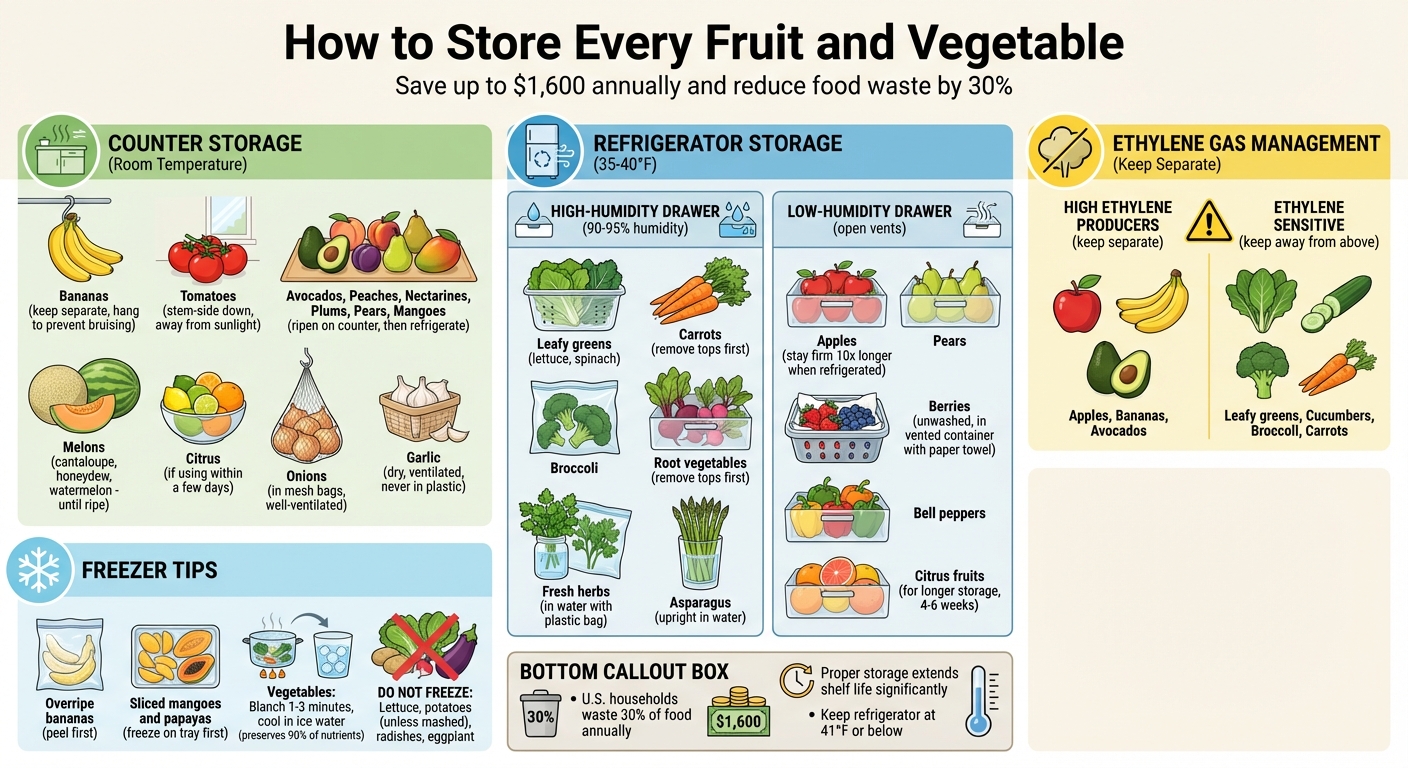
Complete Guide to Storing Fruits and Vegetables: Counter vs Refrigerator Storage Chart
How I Keep Fruits & Vegetables Fresh for Weeks | Under the Median Collab
Storing Produce on the Counter
Not all fruits and vegetables are meant for the refrigerator. In fact, some lose their flavor, develop an unpleasant texture, or stop ripening when chilled too soon. The secret lies in knowing which items thrive at room temperature and how to manage their ripening without letting them go bad.
Fruits That Should Stay on the Counter
Bananas are best kept on the counter, away from direct sunlight and heat sources like stoves or dishwashers. Store them separately from other produce since ripe bananas release ethylene gas, which can speed up the ripening of nearby fruits. To reduce bruising and slow ripening, hang bananas on a banana hook instead of piling them up.
Tomatoes also shine at room temperature. Keep them out of sunlight and place them stem-side down on a shallow plate to reduce moisture loss and the risk of mold. Avoid refrigerating unripe tomatoes, as the cold can ruin their taste and texture. If fully ripe tomatoes won’t be used within a day or two, you can refrigerate them briefly, but let them return to room temperature before eating to restore their flavor.
Fruits like avocados, peaches, nectarines, plums, pears, and mangoes should ripen on the counter in a cool spot away from direct sunlight. Once they’re soft to the touch, refrigerate to extend their freshness. To speed up ripening, place unripe fruit in a paper bag with a ripe banana or apple. For stone fruits like peaches, laying them in a single layer instead of stacking helps prevent bruising.
Melons, including cantaloupe, honeydew, and watermelon, ripen best on the counter, away from sunlight. Once ripe or cut, move them to the fridge to keep them fresh. Citrus fruits, such as oranges, lemons, and limes, can stay on the counter if you plan to use them within a few days. For longer storage, refrigeration is a better option.
Some vegetables also thrive when stored outside the fridge, as long as they’re kept under the right conditions.
Vegetables That Should Stay on the Counter
Onions, garlic, and potatoes prefer a cool, dark, dry, and well-ventilated space like a pantry. Dry onions should be stored in mesh bags, shallow boxes, or hanging nets to allow airflow and prevent mold. Garlic also needs a dry, ventilated environment and should never be sealed in plastic.
Potatoes are happiest in a cool, dark, and well-ventilated area, ideally between 45–55°F. Refrigeration can turn their starches into sugar, affecting both their flavor and how they cook. Keep them dry and toss out any that have started sprouting.
It’s important to store onions and potatoes separately. Onions release gases and moisture that can cause potatoes to sprout and spoil faster. Use ventilated containers and keep them in different parts of your pantry or storage area to maintain their quality.
How to Store Produce in the Refrigerator
To keep your produce fresh and flavorful, set your refrigerator temperature between 35–40°F. The USDA advises maintaining refrigerators at 41°F or below to slow bacterial growth, though internal temperatures might range from 32°F to 41°F.
Keep Fruits and Vegetables Separate
It’s a good idea to store fruits and vegetables apart. High-ethylene fruits should be kept away from vegetables, as the gas they emit can speed up spoilage. Use separate crisper drawers or designated sections in your fridge to maximize freshness. Additionally, adjusting your crisper drawers for the right humidity levels can make a big difference.
High-Humidity vs. Low-Humidity Drawers
Most refrigerators come with crisper drawers that let you control humidity, which is key to keeping produce fresh. High-humidity drawers (often labeled "vegetables" or with closed vents) maintain moisture levels around 90–95%, ideal for items like leafy greens that can wilt easily. On the other hand, low-humidity drawers (labeled "fruits" or with open vents) let ethylene gas and excess moisture escape, which helps fruits stay fresh longer.
Here’s a quick guide for organizing your produce:
| Produce Item | Recommended Drawer | Why? |
|---|---|---|
| Leafy Greens (lettuce, spinach) | High-Humidity | Retains moisture, prevents wilting |
| Apples, Pears | Low-Humidity | Releases ethylene gas to prevent softening |
| Carrots, Broccoli | High-Humidity | Keeps them crisp, avoids drying out |
| Berries | Low-Humidity (or main fridge) | Promotes air circulation, reduces mold |
| Bell Peppers | Low-Humidity | Prevents excess moisture buildup |
Refrigerator Storage Tips by Item
Here are some specific tips for common produce items to help them last longer:
- Berries: Keep berries unwashed in a shallow, vented container lined with a dry paper towel. This setup absorbs moisture and allows airflow, reducing mold. Wash only when ready to eat.
- Asparagus: Stand the bunch upright in a glass of cold water, with the tips loosely covered, or wrap the base in a damp paper towel.
- Fresh Herbs: Trim the stems, place them in a glass of water, and loosely cover with a plastic bag to maintain freshness.
- Leafy Greens: Wash, dry thoroughly, and store in a sealed bag or container with a paper towel to absorb extra moisture.
- Root Vegetables: Remove any attached greens, as they draw moisture from the roots. Store the roots in a sealed container lined with a dry towel, ideally in the high-humidity drawer.
- Mushrooms: Use a paper bag to store mushrooms. This allows them to breathe while preventing them from drying out.
How to Store Different Types of Fruit
Storage Methods for Popular Fruits
Apples do best when stored in a cool spot, like the refrigerator. Left at room temperature, they soften about 10 times faster, so chilling them helps maintain their crisp texture for weeks. To prevent moisture buildup, keep them loose in the crisper drawer and away from produce that’s sensitive to ethylene gas.
Citrus fruits – like oranges, lemons, limes, and grapefruits – should be stored loose or in mesh bags in the refrigerator’s crisper drawer, ideally between 32–41°F. Proper air circulation is key to keeping them fresh for 4–6 weeks. Avoid sealing them in airtight containers, as trapped moisture can lead to mold.
Stone fruits such as peaches, plums, and nectarines benefit from a two-step storage process. First, let them ripen on the counter, keeping them out of direct sunlight. Once they’re ripe and slightly soft, move them to the refrigerator’s crisper drawer to keep them fresh for another 3–7 days. Similarly, fruits like avocados and melons should ripen at room temperature before refrigeration. For fruits that require gentle handling, specific tips can make all the difference.
Keeping Delicate Fruits Fresh Longer
Delicate fruits, like berries, need extra care since they’re prone to mold and bruising. To preserve their quality, avoid washing them until you’re ready to eat. Instead, arrange them in a single layer inside a shallow container lined with paper towels. Leave the lid slightly open to allow air circulation, which can help extend their shelf life to around 4–7 days in the refrigerator.
For fruits like ripe pears and mangoes, refrigeration is best only after they’ve fully ripened on the counter. Cooling unripe fruit can stop the ripening process, leaving you with firmer, less flavorful results. Once ripe, these fruits typically stay fresh for an additional 1–3 days in the fridge.
sbb-itb-663e316
How to Store Different Types of Vegetables
Storing Root Vegetables and Tubers
For root vegetables like potatoes, onions, and squash, a cool, dry, and dark pantry with good ventilation is ideal. This setup helps prevent sprouting and keeps them fresh longer. Onions, in particular, benefit from being stored in shallow boxes, mesh bags, or even hung in nylons to ensure proper airflow.
Potatoes should also be kept in a similar environment – cool, dark, and dry – but never in the refrigerator. Cold temperatures can turn their starches into sugars, which changes their flavor and texture. It’s also important to keep potatoes and onions apart, as gases from onions can speed up potato spoilage.
Carrots need a slightly different approach. Trim off their tops to reduce moisture loss and store the carrots in a sealed container with a dry towel. This method keeps them fresh for up to 3–4 weeks. If you want to save the carrot tops for later use, store them separately in a sealed container lined with a damp towel.
Now, let’s look at how to maintain the crispness of leafy greens and other fresh vegetables.
Storing Leafy Greens and Fresh Vegetables
Leafy greens like lettuce and spinach thrive in high humidity. To keep them crisp, wash and dry the greens, then store them in a sealed container or bag lined with a damp paper towel. Remove any ties that might bruise the leaves. When stored in your refrigerator’s crisper drawer, they can stay fresh for 4–7 days or even longer.
Broccoli requires a slightly different technique. Store it in the crisper drawer of your fridge, either in an open container or loosely wrapped in a damp towel. This allows for proper air circulation while maintaining moderate humidity. Avoid airtight containers, as trapped moisture can cause rot. When stored correctly, broccoli should stay fresh for 1–2 weeks. To get the best results, keep your refrigerator’s crisper drawers set between 32°F and 41°F.
Other Ways to Keep Produce Fresh
Freezing Fruits and Vegetables
Freezing produce at its peak ensures you preserve both flavor and nutrients. Fruits like bananas, papayas, and mangoes are particularly freezer-friendly. For overripe bananas, peel them and store in a plastic bag – perfect for smoothies or baking later. With papayas and mangoes, slice them up and freeze the pieces individually on a tray before transferring to a bag. This prevents clumping and makes it easy to grab exactly what you need.
When it comes to vegetables, blanch them for 1–3 minutes, then immediately cool them in ice water to halt the cooking process. Once dry, freeze them on a tray. This method helps maintain their color, texture, and preserves up to 90% of their nutrients compared to freezing them raw.
However, not all produce freezes well. Avoid freezing items like artichokes, Belgian endive, eggplant, lettuce, potatoes (unless mashed), radishes, sprouts, and sweet potatoes, as their texture and quality tend to degrade.
While freezing is a great option, managing natural ripening agents can further extend the life of your produce.
Managing Ethylene Gas and Ripening
To complement freezing, proper ethylene gas management is key to keeping produce fresh. Ethylene-producing fruits, like apples and bananas, should be stored separately from ethylene-sensitive vegetables. Use your fridge drawers strategically: a low-humidity drawer for ethylene-producing fruits and a high-humidity drawer for sensitive vegetables. This simple separation can add several days to your produce’s shelf life.
If you need to speed up the ripening process for fruits like avocados, pears, peaches, or plums, place them in a paper bag with a ripe fruit. This trick can ripen them in just 1–2 days – just check daily to avoid over-ripening.
Conclusion
Storing produce properly doesn’t have to be complicated. Let fruits like avocados and peaches ripen on the counter before moving them to the fridge. Keep potatoes, onions, and garlic in a cool, dark pantry – but make sure to store onions and potatoes separately. Use your crisper drawers wisely by separating ethylene-producing fruits from vegetables that are sensitive to it.
These small steps can make a big difference. For instance, apples can stay firm up to 10 times longer when refrigerated. Keeping your produce at 41°F or below helps maintain its vitamins, texture, and flavor while cutting down on food waste.
Why does this matter? On average, U.S. households waste about 30% of their food, which translates to approximately $1,600 worth of produce per family each year. By extending the life of items like berries, greens, and root vegetables, proper storage can save money and reduce waste significantly.
Start by organizing your fridge. Keep ethylene-producing fruits away from sensitive vegetables, and don’t toss overripe bananas – freeze them for smoothies instead. Simple habits like these not only save cash but also keep your ingredients fresh and ready to use.
For more tips on managing your kitchen and making the most of your produce, check out Comfy Kitchen for practical recipes and advice.
FAQs
What’s the best way to store fruits and vegetables to keep them fresh longer?
To make fruits and vegetables last longer, it’s important to store them correctly based on their unique requirements. Most items should go in the refrigerator, ideally in the produce drawer or breathable containers. However, root vegetables like potatoes and onions do better in a cool, dark, and dry spot. Hold off on washing your produce until you’re ready to use it – extra moisture can make them spoil faster. Using perforated bags or airtight containers can also help by managing airflow and humidity to keep everything fresh.
What’s the best way to keep bananas fresh for longer?
To keep bananas fresh, let them sit at room temperature until they ripen. Once they’re ripe, move them to the refrigerator to slow down the ripening process. The peel might turn dark in the fridge, but don’t worry – the fruit inside will remain fresh and delicious.
Why shouldn’t you store potatoes and onions together?
It’s best to keep potatoes and onions apart. Why? Onions release gases and moisture that can speed up the spoiling or sprouting of potatoes. Separating them helps both last longer.
For potatoes, aim for a cool, dark, and well-ventilated spot. On the other hand, onions thrive in a dry, ventilated area away from direct sunlight. Keeping these storage tips in mind ensures they stay fresh for as long as possible.