

When deciding between plastic and glass food storage containers, it’s all about your needs. Plastic is lightweight, shatterproof, and portable, making it great for on-the-go meals or kids’ snacks. However, it can leach chemicals when exposed to heat or acidic foods and tends to absorb stains and odors. Glass, on the other hand, is chemical-free, resists stains and smells, and is oven-safe – but it’s heavier, breakable, and more expensive.
Here’s a quick breakdown:
- Plastic: Affordable, portable, and durable for daily use, but may degrade over time and isn’t ideal for reheating.
- Glass: Non-toxic, long-lasting, and versatile for reheating and storage, but heavier and less portable.
Quick Comparison:
| Feature | Plastic Containers | Glass Containers |
|---|---|---|
| Durability | Resists breaking but warps over time | Breakable but lasts decades |
| Weight | Lightweight | Heavier |
| Heat Tolerance | Limited; avoid microwaving | High; oven and microwave-safe |
| Chemical Safety | Risk of leaching chemicals | Non-reactive and chemical-free |
| Cost | $3–$25 for basic sets | $25–$200+ |
| Stain/Odor Resistance | Absorbs stains and odors | Resists stains and odors |
| Portability | Excellent for travel | Less portable |
For the best of both worlds, use plastic for travel or short-term storage and glass for reheating, long-term storage, and leftovers.
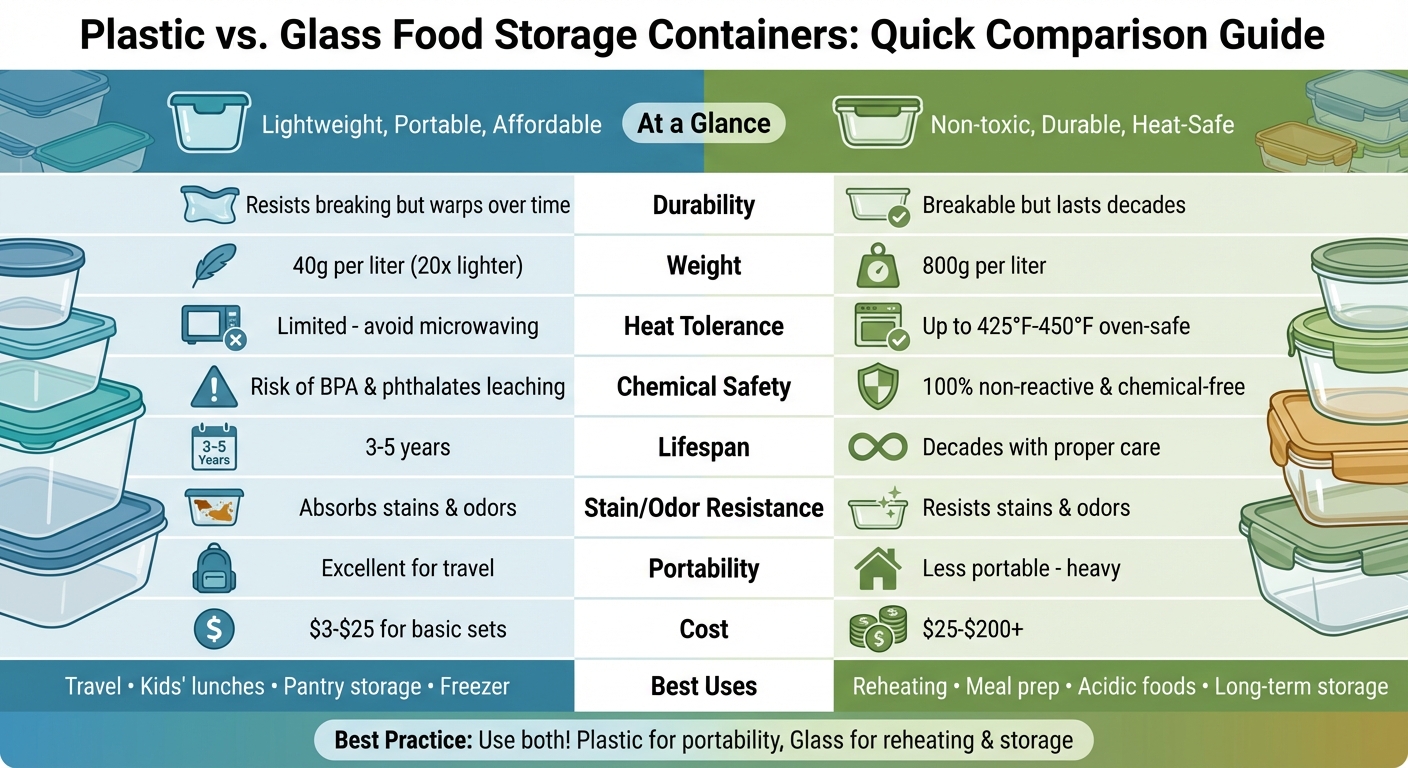
Plastic vs Glass Food Storage Containers Comparison Chart
Equipment Review: The Best Plastic and The Best Glass Food Storage Containers & Our Testing Winners
Plastic Food Storage Containers
Plastic containers are a kitchen essential – they’re lightweight, budget-friendly, and durable. For instance, a one-liter plastic jar weighs just 40 grams, while a similar glass jar comes in at about 800 grams. That’s a weight difference of 20 times! This makes plastic a practical choice for packing lunches, loading up a cooler for a picnic, or simply avoiding the strain of carrying heavy items.
Their durability is another big plus, especially for families with kids. Drop a plastic container, and it bounces back; drop glass, and you’re left cleaning up sharp, dangerous shards. This toughness also makes plastic containers ideal for outdoor adventures like camping or hiking.
Many plastic container sets are designed to save space, with stackable or nesting options. Some even come with handy extras like dividers or colander inserts for rinsing produce. Features like freshness-tracking dials also help keep your pantry and meal prep organized [11, 12, 16, 18].
Affordability is another reason plastic containers are so popular. Basic sets start at just $6.99 for a three-pack, while higher-quality options, like the Rubbermaid Brilliance 10-piece set, cost around $26.99 [10, 11]. Rubbermaid Brilliance was even named the top pick by America’s Test Kitchen in December 2025, thanks to its ability to pass a rigorous "blue water" shake test without leaking and survive a drop from counter height while frozen. Their low cost also makes them perfect for sharing meals or sending care packages without worrying about getting the container back.
Benefits of Plastic Containers
Plastic containers offer several practical advantages:
- Their lightweight design makes them easier to handle, especially for people with mobility or health challenges. In contrast, glass containers can be cumbersome and difficult to lift.
- They save space. A full set of plastic containers can often fit in the same area that might hold just a few glass ones [16, 20].
Downsides of Plastic Containers
Despite their convenience, plastic containers do have drawbacks. One major concern is chemical leaching. When exposed to heat or used to store fatty or acidic foods, plastics can release chemicals like BPA and phthalates into food [13, 3]. These substances are known endocrine disruptors that may interfere with hormones, potentially affecting fertility and reproduction [13, 6]. The European Food Safety Authority has even drastically lowered the tolerable daily intake for BPA due to these risks.
"The transfer [of chemicals] is also higher with hot foods. This means you might absorb a higher dose of chemicals by microwaving food in a plastic container than you would when using the same container to store salad."
– Dr. Jane Muncke, Managing Director and Chief Scientific Officer, Food Packaging Forum
Another issue is material degradation. Even with proper care, plastic containers typically last only 3 to 5 years before becoming brittle, cracked, or warped. Dishwashers and UV exposure can speed up this process, weakening the plastic over time. Any signs of wear – like discoloration, cloudiness, or cracking – mean it’s time to replace the container [6, 11].
Plastic also has a tendency to absorb stains and odors. Foods like tomato sauce, curry, or turmeric can leave permanent marks, and even after thorough washing, some containers may retain food smells or grease [6, 5].
Finally, the environmental impact of plastic is considerable. Only about 9% of plastic food containers are recycled successfully [10, 2]. In 2012, just 14% of plastic containers and packaging in the U.S. were recycled, with most ending up in landfills. In 2010 alone, an estimated 14 million tons of plastic containers were generated.
When to Use Plastic Containers
Plastic containers shine in specific scenarios:
- Pantry storage: They are great for organizing dry goods like flour, sugar, beans, pasta, and rice, where there’s minimal risk of chemical transfer [16, 18].
- Freezer storage: Opt for "freezer-safe" plastic containers to avoid cracking. Pre-portion soups, beans, or chopped fruits and veggies for easy meal prep [15, 5, 16, 20].
- On-the-go meals: Their shatter-resistant design makes them ideal for lunch bags, backpacks, or coolers. As Karuna Eberl explains:
"I don’t like them [glass] for the cooler, the car or on a hike because they’re heavy and breakable. Takeout containers are a perfect substitute."
- Refrigerator storage: Plastic works well for salads and cut vegetables. Just ensure your fridge stays between 35°F and 40°F, and always let hot foods cool before transferring them into plastic containers [11, 17].
To limit chemical exposure, avoid microwaving food in plastic containers – even those labeled "microwave-safe." That label only means the plastic won’t melt, not that it’s free of chemical leaching [13, 14]. Hand wash plastic containers with warm, soapy water instead of using the dishwasher, as high heat can accelerate wear [6, 11]. Also, avoid storing fatty or acidic foods like tomato sauce or lasagna in plastic for extended periods [13, 11]. Lastly, check the bottom of your containers for resin codes. Stick to codes 1, 2, 4, and 5, and steer clear of codes 3, 6, and 7, which may contain PVC, polystyrene, or BPA [3, 14].
Glass Food Storage Containers
Glass containers stand out for their health benefits, durability, and versatility, although they do come with the trade-offs of being heavier and more expensive than plastic.
One of the biggest perks of glass is that it doesn’t leach chemicals. Being non-reactive and non-porous, glass won’t release BPA, phthalates, or other harmful substances into your food – even when reheating acidic dishes like marinara or storing fatty foods. As eco-writer Wendy Gabriel puts it:
"Potentially harmful chemicals aren’t leaching into our meals when heated in a glass food storage container – or anytime, for that matter."
Glass also resists stains and odors far better than plastic. That stubborn tomato sauce that might permanently tint a plastic container? It washes right off glass. The same goes for strong-smelling ingredients like garlic or curry – glass won’t absorb those odors, keeping your containers odor-free and hygienic.
When it comes to versatility, glass is hard to beat. It’s safe for the microwave, dishwasher, freezer, and oven – handling temperatures up to 425°F to 450°F in most cases, and up to 950°F for borosilicate glass. Just remember to remove any plastic lids before putting them in the oven, as they aren’t heat-safe.
Environmentally, glass is a standout choice. It’s 100% recyclable and can be recycled endlessly without losing quality or purity – a rare trait among food storage materials.
Benefits of Glass Containers
Glass containers offer a range of advantages, starting with their non-porous surface. This feature helps them resist germs, stains, and odors, ensuring long-term hygiene. Unlike plastic, which often clouds or discolors over time, glass maintains its clarity, even after years of use.
Durability is another major plus. While glass can break if dropped, it doesn’t warp, melt, or scratch as easily as plastic. With proper care, glass containers can last for decades, far outliving the 3-to-5-year lifespan typical of plastic. For instance, in December 2025, America’s Test Kitchen tested Rubbermaid Brilliance Glass Food Storage Containers by dropping them from counter height three times. The result? No cracks or breaks – just two small scratches on the bottom.
Glass’s transparency and tight seals also make it easier to manage your kitchen. The clear design lets you see what’s inside at a glance, serving as a visual reminder to use leftovers before they spoil. Plus, the airtight seals act as a barrier against moisture and bacteria, keeping food fresher for longer. In July 2025, Better Homes & Gardens tested the Pyrex FreshLock Glass Storage Set by storing a peeled avocado for three days. The airtight seal kept the avocado fresh and significantly reduced browning.
Thermal versatility is another area where glass shines. Most glass containers can go from the freezer to the microwave or oven without worry. Borosilicate glass, in particular, handles rapid temperature changes exceptionally well, making it ideal for freezer-to-oven use. Tempered soda-lime glass, while slightly less resistant to thermal shock, offers better impact and scratch resistance.
Downsides of Glass Containers
Despite their many benefits, glass containers do have some drawbacks. Their heavier weight and potential for breakage make them less practical for on-the-go use. Even though tempered glass is designed to break into blunt fragments rather than sharp shards, it still poses a risk – especially in households with young children or during outdoor activities like camping.
Glass containers are also more expensive. Basic sets start around $32 for 12 containers, while mid-range options like Rubbermaid Brilliance or Glasslock range between $40 and $60. Premium ceramic-coated sets, such as Caraway, can cost over $200.
Additionally, glass requires careful handling during extreme temperature transitions. Moving a container directly from the freezer to a preheated oven – or vice versa – can cause it to shatter. To avoid this, let frozen containers thaw in the refrigerator before reheating.
When to Use Glass Containers
Glass is perfect for oven-safe dishes like casseroles, lasagnas, or roasted vegetables. You can prep, bake, store, and reheat all in the same container, cutting down on cleanup.
For acidic or strongly flavored foods, glass is the better option. Tomato-based sauces, citrus marinades, curries, and pickled items won’t stain or leave lingering odors in glass as they might in plastic.
Glass is also ideal for large-batch cooking. Soups, stews, and sauces stored in glass stay fresh longer without absorbing flavors or leaching chemicals. The transparency makes it easy to identify what’s inside, helping reduce food waste.
If you’re freezing food, borosilicate glass is your best bet for handling temperature changes. Leave 1 to 1.5 inches of headroom when freezing liquids to allow for expansion and prevent cracking. Chef Jason Goldstein, founder of Chop Happy, advises:
"When in doubt, get borosilicate glass so you can use it for everything."
For daily heavy use, tempered soda-lime glass is a solid choice. It’s more resistant to impacts and scratches, making it practical for busy kitchens. Just check for "oven-safe" or "microwave-safe" stamps on the bottom, as untreated soda-lime glass isn’t heat-resistant.
Next, we’ll compare plastic and glass side-by-side to help you decide which works best for your kitchen needs.
sbb-itb-663e316
Plastic vs. Glass: Direct Comparison
Comparison Table
Here’s a side-by-side look at how plastic and glass containers measure up for everyday kitchen use:
| Feature | Plastic Containers | Glass Containers |
|---|---|---|
| Durability | Susceptible to warping, discoloration, and scratches | Tough against scratches and odors but can break if dropped |
| Weight | Lightweight and easy to handle | Heavier and bulkier |
| Heat Tolerance | Limited; may melt or deform in microwaves or dishwashers | Excellent; safe for microwaves, dishwashers, and ovens (up to 425°F–450°F) |
| Chemical Safety | Can leach BPA, phthalates, or microplastics | Non-reactive and free of harmful chemicals |
| Lifespan | Short-lived (a few months to a couple of years) | Long-lasting; can endure for decades if handled carefully |
| Portability | Highly portable; lightweight and shatterproof | Less portable; heavy and fragile |
| Stain/Odor Resistance | Poor; absorbs stains and odors over time | Excellent; non-porous and resists both stains and smells |
| Cost | Budget-friendly ($3–$25 for basic sets) | More expensive ($25–$200+ depending on brand) |
This table highlights the main differences, but let’s dive deeper into how to choose the best option for your needs.
How to Choose Based on Your Needs
Start by considering how you’ll use the containers. Use the table as a quick reference, but here are some more tailored recommendations:
- For Meal Prep at Home: Glass is the ideal choice. It’s safe for reheating, helps preserve food quality, and its clear design makes it easy to see what’s inside and prioritize what to use first.
- For On-the-Go Use: Plastic wins for portability. It’s lightweight and shatterproof, making it perfect for school lunches, picnics, or camping trips. Just avoid reheating food in plastic to reduce chemical exposure.
- For Pantry Storage: Glass works best to keep food fresh while allowing you to quickly identify the contents.
- For Reheating Leftovers: Stick with glass to avoid potential chemical leaching. Its heat tolerance makes it a safer option.
- For Freezer Storage: Borosilicate glass is your go-to for handling temperature changes, like moving from freezer to oven. If you prefer plastic, use it only for short-term freezing and thaw food before reheating.
Using Both Plastic and Glass in Your Kitchen
Incorporating both plastic and glass containers into your kitchen routine can make life a whole lot easier. Each material has its own strengths, so using them strategically ensures you’re prepared for a variety of tasks.
Glass containers are ideal for long-term storage at home. Their transparency makes it easy to spot leftovers, encouraging you to use them before they go bad. They’re perfect for batch cooking, reheating meals, and keeping your fridge organized. Plus, glass doesn’t absorb odors or stains, making it the go-to choice for storing foods like marinara sauce or curry .
On the other hand, plastic containers shine when portability and convenience are key. They’re lightweight and less prone to breaking, which makes them great for school lunches, work commutes, and picnics. Plastic is also a smart choice for organizing your pantry or storing dry goods. Thanks to their stackable and nestable designs, they help maximize cabinet space, especially in smaller kitchens.
For specific situations, the choice is clear. Glass is better for storing aromatic, acidic, or oily foods, while plastic works well for cold snacks or sandwiches that need to stay separated – think bento-style boxes for an easy grab-and-go option. By assigning each material to the tasks it handles best, you can create a more efficient and organized kitchen.
Conclusion
Both plastic and glass food storage containers can play an important role in your kitchen. Knowing the differences between them allows you to choose the right option for your cooking and storage needs.
Glass containers shine when it comes to reheating, long-term storage, and preserving acidic or strongly scented foods. They’re non-toxic, oven-safe, and fully recyclable, making them a solid choice for many households. On the other hand, plastic containers are lightweight, shatterproof, and perfect for on-the-go meals, kids’ lunches, or when you’re working with limited storage space.
For those who frequently batch-cook or reheat leftovers, glass is a reliable option. If portability and convenience are priorities – like packing lunches or snacks – plastic is often the better fit. Having a mix of both types on hand can provide a versatile and practical setup for any kitchen.
"It’s important to keep track of how long you’ve had a plastic container, as chemicals can ‘leak’ out of the plastic when heating up." – Leanne Stapf, Chief Operating Officer, The Cleaning Authority
FAQs
Can you use glass containers in the oven or microwave?
Yes, glass containers marked as microwave-safe or crafted from materials such as borosilicate or tempered glass are suitable for use in both ovens and microwaves. These types of glass are built to withstand high heat without cracking or breaking.
However, it’s important to review the manufacturer’s guidelines to confirm the container’s heat tolerance. Also, be cautious with sudden temperature shifts – like moving a hot glass container into cold water – as this can lead to cracking.
What steps can I take to reduce chemical exposure when using plastic food containers?
When aiming to limit chemical exposure, opt for plastic containers marked with resin codes 1, 2, 4, or 5, as these are generally regarded as safer options. Avoid microwaving these containers or putting them in the dishwasher, as heat can lead to chemical leaching. Let hot foods cool before storing them in plastic containers, and try to steer clear of using them for fatty or acidic foods, which can also increase leaching risks. Always hand-wash plastic containers gently, and replace any that show signs of scratching, warping, or damage to keep them safe for use.
How do plastic and glass food storage containers impact the environment?
Plastic containers have a heavy toll on the environment, largely because most of them aren’t recycled. In the U.S., only about 14% of plastic containers actually make it through the recycling process. The rest? They often end up in landfills, are burned in incinerators, or contribute to pollution through greenhouse gas emissions and the spread of microplastics. On top of that, producing new plastic generates significant amounts of carbon dioxide and other harmful pollutants.
Glass containers, by contrast, offer a much more sustainable alternative. They are highly recyclable and can be reused over and over again without losing their quality. In fact, nearly 100% of glass can be reclaimed, which helps cut down on landfill waste significantly. While making glass does require a lot of energy, and its heavier weight can lead to higher transportation emissions, its overall environmental impact tends to be smaller than plastic’s in the long run. If you’re aiming for a more eco-friendly option, glass containers are often the better pick.