
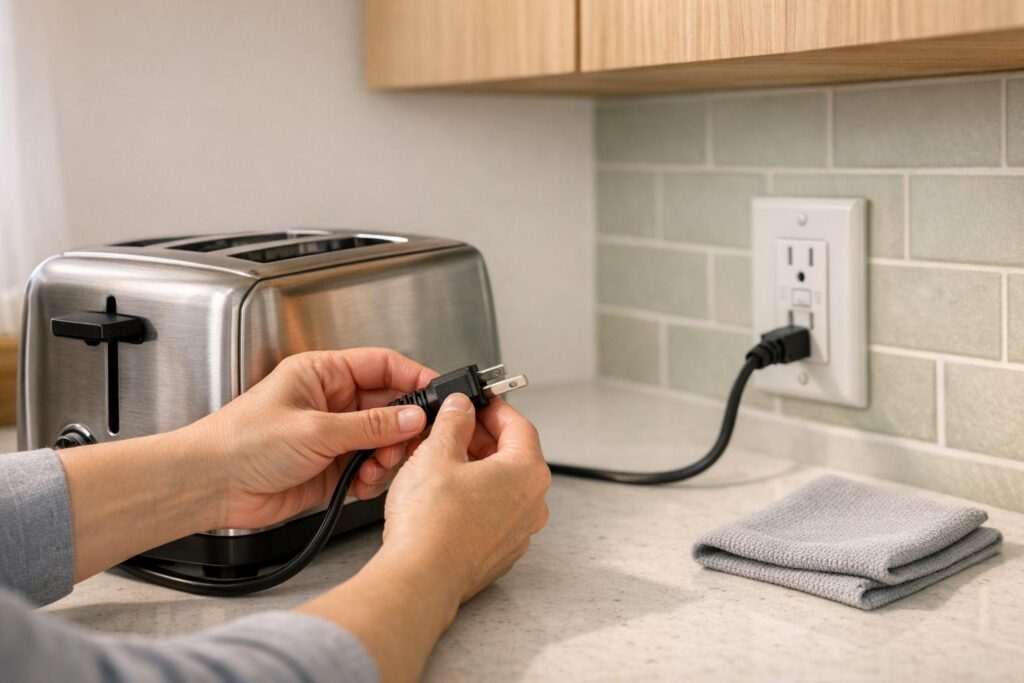
Small appliances make life easier, but they can also be dangerous if misused. From electrical fires to shocks, burns, and food contamination, the risks are real. This guide equips you with safety tips to protect your home and family. Here’s what you’ll learn:
- How to choose safe appliances: Look for safety certifications like UL or FDA compliance, inspect build quality, and read user manuals.
- Daily safety habits: Unplug appliances after use, avoid overloading outlets, and keep devices away from water.
- Maintenance tips: Clean appliances regularly, inspect cords for damage, and replace worn-out parts to prevent hazards.
- Common hazard prevention: Avoid electrical shocks, reduce fire risks, and handle sharp or hot components carefully.
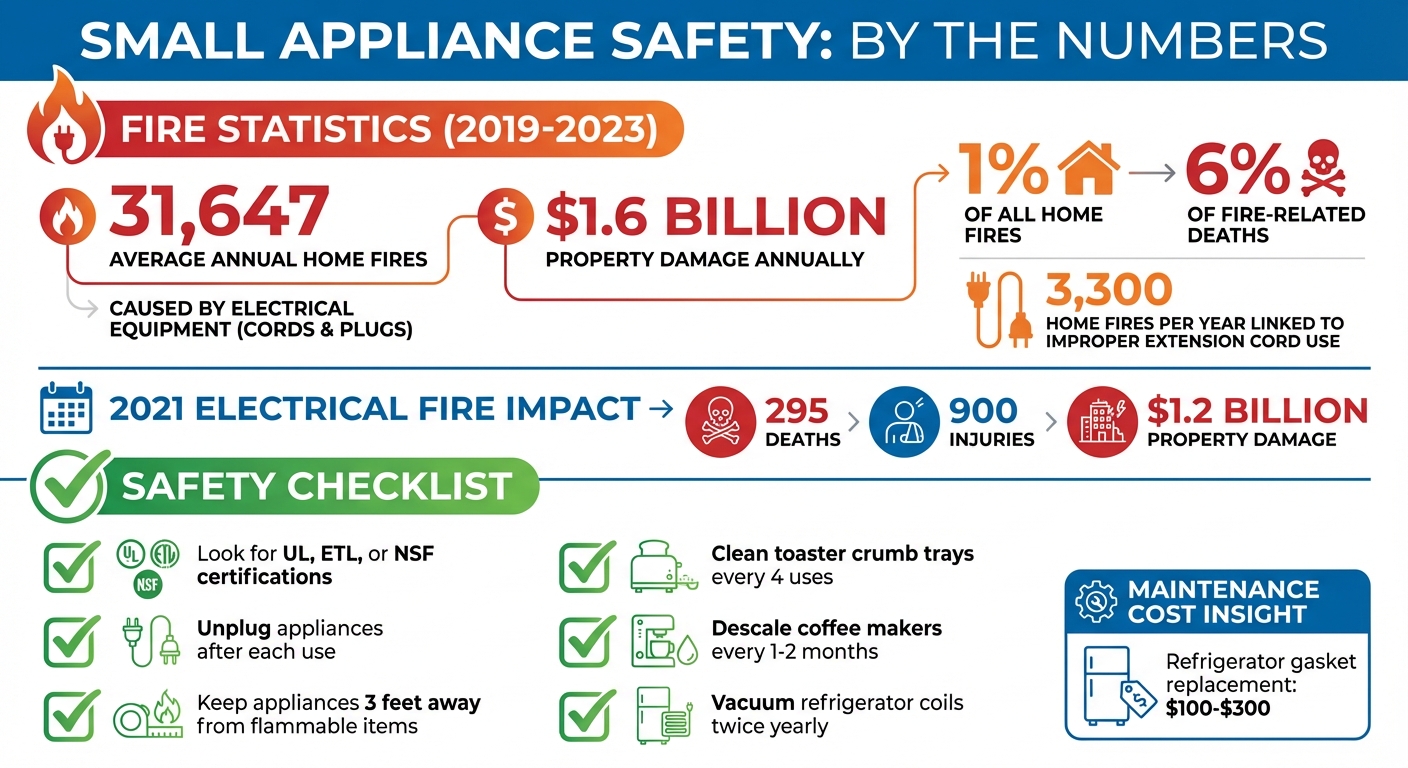
Small Appliance Safety Statistics and Fire Prevention Facts
Important Safety Checks For Your Household Appliances
sbb-itb-663e316
How to Choose Safe Small Appliances
When it comes to kitchen safety, selecting the right appliances is a critical first step. Choosing well-designed, properly certified products can help you avoid electrical fires, shocks, and injuries. Here’s how to make informed decisions when shopping for small appliances.
Check for Safety Certifications
Start by ensuring the appliance has a recognized safety certification. Look for marks like UL (Underwriters Laboratories), ETL (Intertek), or NSF on the product or its packaging. These certifications mean the appliance has been tested by an independent third party to ensure it meets standards for electrical, mechanical, and fire safety.
"All electrical appliances need to be NRTL-listed (Nationally Recognized Testing Laboratory) for safety. It demonstrates that the appliance has been tested by an independent third party, which accounts for possible hazards." – David Nance, Senior Manager of Electrical Safety, NSF
For appliances that come into contact with food – like blenders, food processors, or air fryers – check for FDA compliance. Manufacturers should provide documentation confirming that the materials used are food-safe and won’t release harmful chemicals into your meals.
Examine Build Quality and Safety Features
Once you’ve confirmed the certifications, take a closer look at the appliance’s construction. Pay attention to the power cord – make sure it’s thick, well-insulated, and free from any signs of wear or damage. Some modern appliances even feature breakaway connectors designed to reduce accidents.
"Cords are a snagging hazard. A child can be injured by a falling appliance or burned by cooking appliances like crockpots or deep fryers." – John Drengenberg, Consumer Safety Director, UL Solutions
Look for additional safety features like non-slip feet or a wide, stable base to prevent tipping during use. Appliances with blades, such as food processors or blenders, should have safety interlocks that keep the motor from running unless the lid is securely locked. For cooking devices, prioritize models with cool-touch handles and knobs to avoid burns, even when the appliance is hot.
Read the Manufacturer’s Instructions
Don’t overlook the user manual – it’s packed with crucial information. The instructions explain electrical requirements, proper assembly, and specific safety features that might not be immediately obvious. For instance, some appliances include detachable magnetic cords to prevent them from being pulled off the counter accidentally.
The manual also highlights usage limits, like how long the appliance can run continuously or whether it needs a grounded outlet. Ignoring these guidelines can lead to overheating, motor damage, or even electrical shocks. In fact, about 3,300 home fires each year are linked to improper use of extension cords, often because people don’t follow the recommendation to plug appliances directly into wall outlets.
Before using any new appliance, spend a few minutes reviewing the "use and care" or "important safeguards" section. This quick step can help you understand your model’s safety features and avoid potential hazards. Once you’ve chosen the right appliances, the next step is learning daily habits to keep them in top condition.
Daily Safety Practices for Small Appliances
Once you’ve chosen safe appliances, how you use them every day plays a big role in preventing accidents. Simple habits can go a long way in avoiding kitchen mishaps like electrical shocks or fires. Let’s look at some practical tips for keeping your kitchen safe.
Unplug Appliances After Each Use
Turning an appliance "off" doesn’t completely cut off electricity. Devices like toasters, air fryers, blenders, and coffee makers should always be unplugged after use to avoid risks like short circuits or accidental activation.
"In terms of safety, simply turning it off isn’t enough. Despite being in the ‘off’ position, a small appliance that is still plugged into an electrical outlet can still pose the risk of creating electric shocks." – Kristeen Cherney, House Digest
When unplugging, grab the plug itself – not the cord – to avoid damaging internal wires, which can lead to fires. Make it a habit to inspect cords regularly for cracks or loose connections, and repair or replace them as needed.
For heat-producing appliances like toasters or irons, unplug them and let them cool completely before storing or cleaning. If food gets stuck in a toaster, wait until it’s unplugged and cool before attempting to remove it. During thunderstorms, unplug sensitive appliances to protect them from power surges. And if you’re leaving home for more than a day, disconnect all non-essential small appliances.
Avoid Overloading Electrical Outlets
Unplugging is just one part of the equation – avoiding overloaded outlets is just as important. Kitchen appliances like microwaves, toasters, and air fryers can draw a lot of power. Running too many high-powered devices on the same circuit can lead to overheating and even sparks.
"Avoid using multiple high-powered appliances at once, so as not to overload the circuit." – David Nance, Senior Manager of Electrical Safety, NSF
Whenever possible, plug appliances directly into wall outlets instead of relying on extension cords or power strips, which may not handle the wattage. If you need to use a power strip, choose one with built-in overload protection and check that it’s rated for the appliance’s power needs. If a plug feels loose in the outlet, replace the outlet to prevent overheating or electrical arcing.
Keep Appliances Away from Water
Water and electricity don’t mix – this is especially true in kitchens, where spills and moisture are common. Keep appliances like toasters, blenders, and coffee makers away from sinks or wet areas. Using Ground Fault Circuit Interrupter (GFCI) outlets is a good idea, as they shut off power instantly if moisture causes a surge.
"Mixing water and electricity is dangerous. Therefore, it is essential to ensure that all appliances remain away from water sources like sinks and faucets to avoid any risk." – Zimmerman Electric Company
Always dry your hands before handling plugs or switches, and never immerse cords, plugs, or appliances in water unless the manufacturer specifies they’re safe to submerge. If a spill happens near an outlet or plugged-in appliance, clean it up immediately to prevent moisture from reaching electrical components. And remember, always unplug appliances before cleaning them, even if they’re turned off.
Cleaning and Maintaining Your Appliances
Keeping your appliances clean and in good working order is essential for safety and longevity. Neglecting maintenance can lead to fire hazards, electrical issues, or even cause your appliances to work harder than necessary. A little care goes a long way in ensuring a safe and efficient kitchen.
Clean Regularly to Remove Grease and Dirt
Grease, crumbs, and food residue can create serious risks, especially in appliances like toasters and microwaves. For instance, crumbs left in a toaster can ignite when the heating elements activate, while grease buildup on microwave filters can catch fire. Always handle electrical components with dry hands, and avoid immersing motor bases or electrical parts in water.
- Toasters: Empty the crumb tray every four uses to prevent burning and improve food quality. Use a soft brush to dislodge stuck crumbs, but avoid metal utensils like forks, as they can damage the heating elements or cause injury.
- Coffee Makers: Descale every one to two months to remove mineral buildup. Run a cycle with equal parts distilled white vinegar and water, followed by two plain water cycles, or use a commercial descaling solution.
- Microwaves: Steam clean by microwaving a bowl of water with lemon juice for two minutes, then let it sit for 15 minutes before wiping. If you have an over-the-range microwave, soak the grease filter in hot, soapy water monthly, adding 1/4 cup of baking soda for heavy grease buildup.
- Refrigerators: Vacuum or brush the coils twice a year to prevent the compressor from overworking. As Darin Detwiler, PhD, points out, "Clean the coils to keep your refrigerator from burning out."
- Blenders: For a quick clean, fill the jar halfway with warm water and a drop of dish soap, then run it on high for 15–30 seconds. Wash blades separately, treating them like knives to avoid accidents.
Check and Replace Damaged Parts
Even a minor issue, like a frayed cord, can turn an otherwise safe appliance into a hazard. Regularly inspect power cords for signs of wear, such as cracks or exposed wires. If you notice damage, replace the cord with one that matches the original specifications or consider replacing the appliance altogether. Loose plugs or damaged outlets should also be addressed promptly to prevent overheating.
- Gaskets and Seals: Check the rubber gaskets on refrigerators and microwave doors for cracks or grime. Damaged seals can lead to energy loss, forcing the appliance to work harder. Clean them gently with a microfiber cloth dampened in a mild soap solution (1/4 teaspoon dish soap to one cup of warm water). If replacements are needed, costs can range from $100 to $300.
- Filters and Vents: Dishwasher filters should be cleaned monthly in hot, soapy water to avoid drainage issues. Over-the-range microwave filters, especially grease-saturated ones, should also be cleaned regularly to prevent fire risks.
- Electrical Issues: Appliances that frequently trip circuit breakers or blow fuses may have internal defects. Unplug these devices immediately and seek repair or replacement.
"If the appliance has a cracked, damaged or loose cord, replace the appliance." – U.S. Fire Administration
Store Appliances Properly
Proper storage is just as important as cleaning. For heat-producing appliances like toasters or air fryers, allow them to cool completely before storing to avoid burns or damage. Never stack items on top of a toaster oven, as this can lead to melting or fire during use.
Store appliances in dry, stable areas to prevent tipping or falling. Keep cords loosely coiled to avoid internal damage and reduce fire risks. Place appliances away from edges, especially if children or pets are around. For items with sharp removable parts, like blender blades or food processor discs, store them separately in a safe spot to prevent accidental cuts.
If you’re storing appliances for a long time, ensure they’re completely dry to avoid mold or mildew. Periodically check stored items for damage, and inspect cords and plugs before using them again.
Taking the time to clean, inspect, and store your appliances properly not only extends their lifespan but also helps prevent accidents, creating a safer kitchen environment.
How to Prevent Common Appliance Hazards
Using small appliances can make life easier, but they also come with risks if not handled properly. From 2019 to 2023, electrical equipment like cords and plugs caused an average of 31,647 home fires annually, resulting in $1.6 billion in property damage. While these fires make up only 1% of all home fires, they account for 6% of fire-related deaths. Below are practical steps to help prevent electrical shocks, reduce fire risks, and avoid injuries.
Prevent Electrical Shocks
Water and electricity are a dangerous mix, especially in kitchens. Always keep your hands dry when operating appliance switches or plugs, and ensure electrical devices are far from sinks and faucets. If you ever feel a tingling sensation when using an appliance, stop immediately and contact a licensed electrician.
Installing ground-fault circuit interrupters (GFCIs) is a smart safety measure. These outlets detect ground faults caused by defective appliances and cut the power before an electric shock can occur. To ensure they work properly, test your GFCI and AFCI outlets monthly by pressing the "test" button. According to David Nance, Senior Manager of Electrical Safety at NSF, "all electrical appliances need to be NRTL-listed (Nationally Recognized Testing Laboratory) for safety". Check for certification logos on packaging or in the manuals before buying any appliance.
When cleaning or removing stuck food from appliances, always unplug them first. Use non-metal utensils to avoid conducting electricity, which could lead to injury. Even unplugged, microwaves can retain an electric charge, so regularly inspect door seals and locks to ensure they’re in good condition.
Reduce Fire Risks
Heat-generating appliances like toasters, coffee makers, and air fryers should always be plugged directly into wall outlets to avoid overloading circuits. Avoid using extension cords or power strips for these devices, as they can overheat and become fire hazards.
Keep flammable items such as dish towels, curtains, and paper products at least three feet away from any appliance that produces heat. The National Fire Protection Association warns:
"Remember, you do not need a flame to start a fire. Fires can start when heat builds up near things that burn".
Stop using any appliance that emits burning smells, sparks, or causes outlets to feel unusually warm. Additionally, avoid running cords under rugs or across doorways, where they can be damaged by foot traffic. Damaged cords can overheat and start a fire. To stay prepared, install smoke alarms on every level of your home and test them regularly.
Avoid Cuts and Physical Injuries
Small appliances can also pose physical risks, especially those with sharp blades or moving parts. Blades in food processors and blenders are deceptively sharp. Marissa Stevens, a recipe developer and food blogger, advises:
"Food processor blades are sharper than they look, so treat them like knives when loading and cleaning".
Always unplug appliances before handling blades or attachments.
To prevent entanglement hazards, secure loose clothing, tie back long hair, and remove jewelry before using appliances like stand mixers. John Drengenberg, Consumer Safety Director at UL, points out:
"Cords are a snagging hazard. A child can be injured by a falling appliance or burned by cooking appliances like crockpots or deep fryers".
Keep cords short and tucked away to avoid tripping or pulling accidents. Always place appliances on flat, stable surfaces to prevent tipping, and double-check that lids and attachments are securely locked before turning on the power.
When blending hot liquids, Stevens suggests:
"If I’m blending something hot, I prefer to cover the top with a clean dish towel instead of the lid that’s apt to blow off".
Start mixers and blenders on their lowest speed setting to avoid spills or splatters, gradually increasing the speed as needed. By following these precautions and maintaining your appliances properly, you can create a safer and more efficient kitchen environment.
Conclusion
After diving into proper selection, daily habits, and consistent upkeep, one thing is evident: safety isn’t a one-time effort – it’s an ongoing commitment. In 2021, electrical fires in the U.S. resulted in approximately 295 deaths, 900 injuries, and over $1.2 billion in property damage. Many of these tragedies could have been avoided with basic awareness and maintenance.
The steps to safety are straightforward: unplug appliances when they’re not in use, check cords for wear and tear, and clean away grease and crumbs to reduce fire and shock risks. David Nance, Senior Manager of Electrical Safety at NSF, emphasizes that NRTL-listed products undergo rigorous independent safety testing.
Beyond preventing accidents, regular upkeep extends the lifespan of your appliances and keeps them running smoothly. Simple tasks like cleaning refrigerator coils or descaling coffee makers can stop motors from overheating and failing. These efforts not only enhance safety but also save money on costly repairs or replacements.
Safety certifications, proper outlet use, and keeping water away from appliances are key to building a secure kitchen. Install GFCI outlets near sinks, test them monthly, and avoid handling appliances with wet hands. By turning these habits into part of your routine, you create a kitchen where efficiency and safety coexist seamlessly.
FAQs
Do I need GFCI outlets for countertop appliances?
GFCI outlets are a smart choice for countertop appliances, particularly in areas near sinks or water sources. They help lower the risk of electrical shock by quickly shutting off power when a ground fault is detected. This safety measure aligns with U.S. electrical standards, offering extra protection in spaces prone to moisture.
When should I replace an appliance instead of repairing it?
If your appliance is more than 10 years old, constantly breaking down, or driving up your utility bills due to inefficiency, it might be time to consider a replacement. Another key factor is cost – if repairs are more than 50% of what a new appliance would cost, replacing it could save you money in the long run. Even after repairs, if the appliance isn’t performing well, that’s a strong indicator it’s time for an upgrade. When deciding, think about the appliance’s age, repair expenses, energy efficiency, and whether it’s still under warranty. These factors can help you make a smart, cost-effective choice.
Which small appliances should never be used with an extension cord?
Small appliances that use heating elements – such as space heaters, air conditioners, and toaster ovens – should always be plugged directly into a wall outlet. Using extension cords with these devices can lead to overheating and increase the risk of fire, making it a serious safety hazard.