
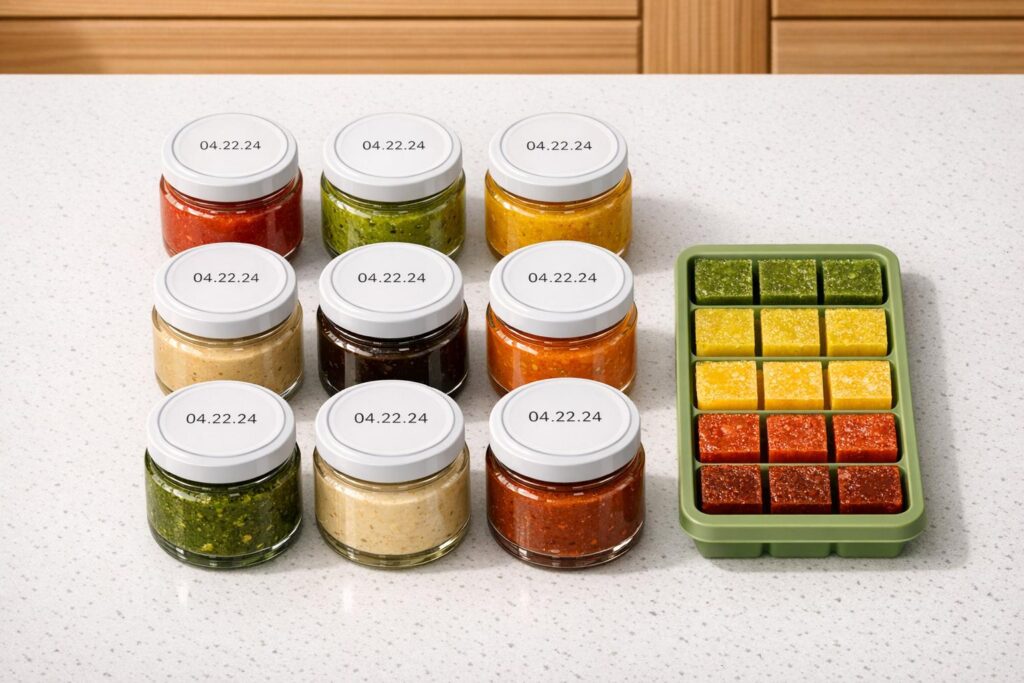
Pre-made sauces are the ultimate hack for simplifying meal prep. They save time, add flavor, and make cooking less stressful. With a few bottles in your pantry, you can transform basic ingredients into delicious meals in minutes. Here’s why they’re so handy:
- Save time: Skip chopping and measuring – just pour and go.
- Add variety: One sauce can be used as a marinade, dressing, or dip.
- Stay organized: Freeze portions for quick use anytime.
- Health-conscious options: Choose sauces with low sodium and sugar to match your dietary needs.
Start with versatile options like pesto, marinara, BBQ sauce, soy sauce, tahini, hot sauce, or gochujang. Store them properly in the fridge or freezer to keep them fresh, and label everything for easy access. With pre-made sauces, you can whip up meals like grain bowls, roasted veggies, or even breakfast tacos without breaking a sweat.
Ready to make meal prep easier? Keep reading for tips on storage, portioning, and creative ways to use sauces.
Pre-Made Sauces to Stock in Your Kitchen
7 Pre-Made Sauces to Keep on Hand
Having a few versatile sauces in your pantry can make meal prep quicker and more flavorful. Take pesto, for example – its herby, nutty blend of basil, garlic, pine nuts, and Parmesan can elevate pasta, pizza, sandwiches, or even grilled proteins. Then there’s marinara, the classic tomato-based sauce that’s perfect for pasta, pizza, or even as a dipping option, with jarred varieties saving you time in the kitchen.
BBQ sauce is another must-have, offering sweet, tangy, or spicy options that pair well with ribs, chicken, or as a dipping sauce. Soy sauce brings that savory umami kick to stir-fries and marinades, while hot sauce adds heat and acidity to everything from eggs to tacos, with varieties ranging from jalapeño lime to chili crisps. Tahini, made from ground sesame seeds, is excellent for dressings, dips, or Mediterranean-inspired dishes. Finally, gochujang – a Korean fermented chili paste – delivers a bold mix of savory, sweet, and spicy flavors, perfect as a glaze, dipping sauce, or drizzle for bowls.
"The right sauce can not only fix almost any dish, but it can also significantly enhance it, adding kick to eggs or a sweet finish to chicken wings." – Nikol Slatinska, Commerce Shopping Writer
Selecting Sauces for Your Diet and Taste
Once your pantry is stocked, it’s important to pick sauces that align with your dietary preferences. Start by checking ingredient labels for simple, whole-food ingredients and steer clear of unnecessary preservatives or artificial additives. Many pre-made sauces are labeled as vegan, gluten-free, dairy-free, or non-GMO, making it easier to find options that suit your needs.
For a healthier pick, registered dietitian Cynthia Sass suggests looking for sauces with no more than 360 mg of sodium and 4 grams of added sugar per serving. If you’re gluten-free or dairy-free, consider alternatives like tamari, coconut aminos, or vegan-friendly sauces that use nutritional yeast and olive oil instead of cheese. Premium brands with shorter ingredient lists are often the best choice for specialty flavors. By choosing sauces that match your diet, you can enjoy both convenience and balanced nutrition in your meals.
sbb-itb-663e316
Storage and Preparation Tips for Pre-Made Sauces
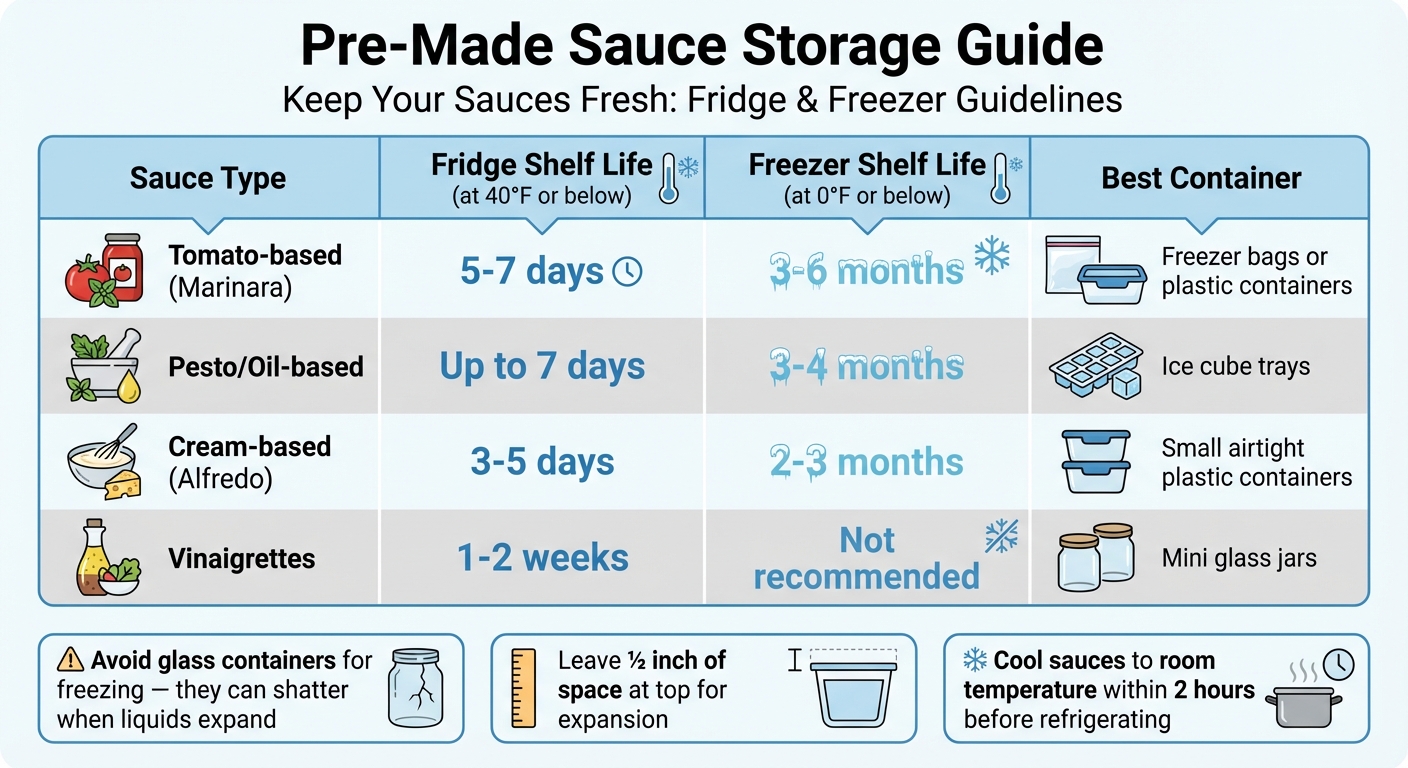
Storage Guidelines for Pre-Made Sauces: Fridge vs Freezer Shelf Life
Portioning Sauces for Single Use
Breaking sauces down into single-use portions is a game changer for busy nights. For thicker sauces like pesto, try freezing them in ice cube trays. Once frozen, pop the cubes into a labeled freezer bag. Each cube holds about 2 tablespoons – perfect for flavoring a single serving of pasta or rice. For liquid sauces, use small, leak-proof jars or silicone cups to avoid messes.
Snack-size freezer bags are another great option for portioning. Fill each bag with enough sauce for one meal, squeeze out the air to prevent freezer burn, and lay the bags flat in the freezer. Once frozen, these "bricks" stack easily and thaw quickly compared to bulky containers. Just remember to cool sauces to room temperature within 2 hours before refrigerating or freezing. Putting hot containers straight into the fridge can raise the internal temperature and compromise food safety.
Fridge and Freezer Storage Guidelines
To keep your sauces fresh, store them properly. In the fridge, most sauces last 3–4 days at 40°F or below. Oil-based sauces like pesto can stretch up to 7 days. For longer storage, freezing is the way to go. Sauces keep their best quality for 3 to 4 months at 0°F or below, though they remain safe to eat for up to 6 months.
| Sauce Type | Fridge Shelf Life | Freezer Shelf Life | Best Container |
|---|---|---|---|
| Tomato-based (Marinara) | 5–7 days | 3–6 months | Freezer bags or plastic containers |
| Pesto/Oil-based | Up to 7 days | 3–4 months | Ice cube trays |
| Cream-based (Alfredo) | 3–5 days | 2–3 months | Small airtight plastic containers |
| Vinaigrettes | 1–2 weeks | Not recommended | Mini glass jars |
For freezing, avoid glass containers – they can shatter when liquids expand. Instead, opt for plastic containers or freezer bags, leaving about half an inch of space at the top for expansion. Keep sauces separate from grains or proteins to maintain their texture and avoid sogginess. Proper storage not only preserves flavor but also ensures quick, hassle-free meal prep.
Labeling and Organization Methods
Labeling is key to avoiding mix-ups and ensuring sauces are used before they expire. Clearly mark each container with the sauce name, preparation date, and expiration date. If the sauce contains allergens like nuts or dairy, list those too for safety. Use adhesive labels, masking tape, or a permanent marker directly on plastic containers – these won’t smudge, even in cold storage.
To stay organized, adopt a "First In, First Out" (FIFO) system by placing older sauces at the front. Assign specific areas in your fridge or freezer for different sauce types – group tomato-based sauces in one section and Asian-inspired ones in another. This makes it easy to grab what you need during meal prep. For extra convenience, keep a simple inventory list on your phone or taped to the freezer door to track what you have and prevent sauces from getting forgotten.
"Freeze them in small portions; then, when you’re ready, you have a plethora of options: Thaw and serve on rice, toss with noodles, or coat your fave greens and sprinkle with nuts or seeds. This makes for a more flexible dish with very little effort." – Kristen Kish, Chef, Arlo Grey
With clear labels, organized storage, and properly portioned sauces, meal prep becomes a breeze.
Using Pre-Made Sauces in Your Meal Prep
Easy Meal Ideas with Pre-Made Sauces
Pre-made sauces can turn simple ingredients into satisfying meals with minimal effort. For instance, toss some pesto over a grain bowl made with quinoa or brown rice, then add roasted veggies and chicken sausage for a complete dish. Need a quick lunch? Drizzle tahini over a Buddha bowl filled with chickpeas and sweet potatoes or spread it on an avocado wrap. Harissa is another game-changer – it adds a bold kick to roasted cauliflower and chickpea bowls, especially when paired with couscous and a dollop of Greek yogurt.
And it’s not just about lunch or dinner – sauces work for breakfast too. Harissa brings extra flavor to scrambled eggs or shakshuka, while ranchero sauce adds a savory punch to breakfast tacos stuffed with black beans and avocado. For wraps, buffalo sauce pairs wonderfully with chicken or cauliflower, and tzatziki makes an excellent burger topping or a dip for pita bread. By keeping a couple of versatile sauces on hand, you can easily create meals using leftover proteins and greens without much planning.
Mixing Sauces for Different Flavors
Once you’ve mastered the basics, try mixing sauces to create new flavor profiles. Combine soy sauce, sesame oil, and agave for a quick stir-fry sauce. Blend a savory house sauce with salsa for a rich, taco-ready topping. Or mix toum (a garlic spread) with mayo and a splash of lemon juice for a creamy white sauce – perfect for sandwiches or as a veggie dip. Feeling adventurous? Combine chipotle sauce with salsa to craft a smoky, spicy topping ideal for breakfast burritos or roasted potatoes. These custom blends can also double as marinades or dressings, adding variety to your meal prep.
Making Quick Marinades and Dressings
Pre-made sauces are also a time-saver when it comes to marinades and dressings. To marinate proteins, place raw chicken, pork, or steak in a freezer bag with your chosen sauce and let it thaw in the fridge for 24–48 hours. For better flavor absorption, lightly salt the protein about 30 minutes before adding the sauce. For example, soy sauce mixed with ginger and honey works wonders on chicken or tofu, while a maple-mustard blend is perfect for baked fish or pork.
Thicker sauces like tahini or hummus can easily be turned into dressings. Just whisk in an acid (like lemon juice or vinegar) and a fat (such as olive oil) in a 1:3 ratio. To keep the mixture smooth and emulsified, add a tablespoon of mustard, honey, or miso. These quick dressings are perfect for grain bowls or salads, eliminating the need for complicated seasoning. Got leftover sauce? Freeze it in ice cube trays. These cubes thaw quickly and can be added to soups or tossed with roasted vegetables for an instant flavor boost. These small tricks streamline your prep time while packing in flavor.
"The secret to effortless weekly meals isn’t always prepping full recipes – it’s having flavor boosters on hand like dressings and sauces." – Jackie, Marin Mama Cooks
Conclusion
Pre-made sauces are a game-changer when it comes to simplifying meal prep and cutting down on stress. They take the hassle out of measuring and mixing multiple ingredients, offering a perfectly balanced blend of flavors – salt, acid, fat, and spice – all in one bottle. No need to second-guess or overthink your seasoning choices.
But the benefits don’t stop at convenience. These sauces add variety and keep your meals exciting, even if you’re working with the same staples like chicken, tofu, or veggies throughout the week. As Hannah Pasternak, Lifestyle Director at SELF, explains:
"Buying a bottle of premade sauce… is the easiest and most cost-effective way to solve all of the above [decision paralysis and meal ruts]".
One bottle can do it all – whether you’re whipping up a marinade, a salad dressing, a dipping sauce, or just adding a drizzle to finish a dish. This versatility gives you endless meal options without adding extra effort.
If you’re just starting out, consider stocking two or three versatile sauces. A spicy chili crisp, a smoky BBQ sauce, or a tangy vinaigrette are great choices to begin experimenting with. You can even mix sauces to create new flavor combinations. Use small containers or portioning methods to keep them handy for those busy nights.
Beyond the time savings, pre-made sauces are budget-friendly, typically ranging from $4 to $15 per bottle. They’re easy to store and pair well with almost anything in your kitchen. Whether you’re prepping meals for the week or just trying to avoid takeout on a hectic evening, these sauces are a reliable way to elevate your dishes. Try them in your next meal prep session – you might be amazed at how much flavor and ease they bring to your cooking routine.
FAQs
What are the best all-purpose sauces to start with?
Great sauces to have on hand include marinara, vinaigrette, and options like chipotle or mushroom sauces. These can add a burst of flavor to dishes like pasta, salads, meats, or vegetables, making your meals quicker to prepare and tastier.
How do I freeze sauces without ruining texture or flavor?
To keep sauces fresh and flavorful during freezing, make sure to cool them quickly and store them in airtight containers. Tomato-based sauces, like marinara, are especially suited for freezing thanks to their natural acidity. For convenience and better quality, freeze sauces in small portions – using ice cube trays is a great option. Quick cooling and airtight storage are essential to maintaining both the flavor and texture of your sauces.
How can I use one sauce across multiple meals all week?
Preparing a batch of sauce ahead of time is a game-changer for quick, flavorful meals. Whip up a versatile sauce and store it in the fridge to elevate proteins, veggies, or grains throughout the week. Take a coconut peanut sauce, for instance – it’s perfect for adding depth to bowls or stir-fries. Or try a cilantro jalapeño crema, which pairs beautifully with tacos or fresh salads. To keep everything fresh, store your sauces in separate meal prep containers. This way, you can mix and match flavors and keep every dish exciting.