
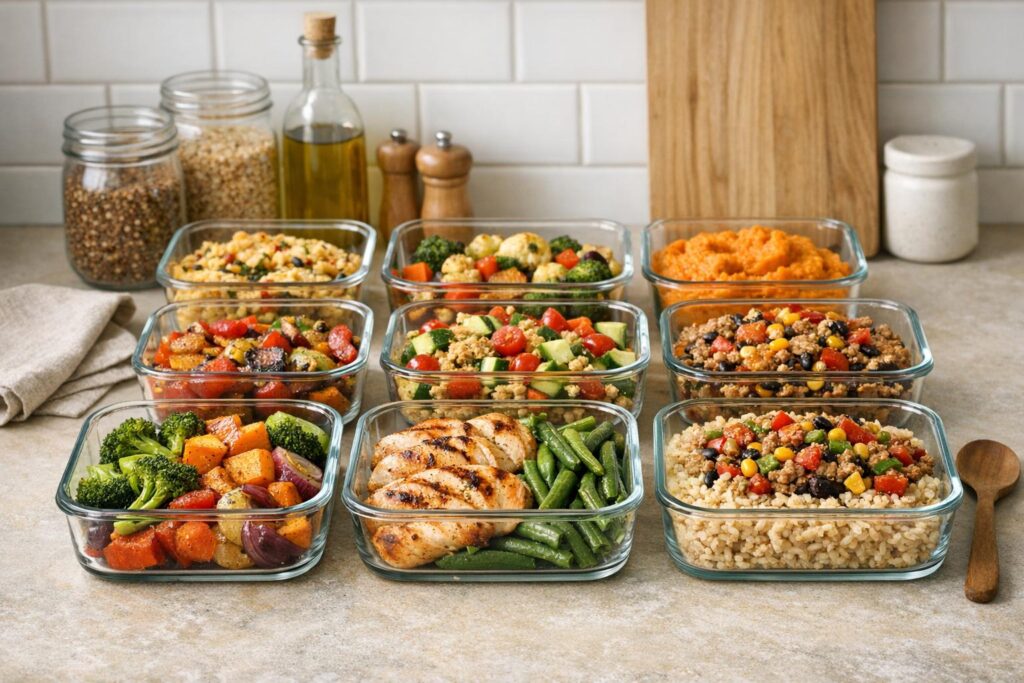
Batch cooking is a simple way to save time, money, and effort by preparing meals or ingredients in bulk. Instead of cooking daily, dedicate 1–3 hours weekly to make meals that are easy to reheat or freeze. This method can save up to 7 hours a week, reduce food waste, and cut annual food costs by $1,400–$2,000. Here’s how to start:
- Choose recipes with shared ingredients: For example, a tomato-meat base can work for chili, pasta, or cottage pie.
- Plan meals for the week: Use a "3 by 2" strategy – cook three meals, eat each twice, and leave one night for leftovers.
- Prep ingredients ahead: Chop, measure, and organize everything before cooking.
- Cook efficiently: Use all your appliances at once – roast veggies, simmer soups, and bake proteins simultaneously.
- Store properly: Portion meals into containers, label them, and freeze or refrigerate as needed.
Batch cooking simplifies weeknight dinners and reduces decision-making stress. Start small, and over time, you’ll refine your process to make it even easier.
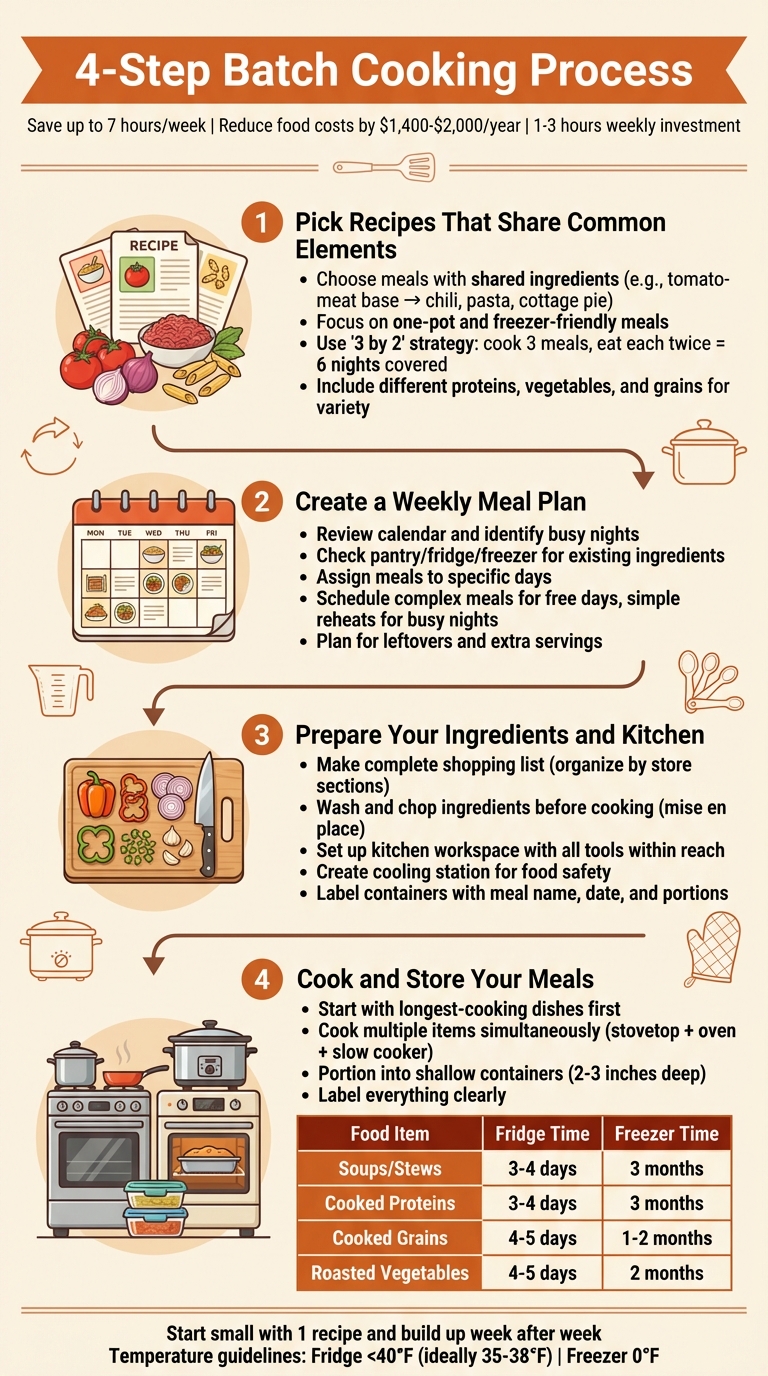
4-Step Batch Cooking Process: From Planning to Storage
The Ultimate Freezer Meal Prep Guide | 40 Recipes That Actually Work
Step 1: Pick Recipes That Share Common Elements
Batch cooking is all about saving time and effort, and choosing recipes with overlapping ingredients is a great way to make the process even smoother. By focusing on meals that share common elements, you’ll minimize prep time, reduce your shopping list, and keep your kitchen workflow organized. As Jennifer Messineo, MS, RD, puts it:
"The first step is to look for recipes that share ingredients".
Here’s how you can make this strategy work for you.
Choose Meals with Shared Ingredients
Start by identifying a versatile base recipe that you can adapt across multiple meals. For example, a tomato and minced meat mixture can serve as the foundation for dishes like ragu pasta, smoky black bean chili, or cottage pie. Similarly, a creamy chicken base can be used for chicken and leek pasta, chicken and broccoli pie, or chicken and sweetcorn soup. This way, you’re preparing one large batch and transforming it into several different dishes instead of starting from scratch each time.
Another tip is to plan meals around a primary protein that’s on sale or already in your pantry. For instance, if you find discounted chicken breasts, you can use shredded chicken for tacos, stir-fries, and salads throughout the week. Checking grocery store deals in advance can help you decide which proteins to buy in bulk, saving both time and money.
Focus on One-Pot and Freezer-Friendly Meals
One-pot recipes are a lifesaver when it comes to batch cooking. Soups, stews, casseroles, and chili are excellent options because they freeze and reheat well. Plus, they make cleanup a breeze. However, steer clear of recipes with cream-based or egg-based sauces, as these can separate or curdle after freezing. Similarly, carbs like pasta and rice are best cooked fresh to avoid mushy textures.
Using the same equipment across recipes can also save time. For example, if you’re roasting vegetables on a sheet pan, you can add potatoes or other sides to the same tray. Or, use a slow cooker for one dish while roasting another in the oven – this way, you can multitask and prep additional ingredients simultaneously.
Include Different Proteins, Vegetables, and Grains
While overlapping ingredients save time, it’s important to mix things up to keep your meals interesting and balanced. Rotate proteins like chicken, turkey, or beans, and incorporate a variety of vegetables like squash, bell peppers, or broccoli. Add grains such as quinoa, rice, or farro to round out your meals.
A handy method is the "3 by 2" approach: cook three different dinners and make enough of each to eat twice during the week. This gives you six nights of meals while only cooking three times.
To make your week even easier, prepare large batches of flexible components – like roasted root vegetables, grains, or shredded chicken – that can be mixed into bowls, wraps, or sides. For grains, opt for sturdier options like farro or black rice, as they hold up better in the fridge over several days compared to softer grains.
Step 2: Create a Weekly Meal Plan
Once you’ve picked recipes that share ingredients, it’s time to match them with your weekly schedule. Start by reviewing your calendar and pinpointing busy nights – those are perfect for reheatable or freezer-friendly meals. Then, check your freezer, fridge, and pantry for proteins, grains, or other staples you already have. These can serve as the backbone for multiple dishes throughout the week.
A handy strategy is the "3 by 2" plan: select three different recipes and cook enough for two nights each, leaving one night open for leftovers. Getting your family involved in planning can also make meals more exciting for everyone and encourage participation.
Schedule Meals by Day
With your meal plan in place, assign each dish to a specific day of the week. Save the more involved recipes for days when you have extra time and plan simpler, reheatable meals for hectic evenings. Meals made with delicate ingredients, like fresh berries or leafy greens, are best enjoyed earlier in the week, while hearty dishes, such as stews or roasted vegetables, hold up well for later.
If you’re batch-cooking a main dish like curry or stew, consider preparing sides like rice or pasta fresh on the day you serve them to maintain their texture. You can also get creative with batch-cooked proteins. For example, shredded chicken can double as a refreshing salad topping in summer or a hearty soup ingredient in winter.
Plan for Leftovers and Extra Servings
To avoid accidentally eating more than planned, portion and label meals right after cooking. This keeps your weekly plan on track and ensures you don’t run out of meals midweek. For food safety, eat refrigerated leftovers within three days, and freeze anything you plan to use later. Don’t forget to label frozen portions with a thawing reminder.
Versatile base recipes are a lifesaver here – they can be transformed into entirely new dishes, keeping meals interesting and reducing the temptation to order takeout if plans change. A clear plan not only saves time but also cuts down on daily decision-making, making your cooking efforts go further.
sbb-itb-663e316
Step 3: Prepare Your Ingredients and Kitchen
With your meal plan in place, the next step is setting yourself up for success. This phase is all about preparation, and getting it right will save you time and keep things running smoothly when it’s time to cook.
Make a Complete Shopping List
Start by taking stock of what you already have to avoid buying duplicates. Then, combine all your recipe ingredients into one master list. Focus on staples like chicken, rice, and beans – items that can work across multiple meals.
Check grocery store flyers for deals on proteins and other essentials, and consider buying in bulk when it makes sense. Organize your list by store sections (produce, dairy, frozen) to keep your trip efficient and avoid wandering back and forth. If you’re short on time, grocery delivery can be a lifesaver.
"Your grocery bill will be lower as you only stock up on items you need for your planned meals."
– Evelisse Capó, PharmD, DipACLM
Once your shopping is done, it’s time to get those ingredients ready.
Wash and Chop Ingredients Before Cooking
Before you even turn on the stove, take the time to weigh, measure, and chop everything you’ll need. This mise en place approach keeps you organized and prevents last-minute scrambling. For large tasks like shredding carrots or dicing onions, a food processor can be a huge time-saver. Don’t forget to use separate cutting boards for raw meats and produce to avoid cross-contamination.
For ingredients with high water content – like tomatoes, cucumbers, or lettuce – wait to chop them until the day you’ll use them to keep them fresh. While items like roasted potatoes are cooking in the oven, you can multitask by washing and portioning fresh fruits and vegetables. And if you’re short on time, pre-washed greens, rotisserie chickens, or steam-in-bag grains are great shortcuts.
Set Up Your Kitchen Space
A well-organized kitchen can make all the difference. Start by clearing your counters and arranging all your ingredients and tools – pots, pans, knives, and cutting boards – so everything is within reach. If you’re using multiple cooking methods, like the stove, oven, and Instant Pot, plan your setup to maximize efficiency.
Create a cooling station with shallow containers or an ice bath to quickly bring food down to a safe temperature. The USDA advises refrigerating food within 2 hours of cooking to prevent spoilage. Keep a permanent marker and labels handy to note the meal name, date, and portion size on your containers as you fill them.
"Start by organizing your kitchen workspace before you begin; clear counters, gather all your ingredients, and line up your tools so you’re ready to roll."
– Rain Vergara
With your ingredients prepped and your kitchen ready to go, you’re all set to dive into cooking and storing your meals.
Step 4: Cook and Store Your Meals
When it’s time to cook, having a clear plan can make the process smoother and more efficient. By using your prepped ingredients wisely and working with your appliances simultaneously, you can tackle multiple dishes at once without feeling overwhelmed.
Plan the Order of Your Cooking Tasks
Start with dishes that take the longest to cook, like soups, stews, or casseroles. While those simmer or bake, you can focus on quicker items, like sautéed vegetables or grilled proteins. Prioritize dishes that need to cool completely, as this helps meet food safety standards. This approach allows you to work on several meals at once instead of waiting for one to finish. As Rain Vergara wisely says:
"Multitasking without a plan is just fancy wordplay for ‘mess waiting to happen,’ so keep it organized".
Cook Multiple Items at Once
Maximize your kitchen by putting all your appliances to work. For example, have a soup bubbling on the stovetop, vegetables roasting in the oven, and proteins cooking in an Instant Pot or slow cooker – all at the same time. While chicken breasts bake at 375°F for 25–30 minutes, you could brown ground turkey on the stove and prepare rice in a rice cooker. To cut down on cleanup, reuse utensils for tasks that don’t involve raw ingredients.
Once your cooking is done, shift immediately to portioning and labeling to lock in freshness.
Portion and Label Your Meals
Divide your meals into individual or family-sized portions using airtight, freezer-safe containers. Opt for shallow containers (no more than 2–3 inches deep) to help food cool evenly and quickly. Label each container with the meal name, preparation date, and number of servings using a permanent marker. This prevents "freezer mystery" meals and makes it easy to use the "First In, First Out" method to rotate your stock. For soups and sauces, freeze them flat in freezer bags on a cookie sheet, then stack them vertically to save space.
| Food Item | Fridge Storage (at 40°F or below) | Freezer Storage (at 0°F or below) |
|---|---|---|
| Soups and Stews | 3–4 days | Up to 3 months |
| Cooked Proteins (Chicken, Beef) | 3–4 days | Up to 3 months |
| Cooked Grains (Rice, Quinoa) | 4–5 days | 1–2 months |
| Roasted Vegetables | 4–5 days | 2 months (if blanched) |
| Casseroles (Lasagna, Shepherd’s Pie) | 4–5 days | Up to 3 months |
To maintain freshness and prevent bacterial growth, keep your fridge below 40°F (ideally between 35°F–38°F) and your freezer at 0°F. Avoid freezing high-moisture foods like lettuce, cucumbers, or mayonnaise-based sauces, as they tend to lose texture or separate when thawed. With properly stored meals, you’ll have stress-free weeknight dinners ready to go.
Conclusion
Efficient batch cooking boils down to a few key strategies: choosing recipes with overlapping ingredients, planning meals ahead, prepping your kitchen space, and cooking and storing everything in one go. This method not only eliminates the hassle of nightly meal decisions but also cuts down on repetitive cleanup. While cooking from scratch every evening can take 30–60 minutes per meal (up to 7 hours a week), batch cooking sessions usually require just 1–3 hours.
If you’re just starting out, it’s best to ease into the process. Begin with a single recipe or focus on preparing one course. As Melanie puts it:
"If you’re a beginner at this, start with one recipe and build up week after week".
Over time, you’ll discover which dishes freeze well and how to streamline your kitchen setup. Alea Milham, author of Prep-Ahead Meals from Scratch, shares her perspective:
"I use batch cooking as a frugal way of creating my own ‘convenience foods’ to simplify dinner preparation on busy weeknights".
Having pre-made meals on hand can help curb those last-minute takeout cravings.
When stored properly, your meals will provide stress-free dinners throughout the week. With practice, each session becomes quicker and easier, turning what may seem daunting at first into a simple and rewarding weekly habit.
FAQs
How can I choose recipes that use similar ingredients for batch cooking?
Batch cooking can be a game-changer for saving time and effort in the kitchen. The trick? Focus on recipes that share common ingredients. Start with a couple of versatile proteins – think chicken breasts, ground turkey, or even a plant-based option – and cook them in large batches. These can easily be repurposed into meals like salads, stir-fries, or casseroles throughout the week.
Another tip is to choose sauces or marinades that work across multiple dishes. A lemon-garlic marinade, for instance, pairs beautifully with chicken, fish, or roasted veggies. Lastly, stick to recipes that use pantry staples like onions, carrots, or rice. Prep these in one go, and you’ll have a solid base to mix and match into different meals. By overlapping ingredients, you’ll cut down on prep time, minimize food waste, and make your weeknight dinners a breeze.
What’s the best way to keep batch-cooked meals fresh and safe to eat?
To keep your batch-cooked meals fresh and safe, start with clean hands and sanitized surfaces. Make sure to cook foods to their recommended internal temperatures, and cool them quickly by transferring them into small, shallow containers before placing them in the fridge. Keep your refrigerator set to 40°F or below, and aim to eat your meals within 3–4 days. When reheating, heat the food to at least 165°F and avoid leaving it in the 40–140°F danger zone for extended periods. Following these steps will help preserve both the safety and flavor of your meals.
What mistakes should I avoid when starting batch cooking?
When diving into batch cooking, skipping the planning phase is a common misstep. Without a clear menu or prep strategy, you might end up wasting ingredients, making extra trips to the store, or preparing meals that don’t align with your weekly schedule. Take the time to map out your meals, dedicate a specific day for preparation, and choose recipes that work well together.
Another pitfall is cooking a massive batch of just one dish – it can get boring fast. Instead, focus on preparing versatile ingredients like roasted vegetables, cooked grains, and proteins. These components can be combined in different ways to keep your meals interesting throughout the week. Store them separately to maintain both freshness and flexibility.
Lastly, don’t underestimate the importance of proper storage and labeling. Use airtight containers, clearly label them with dates, and organize your freezer so nothing gets lost or forgotten. With thoughtful planning, a variety of meal options, and smart storage practices, batch cooking becomes not only efficient but also something you’ll look forward to doing.