

Eating seasonal produce is a simple way to enjoy better-tasting, nutrient-rich meals while saving money and reducing your carbon footprint. Seasonal fruits and vegetables are picked at their peak ripeness, offering superior flavor and freshness compared to out-of-season options. Plus, they often cost less and support local farmers.
Key Highlights:
- Winter: Citrus fruits like oranges and hearty vegetables like kale and sweet potatoes.
- Spring: Fresh asparagus, peas, and strawberries.
- Summer: Juicy tomatoes, berries, and stone fruits like peaches.
- Fall: Apples, pumpkins, and Brussels sprouts.
How to Incorporate Seasonal Produce:
- Breakfast: Add fruits to oatmeal, smoothies, or egg dishes with seasonal veggies.
- Lunch: Build salads, soups, or sandwiches using what’s in season.
- Dinner: Roast vegetables as sides, create one-pot meals, or make seasonal pasta dishes.
Switching standard ingredients for seasonal ones, like using kale instead of lettuce in winter or spiralized zucchini instead of pasta in summer, keeps meals interesting and nutritious. Shopping at farmers’ markets or joining a CSA program can help you access the freshest produce.
Seasonal eating isn’t just good for your meals – it’s good for your wallet and the planet. Start exploring what’s in season and bring new flavors to your kitchen today!
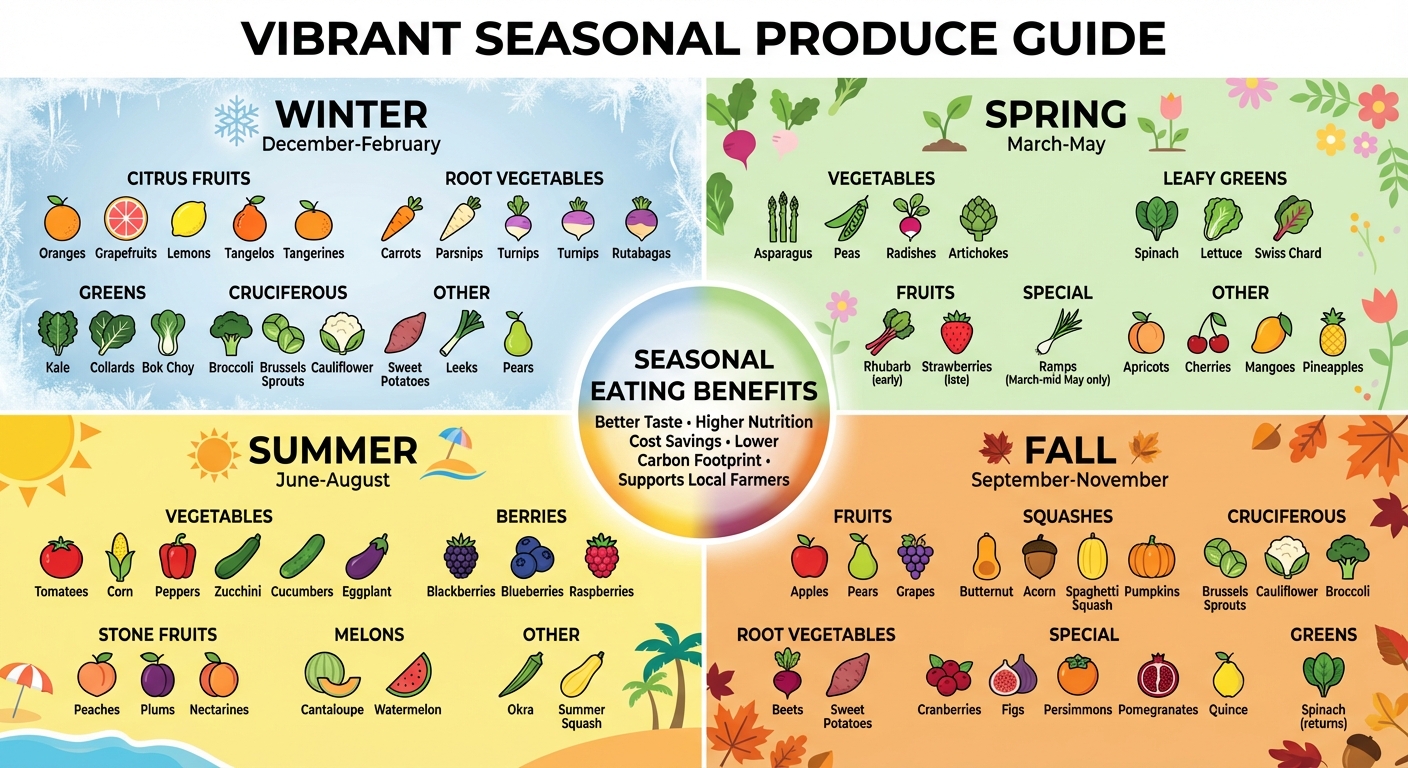
Seasonal Produce Guide: What to Eat Each Season
Seasonal Home Cooking 101 | Best fresh ingredients I cook at home for family meals
Seasonal Produce by Season
Planning meals around seasonal produce means enjoying the freshest and most flavorful ingredients throughout the year. While staples like apples, carrots, and potatoes are often available year-round thanks to cold storage and varied growing regions, most fruits and vegetables follow natural cycles influenced by local weather. Here’s a breakdown of what to expect in each season, helping you adjust your meal planning effortlessly.
Winter (December-February)
Winter is all about citrus fruits and hearty vegetables. Oranges, grapefruits, lemons, tangelos, and tangerines bring bright, juicy flavors to the table when other fruits are scarce. Root vegetables like carrots, parsnips, turnips, and rutabagas thrive in the cold, developing a natural sweetness. Winter greens such as kale, collards, bok choy, and cruciferous vegetables like broccoli, Brussels sprouts, and cauliflower are also at their peak. Sweet potatoes, leeks, and pears round out the season’s offerings.
Spring (March-May)
Spring ushers in tender, fresh flavors. Early in the season, you’ll find asparagus, peas, radishes, artichokes, and leafy greens like spinach, lettuce, and Swiss chard. Rhubarb makes its appearance in early spring, while strawberries sweeten up by late spring. Ramps, a wild onion with a garlicky twist, are a prized seasonal treat available only from March to mid-May. Apricots, cherries, mangoes, and pineapples also start to come into season as temperatures rise.
Summer (June-August)
Summer is a feast of abundance, especially for vegetables and stone fruits. Farmers’ markets overflow with tomatoes, corn, peppers, zucchini, cucumbers, eggplant, and green beans. Berries – like blackberries, blueberries, and raspberries – are plentiful and often more affordable. Stone fruits, including peaches, plums, and nectarines, hit their peak sweetness. Melons such as cantaloupe and watermelon provide a refreshing escape from the heat, while okra and summer squash add variety to summer cooking.
Fall (September-November)
Fall brings a mix of hearty and sweet flavors. Apples, pears, and grapes dominate the fruit selection, while winter squashes like butternut, acorn, spaghetti squash, and pumpkins take center stage with their dense, flavorful flesh. Cool weather welcomes back Brussels sprouts, cauliflower, and broccoli. Root vegetables such as beets and sweet potatoes are freshly harvested, and seasonal delights like cranberries, figs, persimmons, pomegranates, and quince add unique flavors to autumn dishes. Spinach also reappears, thriving in the cooler temperatures after summer’s heat.
Adding Seasonal Produce to Breakfast
Breakfast is a perfect time to bring seasonal produce into your daily meals. Starting the day with fresh fruits or vegetables not only adds flavor but also sets a healthy tone for the rest of the day. Here are three simple ways to incorporate seasonal produce into your morning routine.
Quick Breakfast Additions
One of the easiest methods is to add seasonal fruits to what you’re already eating. Stir half a cup of chopped seasonal fruit into your oatmeal or overnight oats. For example, apples are great in the fall, berries shine in the summer, and citrus fruits are perfect for winter mornings. Keep a bowl of fresh fruit on your counter to make healthy grab-and-go options more convenient. If you’re a fan of toast, try spreading ricotta or peanut butter on top, then add berries with a sprinkle of mint in the summer or banana slices with a dash of cinnamon in the fall.
Seasonal Smoothies
Smoothies are a fantastic way to pack several servings of produce into one meal. A good rule of thumb for a creamy smoothie is to use a 2:1:1 ratio – two parts frozen fruit, one part liquid, and one part thickener like banana or Greek yogurt. For green smoothies, go with a 1:1:1:1 ratio, blending leafy greens, frozen fruit, liquid, and a thickener for balanced flavor. In winter, try citrus fruits like blood oranges with kale, while summer combinations like watermelon-mint or blueberry-peach are refreshing. Add a pinch of salt to enhance the flavors, and use dates or honey to sweeten tart fruits. To avoid waste, freeze excess fruit in small pieces for future smoothies.
Egg Dishes with Seasonal Vegetables
Eggs pair wonderfully with almost any vegetable, making them a versatile option for breakfast. Pre-chop seasonal vegetables so they’re ready to toss into scrambles or omelets. For heartier vegetables like potatoes, carrots, or Brussels sprouts, pre-cook them ahead of time, and add delicate greens during the last 30 seconds of cooking. Seasonal favorites like asparagus in spring, zucchini in summer, or spinach year-round are great additions. If using grated zucchini or cooked spinach, squeeze out any excess water to avoid a watery dish. Leftover roasted vegetables from dinner can also be repurposed into a delicious frittata, making breakfast both easy and flavorful.
Adding Seasonal Produce to Lunch
Lunch is the perfect opportunity to bring seasonal produce to the table while working toward the daily goal of 4–5 cups of fruits and vegetables. By tailoring your meals to the season, you can enjoy fresh, vibrant flavors year-round. Think crisp salads in the summer, hearty soups in the colder months, and sandwiches packed with seasonal goodness any time of year. Here are three ways to make lunch shine with seasonal ingredients.
Salads with Seasonal Ingredients
A great salad starts with greens that suit the season. In the warmer months, tender greens like romaine or mixed baby greens are ideal, while winter calls for sturdier options like kale, radicchio, or cabbage that hold up well even when dressed in advance. To make a salad more filling, toss in cooked grains like quinoa or farro and add a protein source such as chickpeas or grilled chicken.
Each season brings its own special touch. Spring salads can feature fresh strawberries and snap peas, while summer salads benefit from refreshing ingredients like watermelon and cucumber. Fall salads come alive with roasted squash and toasted walnuts, and winter greens get a bright lift from a squeeze of citrus. For heartier greens, a simple citrus-olive oil dressing can soften their texture. Roasting vegetables like sweet potatoes or beets at 375°F to 400°F gives them a crispy, caramelized edge, making them a delicious addition to fall and winter salads.
Seasonal Soups and Stews
When salads aren’t quite enough, soups and stews make a warm, comforting alternative. Start by sautéing aromatics like onions, leeks, or scallions in butter or olive oil until they’re soft and fragrant. Add diced carrots and celery to create a flavorful base. For fall and winter, roast vegetables like squash or sweet potatoes at 375°F–400°F for 20–25 minutes to deepen their natural sweetness before adding them to your soup. Hardy greens such as kale, Swiss chard, or collards hold up well during longer cooking times, while slices of apple or pear can add a subtle sweetness to balance savory flavors.
For a heartier soup, include grains like barley or farro and proteins like beans or lentils. In the summer, keep things light with fresh tomatoes, zucchini, and bell peppers, either sautéed for a quick broth or blended into a chilled gazpacho. If you’re blending hot soup, remember to remove the center cap of the blender lid and cover the opening with a kitchen towel to let steam escape safely.
Sandwiches and Wraps
Seasonal produce can elevate sandwiches and wraps with fresh flavors and satisfying textures. In spring, thinly sliced asparagus and radishes add a refreshing crunch. Summer is all about juicy, ripe tomatoes and grilled zucchini, while fall brings the sweetness of thinly sliced apples or pears paired with roasted cauliflower. In winter, roasted root vegetables and radicchio provide hearty, bold flavors.
To make the most of your produce, use a mandoline or sharp knife for thin, even slices that allow flavors to meld beautifully. Roasting vegetables enhances their natural sweetness, making them even more delicious. For a low-carb twist, swap tortillas for large collard greens as wraps. Add a punch of flavor with quick-pickled vegetables like carrots or turnips – they’ll bring just the right amount of tang and crunch to your meal.
sbb-itb-663e316
Adding Seasonal Produce to Dinner
Dinner is a wonderful chance to highlight the best of seasonal produce. Whether you’re crafting a simple side dish or centering an entire meal around fresh ingredients, the right approach can turn everyday vegetables into something special.
Vegetable Side Dishes
Dinner opens the door to richer, deeper flavors by using thoughtful cooking techniques. Roasting vegetables at high heat, for example, enhances their natural sweetness and creates a crispy, golden exterior. Set your oven to 400°F–425°F for the best caramelization. To ensure even cooking, cut vegetables into uniform pieces and spread them out in a single layer, leaving space between each piece to avoid steaming.
Each season offers its own standout options. In winter, try roasted carrots and beets topped with goat cheese or spicy broccoli rabe sautéed with garlic and red chili flakes. Spring brings quick-cooking favorites like asparagus with a shallot vinaigrette or Mediterranean-spiced carrots served over a dollop of yogurt. Summer is perfect for grilling corn on the cob or making "Garlic-Butter Zucchini" by scoring zucchini halves and roasting them until golden. Fall shines with dishes like roasted Brussels sprouts paired with grapes and feta or "Smashed Brussels Sprouts" finished with a crispy Parmesan crust.
To elevate these dishes, add aromatics like garlic or shallots during cooking, and finish with a squeeze of citrus, a sprinkle of toasted nuts, or a drizzle of balsamic glaze for extra brightness and depth.
Main Courses with Seasonal Produce
Seasonal produce can take center stage in dinner mains, whether in vibrant pasta dishes or hearty stews. In spring, recipes like Asparagus and Wild Mushroom Tagliatelle or Chipotle Cauliflower Tacos highlight fresh, lively flavors. Summer’s bounty shines in meals like Baked Eggplant with Mozzarella and Fresh Tomato Basil Salad or Pan-Seared Pork Loin with a juicy Nectarine Salad. Fall brings comforting dishes like Five-Spice Brussels Sprouts and Sausage Stir-Fry or Rigatoni with Roasted Delicata Squash. Winter leans into root vegetables and preserved flavors with dishes like Japanese Curry featuring Winter Squash and Mushrooms or Stuffed Acorn Squash.
For a lighter option, swap pasta for roasted spaghetti squash and toss it with tomato sauce and mozzarella. Sheet-pan meals are another great choice for busy nights – roast root vegetables like sweet potatoes and carrots together on one pan, then serve with a zesty green salsa for a simple yet flavorful dinner.
Seasonal One-Pot Meals
When ease and minimal cleanup are priorities, one-pot meals are the way to go. These dishes combine convenience with the flavors of the season. Winter calls for warming options like Chicken Pozole Soup or Lemon-Spinach Orzotto. In spring, hearty choices like Chana Masala or Chicken Pot Pie Soup fit the bill. Summer offers lighter fare, such as Zucchini and Basil Soup or Tomato-Watermelon Gazpacho. Fall favorites include cozy meals like Turkey Chili or Crockpot Apple Cider Pork served over creamy mashed sweet potatoes.
Sheet-pan meals provide similar convenience with a twist. For example, roasted pork chops with delicata squash and poblano peppers allow all the ingredients to caramelize together, delivering big flavor with minimal effort and cleanup.
Ingredient Swaps for Everyday Meals
Switching out standard ingredients for seasonal ones is a simple way to elevate both the flavor and nutrition of your meals. By focusing on seasonal produce that matches the texture, taste, and role of your usual ingredients, you can create dishes that feel fresh and exciting.
Start by thinking about the ingredients you use most often and see if there’s a seasonal option that fits. For instance, if romaine or iceberg lettuce is your go-to for salads, consider using kale in the cooler months or fresh spinach in the spring for an added nutrient boost. Love mashed potatoes? Try swapping them for parsnips in the winter for a naturally sweet and fiber-rich alternative, or use celery root for a creamy, mild twist.
"In-season fruits have a depth and brightness of flavor that out-of-season produce just can’t compare to." – Marque Collins, Executive Chef at Tullibee
For a low-carb option, riced cauliflower works well as a substitute for white rice during the fall and winter months, soaking up flavors beautifully. In the summer, spiralized zucchini makes a light and refreshing pasta alternative. Adding thinly sliced apples or pears to fall sandwiches can bring a satisfying crunch and natural sweetness.
By focusing on what’s in season, you not only enhance the flavor of your meals but also maximize their nutritional value. Below is a handy table of ingredient swaps to inspire your next recipe.
Seasonal Ingredient Swaps Table
| Standard Ingredient | Seasonal Alternative | Best Season | Flavor Profile | Nutritional Benefit |
|---|---|---|---|---|
| Romaine/Iceberg Lettuce | Kale | Fall/Winter | Earthy, hearty | High in Vitamins A, C, and fiber |
| White Rice | Cauliflower (Riced) | Fall/Winter | Mild, nutty | High in fiber and Vitamin C |
| Standard Potatoes | Parsnips | Winter | Sweet, licorice-like | Excellent source of dietary fiber |
| Tomato (Sandwich topping) | Thinly Sliced Apples | Fall | Sweet, crisp | High in fiber and Vitamin C |
| Pasta Noodles | Zucchini (Spiralized) | Summer | Mild, fresh | Low calorie, high water content |
| Corn (Canned) | Fresh Corn on Cob | Summer | Sweet, milky | Peak sweetness and antioxidants |
| Standard Onions/Garlic | Ramps | Spring | Pungent onion-garlic cross | Fresh spring antioxidants |
Incorporating these swaps into your meals can spark creativity and make the most of what each season has to offer. For tougher greens like kale, removing the thick ribs before using them raw in salads can improve their texture. And if you’re working with root vegetables, storing them in a cool, dark, low-humidity spot can keep them fresh for up to three months.
Conclusion
Key Takeaways
Seasonal produce brings a mix of benefits – better taste, higher nutrition, cost efficiency, and a lighter environmental footprint. When fruits and vegetables are harvested at their natural peak, they’re not only juicier and sweeter but also packed with more vitamins and minerals compared to those picked early for shipping. Plus, seasonal items are often more budget-friendly since they’re locally abundant – basic supply and demand at work.
Choosing seasonal produce also helps cut down on energy use and carbon emissions while supporting local farmers. Shopping at farmers’ markets or joining a CSA program keeps your dollars in the community and bolsters small-scale agriculture.
"Eating seasonally is a practical and impactful way to nourish your body, support local farmers, and protect the planet." – SLO Food Bank
Seasonal eating also keeps your meals fresh and exciting. By rotating ingredients throughout the year, you can avoid falling into a meal rut and find opportunities to try new recipes. Whether it’s swapping romaine for kale in a winter salad or using spiralized summer zucchini instead of pasta, each season opens the door to unique culinary adventures.
With these benefits in mind, why not start incorporating seasonal cooking into your routine?
Next Steps
Kick off your seasonal cooking journey by choosing produce at its freshest. Head to your local farmers’ market or grocery store and look for seasonal items that look vibrant and inviting – think root vegetables with their greens still attached, firm and crisp produce, or fruits that yield slightly to a gentle press near the stem. If you’re new to seasonal eating, follow local farms or food bloggers on social media for updates on harvests and recipe inspiration.
Consider joining a Community Supported Agriculture (CSA) program or visiting pick-your-own farms to connect directly with the seasonal harvest. When produce is at its peak and most affordable, try preserving it through canning, freezing, or pickling for future meals. Even small steps, like growing herbs on your windowsill or experimenting with one new seasonal vegetable each week, can help you build a habit of seasonal cooking. These simple changes can complement the meal ideas mentioned earlier.
For more recipe inspiration and kitchen tips, check out the resources available at Comfy Kitchen.
FAQs
How can I find out which fruits and vegetables are in season near me?
To figure out what produce is currently in season where you live, start by pinpointing your region or state – what’s available depends heavily on the local climate. A visit to your local farmers’ market can be incredibly helpful. Whether you stop by in person or browse their websites, you’ll get a clear idea of what’s being harvested right now. Another option is to use seasonal produce guides or online tools tailored to your state, which provide detailed lists based on your location and the time of year.
Once you’ve identified what’s fresh, head over to Comfy Kitchen’s recipe library for inspiration. You’ll find plenty of simple, tasty ideas to bring seasonal fruits and vegetables to your table – from hearty breakfasts to satisfying dinners. Seasonal eating has never been so easy (or delicious)!
How can I store seasonal produce to keep it fresh longer?
To keep your seasonal fruits and veggies fresh for as long as possible, try these straightforward tips:
- Store at the right temperature: Keep your fridge set to 40°F or lower, and use the crisper drawers for delicate items like leafy greens. Refrigerate produce such as apples, berries, and broccoli. On the other hand, items like avocados, bananas, and tomatoes do better at room temperature.
- Manage moisture levels: Wrap leafy greens in a damp paper towel and place them in a plastic bag, but store mushrooms in a paper bag to keep them dry. Hold off on washing produce until you’re ready to use it – excess moisture can make it spoil faster.
- Freeze what you can’t use right away: Blanch sturdy greens like kale or chard before freezing them in airtight containers. Fruits like berries and vegetables like peas and corn also freeze well, letting you enjoy their peak flavor even months later.
By following these storage tips, you’ll cut down on waste and keep enjoying fresh, seasonal ingredients in your meals!
How can I grow my own seasonal produce at home?
Growing your own seasonal fruits and vegetables can be an incredibly satisfying way to enjoy fresh, flavorful produce throughout the year. If you’re ready to dig in, here’s how to get started:
- Find the perfect spot: Look for a sunny area in your yard that gets at least 6 hours of direct sunlight daily and has good drainage. Healthy plants start with the right environment.
- Prep your soil: Use a simple home soil test kit to check pH and nutrient levels. Enrich the soil by mixing in compost or well-rotted manure to boost its fertility and texture.
- Plan your crops: Map out your garden layout and give each plant enough space to grow. Choose crops that thrive in the current season – think tomatoes for summer or kale for fall.
- Water and mulch wisely: Keep the soil evenly moist, aiming for about 1 inch of water per week, preferably in the morning. Add a 2-inch layer of mulch to lock in moisture and keep pesky weeds at bay.
Once your garden starts producing, harvest your fruits and veggies at their peak ripeness. Then, head to Comfy Kitchen for creative recipe ideas that make the most of your fresh, seasonal bounty!