
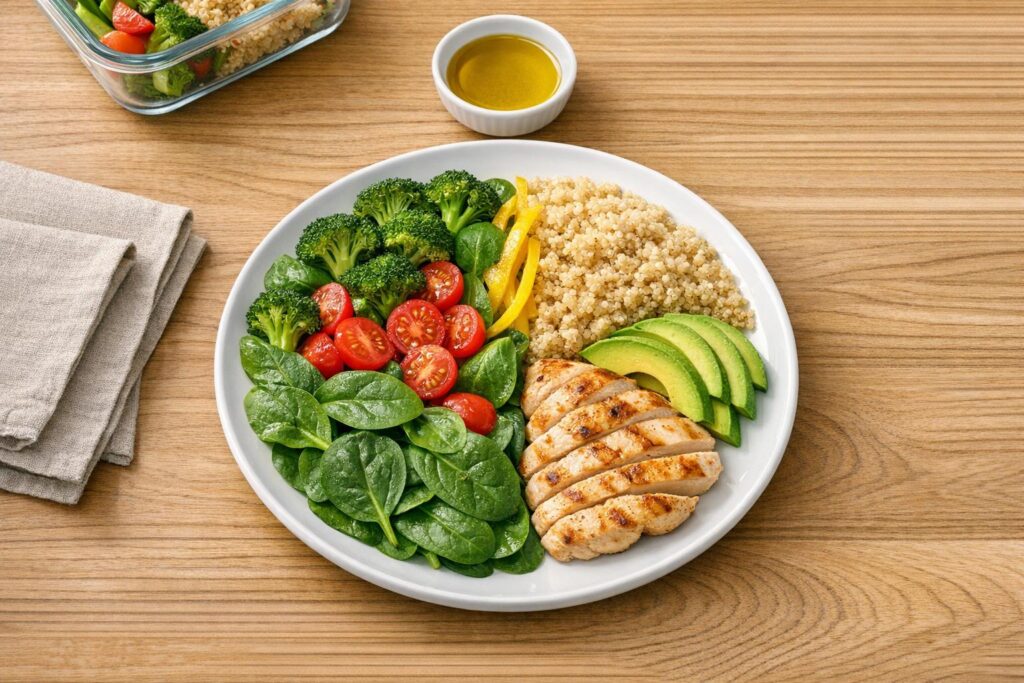
Eating balanced meals doesn’t have to be complicated. Here are 7 practical tips to help you create meals that keep you energized, satisfied, and healthy:
- Fill Half Your Plate with Vegetables and Fruits: Focus on non-starchy veggies like broccoli or spinach and whole fruits like apples or berries for fiber and nutrients. Aim for 2.5–4 cups of vegetables and 1.5–2.5 cups of fruit daily.
- Choose Whole Grains for a Quarter of Your Plate: Opt for brown rice, quinoa, or whole-wheat pasta. Stick to ½ cup per serving and vary your grains for a nutrient boost.
- Include Lean Proteins for the Remaining Quarter: Think chicken, seafood, eggs, or plant-based options like tofu or lentils. Aim for 4–5 ounces per meal to maintain muscle and energy.
- Use the Plate Method to Control Portions: Divide a 9-inch plate into half veggies, one-quarter protein, and one-quarter whole grains for effortless portion control.
- Add Healthy Fats in Small Amounts: Include sources like olive oil, nuts, seeds, or avocado. Keep portions to 1 tablespoon of oil or a small handful of nuts to avoid extra calories.
- Eat Different Foods for Better Nutrition: A variety of colorful fruits, veggies, proteins, and grains ensures a well-rounded diet and supports gut health.
- Prep Ingredients Ahead for Quick Meals: Batch-cook proteins, grains, and veggies to save time and ensure balanced meals throughout the week.
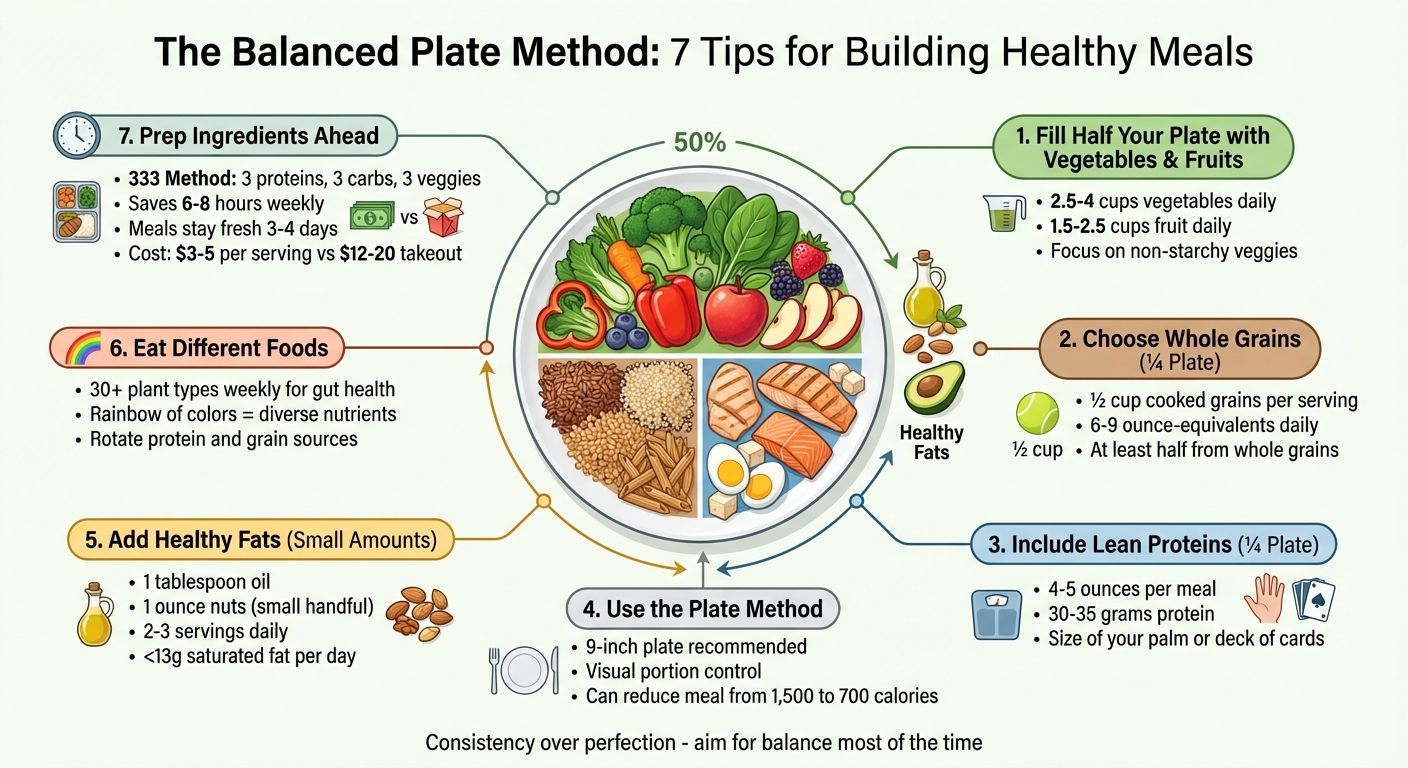
The Balanced Plate Method: Visual Guide to Healthy Meal Portions
1. Fill Half Your Plate with Vegetables and Fruits
Focus on Portion Sizes
Your plate can be a simple yet effective tool for managing portions. Aim to fill half of a standard dinner plate with vegetables and fruits. For instance, replacing part of a steak meal with vegetables can slash calories from around 1,500 to 700. Similarly, swapping out eggs and sausage for fruit at breakfast can turn a 700-calorie meal into roughly 400 calories.
When it comes to vegetables, prioritize non-starchy options like leafy greens, broccoli, bell peppers, zucchini, and cucumbers. These are naturally low in calories and packed with fiber, which helps keep you full and supports healthy digestion. For fruits, whole options like berries, apples, and oranges are better than juice. Aim to get at least half of your daily fruit intake from whole fruit. These portion strategies can help you enjoy a nutrient-packed, satisfying meal.
Emphasis on Food Variety
After nailing portion sizes, focus on variety to ensure you’re getting a wide range of nutrients. A colorful plate isn’t just visually appealing – it’s a sign of diverse vitamins, minerals, and antioxidants. For example, leafy greens are rich in iron and calcium, orange veggies like carrots and squash provide beta-carotene, and red peppers are loaded with vitamin C. Adults should aim for 2.5 to 4 cups of vegetables and 1.5 to 2.5 cups of fruit daily. To give you an idea, one cup of fruit equals a small apple, a large banana, or about 20 grapes.
Balance of Essential Nutrients
Vegetables and fruits are excellent sources of fiber, which supports digestion and heart health, but they shine brightest when paired with other nutrients. Combining non-starchy vegetables and fruits with protein and healthy fats helps stabilize blood sugar levels, as highlighted by Sam Presicci, RDN. Avoid eating "naked carbs" by pairing starchy vegetables or fruits with a protein or fat source. For example, add a side salad to your pizza or roasted vegetables to your burger. And remember, potatoes and French fries don’t count toward your veggie half due to their effect on blood sugar. Small adjustments like these can make a big difference in creating balanced, nutrient-rich meals.
sbb-itb-663e316
2. Choose Whole Grains for a Quarter of Your Plate
Focus on Portion Sizes
Whole grains should make up about a quarter of your plate at every meal – a simple way to keep portions in check. A good rule of thumb is to aim for ½ cup of cooked grains per serving. This could be brown rice, quinoa, oatmeal, or whole-wheat pasta. If you don’t have measuring tools handy, use everyday items for reference: a tennis ball, a CD case, or the size of two large eggs can help you estimate serving sizes. Adults are typically encouraged to eat 6–9 ounce-equivalents of grains daily, with at least half coming from whole grains. Starchy vegetables like potatoes, sweet potatoes, and corn can also count toward this grain portion.
Once you’ve got portion sizes down, mixing up your grain choices is key to getting a variety of nutrients.
Emphasis on Food Variety
Beyond portion control, adding variety to your whole grains can elevate the nutritional value of your meals. Try rotating options like farro, quinoa, barley, bulgur, millet, or wheat berries to tap into a broader range of vitamins and minerals. Even cornmeal, polenta, and whole-grain corn tortillas fit into this category.
"The word ‘whole’ is an indication that the fiber and all the different parts of the wheat are intact, which is what we want." – Paige Welsh, RD, LD, Cleveland Clinic
When grocery shopping, check labels for the word "whole" and ensure whole grains are listed first in the ingredients. This ensures the grain’s fiber-rich bran and nutrient-packed germ are still intact.
Balance of Essential Nutrients
Just like a mix of vegetables enhances a meal’s nutrition, pairing whole grains with proteins and healthy fats creates a more balanced dish. The fiber in whole grains slows digestion, helping to prevent blood sugar spikes and providing steady energy throughout the day.
"By opting for whole grains, you’re eating more of the nutrients and fiber that are retained. Fiber slows the rise of blood sugars and provides more stable energy." – Kelsey, Registered Dietitian
For an even better balance, combine whole grains with proteins and fats to help stabilize blood sugar and keep you feeling full longer. If you follow a plant-based diet, pairing grains with legumes or nuts can form complete proteins, giving you all nine essential amino acids.
MEAL PREP | 10 healthy meals in 1 HOUR (+ PDF guide)
3. Include Lean Proteins for the Remaining Quarter
Once you’ve added whole grains to your plate, it’s time to complete the picture with lean proteins. These not only support muscle health but also provide steady energy throughout the day.
Focus on Portion Sizes
Dedicate the final quarter of your plate to lean protein, aiming for about 4–5 ounces (30–35 grams) per meal. To make it simple, think of a portion roughly the size of your palm or a deck of cards. Distributing protein evenly across all three meals helps maintain steady energy levels and prevents uneven intake throughout the day.
For example, one ounce of chicken breast contains 7 grams of protein, 2 grams of fat, and 45 calories. Compare that to sausage, which also offers 7 grams of protein but comes with 8 grams of fat and 100 calories. Opting for lean proteins allows you to meet your nutritional needs without overloading on saturated fat or sodium.
Emphasis on Food Variety
Mixing up your protein sources is key to getting a broader range of nutrients. Seafood like salmon and mackerel delivers omega-3 fatty acids that support heart health. Eggs and lean poultry are packed with iron and B vitamins, which are essential for energy production. For plant-based eaters, lentils, chickpeas, and tofu provide added fiber and magnesium to round out your meals.
"We need protein to build muscle, cells, and enzymes. But protein foods can be different in fat content, calories, and sodium." – Ame Proietti, RD, LDN
If you’re following a plant-based diet, combine different protein sources throughout the day to ensure you’re getting all nine essential amino acids. For instance, pairing beans with brown rice or hummus with whole-grain pita can help you meet this goal.
Balance of Essential Nutrients
Protein plays a vital role in building muscle and slowing digestion, which helps stabilize blood sugar and keeps you feeling full for longer.
"Consuming a source of protein with each meal helps reduce hunger, control appetite and increase your metabolism." – Kelsey, Registered Dietitian
To make meal prep easier on busy days, keep convenient protein options like rotisserie chicken, canned tuna, hard-boiled eggs, or canned beans stocked in your kitchen. These staples make it simple to throw together balanced meals in no time.
4. Use the Plate Method to Control Portions
Focus on Portion Sizes
The plate method is a straightforward way to manage portions without the hassle of counting calories. Using a 9-inch dinner plate, divide it into three sections: half for non-starchy vegetables, one-quarter for lean protein, and one-quarter for whole grains or starchy vegetables.
This visual approach naturally limits calorie-dense foods while emphasizing nutrient-packed options. For example, a typical restaurant meal of steak and starch can pack around 1,500 calories. By adjusting the portions – reducing the steak and starch and filling half the plate with vegetables – you can bring it down to about 700 calories. Similarly, swapping a diner-style breakfast (around 700 calories) for a plate-method version (closer to 400 calories) makes a big difference.
"The Plate Method can be as effective as calorie counting and other methods of meal planning. It even removes the tedious aspects required by other methods." – Julia Axelbaum, RD, CSOWM, Form Health
This method simplifies portion control while promoting a balanced, nutrient-rich meal.
Balance of Essential Nutrients
Filling half your plate with high-fiber, non-starchy vegetables like spinach, broccoli, or bell peppers adds volume and helps you feel full without adding many calories. The remaining quarters – dedicated to protein and grains – provide the nutrients needed for muscle maintenance and steady energy.
When dining out, mentally divide your plate to avoid oversized portions of meat or starch. You can ask for extra vegetables to balance things out or set aside excess portions on your plate. For mixed dishes like wraps or casseroles, break them down mentally to ensure they align with the half-quarter-quarter guideline.
5. Add Healthy Fats in Small Amounts
Healthy fats are essential for a well-rounded diet. They enhance flavor, provide important nutrients, and can be enjoyed without adding too many calories – if you watch your portions.
Focus on Portion Sizes
While healthy fats are nutrient-rich, they can be calorie-dense, so portion control is key. For example, limit added fats like oils, butter, or dressings to about 1 tablespoon. A small handful of nuts (roughly 1 ounce) or 2 teaspoons of nut butter is enough for a snack. If you’re using avocado, half a medium one (around 3 ounces) works perfectly as a spread and even counts toward your vegetable intake.
The American Heart Association (AHA) recommends 2 to 3 servings of fat or oil daily for a 2,000-calorie diet – about 9 teaspoons in total. A single serving could be 1 teaspoon of olive oil, 1 tablespoon of low-fat mayonnaise, or 2 tablespoons of light salad dressing. To keep your heart healthy, aim to stay under 13 grams of saturated fat per day, which is less than 6% of your total calories.
Emphasis on Food Variety
Adding variety to your fat sources ensures you get a range of health benefits. Liquid plant oils like olive, canola, and sunflower oil are excellent for cooking and are packed with vitamin E. Fatty fish, such as salmon and mackerel, are rich in omega-3 fatty acids, which are crucial for brain and heart health. Try to include at least two 140-gram servings of fish per week, with one being oily fish.
Nuts and seeds, like walnuts, chia seeds, and flaxseeds, not only provide healthy fats but also add fiber to your meals. Other great options include avocados, olives, and eggs. For instance, a single egg offers about 27% of your daily choline needs, which supports brain function. If you’re using nut butters, choose ones without added palm oil, sugar, or salt. These diverse fat sources not only improve nutrient absorption but also help you feel full longer.
Balance of Essential Nutrients
Fats do more than make food taste good – they’re vital for absorbing fat-soluble vitamins like A, D, E, and K. They also slow digestion, helping you feel satisfied after eating. Since your body can’t produce omega-3 and omega-6 fatty acids, you need to include foods like fatty fish, nuts, and seeds in your diet.
"If you want to feel both full and satisfied after a meal, fat is your friend!" – Kelsey Kunik, Registered Dietitian
For better heart health, swap saturated fats like butter and lard for unsaturated options. A drizzle of olive oil over roasted veggies or a tablespoon of ground flaxseed in your oatmeal is an easy way to add healthy fats without overloading on calories. These small changes can make a big difference in maintaining a balanced and satisfying diet.
6. Eat Different Foods for Better Nutrition
Why Food Variety Matters
No single food can provide everything your body needs to thrive. By eating a diverse range of foods, you ensure your diet is packed with essential macronutrients, vitamins, and minerals. This approach helps prevent the nutritional gaps that often come with restrictive or fad diets. Pair this variety with proper portioning to maintain a well-rounded nutrient balance.
Think of your plate as a rainbow. Different colors in fruits and vegetables represent unique antioxidants and phytonutrients that your body craves. Mixing up your protein and carbohydrate sources further broadens the nutrient spectrum. A simple way to start? Add one new fruit or vegetable to your cart each time you shop. Over time, this habit can expand your palate and your nutrient intake.
"At its core, a balanced diet isn’t about picking and choosing ‘best’ foods or focusing on ‘superfoods.’ It’s about eating a range of nutritious, whole foods." – Paige Welsh, RD, LD, Cleveland Clinic
This variety doesn’t just nourish your body – it also supports a healthier gut.
The Nutrient Balance Advantage
Adding diversity to your meals does more than keep things interesting. It plays a key role in gut health and overall wellness. Studies show that people who consume over 30 different plant-based foods each week have more diverse gut microbiomes compared to those who stick to fewer than 10 types. This diversity boosts digestion, strengthens immunity, and helps your body absorb nutrients more effectively.
For anyone following a plant-based diet, variety is even more critical. Many plant proteins are incomplete on their own, but combining different sources – like grains with legumes or nuts with seeds – ensures you get all nine essential amino acids. Don’t forget to use a mix of fresh, frozen, and canned produce to add texture and retain nutrients.
7. Prep Ingredients Ahead for Quick Meals
Taking time to prep ingredients in advance can make sticking to healthy eating habits much easier and more manageable.
Focus on Portion Sizes
Prepping ahead helps you control portions effortlessly. By dividing meals into individual, microwave-safe containers, you can stick to your goals – whether that’s managing calories or hitting specific nutrient targets, like 20–35 grams of protein per meal.
"Meal prepping and planning helps you to eat more consistently throughout the day… which helps control hunger levels and prevents overeating." – Elyse Homan, MS, RD, LD, Cleveland Clinic
Batch cooking is a huge time-saver. Cooking proteins, grains, and vegetables in bulk can reduce daily prep time by 62%. Plus, meal preppers report saving 6–8 hours a week and losing an average of 6.2 pounds over 12 weeks.
Emphasis on Food Variety
Prepping individual ingredients instead of full meals keeps things interesting. For example, cook chicken thighs (which tend to stay juicier than breasts), quinoa, and roasted broccoli. Throughout the week, you can mix and match these basics with different sauces or spices to keep meals exciting [44–46].
Try the 333 Method: Prepare 3 proteins, 3 carbs, and 3 vegetables for variety all week long. This method not only keeps your meals fresh but also encourages better eating habits – meal preppers tend to eat 23% more vegetables and 18% less processed foods. Including a rainbow of vegetables (like dark greens, orange, red, and purple) ensures you’re getting a range of nutrients and antioxidants.
Balance of Essential Nutrients
Combining prepped ingredients in the right proportions ensures every meal is balanced. Use this simple formula: Protein + High-fiber Carbohydrate + Healthy Fat + Color. Aim to fill half your container with non-starchy vegetables, one quarter with a lean protein, and one quarter with a complex carbohydrate. Add a small serving of healthy fat – like olive oil, avocado, or nuts – for a well-rounded meal.
Roast hardy vegetables like Brussels sprouts, cauliflower, and bell peppers at 400–425°F. They’ll keep their flavor and texture for 4–5 days. Since most cooked meals stay fresh in the fridge for 3–4 days, freeze anything you plan to eat later in the week. And here’s a bonus: home-cooked, prepped meals typically cost just $3 to $5 per serving, compared to $12 to $20 for takeout.
Conclusion
Putting together balanced meals becomes much easier when you combine these seven tips. By keeping 3–5 staple ingredients from each macronutrient group on hand, you can simplify meal decisions during hectic weeks. Instead of focusing on what to cut out, aim to fill your plate with fiber, protein, and colorful vegetables.
The key to eating well lies in consistency, not perfection. Strive to make most of your meals balanced, but don’t stress about being flawless every time. As registered dietitian Hannah Magee explains:
"Eating well isn’t about being perfect. It’s about what you do most of the time, not all of the time".
This flexible approach allows room for enjoying "fun foods" guilt-free while staying on track with your nutritional goals.
You can also experiment with variety to keep things interesting and nutritious. For example, people who consume over 30 different plant types weekly tend to have a more diverse gut microbiome than those eating fewer than 10 types. Try switching up your primary protein and carb sources each week, or enhance convenience foods by adding fresh vegetables and lean proteins.
Start small – maybe by prepping a few ingredients on Sunday or making it a habit to fill half your plate with vegetables at dinner. The idea is to build habits that make healthy eating feel natural and enjoyable, not restrictive.
For more simple recipes and kitchen tips, visit Comfy Kitchen and make balanced eating a breeze.
FAQs
How do I use the plate method for soups, salads, or casseroles?
To use the plate method with soups, salads, or casseroles, focus on keeping portions balanced. For soups or casseroles, serve a portion alongside a side of non-starchy vegetables. When it comes to salads, think of your plate in sections: fill half with vegetables, a quarter with grains or starchy vegetables, and the remaining quarter with lean protein. This approach helps maintain nutrient balance and keeps portion sizes in check for any meal.
What are easy balanced meal options if I’m vegetarian or vegan?
Balanced vegetarian or vegan meals are all about combining the right ingredients to create a nourishing plate. Start with a protein source like beans, tofu, or lentils. Pair these with whole grains (think quinoa, brown rice, or farro) or starchy vegetables like sweet potatoes. Then, load up on a variety of colorful vegetables for added nutrients. To round it all off, include healthy fats such as avocado, nuts, or seeds. This combination ensures you’re getting a mix of protein, fiber, and essential nutrients in every meal.
How can I build a balanced meal when eating out or ordering takeout?
To put together a nutritious meal when dining out or ordering takeout, aim for a mix of vegetables, protein, and healthy fats. Go for non-starchy veggies like leafy greens, pair them with grilled or roasted proteins, and include healthy fats such as olive oil or avocado. You can round out your meal with whole grains or a serving of fruit. Keep portion sizes in check by saving leftovers for later, and steer clear of dishes made with overly processed ingredients. These simple choices can help you enjoy a meal that’s both satisfying and nourishing.