

When it comes to cookware, durability and performance depend heavily on the material. Here’s a quick rundown of the top 7 cookware materials and what they offer:
- Cast Iron: Known for its longevity and heat retention. Requires seasoning but lasts generations.
- Stainless Steel: Durable, nonreactive, and easy to maintain. Great for everyday cooking.
- Carbon Steel: Lighter than cast iron, heats quickly, and becomes naturally nonstick over time.
- Enameled Cast Iron: Combines heat retention with a rust-resistant coating. Requires less upkeep.
- Copper: Offers unmatched heat control but needs careful maintenance.
- Clad Aluminum: Balances heat conductivity with durability, thanks to its multi-layer design.
- Ceramic-Coated: Nonstick and easy to use but has a shorter lifespan compared to other materials.
Each material suits different cooking styles, maintenance preferences, and budgets. For example, cast iron and stainless steel are long-term investments, while ceramic-coated pans are better for quick, low-heat tasks.
Quick Comparison
| Material | Durability | Heat Performance | Maintenance | Best For | Cost |
|---|---|---|---|---|---|
| Cast Iron | Extremely high | Retains heat well | Needs seasoning | High-heat searing, frying | $ |
| Stainless Steel | High | Even with aluminum/copper core | Low | Everyday cooking, sauces | $$ |
| Carbon Steel | High | Heats fast, retains heat | Requires seasoning | Stir-frying, quick searing | $ |
| Enameled Cast Iron | High (if handled gently) | Retains heat well | Low | Slow cooking, braising | $$ |
| Copper | Moderate | Best heat control | Moderate | Precise tasks like sauces | $$$ |
| Clad Aluminum | High | Even heat distribution | Low | Sautéing, simmering | $$ |
| Ceramic-Coated | Moderate | Quick heating | Low | Eggs, pancakes, delicate dishes | $ |
Choosing the right cookware depends on your cooking habits, willingness to maintain it, and the type of stovetop you use. For longevity, cast iron and stainless steel are excellent options. For convenience, consider enameled cast iron or multi-ply stainless steel. Ceramic-coated pans are ideal for low-heat, quick meals but won’t last as long.
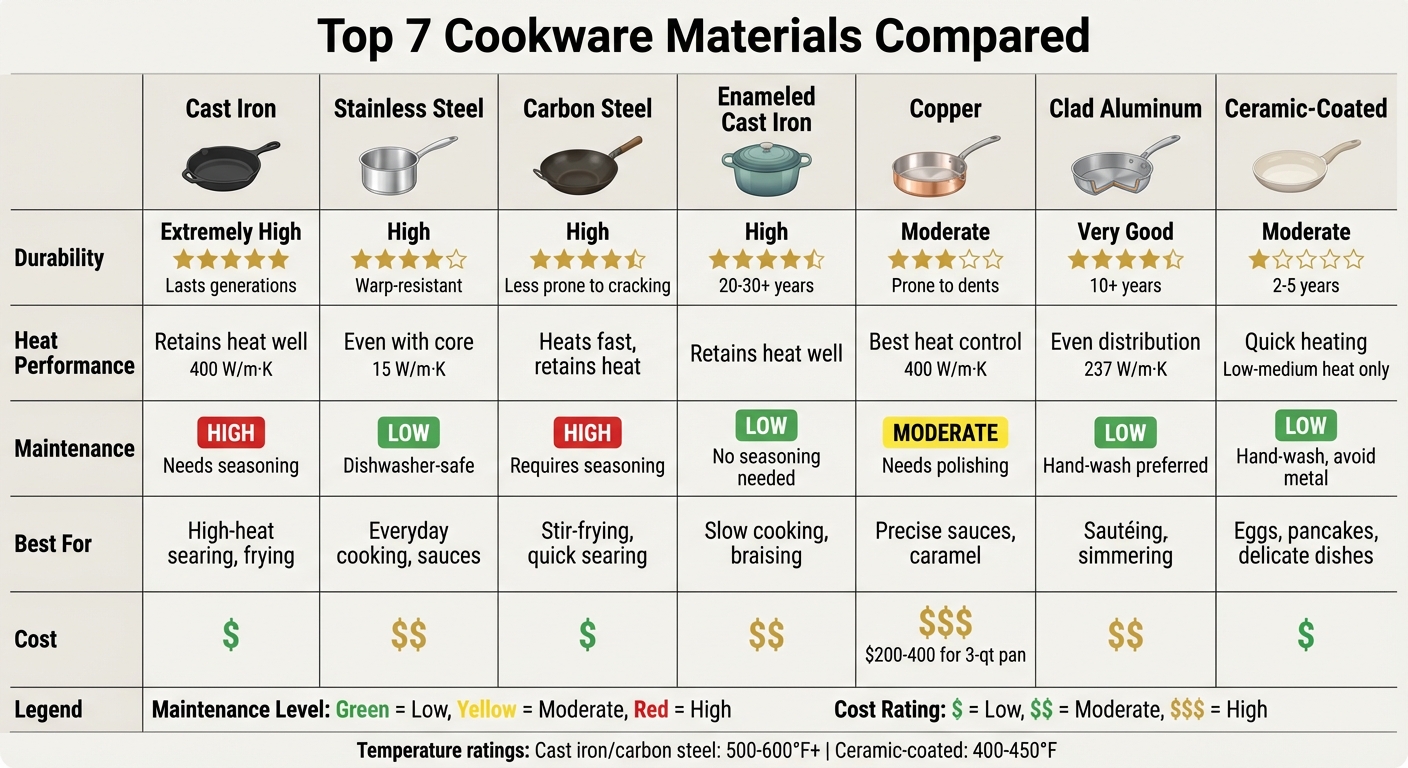
Cookware Materials Comparison: Durability, Heat Performance, Maintenance & Cost
Picking The Right Pan For Every Recipe | Epicurious
1. Cast Iron
Cast iron is one of the toughest and most reliable cookware materials out there. A well-cared-for cast iron skillet can last for generations – some families in the U.S. even pass theirs down as cherished heirlooms, with certain pans still going strong after more than a century. Its sturdy build resists warping, scratching, and denting far better than aluminum or nonstick cookware. Let’s dive into what makes cast iron stand out in terms of heat performance, upkeep, and versatility.
Heat Conductivity
When it comes to heat, cast iron is a star performer. It’s important to preheat the pan slowly over medium heat to avoid uneven hot spots. Once warmed up, it holds onto heat like a champ, staying consistently hot even when you add cold ingredients. This makes it perfect for tasks like searing steaks, frying chicken, deep-frying, or baking – basically, any cooking that benefits from steady, high heat and a golden, crispy finish.
Maintenance Requirements
Taking care of bare cast iron does require a little extra effort, but it’s worth it. To keep it rust-free, regular seasoning is key. Seasoning involves applying a thin layer of cooking oil to the pan and heating it to around 400–450°F, creating a protective, nonstick surface. After using the pan, skip soaking it in water. Instead, dry it thoroughly – often by warming it briefly on the stove – and apply a light coat of oil to keep rust at bay. Even if rust or wear develops, don’t worry. Most issues can be fixed with proper cleaning and reseasoning.
Versatility
Cast iron is incredibly adaptable, working on almost any heat source you’ll find in an American kitchen. Whether you’re using gas, electric, or glass-ceramic stovetops (just lift it instead of sliding to avoid scratches), or even baking in the oven, grilling, or cooking over a campfire, cast iron gets the job done. It’s great for frying, sautéing, baking, and more. Just keep in mind its hefty weight and slower reaction to temperature changes. Also, limit cooking acidic foods for long periods, as they can wear down the seasoning. If you’re unsure where to start, Comfy Kitchen offers recipes and tips to make cooking with cast iron easier and more enjoyable.
2. Stainless Steel
Stainless steel cookware has earned its place in kitchens worldwide thanks to its reliable performance and user-friendly features. Unlike cast iron, which shines in heat retention, stainless steel excels in versatility and durability. It’s highly resistant to scratches, dents, rust, and corrosion, making it a go-to choice for professional chefs who need cookware that can handle constant stirring, deglazing, and long simmering sessions without showing wear and tear.
Durability
Top-quality stainless steel cookware often features a 3- to 5-ply construction, incorporating an aluminum or copper core. This multi-layer design not only ensures even heat distribution but also prevents warping, keeping the pan stable and flat, even after years of heavy use. For example, Viking’s stainless steel sauté pans and stock pots are built to withstand the demands of professional kitchens for decades. Another advantage? Stainless steel is nonreactive, so you can confidently cook acidic dishes like tomato-based sauces or wine reductions without worrying about metallic flavors or damage to the surface.
Heat Conductivity
Thanks to its aluminum or copper core, stainless steel heats evenly across the entire cooking surface, minimizing the risk of hot spots. This even heat distribution ensures consistent results, whether you’re searing a steak to perfection or gently simmering a delicate sauce. Beyond its excellent heat performance, stainless steel also makes cleanup a breeze.
Maintenance Requirements
Stainless steel cookware requires minimal upkeep. Unlike cast iron, it doesn’t need seasoning, and it’s dishwasher-safe for added convenience. It’s also tough enough to withstand metal utensils without scratching. For everyday cleaning, a simple wash with soap and water does the trick, while tougher stains or residue can be tackled with products like Bar Keepers Friend, which restore the surface without damaging the finish.
Versatility
Stainless steel’s versatility makes it a favorite in both home and professional kitchens. It works seamlessly with gas, electric, and induction cooktops, and many pieces are oven-safe at high temperatures. Whether you’re searing, frying, simmering, sautéing, or roasting, stainless steel delivers consistent results. Plus, it’s excellent for creating a flavorful fond, which is perfect for deglazing and enhancing sauces. This adaptability makes stainless steel a reliable choice for everything from quick weeknight meals to more complex recipes.
3. Carbon Steel
Carbon steel offers the toughness of cast iron with the added perks of being lighter and heating up faster. Like cast iron, it builds a natural nonstick surface over time, but its lighter weight and quick heating make it a go-to for fast-paced cooking. This material is a staple in professional kitchens, prized for its ability to handle high heat without warping and its responsiveness to temperature changes. Its all-around performance makes it a valuable piece in any cookware lineup.
Durability
Carbon steel is built to last and is less prone to cracking than cast iron, even if it takes a tumble. With proper care – regular seasoning and thorough drying – a carbon steel pan can serve you for decades. The main challenge is rust, which can form if the pan is left wet or stored in a damp environment. To prevent this, dry your pan completely after washing, apply a thin layer of oil, and store it in a dry spot. If rust does appear, it’s not the end of the road – you can scrub it off with steel wool and re-season the pan to restore its surface.
Heat Conductivity
One of carbon steel’s standout features is how quickly it heats up and how responsive it is to temperature changes. This makes it perfect for cooking tasks that require precision, like sautéing or frying delicate foods. Once preheated, it holds heat well enough for searing, making it a great choice for dishes like stir-fried vegetables, seared steaks, or pan-roasted chicken thighs. While it doesn’t distribute heat as evenly as some materials like clad aluminum, its fast response time and heat retention make it a versatile tool in the kitchen.
Maintenance Requirements
Caring for carbon steel is straightforward but does require consistency. When you get a new pan, season it by washing, drying, applying a thin coat of high-smoke-point oil, and heating it until it darkens. For everyday cleaning, rinse with hot water and use a soft brush to remove food residue. Then, dry the pan over low heat and reapply a light layer of oil. Avoid soaking the pan in water or using a dishwasher, as both can strip the seasoning and encourage rust. Compared to cast iron, maintaining carbon steel often feels easier since it’s lighter and smoother.
Versatility
Carbon steel is compatible with gas, electric, and induction cooktops, and most pans can handle oven temperatures common in U.S. kitchens. It’s excellent for searing, sautéing, stir-frying, and shallow frying. Its seasoned surface is also great for cooking eggs, pancakes, or delicate fish. However, it’s not the best option for long, acidic cooking like simmering tomato sauces or wine-based dishes, as the acid can wear down the seasoning and affect the flavor. For those recipes, stainless steel or enameled cast iron is a better fit.
4. Enameled Cast Iron
Enameled cast iron is a modern twist on traditional cast iron, offering excellent heat retention along with a low-maintenance, rust-resistant finish. Thanks to its enamel coating, it eliminates the need for seasoning and protects the iron underneath from rust, making it a great choice for beginners. Dutch ovens are the standout example of this material, known for their ability to handle a variety of cooking tasks – from stovetop searing to oven braising. The heavy construction and snug-fitting lids ensure even heat distribution, perfect for slow-cooked meals like pot roast, chili, or artisan bread. Let’s dive into what makes this cookware so durable and versatile.
Durability
With proper care, a high-quality enameled Dutch oven can last 20 to 30 years – or even longer. The enamel layer protects the iron from moisture, so rust is rarely a concern, unlike bare cast iron, which requires constant upkeep. However, the enamel can chip if mishandled, such as dropping the pot or knocking it against hard surfaces. Once chipped, those spots can become vulnerable to rust. To keep it in top shape, handle it gently, especially on glass cooktops, and avoid exposing it to sudden temperature changes, like putting a hot pot into cold water.
Heat Conductivity
While enameled cast iron doesn’t heat as quickly or evenly as materials like aluminum or copper, it excels at holding heat once it’s warmed up. This makes it ideal for recipes that require steady, gentle heat – think braised short ribs, hearty stews, or rich tomato sauces. The thick walls and heavy lid help lock in moisture, ensuring tender meats and concentrated flavors. For tasks requiring quick temperature changes, like stir-frying, lighter materials such as carbon steel are a better fit. To get the best results, preheat your enameled cast iron on medium heat for a few extra minutes before cooking.
Maintenance Requirements
One of the perks of enameled cast iron is its low-maintenance care. Unlike bare cast iron, it doesn’t need seasoning, and it can handle acidic ingredients like tomatoes or wine without any damage. After cooking, let it cool before washing with warm water and mild dish soap. Stick to wooden, silicone, or nylon utensils to protect the enamel from scratches, and avoid abrasive scrubbers. For stubborn stains, a simple paste of baking soda and water works wonders. While many brands claim their enameled cookware is dishwasher-safe, hand-washing is the best way to preserve its glossy finish and prevent dulling over time. Compared to nonstick pans, enameled cast iron can withstand much higher oven temperatures – often up to 450–500°F, depending on the knob material – but it’s heavier and requires careful handling.
Versatility
Enameled cast iron is compatible with gas, electric, and induction stovetops, and it transitions effortlessly from stovetop to oven. This makes it a favorite for one-pot meals and bread baking. A 5½–7-quart Dutch oven is the sweet spot for most American households, easily serving 4–6 people while accommodating whole chickens, large soups, or casseroles. It’s great for tasks like searing, shallow frying, simmering, and even serving at the table, thanks to its attractive finish. However, it’s not the best choice for ultra-high-heat dry cooking or open campfires, as extreme and uneven heat can damage the enamel. For home cooks, an enameled Dutch oven often becomes a kitchen staple, used regularly for everything from weeknight soups to weekend roasts.
sbb-itb-663e316
5. Copper
Copper cookware has long been celebrated for its exceptional heat conductivity, making it a favorite among professional chefs for generations. With a conductivity rating of around 400 W/m·K, it far outperforms stainless steel (~15 W/m·K) and aluminum (~237 W/m·K). This makes copper the ideal choice for recipes that demand precise temperature control, such as caramel, delicate sauces, custards, and chocolate. To ensure safety, most modern copper pans are lined with stainless steel or tin, which prevents the copper from reacting with acidic ingredients while maintaining its superior heat performance.
Durability
Copper is softer than materials like stainless steel or cast iron, which means it can be more prone to dents and scratches. However, cookware made with 2.5–3 mm thick copper walls and a stainless steel lining can last for decades if treated with care. Stainless linings are more resistant to corrosion and acidic ingredients, while tin linings provide a naturally smooth, low-stick surface. Proper care is key: avoid using metal utensils on tin linings, keep heat levels moderate, and always handwash. With this attention, copper pans can become cherished heirlooms, much like cast iron, passed down through generations.
Heat Conductivity
One of copper’s standout features is its remarkable heat responsiveness. It heats up quickly and evenly across the entire surface, and it cools down just as fast when you lower the temperature. This quick reaction time allows cooks to make precise adjustments, which is especially helpful for preventing sauces from breaking or burning. For home cooks in the U.S. who enjoy making candy or jam, copper’s ability to maintain consistent temperatures ensures reliable results. While thicker copper pans may take slightly longer to preheat compared to thinner aluminum pans, the precise control and even heating they offer are well worth the wait.
Maintenance Requirements
Copper cookware requires more upkeep than stainless steel or nonstick options. Over time, the exterior develops a natural patina, which can appear brown or greenish. To maintain its shine, polish it occasionally using a lemon–salt paste. Always handwash with warm, soapy water, dry immediately, and store carefully to prevent scratches. Use only wooden or silicone utensils to protect the lining, and avoid dishwashers. For stainless-lined copper, cleaning is straightforward, much like regular stainless steel pans. If you notice large areas of exposed copper on a tin-lined pan, it’s important to have it professionally retinned before using it with acidic foods.
Versatility
Thanks to its heat control and durability, copper cookware performs beautifully on gas and electric stovetops and is oven-safe for most recipes. However, it’s not naturally compatible with induction cooktops unless it has a magnetic base. For those who prefer induction cooking, copper-core stainless steel cookware is a practical alternative. Copper excels in tasks requiring precision, such as making sauces, caramel, or reductions, but it’s less suited for high-heat searing or everyday dishes like scrambled eggs, where cast iron or nonstick pans might be more convenient.
Copper cookware is also one of the pricier options on the market. A 3-quart sauté pan typically costs between $200–$400 in the U.S., making it a specialized tool best suited for those who frequently prepare temperature-sensitive dishes and aim for professional-level results.
6. Aluminum (Clad)
Clad aluminum cookware, often labeled as tri-ply or multi-ply stainless steel, is built with a thick aluminum core layered between sheets of stainless steel. It’s a practical option for those who want the heat conductivity of aluminum without the challenges of copper or carbon steel. This design combines aluminum’s ability to heat evenly with the durability and nonreactive qualities of stainless steel. Unlike bare aluminum, which can warp or react with acidic ingredients, clad aluminum delivers a balanced, all-purpose cooking experience.
Durability
One of the standout features of clad aluminum cookware is its durability. The stainless steel exterior resists warping, scratching, and chipping, allowing these pans to last for many years – often over a decade. Heavier constructions, like 3-ply or 5-ply designs with thicker aluminum cores, are even less prone to warping. Since there’s no nonstick coating to wear off, the aluminum core stays protected by the surrounding stainless steel. To keep your pans in top shape, avoid sudden temperature changes, like plunging a hot pan into cold water, as this can stress the material.
Heat Conductivity
The aluminum core in clad cookware ensures excellent heat distribution, outperforming single-ply stainless steel pans. This design minimizes hot spots, making it easier to achieve even browning and perfect searing. While copper might be faster at responding to temperature changes, clad aluminum offers a good middle ground. It’s quick enough for tasks like deglazing and steady enough for simmering. High-end models even extend the aluminum core to the sidewalls, ensuring consistent heating throughout the pan. This versatility makes it suitable for a wide range of cooking methods.
Maintenance Requirements
Clad aluminum cookware is low-maintenance compared to other materials. There’s no need for seasoning or rust prevention, and it’s easy to clean. Preheating on medium heat helps avoid unnecessary stress on the metal, while a light layer of oil on the stainless steel interior can improve food release. Hand-washing is recommended to preserve the finish, and for tougher stains or discoloration, a baking soda paste or stainless-steel cleaner works wonders. To keep polished exteriors scratch-free, skip the steel wool.
Versatility
Clad aluminum cookware strikes a great balance between performance and practicality. It’s perfect for tasks like searing meats, sautéing vegetables, making pan sauces, or simmering soups. Most pieces are oven-safe up to 400–500°F, making it easy to transition from stovetop to oven or broiler. The magnetic stainless steel exterior also ensures compatibility with induction, gas, and electric cooktops. For those starting a cookware collection on a budget, a 10–12 inch skillet, a 3–4 quart saucepan, and a 5–8 quart stockpot are excellent choices. With its reliable performance and value, clad aluminum is a smart addition to any kitchen.
7. Ceramic-Coated
Ceramic-coated cookware features an aluminum base topped with a silica-based sol-gel nonstick coating. Unlike traditional PTFE (Teflon) pans, these are marketed as free of PFAS and PTFE, making them appealing to those seeking a "cleaner" nonstick option. When new, these pans deliver excellent food release, making them perfect for eggs, pancakes, and delicate items like fish fillets. However, the coating tends to wear out faster than PTFE or more durable materials like stainless steel and cast iron. Most people view ceramic-coated pans as short-term tools with a lifespan of about 2–5 years, rather than long-term investments.
Durability
Ceramic-coated cookware doesn’t match the longevity of stainless steel or cast iron, but it can outlast many inexpensive PTFE pans if handled carefully. According to Consumer Reports, some ceramic-coated pans began losing their nonstick properties after about 2,000–3,000 abrasion test rubs, whereas PTFE pans often lasted longer under the same testing. The main culprits for wear include scratches from metal utensils, abrasive cleaning tools, stacking without protection, overheating (above 500°F), and frequent dishwasher use. To extend their life, stick to medium heat, avoid metal utensils, and always handwash. With proper care, these pans can maintain their nonstick performance for a few years, but over time, food will begin to stick even if the pan itself remains intact.
Heat management is also crucial for preserving the coating and maintaining performance.
Heat Conductivity
The heat conductivity of ceramic-coated pans depends on the material of the base – most commonly aluminum or stainless steel. Aluminum is widely used in mid-range ceramic pans in the U.S. because it heats quickly and evenly, making it ideal for low to medium heat tasks like cooking eggs, pancakes, or sautéing vegetables. However, ceramic coatings can struggle at high temperatures, losing their nonstick properties and potentially discoloring. This makes them unsuitable for high-heat tasks like searing or prolonged cooking at maximum temperatures. Stainless steel, carbon steel, or cast iron are better choices for those situations. Ceramic-coated pans shine when used for gentle, moderate cooking at temperatures around 300–400°F.
Maintenance Requirements
Proper care is key to extending the life of ceramic-coated cookware. Stick to low to medium heat and avoid preheating an empty pan to protect the coating. Use wooden, silicone, or plastic utensils to prevent scratches, and always handwash with a soft sponge and mild detergent. Avoid abrasive cleaners like steel wool and limit dishwasher use, as these can degrade the coating faster. Cooking sprays should also be skipped – they can leave sticky residues that reduce the pan’s nonstick performance. Instead, use a small amount of oil or butter. When storing, place pan protectors or soft towels between pieces to prevent abrasion. These habits can mean the difference between a pan that lasts a year and one that remains functional for several years.
Versatility
Ceramic-coated pans are excellent for quick, everyday meals like scrambled eggs, omelets, or hash browns, where minimal oil and easy cleanup are priorities. They’re also great for delicate foods like fish fillets or cheesy dishes like quesadillas that might stick to other surfaces. Many ceramic-coated pans are oven-safe, typically up to 400–600°F, though it’s always best to check the manufacturer’s instructions. However, they’re not suited for high-heat tasks like searing steaks or broiler use, as such conditions can damage the coating. In short, ceramic-coated pans are a convenient choice for everyday, low-heat cooking, while sturdier materials like cast iron or stainless steel are better for high-heat and long-term durability. They fill an important role in the kitchen, offering an easy, low-stick option for quick meals and lighter cooking tasks.
Material Comparison Table
Here’s a detailed look at how seven common cookware materials compare. Copper stands out as the top heat conductor, known for heating and cooling quickly and evenly. However, it’s a softer metal that requires careful maintenance to keep it in good shape.
| Material | Durability & Lifespan | Heat Conductivity | Maintenance | Best Uses | Relative Cost |
|---|---|---|---|---|---|
| Cast Iron | Outstanding – can last generations; re-seasonable | Good – heats slowly but retains heat well | High – needs regular seasoning and hand-washing | High-heat searing, frying, and oven use | $ |
| Stainless Steel (Multi-Ply) | Excellent – warp- and scratch-resistant, nonreactive | Very Good – improved by aluminum or copper core | Low – dishwasher-safe; no seasoning needed | Everyday sautéing, pan sauces, boiling, browning meats | $ |
| Carbon Steel | Excellent – similar to cast iron but lighter | Good – heats faster than cast iron, retains heat well | High – requires seasoning and prompt drying | High-heat searing, stir-frying, woks, crepes | $ |
| Enameled Cast Iron | Very Good – rust-proof, though enamel may chip if dropped | Good – similar heat retention to bare cast iron | Low – no seasoning needed; hand-wash recommended | Braising, stews, soups, casseroles, no-knead bread | $ |
| Copper | Good – softer metal, prone to dents or scratches; long-lasting with care | Excellent – the fastest and most responsive conductor | Moderate – needs polishing and careful temperature control | Delicate sauces, caramel, custards, and precise temperature recipes | $ |
| Aluminum (Clad) | Very Good – hard-anodized for scratch and corrosion resistance | Very Good – heats quickly and evenly | Low – hand-wash preferred; no seasoning required | Quick sautéing, boiling, restaurant-style cooking | $ |
| Ceramic-Coated | Fair – coating wears over time, though base remains durable | Good – aluminum base heats quickly but isn’t suited for very high heat | Low – hand-wash advised; avoid metal utensils | Eggs, pancakes, delicate fish, and low-heat tasks | $ |
According to Viking Culinary, cast iron ranks as the most durable cookware material, followed by stainless steel, carbon steel, and hard-anodized aluminum for their longevity and resistance to wear.
If you’re looking for cookware that’s both durable and easy to maintain, a multi-ply stainless steel set (like a sauté pan, saucepan, and stockpot) is a solid option. Its dishwasher-safe, nonreactive surfaces and oven-friendly design make it a go-to for many U.S. kitchens. Once you’ve chosen the material that suits your cooking needs, Comfy Kitchen provides helpful recipes and kitchen tips to help you make the most of your cookware.
Pro Tip: In the U.S., cookware temperature ratings are often listed in °F. Cast iron and carbon steel can handle very high heat (500–600°F or more), while ceramic-coated cookware is usually limited to around 400–450°F. Always check the manufacturer’s guidelines to stay within safe temperature ranges.
Conclusion
When choosing cookware, consider these three key questions: How much upkeep are you willing to handle? What type of cooking do you do most often? What kind of stovetop do you use?
If you’re looking for cookware that lasts a lifetime, cast iron and carbon steel are excellent choices. They shine in high-heat tasks like searing and stir-frying on gas or induction stovetops, and they develop a natural nonstick surface over time. For those who prefer similar heat retention without the need for seasoning, enameled cast iron is ideal for slow cooking and braising.
For cooks who prioritize ease of cleaning, low-maintenance options are a better fit. Multi-ply stainless steel is a versatile choice – it’s dishwasher-safe, nonreactive, and works on all stovetops. If you need something that heats up quickly, clad aluminum is a great option. On the other hand, ceramic-coated pans are perfect for delicate dishes, though they aren’t suited for high-heat cooking.
Different cookware options cater to various budgets and cooking preferences. If you’re watching your spending, consider starting with cast iron or carbon steel and gradually adding stainless steel for convenience. For high-heat cooking, steer clear of ceramic-coated pans, as they wear out quickly. Induction stovetop users should stick to magnetic materials like cast iron, carbon steel, or stainless steel, as copper and standard aluminum often require adapters.
FAQs
What are the most durable cookware materials for high-heat cooking?
For cooking at high temperatures, cast iron and stainless steel are standout options. Cast iron excels at holding heat, which makes it perfect for jobs like searing steaks or frying foods. On the flip side, stainless steel is tough, resists rust, and ensures even heat distribution – especially when combined with an aluminum or copper core.
Both materials are built to withstand intense heat without bending or breaking down, making them dependable for a wide range of cooking techniques.
What’s the best way to care for cast iron cookware?
To keep your cast iron cookware in top condition, make sure to clean it well after every use and dry it thoroughly to avoid rust. After cleaning, rub a thin layer of vegetable oil over the surface. Skip the soap and never put it in the dishwasher – both can strip away the seasoning that makes cast iron so effective. Every so often, re-season your pan by baking it at 350°F for about an hour. Lastly, store your cast iron in a dry spot to help it last for years.
What is the best low-maintenance cookware material?
Stainless steel cookware is a go-to option for anyone seeking low-maintenance and long-lasting kitchen tools. Its durability and resistance to rust and stains make it a practical choice, and it doesn’t demand extra effort like seasoning or careful handling.
Another perk? It’s dishwasher safe, which means cleanup is a breeze. Whether you’re whipping up a quick breakfast or preparing a more elaborate meal, stainless steel provides a dependable, hassle-free solution for all kinds of recipes.