

Spices don’t expire like fresh food, but they lose flavor over time. While they remain safe to use, old spices won’t deliver the bold taste you expect in cooking. Ground spices generally last 1–3 years, while whole spices can retain flavor for up to 4 years if stored properly. Key factors like air, heat, light, and moisture speed up flavor loss. To check freshness, look for vibrant color, strong aroma, and rich flavor. For best results, store spices in airtight containers in a cool, dark, and dry place. Replace stale spices to keep your dishes flavorful and satisfying.
Do Spices and Herbs Have an Expiration Date?
Do Spices Expire?
Spices don’t go bad in the same way foods like milk or fresh produce do. They won’t grow mold or become unsafe to eat. As McCormick Kitchens puts it:
Spices do not expire in the same way that milk does nor do they become moldy or rotten in the same way fresh produce does. It’s better to think of spices as going "not good" rather than bad.
While they remain safe to consume, spices lose their flavor and potency over time. The "best-by" date on the jar is more about quality than safety. You can still use spices after that date, but don’t expect them to pack the same flavor punch.
Why Spices Lose Their Flavor
The flavor in spices comes from essential oils, which gradually break down when exposed to air, light, heat, and moisture. Here’s what happens:
- Oxygen triggers oxidation, weakening the flavor compounds.
- Heat speeds up the breakdown of those compounds.
- Sunlight fades both the color and taste.
- Humidity can cause clumping and even musty odors.
Ground spices lose their flavor faster than whole spices because grinding increases their surface area, making them more vulnerable to air and oxidation. As food editor Alexandra Emanuelli explains:
Once they’re ground, they begin to slowly oxidize, losing potent flavor and aroma.
How Old Spices Affect Your Cooking
Using old spices won’t harm you, but it might harm your cooking. Dishes seasoned with stale spices can turn out bland and lack the depth you were aiming for. WebstaurantStore sums it up well:
If you season your dishes with spices that are several years old, you may not achieve the flavor you were looking for.
To avoid disappointment, taste a pinch of the spice before adding it to your dish. If the flavor seems weak, you might need to use more – or better yet, replace it with a fresh jar. Want to know how to check your spices for freshness? Keep reading.
How Long Do Spices Last?
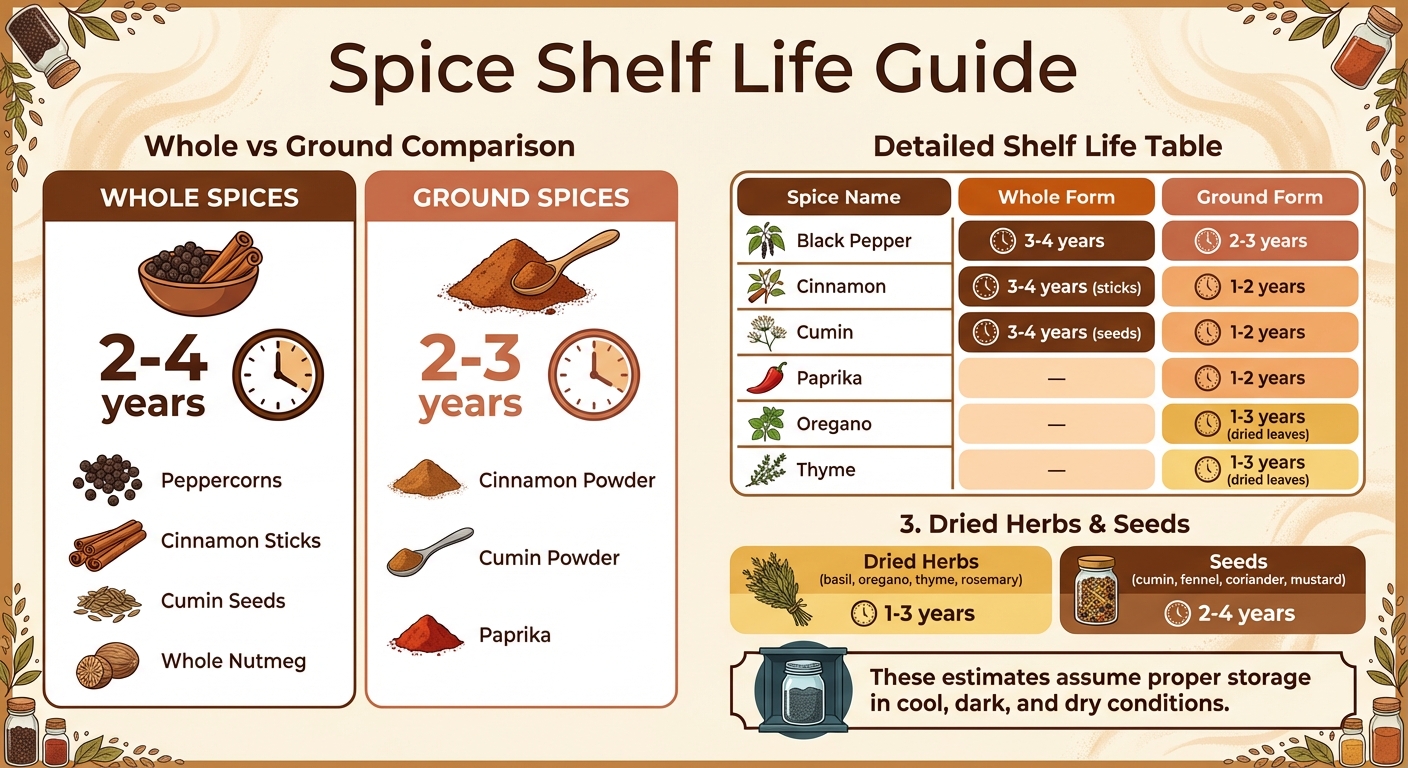
Spice Shelf Life Guide: Whole vs Ground Spices Storage Duration
The shelf life of spices depends on whether they are whole or ground. Knowing this can help you keep your spices fresh and flavorful for as long as possible. When stored in a cool, dry, and dark place, whole spices can last between 2 and 4 years, while ground spices generally hold their flavor for 2 to 3 years. Dried herbs, on the other hand, typically remain potent for about 1 to 3 years.
Whole Spices vs. Ground Spices
Kate Merker, chief food director at Good Housekeeping, puts it simply:
"As a rule, whole spices always last longer than ground spices."
Take whole peppercorns, cinnamon sticks, cumin seeds, or whole nutmeg as examples – they can stay flavorful for 3 to 4 years. Compare that to their ground counterparts, like cinnamon or cumin powder, which often lose their punch within 1 to 2 years.
The difference lies in surface area. Donald W. Schaffner, PhD, a food microbiology professor at Rutgers University, explains:
"This is because the grinding process breaks open the cells and then this allows any flavors to degrade over time with the exposure to oxygen."
In short, whole spices expose less surface area to air, helping them retain their essential oils and flavors longer.
Dried Herbs and Seeds
Dried leafy herbs like basil, oregano, thyme, and rosemary tend to lose their flavor faster, lasting about 1 to 3 years. Their delicate leaves, with more surface area, make them more vulnerable to flavor loss. Seeds such as cumin, fennel, coriander, and mustard behave more like whole spices. When stored properly, they can stay fresh for 2 to 4 years.
Spice Shelf Life Reference Table
Here’s a quick guide to the shelf life of some common spices:
| Spice | Whole Form | Ground Form |
|---|---|---|
| Black Pepper | 3–4 years | 2–3 years |
| Cinnamon | 3–4 years (sticks) | 1–2 years |
| Cumin | 3–4 years (seeds) | 1–2 years |
| Paprika | 1–2 years | |
| Oregano | 1–3 years (dried leaves) | |
| Thyme | 1–3 years (dried leaves) |
These estimates assume proper storage – away from heat, light, and moisture. Poor storage conditions can cause spices to lose their flavor much sooner. Keeping these timelines in mind will help you know when it’s time to test your spices for freshness.
sbb-itb-663e316
How to Tell If Your Spices Are Still Good
Spices are the secret behind bold, flavorful dishes. But even if they’re still safe to use, spices can lose their punch over time. Here’s how to figure out if it’s time to refresh your spice rack.
Check for Visual Changes
Start by taking a close look at your spices. Bright colors like paprika’s deep red, turmeric’s golden yellow, or basil’s vibrant green should still pop. If those colors have dulled, chances are the flavor has faded too.
Next, examine the texture. Spices like garlic powder, onion powder, or ground pepper should flow easily. If they’ve clumped together, hardened, or feel sticky, they might have absorbed moisture or gone stale. And if you spot any mold or actual moisture, it’s time to toss them out immediately.
Test the Smell and Taste
Your sense of smell is a powerful tool for testing spice freshness. Grab a small amount, rub it between your fingers to release the oils, and take a whiff. A strong, distinct aroma means the spice is still doing its job. If the scent is weak or musty, it’s likely past its prime.
Lior Lev Sercarz, founder of the spice brand La Boîte and author of several books on spices, offers this advice:
"The easiest way to test spices is simply to smell them and taste a small amount. They should have a nice scent and good flavor. You, of course, want to avoid a rancid scent."
For taste testing, sprinkle a tiny bit on your tongue. If it tastes bland, dusty, or even slightly off, the spice has lost its edge. Cooking with it may confirm the problem – if the flavor doesn’t come through as it should, it’s time for a replacement.
Notice the Difference in Your Food
Sometimes, your food can be the ultimate test. If your dishes are consistently falling flat despite following recipes to the letter, your spices might be the culprit. Fresh spices should add depth and boldness to your cooking without needing to double or triple the amount. If they’re not, it’s time to restock and bring the flavor back to your meals.
How to Store Spices Properly
How you store your spices has a direct impact on their flavor and shelf life. Proper storage preserves their essential oils, while poor conditions can dull their taste and aroma.
Best Storage Conditions
Airtight containers are a must. Transfer your spices from plastic packaging into airtight glass jars or metal tins. Glass jars are especially effective because they don’t react with the spices, won’t absorb odors, and help retain the essential oils that give spices their flavor. Plus, they’re more durable than plastic options.
Spices thrive in a cool, dark, and dry environment. A closed pantry, drawer, or spice cabinet is ideal. Keep the temperature below 70°F and avoid humidity. Direct light can fade the vibrant colors of your spices and break down the oils that make them aromatic and flavorful. While countertop spice racks might look appealing, they expose your spices to light and heat, which can lead to faster degradation.
When measuring spices, keep them away from the stove to avoid exposing them to steam and moisture. There are a few exceptions to the general storage rules: chili powder and paprika retain their color and flavor longer when refrigerated, and saffron threads can be frozen if you live in a hot, humid area.
By following these guidelines, you can maintain the quality and potency of your spices for much longer.
Storage Mistakes to Avoid
Certain habits can ruin even the best spices. For example, placing a spice rack above your stove might seem convenient, but it’s one of the worst spots for storage. As Spices Inc. points out:
Never store your spices above your stove as the additional heat will more quickly lead to degradation of their quality. Also don’t store them directly above your dishwasher as the increased humidity will also shorten their shelf life.
Heat and moisture are the enemies of spices. Avoid placing them near ovens, dishwashers, or any heat-emitting appliances. These conditions lead to flavor loss, clumping, and a shorter shelf life. Similarly, direct sunlight can fade their colors and weaken their potency.
While it might seem like a good idea to refrigerate or freeze spices, this is generally not recommended. Spices Inc. explains why:
If you have ever heard it’s good to freeze spices and herbs forget it! Condensation will be a problem each time the jar or bag of spice comes out of the freezer and is likely to introduce unwanted moisture to the spices.
The temperature changes and condensation from refrigeration or freezing can cause clumping and diminish their flavor. Stick to a cool, dry pantry or spice cabinet to keep your spices at their best.
Conclusion
Spices don’t necessarily go bad, but they do lose their flavor over time. As their essential oils break down, the vibrant taste and aroma they bring to your dishes fade away. The "best-by" date on spice jars is more about quality than safety, as we’ve discussed earlier.
The key to keeping your spices flavorful is proper storage. Keep them in a cool, dark place, sealed in airtight containers. Whole spices can maintain their potency for up to 4 years, while ground spices typically last up to 2 years. Make sure they stay dry and far from heat or direct sunlight.
One habit to adopt is regularly checking your spice collection. As Kristin Sutter and Amrita Thakkar from Taste of Home point out:
Spices are definitely one of the pantry items we keep for too long, so you might need to do a check a couple of times a year to see what you need to discard.
A quick smell and taste test can reveal if a spice has lost its edge. If the aroma is faint or the flavor feels dull, it’s time to let it go. This small effort ensures your dishes always shine with fresh, bold flavors.
For an extra layer of freshness, label each spice jar with the date you opened it. A simple permanent marker can help you keep track, so you’ll always know when it’s time to refresh your pantry staples.
FAQs
How can I tell if my spices are no longer fresh?
To figure out if your spices are still good to use, start with a simple sniff test. If the smell is faint or barely there, chances are the flavor has faded too. Another trick is to rub a small pinch between your fingers – if the scent is weak or lacks intensity, it’s time to toss them. Also, take a look at the color; spices that have lost their bright, rich tones are usually no longer at their best. To keep your spices fresh for longer, store them in a cool, dry spot, away from direct sunlight.
How can I store spices to keep them fresh longer?
To keep your spices at their peak, store them in airtight containers like glass jars with tight lids, stainless-steel tins, or ceramic pots. Make sure these containers are kept in a cool, dry, and dark place – a pantry or cabinet works perfectly. Avoid exposing spices to direct sunlight, heat from appliances like ovens, or moisture, as these elements can degrade their flavor and aroma over time.
Here are some tips to ensure your spices stay fresh:
- Choose containers with tight seals to block out air and humidity.
- Store spices in a spot where the temperature stays below 75°F.
- Keep them away from heat sources like the stove, dishwasher, or sink to minimize exposure to heat and moisture.
- Skip refrigerating or freezing dried spices – condensation can make them clump or lose their flavor.
- Label containers with the purchase date and periodically check older spices by giving them a sniff or taste before using.
For more kitchen advice and recipes, check out Comfy Kitchen – your go-to source for maximizing your spice collection!
Do ground spices lose their flavor faster than whole spices?
Ground spices tend to lose their flavor much faster than whole spices. Why? Grinding increases the surface area exposed to air, light, and moisture, which accelerates the breakdown of essential oils – the compounds responsible for their flavor and aroma. In contrast, whole spices keep these oils locked in, preserving their freshness and potency for a much longer time when stored correctly.
To keep your spices at their best, store them in airtight containers, away from heat, light, and humidity. While whole spices can stay fresh for several years, ground spices are best used within 1 to 2 years to enjoy their full flavor.