
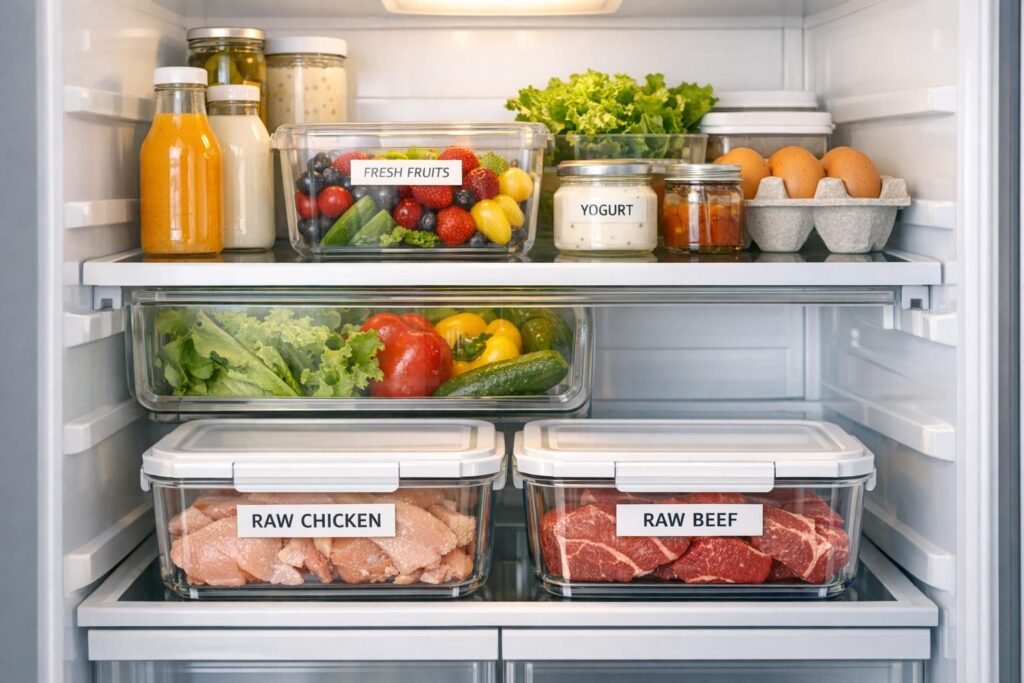
Cross-contamination in your fridge can lead to serious foodborne illnesses. Preventing it is simple if you follow these key steps:
- Organize food by cooking temperature: Store raw poultry on the bottom shelf, ground meat above it, and ready-to-eat foods at the top.
- Use leak-proof containers: Raw meat, poultry, and seafood should always be sealed to avoid drips.
- Separate raw and cooked foods: Keep raw items away from leftovers and ready-to-eat items.
- Wrap all foods securely: Proper wrapping prevents contamination and keeps food fresh.
- Maintain a fridge temperature of 40°F or below: Use a thermometer to ensure safe storage conditions.
- Clean your fridge regularly: Wipe spills immediately and sanitize surfaces to kill bacteria.
- Label and rotate items: Use the "First In, First Out" system to reduce spoilage.
- Designate storage zones: Assign specific areas for raw meat, dairy, produce, and ready-to-eat foods.
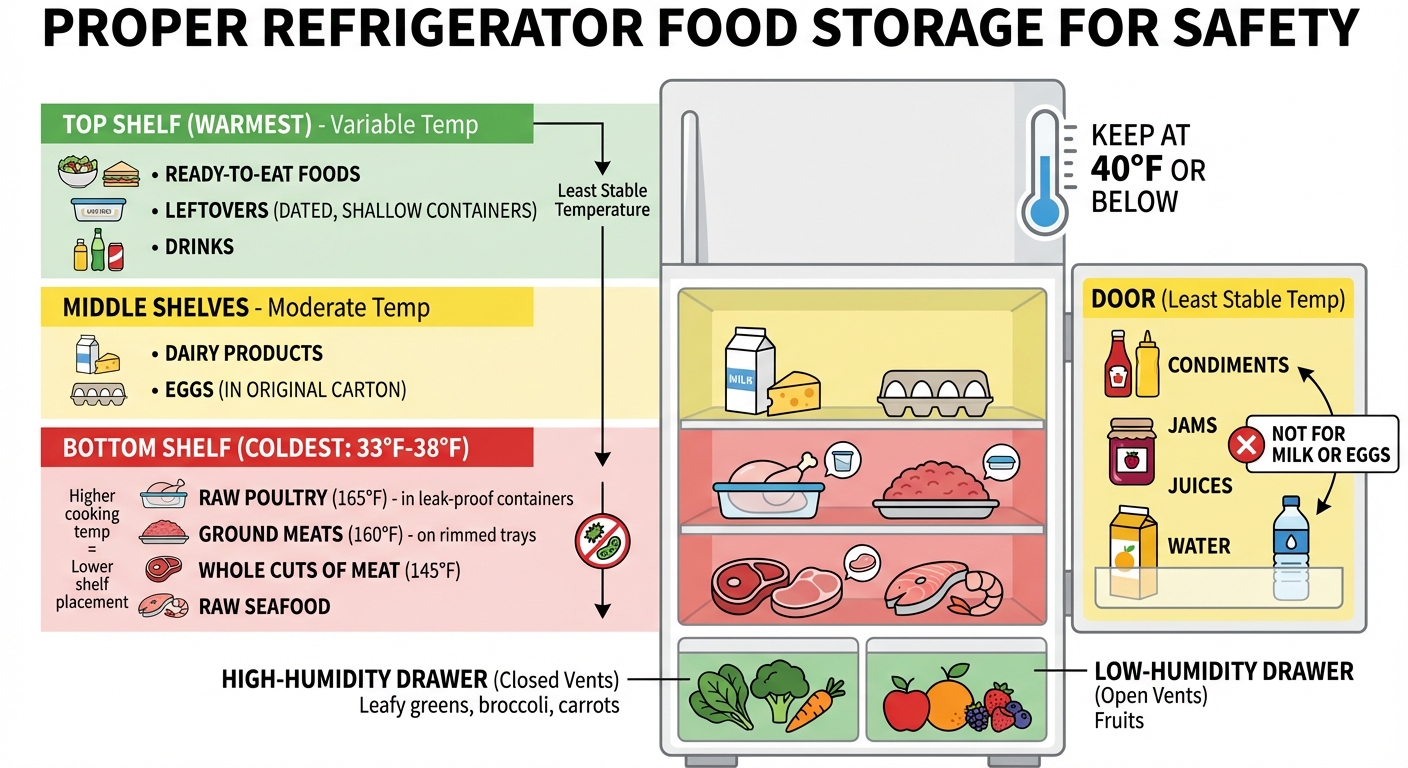
Proper Refrigerator Food Storage Organization by Temperature Zones
How To Prevent Fridge Cross-Contamination?
1. Organize by Cooking Temperature (Bottom-to-Top Placement)
A smart way to keep your refrigerator organized – and safe – is by arranging food based on their cooking temperatures. This method helps reduce the risk of cross-contamination by placing items requiring higher cooking temperatures on lower shelves.
Here’s how it works: raw poultry, which needs to be cooked to 165°F, belongs on the bottom shelf. Just above that, store ground meats (160°F). Whole cuts of meat, like steaks or roasts (145°F), can go on higher shelves. Finally, ready-to-eat foods like leftovers, deli meats, and fresh produce should sit at the top of your fridge .
This system follows a key food safety principle:
"The more likely it is that a food could make you sick, and the higher the final temperature you intend to cook it to, the lower in the refrigerator it should be stored, both to keep it cooler and to prevent cross-contamination." – J. Kenji López-Alt, Culinary Consultant
The bottom shelf, often the coldest area in the fridge (typically between 33°F and 38°F), is perfect for raw proteins. To keep things tidy and safe, place these items on a rimmed plate or tray to catch any leaks. If you’re thawing meat, do it here in a container to capture any liquids. This way, you protect other foods from contamination while keeping your fridge cleaner overall.
2. Store Raw Meat, Poultry, and Seafood in Leak-Proof Containers
Storing raw foods securely is just as important as placing them on the correct refrigerator shelf. Without proper containment, raw meat juices – often carrying harmful bacteria like Salmonella and E. coli – can drip and contaminate other foods.
To minimize this risk, always transfer raw meat, poultry, and seafood into sealed, leak-proof containers. Don’t rely on the original grocery packaging – it’s rarely secure enough. Instead, opt for heavy-duty, sealable plastic bags or airtight containers. For added protection, place the container on a rimmed plate to catch any potential leaks.
"To prevent juices from raw meat, poultry, or seafood from dripping onto other foods in the refrigerator, place these raw foods in sealed containers or sealable plastic bags." – FDA
Storage time is key. Keep raw poultry, ground meat, and seafood in the fridge for no more than 1–2 days. Steaks and roasts can last a bit longer, up to 3–5 days. To stay organized, label containers with the storage date. If you need to store these items for a longer period, vacuum-sealed bags are a great option to extend their shelf life.
"Proper food storage will reduce your risk of food poisoning and help stretch your food dollar since your food won’t spoil as quickly." – Barbara Gordon, RDN, LD
Taking a little extra time to store raw proteins properly not only reduces the risk of foodborne illness but also helps keep your refrigerator cleaner and more organized.
3. Keep Raw and Cooked Foods Physically Separated
Even with leak-proof containers, it’s crucial to keep raw and cooked foods apart to prevent cross-contamination. Raw animal products can carry harmful pathogens that might spread to ready-to-eat items, which typically aren’t reheated to kill bacteria. Think about leftovers like pizza, fresh salads, or deli meats – these foods don’t go through a reheating process to eliminate potential microbes. Separating raw and cooked foods works hand-in-hand with proper shelf organization to minimize risks.
Why is this so important? Cross-contamination is a leading cause of foodborne illness.
"Cross-contamination is the physical movement or transfer of harmful bacteria from one person, object or place to another."
To stay safe, always store ready-to-eat foods on the upper shelves and raw meats on the bottom, where they can’t drip onto other items. Place fresh produce in the crisper drawers, and keep eggs in their original carton in the main compartment – not in the door. These small steps can make a big difference in keeping your food safe.
4. Cover All Foods with Proper Wrapping
After separating raw and cooked foods, the next step is to wrap everything securely. Proper wrapping helps block odors, moisture, and bacteria, keeping your food fresh and safe.
Leaving food uncovered in your fridge isn’t just a bad habit – it’s an open invitation for contamination and spoilage. Exposure to air speeds up the deterioration process, allows items to absorb unwanted odors, and creates a breeding ground for harmful bacteria. To avoid this, every item in your fridge should be protected – whether with an airtight lid, plastic wrap, foil, or a sealed container.
The type of wrapping you use depends on what you’re storing. For raw items, use sealed, leak-proof containers to prevent juices from spilling. If possible, place them on a rimmed plate for added security. Leftovers? Transfer them to shallow, airtight containers – this not only promotes faster cooling but also reduces air exposure.
"Air is the enemy of most foods and can increase their rate of spoilage." – J. Kenji López-Alt, Culinary Consultant
Different foods have specific needs when it comes to wrapping. Vegetables, for example, do well in breathable plastic bags or with slightly open tops to balance humidity without trapping excess moisture. Fresh herbs can stay crisp if you wash them, roll them in damp paper towels, and seal them in zipper-lock bags. Cheese requires a bit more care – wrap it in parchment paper first, then place it in a sealed bag. This method prevents it from drying out while still allowing it to breathe.
Beyond keeping food fresh, proper wrapping is a powerful way to reduce the risk of foodborne illnesses. In the U.S. alone, foodborne illnesses affect about 48 million people each year. Securing containers tightly not only locks in freshness but also prevents moisture loss, odor transfer, and the spread of bacteria.
5. Maintain Refrigerator Temperature at 40°F or Below
Once your food is properly secured and wrapped, the next critical step is keeping your refrigerator at the right temperature. Setting your fridge to 40°F or below significantly slows bacterial growth, helping to keep your food safe. Even if your fridge is perfectly organized, an incorrect temperature can allow bacteria to thrive.
This temperature keeps your food out of the "Danger Zone" – a range between 40°F and 140°F where bacteria multiply the fastest. According to the FDA, "Chilling stored foods to proper temperatures is one of the best ways to slow the growth of dangerous bacteria". While refrigeration won’t kill bacteria, it dramatically reduces their ability to reproduce, giving you more time to safely consume your food.
Here’s the catch: most refrigerator dials don’t display the actual temperature. Without a standalone appliance thermometer, you’re essentially guessing. To ensure accuracy, place a thermometer in the warmest spot in your fridge – usually near the door or top shelf. Aim for a range of 35°F to 38°F to ensure your fridge stays below 40°F, even during door openings or defrost cycles. This simple step is a vital part of an overall food safety plan.
Temperature control becomes even more crucial when you factor in the risks of cross-contamination. For example, if raw meat juices drip onto ready-to-eat foods and your fridge is too warm, bacteria can multiply to dangerous levels in just a few hours. Shockingly, a University of Tennessee study found that only 9% of consumers use a refrigerator thermometer – a small tool that could prevent serious foodborne illnesses.
Another key to maintaining proper temperature is ensuring good air circulation. Overpacking your fridge can block airflow, making it harder to maintain consistent cooling. Keep your fridge about 75% full to allow cold air to circulate freely. When storing hot leftovers, divide them into shallow containers to help them cool quickly without raising the fridge’s internal temperature. These small adjustments can make a big difference in keeping your food fresh and safe.
sbb-itb-663e316
6. Clean Storage Areas Regularly with Hot, Soapy Water
Keeping your fridge clean is just as important as maintaining the right temperature. A dirty fridge can become a breeding ground for harmful bacteria. Using hot, soapy water is a simple but effective way to prevent cross-contamination. Some bacteria, like Listeria monocytogenes, can survive and even thrive in the cold temperatures of your refrigerator.
The FDA strongly advises regular cleaning: "Clean the refrigerator regularly and wipe spills immediately. This helps reduce the growth of Listeria bacteria and prevents drips from thawing meat that can allow bacteria from one food to spread to another". Addressing spills right away minimizes the risk of bacteria spreading.
For a thorough clean, remove shelves and drawers and wash them with hot, soapy water. Take care with glass shelves – let them warm to room temperature before washing to prevent cracking. Once washed, rinse all surfaces to remove soap residue. For those tricky spots like drawer tracks and corners, use a clean toothbrush dipped in soapy water to scrub away crumbs and sticky residue. These small steps go a long way in reducing the chances of cross-contamination.
If there’s a food recall, cleaning becomes even more critical. The CDC warns: "If you have a recalled food item in your refrigerator, it’s important to throw out the food and clean your refrigerator. Germs in the recalled food could spread to drawers or shelves". After cleaning, follow up with a sanitizing solution – mix 1 tablespoon of liquid bleach with 1 gallon of water. Don’t overlook the rubber door gasket; wipe it down with warm, soapy water to remove dirt and mildew, ensuring the seal remains airtight.
7. Use the First In, First Out (FIFO) System with Date Labels
The First In, First Out (FIFO) system is a simple yet effective way to cut down on food spoilage and contamination. By using older items first, you ensure food doesn’t sit around long enough to go bad. While refrigeration slows bacterial growth, it doesn’t stop it entirely – certain bacteria, like Listeria monocytogenes, can still thrive in cold environments. Sticking to FIFO helps you use food before harmful bacteria can reach unsafe levels.
To get started, label and organize your items properly. Use clear date labels on every container, noting the storage date and a brief description of the contents. Masking tape and a permanent marker are handy tools for this task. When unpacking groceries, place older items at the front of the fridge and newer ones toward the back. Culinary expert J. Kenji López-Alt emphasizes the importance of this practice:
"As much as I promote good science, there are some things that simply aren’t worth experimenting with; creating life inside your refrigerator is one of them".
Keep track of how long different foods last. For example, ground meats and poultry are good for 1–2 days, leftovers for 3–4 days, and fresh eggs for 3–5 weeks. Make it a habit to check your fridge weekly, tossing anything that’s past its prime.
Following FIFO also prevents issues like packaging leaks that could contaminate other foods. Older produce, if left unchecked, can develop mold that releases spores, potentially spoiling nearby fresh fruits and vegetables. By routinely rotating your fridge’s contents, you can reduce these risks and maintain a safer, more organized kitchen.
8. Designate Specific Storage Zones for Different Food Types
Organizing your fridge with designated zones is a smart way to minimize cross-contamination and keep your food fresher for longer. Start by matching food types to the temperature zones in your refrigerator. Top shelves are perfect for ready-to-eat items like leftovers or drinks. Middle shelves work best for dairy products, and it’s a good idea to keep eggs in their original carton for added stability. The bottom shelf, which is typically the coldest area, should house raw meat, poultry, and seafood. Culinary expert J. Kenji López-Alt explains:
"The more likely it is that a food could make you sick, and the higher the final temperature you intend to cook it to, the lower in the refrigerator it should be stored".
Pay special attention to your crisper drawers, as they are designed for specific produce needs. Use the high-humidity drawer (with closed vents) for leafy greens and moisture-loving vegetables like broccoli and carrots. Meanwhile, fruits should go in the low-humidity drawer to keep ethylene gas from spoiling other produce.
When it comes to the fridge door, remember it’s the least stable area in terms of temperature. Reserve this space for condiments, jams, juices, and water – items that can handle slight temperature fluctuations. Milk and eggs, however, belong in the main compartment to maintain consistent cooling. As Barbara Gordon, RDN, LD, advises:
"Proper food storage will reduce your risk of food poisoning and help stretch your food dollar since your food won’t spoil as quickly".
For extra protection, always place raw proteins on a tray or in a leak-proof container on the bottom shelf. This simple step helps catch any drips and keeps contamination from spreading to other foods.
Comparison Table
The table below highlights the differences between improper and proper fridge storage practices to help prevent cross-contamination.
| Food Item | Improper Placement | Proper Placement | Risk of Improper Storage |
|---|---|---|---|
| Raw Chicken | Top or middle shelf without container | Bottom shelf in a leak-proof container or on a rimmed tray | Juices can drip onto ready-to-eat foods, spreading Salmonella or E. coli |
| Milk & Eggs | Refrigerator door bins | Middle or bottom shelf in the main compartment | Temperature fluctuations can lead to rapid bacterial growth and faster spoilage |
| Leftovers | Stored behind raw meat | Top shelf in shallow, dated containers at the front | Risk of cross-contamination from raw meat drips, uneven cooling, and forgotten food |
| Fresh Produce | Open shelves near raw meat | Separate crisper drawers (high humidity for greens, low for fruits) | Contamination from unwashed meat packaging or drips; premature spoilage from ethylene gas |
| Ready-to-Eat Foods | Bottom shelf below raw proteins | Top shelf, away from raw items | Exposure to pathogens from raw meat stored above |
Correct fridge storage is crucial for maintaining food safety. Improper storage can lead to serious contamination risks. For example, a Salmonella outbreak in January 2022 was linked to inadequate cleaning, resulting in widespread illness.
Conclusion
To prevent cross-contamination in your kitchen, combining a few practical strategies goes a long way. Start with physical barriers like using leak-proof containers and proper wrapping to keep raw juices contained. Organize your fridge by cooking temperatures – store raw meats on the bottom shelves to ensure any accidental drips don’t reach ready-to-eat items. Keeping your refrigerator at or below 40°F slows bacterial growth, and regular cleaning helps eliminate potential contaminants. This method not only reduces the risk of foodborne illnesses but also keeps your kitchen running smoothly.
Every year, foodborne illnesses impact millions of people. The USDA emphasizes:
"You can’t see, smell, or taste harmful bacteria that may cause illness, so it’s important to follow a few key steps in food handling, cooking, and storage to prevent foodborne illness".
An organized refrigerator does more than protect your health – it cuts down on food waste, makes ingredients easier to find, and helps maintain food quality. By applying principles like FIFO (First In, First Out) and setting up designated storage zones, you can prevent cross-contamination while improving efficiency.
Start small: add a thermometer to your fridge, move raw meat to the bottom shelf, and build from there. A little weekly maintenance can make a big difference in keeping your kitchen safe and functional.
For more practical tips on kitchen organization and food safety, check out Comfy Kitchen.
FAQs
What’s the best way to organize my fridge to avoid cross-contamination?
To minimize the risk of cross-contamination in your fridge, always store raw meat, poultry, and seafood on the bottom shelf in sealed containers. This helps catch any drips and keeps other foods safe. Keep ready-to-eat and cooked foods on the upper shelves, away from raw items to prevent accidental contact. For fruits and vegetables, place them in their designated crisper drawers to maintain freshness and keep them separate from other foods. The door shelves are best suited for condiments and items that aren’t as sensitive to temperature changes, as the door is typically the warmest area of the fridge. Lastly, set your fridge to 40°F or below and clean it regularly to ensure a safe and sanitary food storage environment.
What are the best containers for safely storing raw meat in the fridge?
When it comes to avoiding cross-contamination, storing raw meat correctly is key. Use clean, leak-proof containers like airtight plastic boxes with secure lids or tightly wrapped packages. These help contain any juices and prevent them from spilling onto other foods. Always place raw meat on the bottom shelf of your refrigerator. This simple step reduces the risk of drips contaminating other items. Not only does this keep your fridge tidy, but it also plays a crucial role in maintaining food safety for your family.
Why should I keep my fridge at 40°F or below?
Keeping your fridge at 40°F or lower is key to ensuring food safety. At this temperature, you can avoid the "danger zone" (40°F–140°F), where bacteria multiply quickly, leading to foodborne illnesses and spoilage.
A well-chilled fridge not only protects your health but also keeps your ingredients fresher for longer, so your meals stay tasty and safe. To stay on top of this, use a dependable thermometer to monitor your fridge’s temperature regularly.