
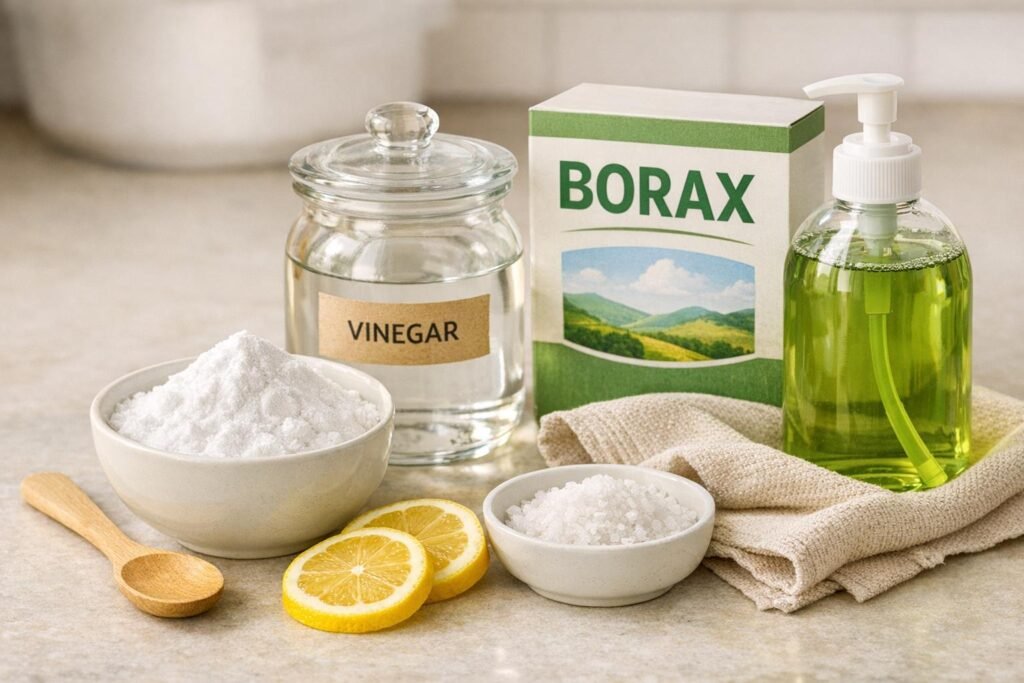
When your sink clogs, you don’t need harsh chemicals. Common household items like baking soda, vinegar, and salt can clear drains safely and cheaply. These natural solutions are gentle on pipes, safer for your home, and effective at breaking down grease, soap scum, and debris. Here are five methods to try:
- Baking Soda & Vinegar: A bubbling reaction clears blockages. Cost: $1–$15.
- Baking Soda & Salt: Abrasion and chemical action tackle buildup. Leave overnight for tough clogs.
- Salt, Borax & Vinegar: Dissolves residue and scrubs pipes. Great for stubborn clogs.
- Dish Soap & Hot Water: Melts grease and loosens debris. Ideal for kitchen sinks.
- Baking Soda, Salt & Cream of Tartar: Cleans and deodorizes, especially in bathrooms.
For best results, use these methods monthly and flush drains weekly with hot water. Avoid mixing with chemical cleaners to prevent harmful reactions. These simple, inexpensive fixes can help keep your plumbing in good shape.
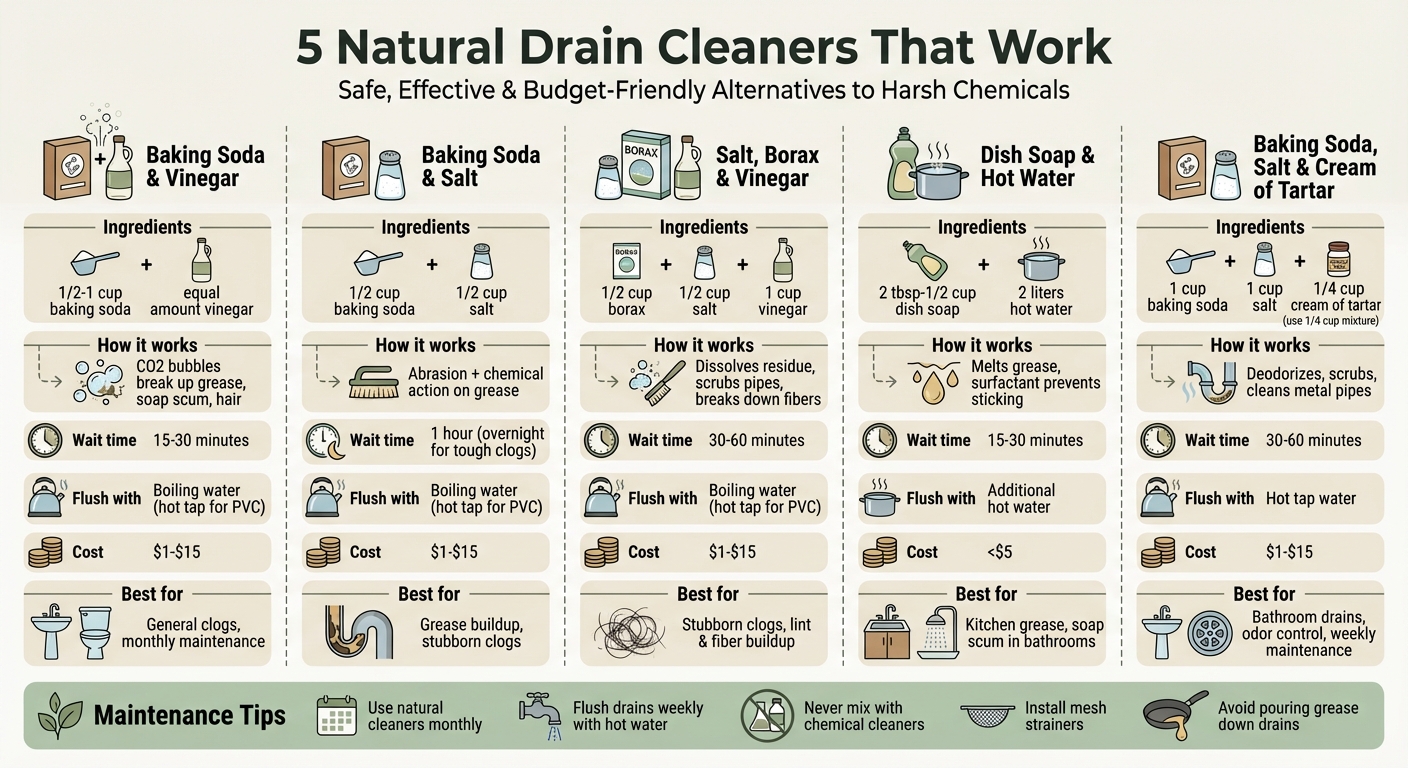
5 Natural Drain Cleaner Methods Comparison Chart
DIY Bathroom Sink Drain Cleanout and Deodorizer Recipe
1. Baking Soda and Vinegar
When baking soda meets vinegar, the reaction creates carbon dioxide bubbles that help break up grease, soap scum, hair, and other debris clogging your pipes. This bubbling action makes it a reliable and eco-friendly way to tackle drain blockages.
Here’s how to use it: First, remove any standing water to ensure the mixture can reach the clog. Pour 1/2 to 1 cup of baking soda directly into the drain, followed by an equal amount of distilled white vinegar. The two ingredients will foam up immediately. Cover the drain quickly with a stopper or a rag to direct the fizz down toward the blockage. Let the mixture sit for 15 to 30 minutes, then flush it out with a pot of boiling water.
If your pipes are made of PVC, stick to hot tap water instead of boiling water to avoid damaging the joints. Also, avoid this method if you’ve recently used a chemical drain cleaner – mixing the two can cause hazardous reactions. This simple solution, costing between $1 and $15, is not only budget-friendly but also effective for monthly maintenance to keep your drains clear.
2. Baking Soda and Salt
This method doesn’t rely on fizzing reactions like baking soda and vinegar. Instead, it tackles grease and buildup with a combination of abrasion and chemical action. Baking soda works to dissolve fatty deposits, while salt adds a coarse texture to physically scrape away debris. As Vineta Jackson, Founder of The Handyman’s Daughter, explains:
"The coarse grit of the salt will gently scrape the inside of your pipes and loosen up trapped debris".
To get started, make sure there’s no standing water in the sink or drain. This ensures the dry mixture can directly reach the clog. Combine 1/2 cup of baking soda with 1/2 cup of salt in a bowl, then pour the mixture straight into the drain. For more stubborn clogs, you can increase the ratio to 1 cup of baking soda and 1/2 cup of salt.
Let the mixture sit for at least an hour so it can break down grease and grime. For tougher blockages, leaving it overnight works even better. Once the waiting period is over, flush the drain with boiling water to clear out the loosened debris. If your pipes are made of PVC, use hot tap water instead of boiling water to avoid damaging the joints.
This straightforward method is not only effective but also easy on the wallet. It costs around $1–$15 for materials, a fraction of the $200+ you’d spend on professional plumbing services.
3. Salt, Borax, and Vinegar
When stubborn clogs refuse to budge, this powerful combination of borax, salt, and vinegar can be a game-changer. Each ingredient plays a unique role: borax, often used as a laundry booster, helps dissolve tough residue; salt scrubs away debris clinging to pipe walls; and vinegar’s acidity breaks down clogs into smaller, more manageable pieces – perfect for tackling lint and fiber buildup.
Start by clearing out any visible hair or debris from the drain. From here, you have two ways to apply the mixture, depending on what works best for you:
- Option 1: Mix ½ cup borax, ½ cup salt, and 1 cup white vinegar into a paste, then pour it directly down the drain.
- Option 2: Layer the ingredients – first pour ¼ cup salt, then ¼ cup borax, followed by ½ cup vinegar. Cover the drain with a stopper or rag to keep the mixture concentrated.
Let the mixture sit for 30 to 60 minutes. Afterward, flush the drain with a pot of boiling water to rinse away the loosened debris. If you have PVC pipes, stick to very hot tap water instead, as boiling water can damage the pipe joints.
Safety Note: Borax is generally safe when used properly, but it’s important to keep it away from children and pets. Amanda August, CEO of Grasshopper Heating, Cooling & Plumbing, offers this advice:
"Borax is generally considered non-toxic if not ingested. Keep it away from children and animals to prevent any complications".
Lastly, never use this method if you’ve recently poured a commercial chemical cleaner down the drain. Mixing these substances can release harmful fumes.
sbb-itb-663e316
4. Dish Soap and Hot Water
Dish soap combined with hot water can effectively tackle clogged drains caused by grease, fats, oils, and soap scum. The heat from the water melts the grease, while the dish soap acts as a surfactant, breaking down the grease and preventing it from sticking to the pipe walls. This method works well for kitchen drains and is equally useful for bathroom drains, where soap scum often binds with hair to create blockages.
To use this method, start by removing any standing water from the sink or tub. Next, pour 2 tablespoons to ½ cup of dish soap directly down the drain. Follow this with about 2 liters (roughly 3 quarts) of hot water. Allow the mixture to sit for 15–30 minutes, then flush the drain with additional hot water to clear away the loosened debris. The temperature of the water is crucial – hot water works best, but avoid boiling water if your pipes are PVC, PEX, or CPVC, as these materials can be damaged by water at 212°F. As Alicia Sokolowski explains:
"The hot water will help dissolve and wash away the soap residue and loosen any grease or debris in the drain".
If you’re unsure, opt for very hot tap water instead of boiling water to protect your pipes.
For ongoing maintenance, make it a habit to pour hot water down the drain weekly. This simple step helps prevent grease buildup and keeps your drains running smoothly. Melissa Poepping recommends:
"Weekly, it’s a good idea to pour a bit of hot water down the drain. It’s a simple step that can easily become a nightly routine for best practice".
This preventative measure only takes a minute but can save you from dealing with stubborn clogs later on.
5. Baking Soda, Salt, and Cream of Tartar
When it comes to maintaining clear and fresh-smelling drains, this trio packs a punch. Baking soda tackles odors, salt provides a gentle scrubbing action, and cream of tartar helps clean and preserve metal pipes. Interestingly, cream of tartar – commonly found in your kitchen for cooking – is also a safe, non-toxic cleaning agent that keeps metal plumbing components shiny and free of debris.
"While cream of tartar is typically used for cooking, it is also a powerful, non-toxic cleaning agent. When combined with baking soda and salt, it is a great way to keep your drain free of debris."
This combination is especially effective for bathroom drains, which often deal with hair and soap scum buildup. It can even handle tough clogs. Here’s how you can make and use this mixture to keep your drains in top condition:
- Mix 1 cup of baking soda, 1 cup of table salt, and 1/4 cup of cream of tartar in a sealed jar. Shake until the mixture is well-blended.
- Pour 1/4 cup of the mixture down the drain, followed by 1 cup of boiling water (use very hot tap water if your pipes are non-metal).
- Let it sit for 30–60 minutes, then flush with hot tap water.
For best results, use this method weekly to prevent odors and blockages. Long-time users swear by its effectiveness. Hester Jacobs shares her experience:
"I have been using this for over 20 years and it works great and is environmentally safe!"
Conclusion
Keeping your drains clear doesn’t have to mean relying on harsh chemicals. The natural cleaners we’ve discussed – like baking soda and vinegar, salt and borax, dish soap with hot water, and even a mix of baking soda, salt, and cream of tartar – are made from everyday items you probably already have in your pantry. These simple solutions can tackle grease, soap scum, and organic buildup while being gentle on your plumbing and safer for your family and the environment.
Unlike chemical-based cleaners, these natural alternatives don’t release toxic fumes or damage your pipes. They’re a safer option for households and won’t pollute groundwater or harm aquatic ecosystems. Plus, they help extend the life of your plumbing, whether it’s made from PVC, cast iron, or galvanized steel.
To keep drains flowing freely, regular upkeep is essential. Use a natural cleaner once a month and flush your drains weekly with hot water to prevent clogs. Installing mesh strainers in your sinks can also catch hair and food particles, and always avoid pouring cooking grease down the drain – collect it and dispose of it properly.
For more tips on keeping your kitchen in top shape, check out Comfy Kitchen’s advice on everything from garbage disposal care to DIY appliance cleaning. With these easy habits, you can maintain a clean, efficient kitchen without relying on costly or hazardous chemical products.
FAQs
How often should I use natural drain cleaners to keep my drains clear?
For routine upkeep, flush your drains with hot water weekly to help avoid buildup. Once a month, take it a step further by using a mix of baking soda and vinegar for a more thorough clean. This straightforward habit can keep your drains smelling fresh and minimize the chances of clogs in the long run.
Are natural drain cleaners safe for PVC pipes?
Yes, natural drain cleaners such as baking soda, vinegar, and salt are safe to use with PVC pipes. These common household ingredients can effectively clear clogs without relying on harsh chemicals that might harm your plumbing over time.
Opting for these natural remedies not only helps protect your pipes but also offers an environmentally friendly approach to drain maintenance. Just make sure to rinse the drain thoroughly with warm water afterward to remove any leftover residue.
Can I use a natural drain cleaner after using a chemical one?
It’s best to avoid using a natural drain cleaner right after a chemical one. Combining different substances can lead to dangerous reactions or make both cleaners less effective. To play it safe, flush the drain thoroughly with plenty of water before switching to a natural option. This step helps wash away any leftover residue from the chemical cleaner.