
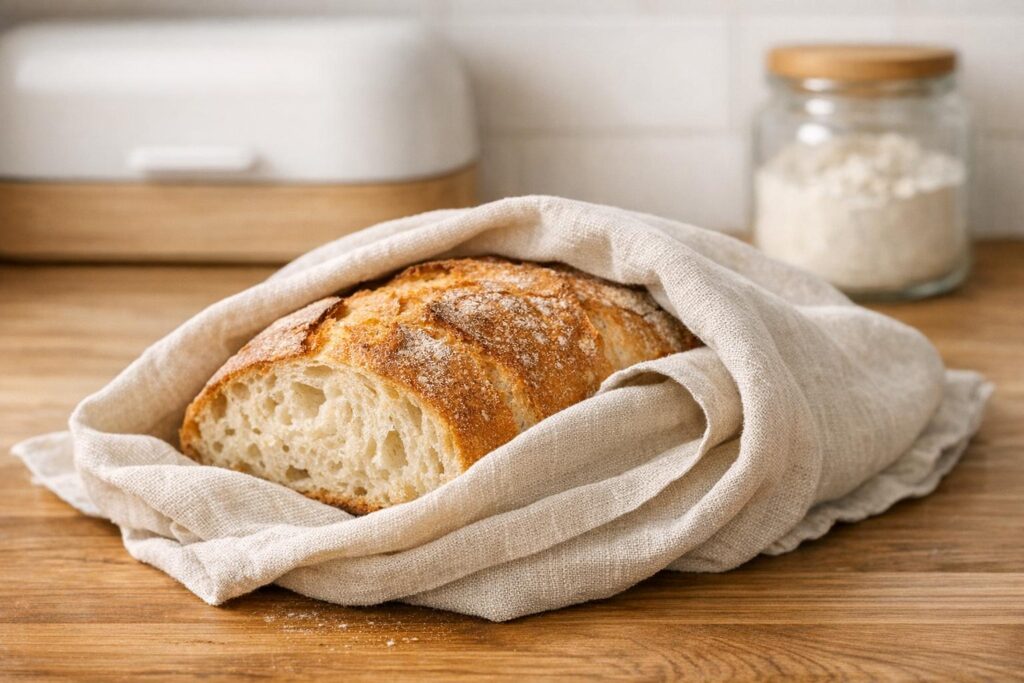
Bread loses its softness due to starch changes and can mold in humid conditions. To keep it in good shape, follow these tips:
- Room Temperature Storage: Store bread at 60–80°F in a cool, dark place for 1–3 days.
- Proper Wrapping: Use plastic, foil, or beeswax wraps to retain moisture. For crusty bread, leave it unwrapped for up to a day.
- Avoid Refrigeration: Refrigeration speeds up staling for most bread types.
- Freezing: Freeze pre-sliced bread in airtight bags for up to 3 months.
- Use a Bread Box: It balances airflow and prevents mold.
- Control Moisture: Keep humidity below 50% and avoid warm, damp spots.
- Revive Stale Bread: Mist with water and reheat in the oven or microwave.
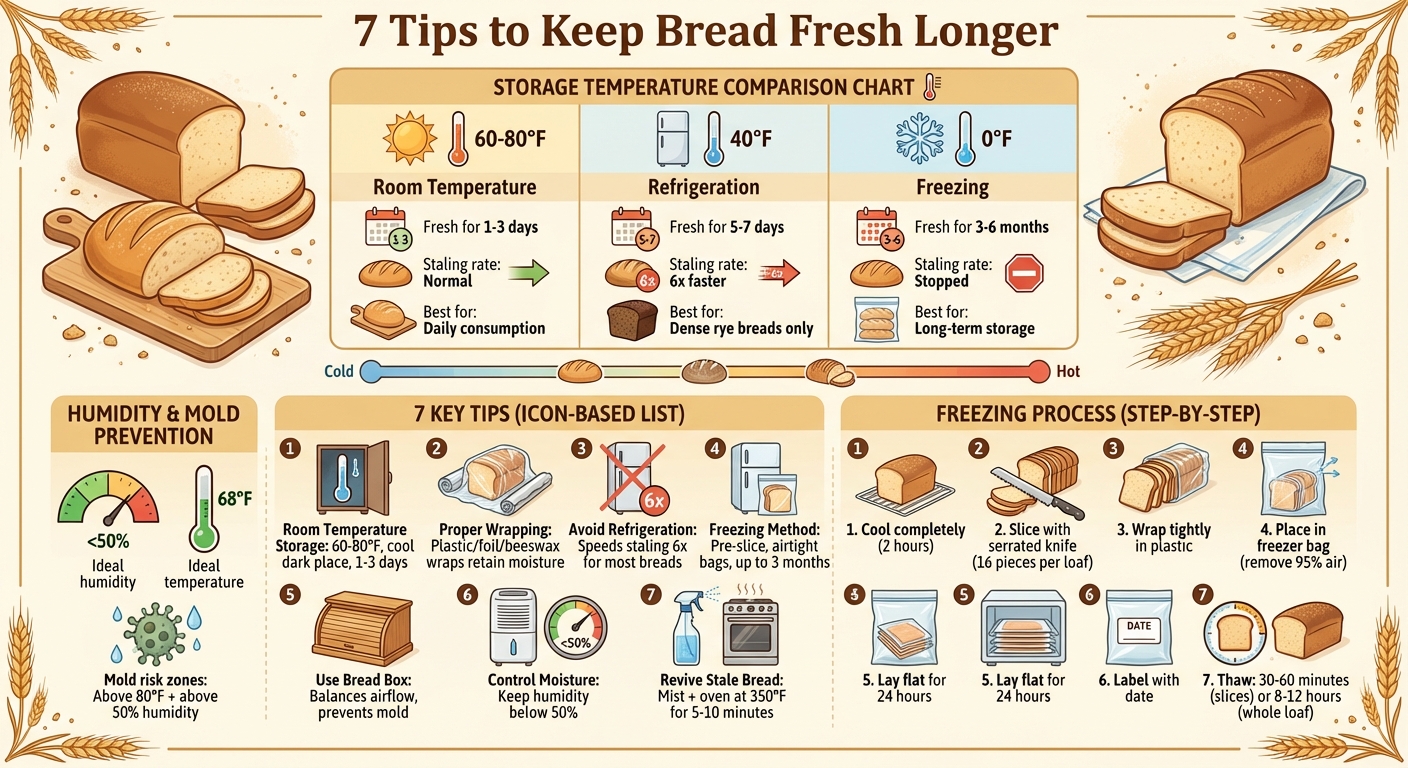
Bread Storage Methods Comparison: Room Temperature vs Refrigeration vs Freezing
The BEST Method(s) that keep Bread Fresh for longer – 224
1. Store Bread at Room Temperature
Keeping bread at room temperature is the best way to maintain its soft texture and overall quality. Ideally, the temperature should stay between 60°F and 80°F (about 16°C to 27°C). If it gets colder than 60°F, the bread’s starches start to crystallize faster, leading to staling. On the other hand, temperatures above 80°F, especially in humid conditions, can encourage mold growth. For the first 24 to 48 hours after baking, white, semi-white, and black breads stay at their best when stored around 68°F (20°C).
To keep your bread fresh and flavorful, store it in a dark, cool place, such as a bread box, cupboard, drawer, or even an unused appliance. These spots protect the bread from sunlight and heat. It’s also important to maintain a relative humidity level below 50% to reduce the risk of mold.
Under these conditions, bread typically stays fresh for 1 to 3 days.
2. Wrap Bread Properly for Short-Term Storage
To keep bread fresh for 1–3 days, wrap it tightly in plastic or foil to retain moisture. This method can help sliced bread stay fresh for up to a week.
If you’re storing a whole loaf, make sure it’s completely cool before wrapping it snugly without leaving any air pockets. For sliced bread, press the cut sides together before wrapping. For added protection, double-wrap the loaf by placing it in a plastic bag after the initial wrap. Prefer a more eco-friendly option? Reusable beeswax wraps are a great choice. They allow the bread to breathe, avoiding over-softening while still preventing moisture loss.
Keep in mind that plastic and foil can soften the crust of breads like baguettes or sourdough. For these types, store them unwrapped with the cut side facing down on the counter. This keeps them fresh for up to a day.
For longer freshness, place the wrapped bread in a sealed container along with a few grains of uncooked rice. The rice helps absorb excess moisture, reducing the chance of mold for up to five days.
Up next, learn why refrigerating bread might not be the best idea when it comes to maintaining its quality.
3. Keep Most Breads Out of the Refrigerator
Storing bread in the fridge might seem like a good way to keep it fresh longer, but it actually has the opposite effect for most types of bread. The cold temperature in a refrigerator (around 40°F) speeds up a process called starch retrogradation. This is when the cooked starch molecules in bread start to recrystallize and release moisture, which makes the bread dry and tough. Compared to room temperature (typically 68°F to 72°F), bread stales up to six times faster in the fridge – even though refrigeration does slow down mold growth.
That said, not all breads react the same way to cold storage. Dense rye breads, like pumpernickel, are an exception. These breads contain more pentosans and moisture, which help them resist staling in the fridge. Similarly, some artisan breads with higher fat or sugar content are less affected by refrigeration because they contain less starch.
For most yeast-based breads – whether it’s white, whole wheat, or crusty loaves – room temperature is the sweet spot for storage, ideally between 60°F and 80°F. If you’ve already refrigerated your bread and it’s gone stale, you can revive it temporarily by toasting or reheating it. This process breaks down the starch crystals, though the bread will harden again once it cools.
For longer storage, freezing is a much better option to prevent staling. We’ll dive into that method in the next section.
4. Freeze Bread for Long-Term Storage
Freezing bread is a great way to keep it fresh for longer. Unlike refrigeration, which can actually make bread stale faster, freezing stops the staling process by locking water molecules in place. This prevents the moisture loss and recrystallization that causes bread to dry out and harden. According to the USDA, most bread types, like white or sourdough, stay fresh in the freezer for up to 3 months, while denser options like rye or bagels can last up to 6 months.
For the best results, slice your bread before freezing. Pre-slicing a standard loaf into 16 pieces allows you to take out only what you need – like a couple of slices for toast – without exposing the rest of the loaf to air or temperature fluctuations. Research published in the Journal of Food Science found that sliced bread thaws about 50% faster than whole loaves. Slices typically take just 30 to 60 minutes at room temperature, while whole loaves can take several hours.
Proper packaging is essential to avoid freezer burn, which happens when air reaches the bread and causes moisture loss and ice crystals. Heavy-duty freezer bags, such as Ziploc Freezer Bags with double zippers, are highly effective at removing air – up to 95% more than regular bags, according to the manufacturer. Avoid using wax paper alone, as it doesn’t provide enough barrier against freezer moisture. Follow these steps to freeze your bread properly:
- Let the bread cool completely to room temperature (about 2 hours after baking or purchasing).
- Slice it with a serrated knife.
- Wrap each portion tightly in plastic wrap.
- Place the wrapped slices in a freezer bag, removing as much air as possible before sealing.
- Lay the bag flat in the freezer for the first 24 hours to prevent slices from sticking together, then store it upright.
- Label the bag with the date, and aim to use the bread within 3 months for the best quality.
When it’s time to thaw, you can leave slices on the counter for 30 to 60 minutes or toast them directly from frozen. For whole loaves, thaw them gradually by refrigerating overnight (8–12 hours), then letting them sit at room temperature for 1–2 hours. Studies from the University of Illinois suggest that toasting frozen or thawed bread can reverse up to 80% of the staling process, giving it a fresh, just-baked texture.
sbb-itb-663e316
5. Use a Bread Box or Proper Container
When it comes to keeping bread fresh, a bread box can be a game-changer. It provides just the right amount of airflow to prevent moisture buildup, which can lead to mold, while also protecting against premature drying. The small vents or loose-fitting lid allow excess humidity to escape, shielding your bread from drafts, direct sunlight, and sudden temperature changes that can speed up staling.
The ideal storage conditions for bread are around 68°F with relative humidity below 50%. Wooden or bamboo bread boxes are particularly effective because they naturally regulate moisture without completely trapping it.
For crusty loaves, store them cut-side down to maintain their texture, while soft sandwich bread benefits from being wrapped in plastic or foil before going into the box. Using this method, crusty artisan bread can stay fresh for 1–2 days, keeping the crust crispy and the interior moist.
If you live in a humid area where mold is a concern, try adding a small dish of uncooked rice to your bread box. Interestingly, tests have shown that bread stored in a glass container with rice stayed soft and mold-free for five days, whereas bread in plastic bags started to show mold early on.
Placement matters too. Keep your bread box in a cool, dark spot, away from heat sources like stoves or sunny windows. Avoid areas like the top of the refrigerator or near ovens, where higher temperatures and humidity can shorten your bread’s shelf life. A good container, combined with smart placement, can make a big difference in keeping your bread fresher for longer.
For more kitchen tips, check out Comfy Kitchen.
6. Control Moisture to Prevent Mold
Mold thrives in warm, damp conditions. In a typical U.S. kitchen where temperatures exceed 80°F and humidity levels hit over 50%, you’re practically inviting those green, fuzzy patches to settle on your bread. Mold spores need a moist surface to latch onto and grow, and bread provides the perfect canvas when exposed to these conditions.
To keep mold at bay, start by identifying areas in your kitchen that tend to trap moisture. For example, storing bread on top of the refrigerator, next to the dishwasher, near the sink or coffee maker, or putting it away while it’s still warm can expose it to humid air. This moisture often condenses on the bread, creating a prime environment for mold growth.
A simple trick to manage humidity is to use uncooked dry rice as a natural moisture absorber. Line a container with dry rice and place your bread on a plate or rack above it, ensuring the bread doesn’t directly touch the rice.
In very humid climates, consider food-safe silica gel or clay-based desiccant packs designed for pantry use. Place these in a corner of your bread box to absorb excess moisture, but make sure they’re labeled "do not eat" and kept out of reach of children and pets.
For best results, store your bread in a cool, dry cabinet away from heat sources. Avoid areas prone to steam buildup, like near stoves, windows, or appliances that emit moisture. Aim for a storage environment with relative humidity below 50% and temperatures between 60–70°F. Combined with proper wrapping and temperature control, these steps can help extend your bread’s freshness and keep mold at bay.
7. Revive Stale Bread
Brought home a loaf of bread that’s gone stale? Don’t toss it just yet – there’s a simple way to bring it back to life using water and heat. Stale bread happens when starch molecules in the bread crystallize, pushing out moisture. By reintroducing water and heat, you can reverse this process and restore its soft, fresh texture. Here’s how to do it based on the type of bread you have.
For whole loaves or crusty breads like baguettes or sourdough, start by preheating your oven to 350°F. Lightly mist the surface of the bread with water, then place it directly on the oven rack or on a baking sheet. Heat for 5-10 minutes, checking after 5 minutes. For denser loaves, you might need to extend the time to 10-12 minutes. The crust will crisp up beautifully, and the inside will regain its softness.
For sliced bread, lightly spray both sides with water and heat it in a toaster oven or a conventional oven at 325°F for 3-5 minutes. If you’re using a regular toaster, set it to medium heat and run it through one or two cycles. In just a few minutes, you’ll have slices with a crispy exterior and a soft interior.
If you’re in a hurry, the microwave method can work for small portions. Wrap a slice in a damp paper towel and microwave it on medium for 10-20 seconds. The steam will soften the bread, but keep an eye on it to avoid overdoing it. For an extra touch of crispness, toast or oven-finish the microwaved bread right after.
Once revived, eat the bread right away – starch recrystallization starts again as it cools. If you don’t plan to eat it immediately, consider turning it into croutons, breadcrumbs, or French toast to avoid wasting it.
Conclusion
Keeping your bread fresh doesn’t require fancy gadgets or complicated techniques – just a few simple habits. Wrapping bread tightly at room temperature helps retain moisture and protects it from drying out, keeping it soft for up to three days. For longer storage, freezing sliced portions in airtight packaging can preserve freshness for up to three months without compromising quality. However, avoid the refrigerator – it speeds up staling by encouraging starch crystals to form, which dries out the bread.
Humidity control is another key factor in maintaining freshness. Mold thrives in high humidity, so aim to keep your storage environment at or below 50% relative humidity. Bread boxes are a great option because they balance airflow while creating a stable microclimate. Together, the right temperature and low humidity help extend the life of your loaf.
By adopting these storage practices, you not only keep your bread tasting great but also reduce waste. Wrapping bread for short-term use, freezing what you can’t eat right away, and managing moisture save you trips to the store and money on replacements. Plus, more of your bread ends up on your plate instead of in the trash.
Whether it’s a crusty homemade sourdough or a soft store-bought sandwich loaf, the secret to making bread last lies in these straightforward steps. Protect it from air, store it at the right temperature, and control moisture levels. With these tips, you’ll enjoy fresher bread for longer while getting the most out of every loaf.
FAQs
Why does storing bread in the fridge make it go stale faster?
Storing bread in the fridge might seem like a good idea, but it actually speeds up the staling process. The cold environment causes the starches in the bread to recrystallize faster, which pulls moisture out and leaves the bread dry and less appealing.
To keep your bread fresh, store it at room temperature in a sealed container. If you need to store it for a longer period, freezing is a much better option.
What’s the best way to bring stale bread back to life?
If your bread has gone stale, don’t toss it just yet! You can bring it back to life by lightly sprinkling water on the crust and popping it into a preheated oven at 350°F for 5–10 minutes. For an extra boost, wrap the bread in aluminum foil before heating – this helps trap moisture and ensures a softer texture. Once warmed, your bread should feel soft and taste almost like it’s fresh out of the bakery.
How can I keep bread from getting moldy?
To keep your bread mold-free, store it in a cool, dry spot with proper airflow. Steer clear of humid areas or direct sunlight, as moisture can speed up mold growth. A bread box or a paper bag is a great choice – they provide the right balance of protection and air circulation. If you need to store bread for a longer time, freezing it in an airtight bag is a smart way to maintain freshness and avoid mold altogether.