
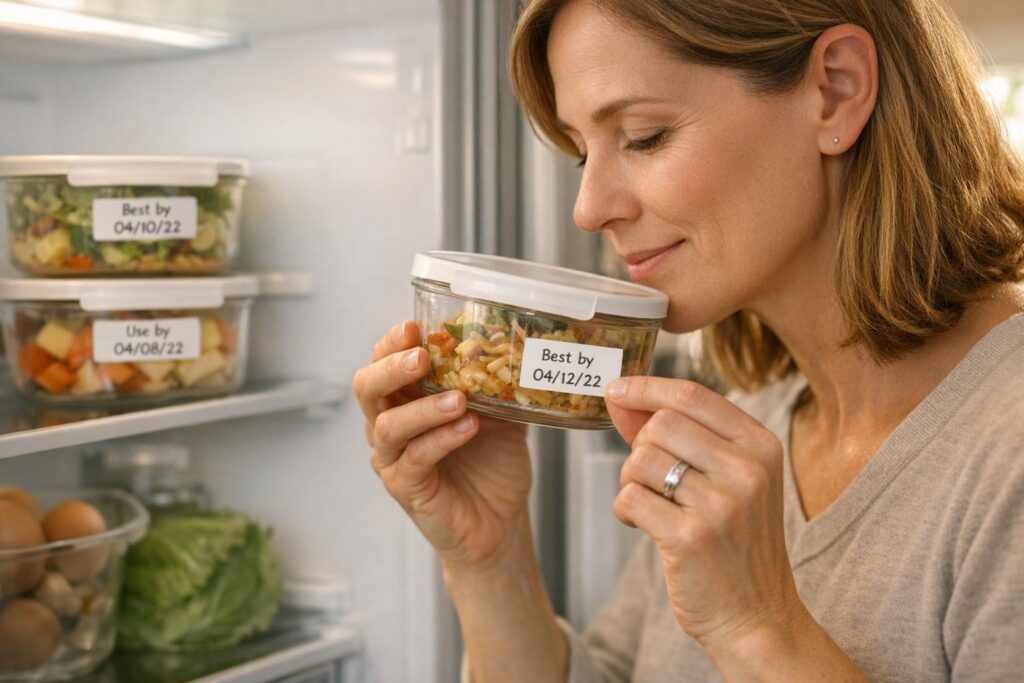
Think food expiration dates are all about safety? Think again. Most food labels like "Sell-By", "Best If Used By", and "Use-By" focus on quality, not safety. Misunderstanding these labels leads to 20% of food waste in the U.S., costing households up to $2,275 annually. Here’s what you need to know:
- "Sell-By": For stores, not consumers. Food is usually fine after this date if stored properly.
- "Best If Used By": Indicates peak flavor or quality, but food is still safe beyond this date.
- "Use-By": A quality marker, except for infant formula, where it ensures safety too.
- Expiration Dates: Primarily about quality, except for regulated items like formula.
Proper storage matters more than these dates. Keep your fridge at 40°F, freezer at 0°F, and don’t leave perishables out for over two hours. Trust your senses – look, smell, and feel for spoilage signs like odor, discoloration, or slimy textures.
Want to reduce waste? Plan meals, use older food first, and freeze items you can’t use in time. Labels guide quality, but smart storage and handling keep your food safe.
Food expiration dates don’t mean what you think – Carolyn Beans
sbb-itb-663e316
Types of Food Date Labels
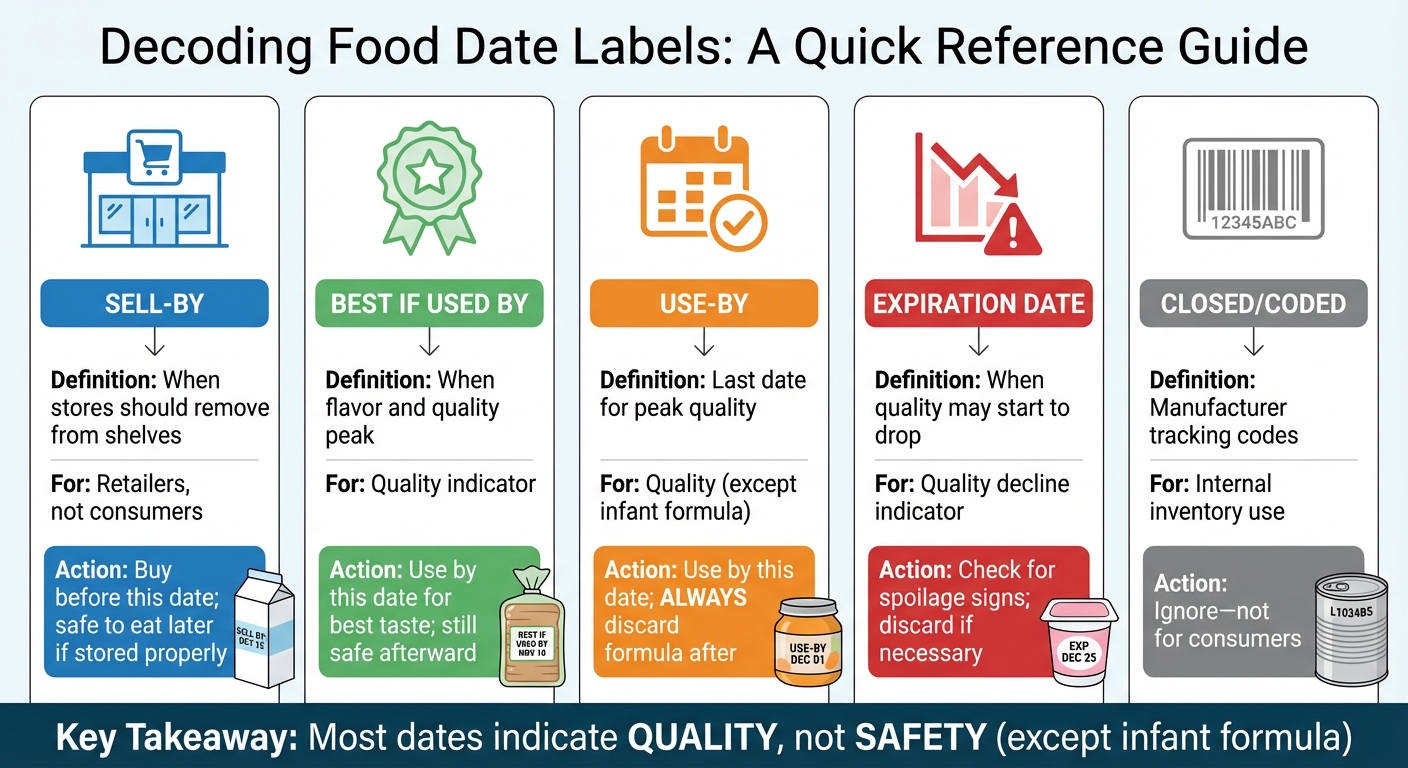
Food Date Label Types: What They Mean and How to Use Them
Getting a handle on food date labels can help cut down on waste while ensuring your meals taste great. You’ve probably seen terms like "Sell-By", "Best If Used By", and "Use-By" on packaging. Most of these dates are about quality, not safety. The one exception? Infant formula. Federal law mandates a "Use-By" date on formula to protect both its safety and nutritional value.
Here’s a breakdown of what these labels mean and how to use them wisely.
Sell-By Dates
"Sell-By" dates are aimed at store staff, not shoppers. They tell retailers how long a product should stay on the shelves to maintain freshness. As a consumer, aim to buy these items before the date passes, but don’t panic if you eat them afterward. Proper storage at home usually means the food is fine well past the "Sell-By" date. For instance, states like Pennsylvania require "Sell-By" dates on items such as milk and shellfish.
Best If Used By/Before Dates
This label points to when food will taste its best. The FDA encourages manufacturers to use this phrasing to avoid confusion. According to Frank Yiannas, Deputy Commissioner for Food Policy and Response at the FDA:
"FDA strongly supports industry’s voluntary industrywide efforts to use the ‘Best if Used By’ introductory phrase when choosing to include a quality-based date label to indicate when a product will be at its best flavor and quality".
In plain terms, food past this date might not be as fresh, but it’s still safe as long as there’s no spoilage. The USDA even notes that many foods remain wholesome beyond the "Best If Used By" date.
Use-By Dates
"Use-By" dates are the manufacturer’s recommendation for when a product is at its peak. For most foods, this is a quality marker, not a safety warning. The exception is infant formula, where the "Use-By" date ensures both safety and nutritional integrity. According to the USDA:
"The ‘Use-By’ date is the last date recommended for the use of the product while at peak quality. It is not a safety date except when used on infant formula".
In 2017, the Grocery Manufacturers Association and Food Marketing Institute suggested using "Use By" exclusively for items that are highly perishable and could pose safety risks after the date.
Expiration Dates
"Expiration" dates are usually found on products where quality declines quickly. While they primarily signal peak quality, they don’t always mean the food is unsafe. Again, the exception is infant formula and certain regulated items, where these dates are tied to safety as well as quality.
Closed or Coded Dates
Ever noticed a random string of letters and numbers on a can or box? That’s a closed or coded date, used by manufacturers for internal tracking. These codes help with inventory management and recalls, not consumer guidance.
For example, egg cartons with a USDA grade shield include a three-digit Julian date, which shows the packing day (001 for January 1, 365 for December 31). As the USDA Food Safety and Inspection Service explains, "The codes are not meant for the consumer to interpret as a ‘Best if Used By’ date".
| Label Type | What It Means | What You Should Do |
|---|---|---|
| Sell-By | When stores should take it off shelves | Buy before this date; safe to eat later if stored well |
| Best If Used By | When flavor and quality are at their best | Use by this date for best taste; still safe afterward |
| Use-By | Last date for peak quality | Use by this date; always toss formula after |
| Expiration Date | When quality may start to drop | Look for spoilage; discard if necessary |
| Closed/Coded | Manufacturer’s tracking info | Ignore – these aren’t for consumers |
Want to know how companies decide these dates? Keep reading to unravel the process behind food labeling.
How Manufacturers Set Expiration Dates
Setting expiration dates involves a careful blend of science, safety, and quality control. Key factors like a product’s moisture content and nutrient composition directly influence how quickly it spoils. To combat this, manufacturers often include preservatives to extend shelf life.
Advanced packaging methods, such as Modified Atmosphere Packaging (MAP), are also used to create controlled environments that slow down the natural degradation process. Beyond the product itself, manufacturers consider the conditions it will face during distribution – things like time spent in transit and fluctuating temperatures. As the USDA Food Safety and Inspection Service explains:
"Factors including the length of time and the temperature at which a food is held during distribution and offered for sale, the characteristics of the food, and the type of packaging will affect how long a product will be of optimum quality."
The dates printed on food packaging generally reflect the period during which the product will maintain its best quality, provided it’s stored correctly. To determine these dates, manufacturers conduct detailed analyses and tests over the product’s shelf life. Since temperature is a major driver of spoilage, predictive models like the Arrhenius equation are often used to estimate how quickly degradation will occur under specific conditions. These calculations assume consumers follow recommended storage guidelines.
One exception to this general rule is infant formula. Its "Use-By" date is federally regulated and based on strict nutrient analysis to ensure safety and efficacy. Up next, find out how proper storage can help you make the most of these expiration dates.
How to Store Different Types of Food
Knowing how to store food properly can make a big difference in keeping it fresh and safe for longer. While expiration dates are helpful, the way you store your food is just as important. Keep your refrigerator at or below 40°F and your freezer at 0°F to slow down bacterial growth. Also, avoid leaving perishable items out for more than two hours – or just one hour if the temperature is above 90°F. Below are tips for storing specific types of food.
Fresh Meat, Poultry, and Fish
When dealing with raw meat, take steps to prevent contamination. Pick it up last while shopping, keep it in the coolest part of your car, and separate it from other groceries using individual bags.
For short-term refrigeration, leave meat in its original packaging. If you plan to freeze it for more than two months, wrap it in foil, freezer wrap, or use freezer bags to avoid freezer burn. Always thaw frozen meat, poultry, and fish in the refrigerator. Thawing on the counter can cause the outer layers to reach unsafe temperatures while the center stays frozen. If meat develops a bad odor, slimy texture, or unusual color, throw it away.
| Food Category | Item Type | Refrigerator (≤40°F) | Freezer (≤0°F) |
|---|---|---|---|
| Fresh Meat | Steaks (Beef, Veal, Lamb) | 3 to 5 days | 4 to 12 months |
| Chops (Pork, Veal, Lamb) | 3 to 5 days | 4 to 12 months | |
| Ground Meats (Beef, Turkey, Pork) | 1 to 2 days | 3 to 4 months | |
| Fresh Poultry | Chicken or Turkey, whole | 1 to 2 days | 1 year |
| Chicken or Turkey, pieces | 1 to 2 days | 9 months | |
| Fresh Fish | Lean Fish (Cod, Flounder) | 1 to 3 days | 6 to 8 months |
| Fatty Fish (Salmon, Tuna) | 1 to 3 days | 2 to 3 months | |
| Shellfish | Shrimp, Crayfish | 3 to 5 days | 6 to 18 months |
| Processed Meat | Bacon | 7 days | 1 month |
| Deli Sliced Luncheon Meat | 3 to 5 days | 1 to 2 months |
Eggs and Dairy
Eggs and dairy are kitchen staples that need consistent cold storage. Keep them in the back of the refrigerator, where the temperature is most stable. Eggs should stay in their original carton to protect them and prevent them from absorbing odors.
Fresh eggs in their shells can last 3 to 5 weeks in the refrigerator, but hard-cooked eggs only last about a week because their protective coating is removed during boiling. If you need to freeze eggs, crack them first – freeze the yolks and whites together or separately. Never freeze eggs in their shells.
Dairy products and eggs often remain safe past their "Best if Used By" dates as long as there are no signs of spoilage, like mold, strange textures, or bad smells. If a power outage occurs, remember that a closed refrigerator keeps food safe for about four hours. Discard milk and eggs if they’ve been above 40°F for more than four hours.
| Product | Refrigerator (≤40°F) | Freezer (≤0°F) |
|---|---|---|
| Raw eggs (in shell) | 3 to 5 weeks | Do not freeze in shell |
| Raw egg whites and yolks | 2 to 4 days | 12 months |
| Hard-cooked eggs | 1 week | Do not freeze |
| Milk (Pasteurized) | 7 to 14 days | 1 to 3 months (quality) |
| Yogurt | 1 to 2 weeks | 1 to 2 months |
Dry Goods, Canned Foods, and Pantry Staples
Dry goods and canned foods are pantry essentials, and proper storage can extend their usability. Keep your pantry between 50°F and 70°F. Canned foods are especially resilient, often staying safe well past their "best by" dates if the cans are undamaged. Avoid cans with deep dents, swelling, or rust, as these could mean contamination or a broken seal.
High-acid canned foods, like tomatoes and fruits, are best used within 12 to 18 months, while low-acid items, such as canned meats or corn, can last 2 to 5 years. Once you open a can, transfer leftovers to a glass or plastic container to avoid a metallic taste.
Dry goods like flour and sugar should be stored in airtight containers to keep them fresh and free from pests. White flour lasts 6 to 12 months at room temperature, but whole wheat flour, which contains more oil, has a shorter shelf life of 3 to 6 months. Rice also varies – white or wild rice can last up to 2 years, while brown rice keeps for about 1 year due to its higher fat content.
| Item | Pantry Storage Time (50–70°F) | Notes |
|---|---|---|
| Dry Beans, Lentils, Peas | 1 to 2 years | Cooked beans last 3–4 days in the refrigerator |
| White or Wild Rice | 2 years | Brown rice lasts only 1 year |
| Pasta (Dry) | 1 to 2 years | Store in original or airtight packaging |
| Canned Goods (Low Acid) | 2 to 5 years | Includes meat, soups, beans, corn, peas |
| Canned Goods (High Acid) | 12 to 18 months | Includes juices, fruits, tomato products |
| Flour (White) | 6 to 12 months | Up to 2 years if stored in the freezer |
| Sugar (Granulated) | 18 to 24 months | Keep in an airtight container |
How to Tell If Food Has Spoiled
Even with proper storage, knowing how to recognize spoiled food is essential. While expiration dates provide a general guideline, your senses are often the most reliable tool for spotting spoilage. These real-time checks can help you ensure food safety and quality.
Start with a visual inspection. Spoiled produce often shows signs like wilting, dark or slimy patches, sticky films (common in bagged salads), wrinkled or peeling skin, or excess moisture. Raw meats might develop unusual colors such as gray, green, or brown spots. Similarly, deli meats and seafood can take on a slick, slimy texture or an iridescent sheen. In dairy products, look for clumping, curdling, or visible mold. Don’t forget to check hidden areas, like the bottom of containers, for mold growth.
Smell is another key indicator. Spoiled food often has a distinct, unpleasant odor. According to the USDA:
"Foods that deteriorate and develop unpleasant odors, tastes, and textures are spoiled."
For instance, meat that has gone bad may have a strong, off-putting smell. If a food item smells strange or “off,” it’s best to discard it immediately.
Texture changes also signal spoilage. Lunch meats or roasts might feel slimy, while fruits and vegetables can turn mushy, slimy, or soggy. Some may even collapse as they lose firmness. Even leftover pasta that has clumped together can indicate it’s no longer safe to eat. These sensory checks, when combined with proper storage, help prevent food waste and keep your meals safe.
Certain foods need extra care. Ground meats, poultry, fresh seafood, and dishes with mayonnaise spoil quickly and should be used within one to two days. Bread with visible mold – whether green or white – should be thrown out, as mold can spread invisibly through porous surfaces. Likewise, discard any cans that are bulging, leaking, rusted, or deeply dented, as they may harbor dangerous spoilage like botulism.
It’s important to note that while spoilage bacteria cause noticeable changes in smell and texture, some harmful pathogens don’t. This makes proper storage and adhering to the two-hour rule for perishable foods critical. When in doubt, it’s safer to throw the food away. Recognizing these spoilage signs helps minimize waste while keeping your kitchen safe.
How to Reduce Food Waste
Managing food expiration dates wisely can play a huge role in cutting down waste. In the United States, about 30% to 40% of food goes uneaten, costing an average family of four roughly $1,500 each year. A lot of this waste comes from simply not managing food properly. But with a few simple adjustments, it’s possible to make a big difference.
Start with smart meal planning. Before you shop, take a look at what’s already in your fridge, freezer, and pantry. Build your meals around ingredients that need to be used soon. This way, older food gets eaten before it spoils. A detailed shopping list based on your meal plan can help you avoid buying duplicates or giving in to impulse purchases. Also, consider how much time you’ll have to cook – choose quick recipes for busy nights and save more elaborate dishes for when you have extra time.
Organize your kitchen to make older food more visible. Try the "First In, First Out" (FIFO) method – place older items in front and newer ones in the back. Set up an "Eat First" bin in your fridge for foods nearing their expiration dates. Label leftovers with the date they were made, and aim to eat them within seven days. These small steps can prevent forgotten items from going bad in the back of the fridge.
Take full advantage of your freezer. If you can’t use something in time, freeze it. Produce, meats, bread – most foods freeze well. For example, overripe bananas can be saved for smoothies or banana bread, and vegetables about to wilt are perfect for soups or stews. Even broccoli stems can be shredded for salads, and scraps from veggies or meat can be turned into homemade broth. You can even freeze milk – just leave some space in the container for it to expand.
Let technology help you out. The USDA’s FoodKeeper app offers tips on how to store hundreds of food items and alerts you when something is nearing its recommended use date. Apps like Cooklist and Mealime can also help you track what’s in your pantry and plan meals to use up ingredients. Jean Buzby, USDA Food Loss and Waste Liaison, highlights the importance of visibility:
"If fresh food is ‘out of sight, out of mind,’ it may be forgotten and ultimately wasted".
Combining these tools with better habits can help you stay on top of expiration dates and reduce waste while keeping your food safe.
Conclusion
Grasping the basics of food expiration dates is simpler than it seems. The main point to remember? Most labels are about quality, not safety. With the exception of infant formula, most foods are safe to eat beyond the printed date – assuming they’ve been stored correctly and don’t show signs of spoilage. As the USDA puts it:
"Confusion over the meaning of dates applied to food products can result in consumers discarding wholesome food".
This highlights the importance of proper storage and paying attention to sensory cues to avoid unnecessary food waste.
Food safety is more about how you store and handle food than the date stamped on the package. For instance, make sure your refrigerator stays at or below 40°F and your freezer at 0°F. Stick to the two-hour rule: don’t leave perishable items out for more than two hours – or just one hour if the temperature is over 90°F. These habits are far more effective at preventing bacterial growth than relying solely on expiration dates.
FAQs
Can I eat food after the date on the package?
In many instances, food can still be safe to eat after the date printed on the package, provided it’s been stored correctly. However, the type of food and the label make a big difference. ‘Use-by’ dates are all about safety – consuming food past this date could pose health risks. On the other hand, ‘best if used by’ dates are more about quality, indicating when the food will taste its best. Always inspect for signs of spoilage like unusual smells, textures, or colors, and trust your instincts before eating.
What’s the real difference between Sell-By, Best If Used By, and Use-By?
The Sell-By date indicates how long stores should keep the product on their shelves for sale. The Best If Used By date suggests when the product will be at its best quality and flavor. Lastly, the Use-By date is the deadline for consuming the product to ensure safety and maintain its nutritional value, particularly for perishable goods.
What foods should I never eat past the Use-By date?
Avoid eating foods like meat, fish, dairy, soft cheeses, infant formula, and ready-to-eat meals once they’ve passed their use-by date. These items can spoil quickly, and consuming them beyond this point may lead to foodborne illnesses, posing serious health risks.