
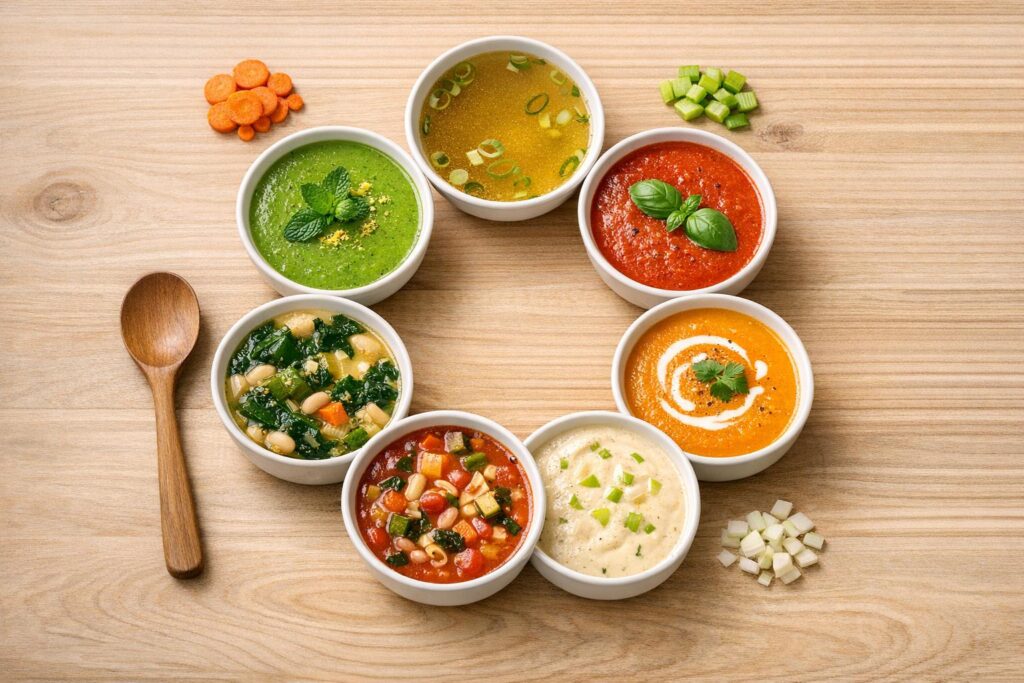
Turning leftover vegetables into soup is a simple way to reduce waste and save money. Whether it’s wilted greens, starchy potatoes, or half a zucchini, these soups make the most of ingredients you already have. Plus, they’re quick to prepare, nutritious, and freezer-friendly. Here’s a breakdown of seven easy recipes:
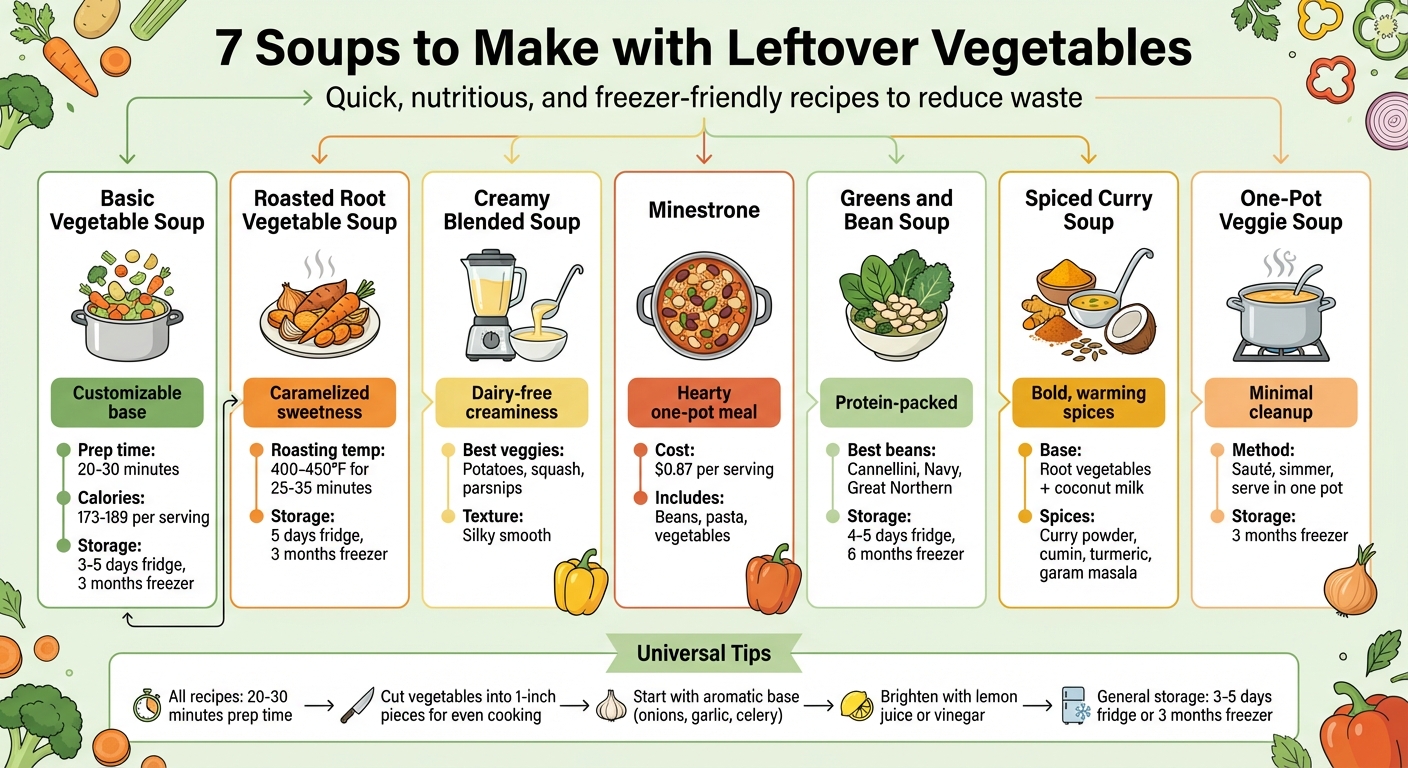
- Basic Vegetable Soup: A simple mix of vegetables, broth, and aromatics. Perfect for customizing.
- Roasted Root Vegetable Soup: Roasting adds sweetness and depth to root veggies like carrots and sweet potatoes.
- Creamy Blended Soup: Starchy vegetables like potatoes and squash create a smooth, dairy-free texture.
- Minestrone: A hearty mix of beans, pasta, and vegetables for a filling one-pot meal.
- Greens and Bean Soup: Combines leafy greens with beans for a protein-packed, flavorful dish.
- Spiced Curry Soup: Uses bold spices and coconut milk to transform leftover vegetables into a rich, warming meal.
- One-Pot Veggie Soup: A no-fuss recipe that brings everything together in a single pot.
Each recipe takes around 20–30 minutes to prepare, and leftovers can be stored in the fridge for up to 5 days or frozen for 3 months. Start with a flavorful base, chop vegetables evenly, and adjust seasonings to taste. A splash of lemon juice or vinegar at the end can brighten the flavors. These soups are a practical and delicious way to make the most of your leftovers.
7 Leftover Vegetable Soup Recipes Comparison Guide
How To Make Vegetable Soup With Leftovers | #StayHome With Jacques Pepin
sbb-itb-663e316
1. Basic Leftover Vegetable Soup
This recipe is a go-to for using up leftover vegetables, offering a simple yet versatile approach. All you need are 1 to 2 pounds of mixed vegetables, 4 to 6 cups of broth, and a few aromatics to create a flavorful base.
Start by heating oil or butter in a large pot. Sauté aromatics like onions, garlic, or celery for about 5 minutes until they soften and become fragrant. As Faith Durand, Senior Vice President of Content at The Kitchn, explains:
"The essentials are vegetables and stock, plus olive oil or butter and some salt and pepper".
Once your aromatics are ready, add your chopped vegetables, cut into roughly 1-inch pieces to ensure even cooking. Starchy vegetables like potatoes or cauliflower work well to give the soup body and a natural thickness. Add the broth, bring everything to a boil, and then lower the heat to let it simmer for 20 to 30 minutes until the vegetables are tender.
For extra flavor, a splash of lemon juice or vinegar can brighten the soup. If you prefer a creamier consistency, blend part or all of the soup using an immersion blender. Leftovers can be stored in the refrigerator for 3–5 days or frozen for up to 3 months. Each serving contains approximately 173–189 calories.
This straightforward method is the perfect starting point for endless variations.
2. Roasted Root Vegetable Soup
Roasting root vegetables before making soup transforms their flavor entirely. The high heat caramelizes their natural sugars, creating a rich, sweet base that sets this soup apart. It’s an ideal way to repurpose leftover vegetables like a leek, a few carrots, or half a sweet potato.
This method works best with a mix of root vegetables, divided into four flavor categories: sweet roots (like carrots, sweet potatoes, and beets), starchy options (like potatoes for creaminess), earthy roots (such as parsnips and rutabagas), and aromatic bulbs (like onions and garlic). As Nicole Cody explains:
"This soup… definitely needs potato to give it that creamy velvety texture, but you can use any other kinds of roasted vegetables too".
Start by peeling and cutting your vegetables into uniform 1-inch chunks. Roast them at 400°F to 450°F for 25 to 35 minutes, until fork-tender and slightly caramelized. Tossing them with rosemary or thyme before roasting adds an extra layer of flavor. As She Likes Food points out:
"Sweet potatoes, carrots, and beets are the sweetest of the root vegetables, whereas rutabaga, turnips, and parsnips can have a bit of a bite. Roasting them brings out their sweeter side, making them perfect for this soup recipe".
After roasting, transfer the vegetables to a pot with 4 to 6 cups of broth. Let them simmer for 10 to 15 minutes, then blend until smooth using an immersion blender. A splash of sherry vinegar at the end brightens the earthy flavors. This soup keeps well, lasting up to 5 days in the fridge or 3 months in the freezer. The result? A deeply flavorful, comforting soup that’s a great way to reinvent leftover veggies.
3. Creamy Blended Vegetable Soup
Turn your leftover vegetables into a smooth, dairy-free soup that feels indulgent yet remains healthy. The key is choosing vegetables that naturally create a creamy texture when blended. Starchy options like potatoes, sweet potatoes, parsnips, and winter squash work wonders here. As registered nutritionist Danijela Armitage explains:
"The potatoes still lend great creaminess – when cooked and blended, they release starch, helping create a velvety texture."
For added depth, sweet vegetables like carrots, pumpkin, or butternut squash provide natural thickness, while zucchini or yellow squash can bulk up the soup without overwhelming the flavor. Much like the Basic Leftover Vegetable Soup, this version relies on simple techniques to bring out the best in your ingredients. Start by sautéing onions, garlic, or leeks in olive oil for about 10 minutes to create a flavorful base. Add your leftover vegetables and just enough broth to submerge them, then simmer until the vegetables are completely soft – this prevents any graininess in the final texture.
To achieve a silky consistency, a high-speed blender is your best bet, though an immersion blender works well if you prefer a slightly chunkier soup. For an extra boost of creaminess and protein, toss in some white beans before blending. To keep the soup visually appealing, stick to vegetables within the same color family – like carrots and sweet potatoes. As Lisa Lotts advises:
"Try to stay within the same basic color scheme of veggies, so the soup doesn’t end up looking dull and gray when it’s pureed."
Finish off with seasonings like thyme, smoked paprika, or curry powder, and brighten the flavors with a splash of lemon juice. This method turns leftover vegetables into a vibrant, hearty soup that’s both easy to make and packed with nutrients.
4. Clean-Out-the-Fridge Minestrone
Minestrone is a perfect way to turn leftover vegetables, beans, and pasta into a satisfying, one-pot meal. As Jennifer Stewart puts it:
"Minestrone… means to serve as a remedy".
Here’s how to turn your fridge odds and ends into a delicious soup.
Start by sautéing onions, celery, and carrots in olive oil until they soften. Next, add sturdier vegetables like potatoes, parsnips, winter squash, or cauliflower, along with broth, and let everything simmer until tender. Softer vegetables – such as zucchini, green beans, bell peppers, or frozen peas – should go in during the last 10–15 minutes of cooking. Stir in leafy greens like spinach, kale, or chard during the final 5 minutes for extra color and nutrients.
For a deeper flavor, toss in a Parmesan rind to add a salty, nutty richness. Leftover spaghetti sauce or mashed potatoes can also intensify the taste. Toward the end, mix in canned beans (white beans, chickpeas, or kidney beans) and small pasta like ditalini or elbow macaroni. Alternatively, if the pasta is already cooked, add it just before serving to maintain its texture.
Home cook Stephanie Bruce shares a useful tip: a pinch of salt can bring a bland broth to life. You can also balance the acidity of tomatoes with a little sugar and brighten the overall flavor with a splash of red wine vinegar. The result? A hearty, flavorful soup that’s easy on the wallet – about $0.87 per serving compared to around $1.15 for canned versions. This minestrone not only fills you up but also helps reduce food waste by making the most of leftover vegetables.
5. Greens and Bean Soup
Greens and bean soup is a fantastic way to turn leftover produce – like a stray leek, a handful of spinach, or a bit of kale – into something hearty and satisfying. This dish combines the earthy flavors of greens with the creamy texture of beans, making it a budget-friendly and protein-packed meal. It’s a great example of how scraps can come together to create a wholesome, waste-free dish.
For the beans, white varieties like Cannellini, Great Northern, or Navy beans are excellent choices. Andrea Mut from My Pocket Kitchen shares her preference:
"Navy beans are my favorite for most soups because of the smaller size and chewier texture. If you prefer a creamier bean, use white kidney beans".
Other options, such as chickpeas, kidney beans, or canned lentils, also work well and can add variety to the soup.
Cooking it right makes all the difference. Start by sautéing aromatics like onions, garlic, or leeks to build a flavorful base. Add sturdy greens – think kale, collard greens, or Swiss chard – early in the process so they soften properly. For delicate greens like spinach or arugula, wait until the end to toss them in. Carol from From A Chef’s Kitchen advises:
"If you plan to refrigerate and reheat later, I suggest leaving the spinach or other greens out. Then, reheat the soup to a good simmer and add the spinach. It doesn’t take long for the spinach to turn a funky green".
Want to take the flavor up a notch? Toss in a Parmesan rind while the soup simmers for a savory boost. A splash of lemon juice or red wine vinegar at the end can brighten the flavors, especially if the soup tastes a bit flat. For a thicker texture, mash some of the beans or blend a portion of the soup before serving.
This soup is perfect for meal prep, staying fresh in the refrigerator for 4 to 5 days or in the freezer for up to 6 months. When reheating, add a bit of broth or water to compensate for the liquid absorbed by the beans during storage. It’s a simple, delicious way to give leftover veggies a second life in your kitchen.
6. Spiced Curry Vegetable Soup
Spiced curry vegetable soup is a perfect way to transform leftover vegetables into a warm and flavorful meal, thanks to its bold spices. Culinary consultant Marc Matsumoto highlights the magic of spices in these situations:
"The beauty of using spices is that they tend to cover up a lack of freshness in produce thats right on the edge".
Start with root vegetables as the base – potatoes (white, red, or gold), sweet potatoes, carrots, parsnips, or butternut squash all work beautifully [43,45]. If you have pre-roasted vegetables, even better! Roasting enhances their natural sweetness and adds depth to the soup [43,45]. For firmer vegetables like cauliflower, eggplant, and zucchini, they hold up well during cooking, while softer leftovers, like overcooked broccoli, may break down too much.
To begin, sauté aromatics like onions, garlic, and fresh ginger with a mix of curry powder, cumin, turmeric, and garam masala for 1–2 minutes. This step releases their fragrant oils and intensifies the flavor [52,53,46]. Then, add vegetable stock and full-fat coconut milk to create a creamy, flavorful base. Start cooking with firmer raw vegetables, and add pre-cooked ones in the last 5–10 minutes to avoid overcooking. For even cooking, chop everything into uniform ½ to ¾ inch pieces.
If the soup turns out spicier than expected, you can adjust it easily. A splash of lemon juice can help tone down the heat. Alternatively, reduce red pepper flakes or stir in yogurt or more coconut milk for a gentler flavor [42,50,46]. Adding a touch of honey or sugar can also balance the spices with a hint of sweetness [47,52,46].
7. One-Pot Veggie Soup
One-pot veggie soup is a comforting meal that keeps cleanup to a minimum. With just a Dutch oven or large stockpot, you can sauté, simmer, and serve – all in the same pot. The process is simple: start by sautéing onions and garlic until softened, toss in your diced leftover vegetables, add your preferred liquid (like stock or water), and let it simmer until everything is tender. Finish by seasoning to taste.
Timing is key when it comes to adding vegetables. Firm veggies like potatoes, carrots, and squash should go in first since they take longer to cook. On the other hand, delicate ingredients like leafy greens or peas are best added during the last 5–10 minutes of cooking. British food writer and chef Elaine Lemm captures the flexibility of this dish:
"The best part about the leftover-vegetable soup is that anything goes. We bring you a template, but swap or add to your liking because there’s no wrong way of cooking this wholesome meal."
Once your base is ready, consider boosting the soup with some protein. For plant-based options, toss in chickpeas, white beans, or lentils during the final 10 minutes of cooking. You can also stir in a handful of old-fashioned rolled oats while simmering – they’ll naturally break down, thickening the soup and adding 9g of protein per serving. If you prefer a creamier texture, purée a portion of the soup right in the pot.
This recipe is a fantastic way to transform leftovers into a delicious, waste-conscious meal. Cover the vegetables with stock, ensuring the liquid rises about an inch above them, and add more if needed. A final touch of lemon juice or a splash of vinegar brightens the flavors. Plus, the soup freezes beautifully for up to 3 months – just let it cool completely before transferring it to airtight containers.
Tips for Making Leftover Vegetable Soups
Transforming leftover vegetables into a delicious soup can be simple and satisfying. These practical tips will help you create soups that are both flavorful and waste-free.
Cut Vegetables Evenly
Chop your leftover vegetables into uniform pieces, about one inch in size. This ensures even cooking and a better texture. Toss out any vegetables that have become too soft or show signs of spoilage.
Develop a Flavorful Base
Start by sautéing aromatics like onions, garlic, or celery to build a rich foundation for your soup. Faith Durand, Senior Vice President of Content at The Kitchn, emphasizes the importance of seasoning early:
"Vegetables need salt and pepper, and if you are adding other seasonings such as spices or dried herbs, add them now so they flavor the soup from the ground up".
When using dried spices like curry powder or cumin, sauté them with the aromatics to unlock their full flavor. Lisa Lotts from Garlic & Zest explains:
"Don’t add the dried spice directly to the soup; instead, bloom the spices with the oil and onions to allow the essential oils to open up the flavors".
Blend for Smoothness
For a creamy texture, blend the soup using an immersion blender or a countertop blender in batches. Aim for 4–6 cups of broth for every 1–2 pounds of vegetables to achieve the perfect consistency. This step not only enhances texture but also ties all the flavors together beautifully.
Fine-Tune and Store
Once the soup is blended, adjust the flavors. A splash of vinegar or lemon juice can brighten a dull soup, while extra broth or a touch of dairy can balance out saltiness. Let the soup cool completely before storing it in airtight containers. Refrigerate for 3–5 days or freeze for up to 3 months. Don’t forget to label the containers with the date.
These tips make it easy to turn leftover vegetables into a comforting, flavorful meal while reducing food waste.
Conclusion
Turn leftover vegetables into soup to reduce waste and save money. Whether it’s half an onion, some wilted greens, or broccoli stems you’d normally throw away, soup gives these ingredients a second chance.
The beauty of vegetable soup is its adaptability – there’s no "wrong" way to make it. Use whatever you have on hand instead of making an extra trip to the store. A great tip? Start a "soup bin" in your freezer to collect vegetable scraps throughout the week. Once it’s full, you’ll have everything you need for a hearty, homemade meal.
Store your soup in the fridge or freezer, as mentioned earlier, making it an excellent option for meal prep.
For more leftover-friendly recipes, visit Comfy Kitchen. You’ll find easy recipes, practical tips, and inspiration to make the most of what’s already in your kitchen. It’s a simple way to ensure every veggie gets its moment to shine.
FAQs
Which leftover vegetables should I avoid using in soup?
When making soups, steer clear of using vegetables from the cruciferous family, like broccoli, cabbage, Brussels sprouts, and cauliflower. These veggies tend to release a bitter flavor when simmered, which can dominate and throw off the balance of your soup’s taste.
How can I make leftover veggie soup thicker without cream?
To make leftover veggie soup thicker without using cream, try blending part of the soup until it’s smooth, then mix it back in. Another option is to use a thickening agent like flour – cooking it with the vegetables before adding stock helps create a thicker texture. You can also toss in starchy vegetables like potatoes, which naturally thicken the soup when cooked and blended. These methods add body and richness without needing cream.
What’s the best way to freeze and reheat vegetable soup?
To freeze vegetable soup, first, allow it to cool completely – this helps prevent ice crystals from forming. Once cooled, pour the soup into airtight containers or freezer-safe bags. Be sure to leave some space at the top for expansion as the soup freezes. Don’t forget to label the containers with the date for easy tracking.
When it’s time to reheat, you can either thaw the soup in the refrigerator overnight or heat it straight from frozen. For stovetop reheating, use medium heat and stir occasionally to ensure even warming. If you’re using a microwave, heat the soup in short bursts, stirring in between to distribute the heat evenly.