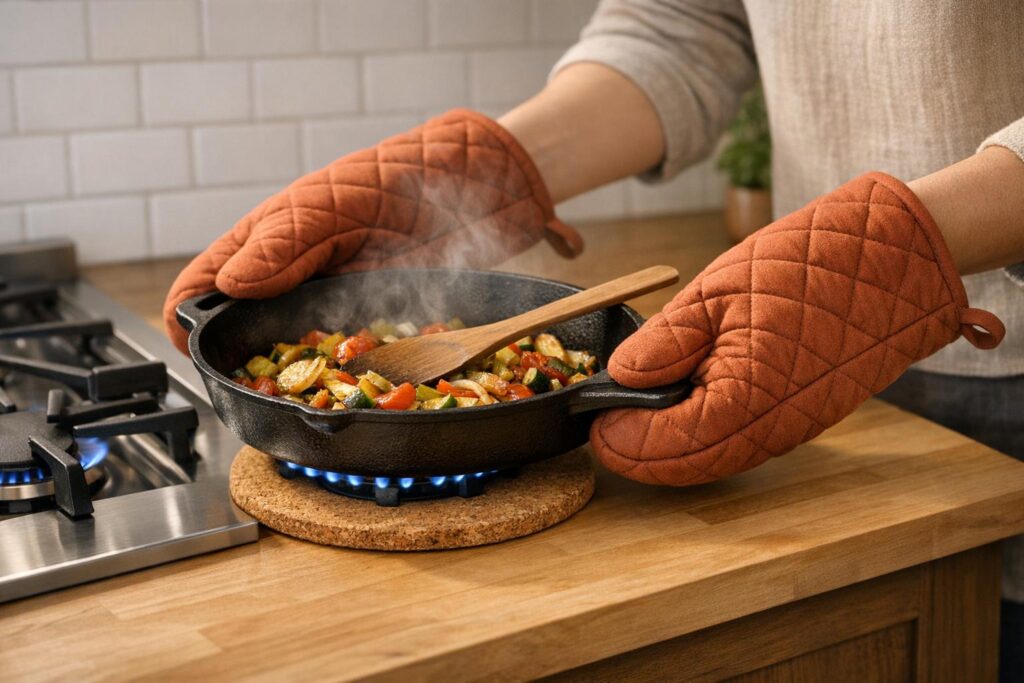
7 Tips for Handling Hot Cookware Safely
Avoid kitchen burns and cookware damage with simple steps: use dry oven mitts, don’t preheat empty pans, turn handles inward, use long utensils, control heat.

Avoid kitchen burns and cookware damage with simple steps: use dry oven mitts, don’t preheat empty pans, turn handles inward, use long utensils, control heat.
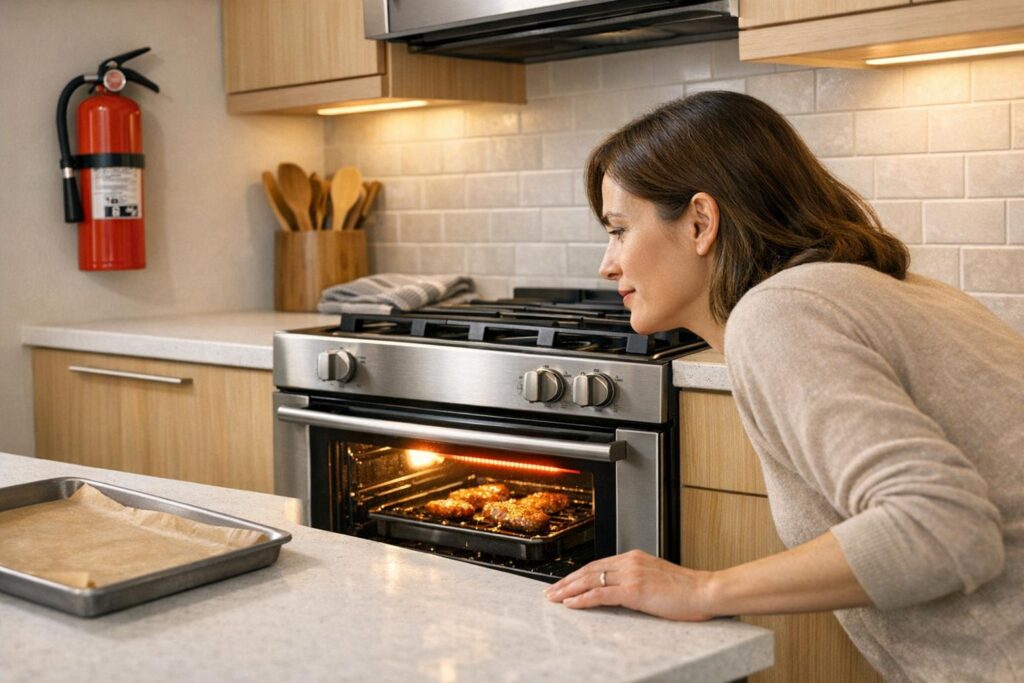
Prevent oven and broiler fires with simple habits: stay present, clean grease, use parchment (not wax), catch drips, keep flammables away, and respond safely.
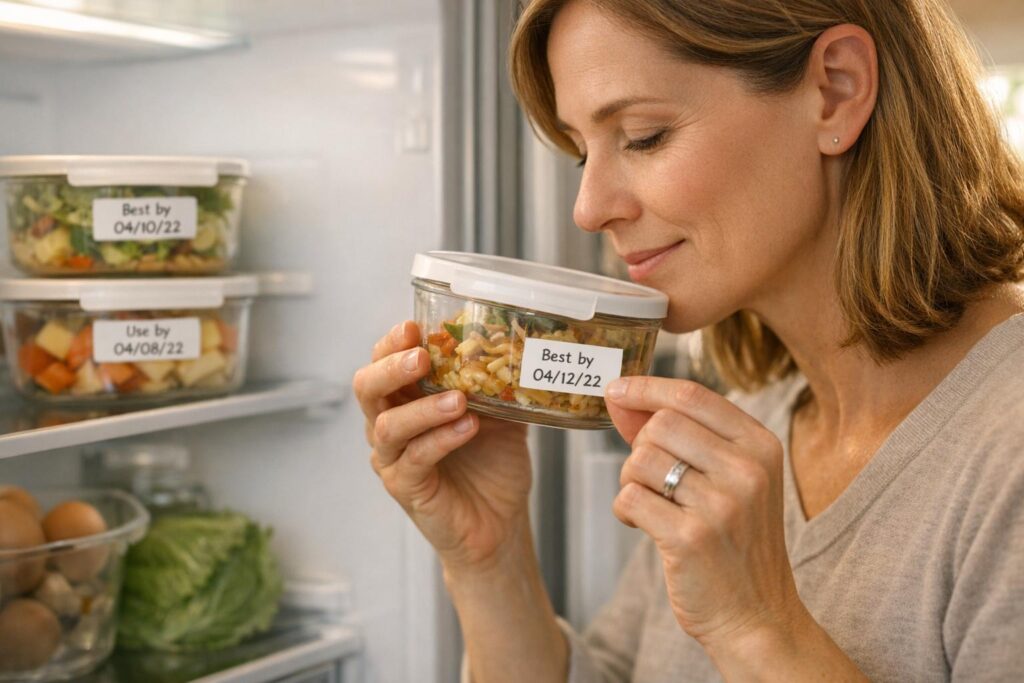
Date labels mainly indicate quality, not safety; proper storage and sensory checks prevent spoilage and reduce food waste.
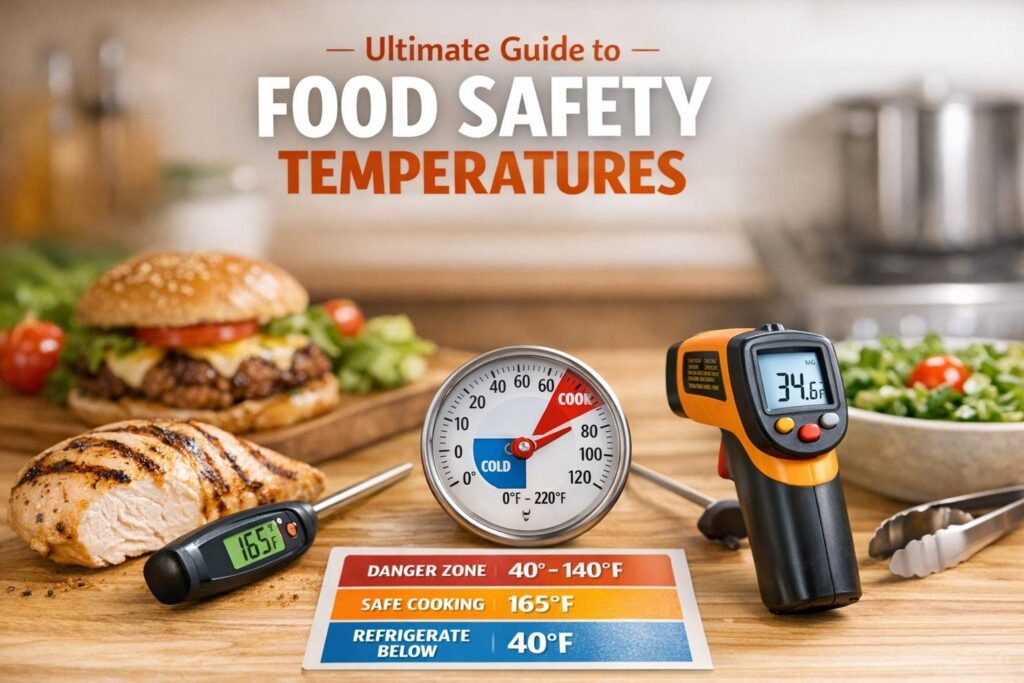
Clear temperature rules for safe food: fridge/freezer settings, cooking and reheating temps, danger zone limits, thawing, cooling, and thermometer tips.
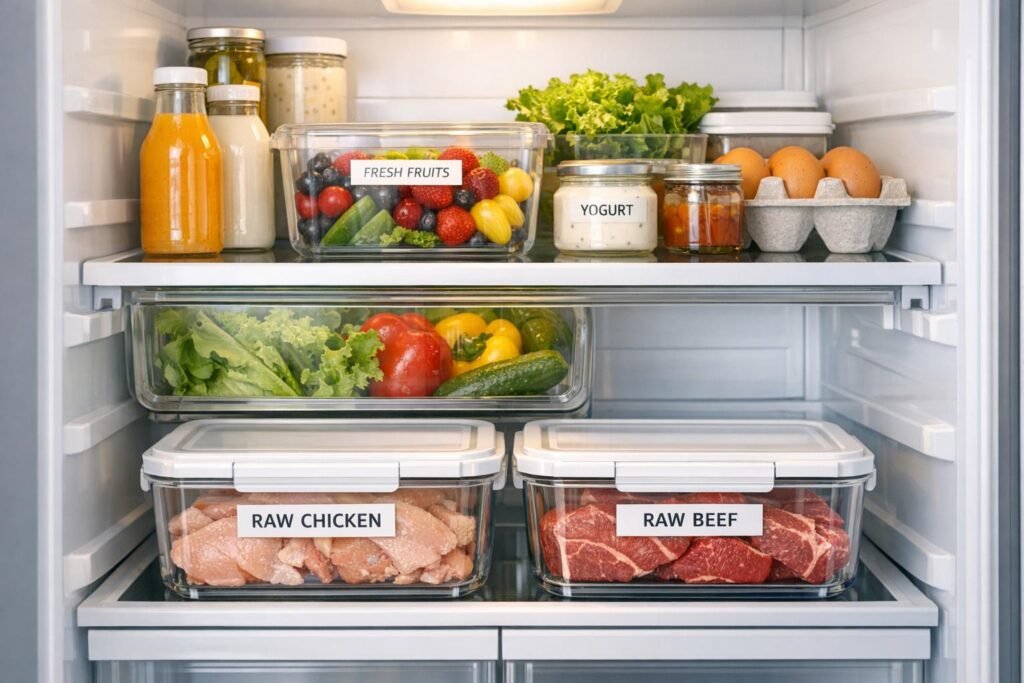
Simple fridge organization: store raw meat on the bottom, use leak-proof containers, keep fridge ≤40°F, clean regularly, and label/rotate to prevent cross-contamination.

Use separate boards for raw and ready-to-eat foods, wash and sanitize after use, dry completely, and replace boards with deep grooves or cracks.

Safe raw meat handling prevents foodborne illness—simple habits like handwashing, separate prep, proper storage, thawing, and cooking to safe temperatures.

Safe internal temps for beef, pork, poultry and ground meat, plus how to use thermometers, proper resting times, and cross-contamination tips.

Practical steps to stop allergen cross-contact in home kitchens: storage, color-coded tools, wash‑rinse‑sanitize, prep order, and emergency response.

Compare plastic and glass food storage containers — pros, cons, safety, heat tolerance, weight, cost, and best uses for meal prep, travel, and long-term storage.